
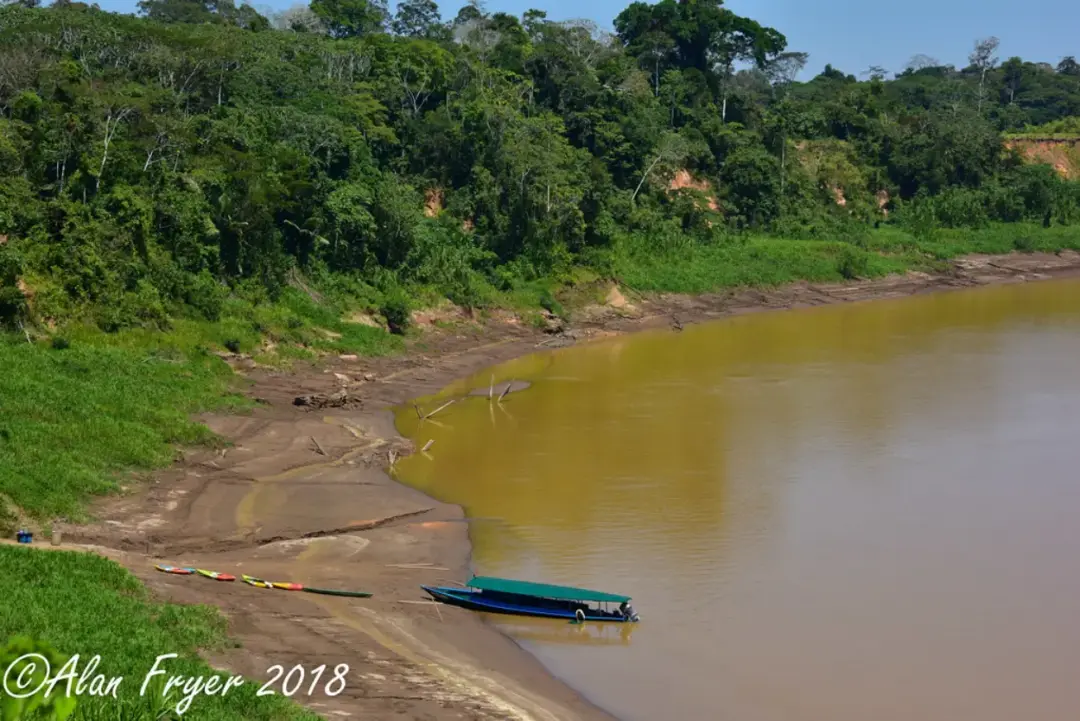
The Tambopata River is one of the most remarkable waterways in southeastern Peru, flowing through some of the most biodiverse landscapes of the Amazon rainforest. Surrounded by dense tropical vegetation, winding riverbanks, freshwater lakes and enormous stretches of untouched forest, this river provides an essential habitat for hundreds of wildlife species and supports the natural life of the Peruvian Amazon.
Located in the department of Madre de Dios, the Tambopata River is an important part of the Amazon Basin and a major natural feature of the region. Its waters connect mountainous landscapes with tropical lowlands before joining the Madre de Dios River near Puerto Maldonado. Along its course, the river passes through extraordinary ecosystems where giant river otters, caimans, monkeys, macaws, colorful fish and countless other animals inhabit the surrounding rainforest.
Beyond its ecological importance, the Tambopata River plays a significant role in local transportation, traditional fishing, community livelihoods and nature-based tourism. Visitors exploring this region can experience the Amazon from the water, discover remote rainforest habitats, observe wildlife and learn about the relationship between local communities and their natural environment.
Table of Contents
Understanding the Tambopata River means discovering more than a geographical feature. It means exploring an interconnected ecosystem that supports the extraordinary biodiversity, cultural heritage and environmental importance of southeastern Peru.
Where Is the Tambopata River Located?
The Tambopata River is located in southeastern Peru, within the Amazon drainage system. Its basin extends across parts of the departments of Puno and Madre de Dios, connecting the eastern slopes of the Andes with the extensive tropical forests of the Amazon lowlands.
The river is particularly important in the province of Tambopata, where it flows through landscapes characterized by humid tropical forests, river islands, natural wetlands and seasonally flooded areas.
Its geographical position makes it an important connection between different ecological regions. The upper sections originate in mountainous terrain, while the lower sections cross warmer lowland rainforest environments.
Geographic Location in Southeastern Peru
The Tambopata River begins in the mountainous areas of the southeastern Andes and gradually descends toward the Amazon lowlands. Its watershed includes a variety of elevations, climates and natural environments.
The upper basin is characterized by mountainous landscapes, steep river channels and faster-moving water. As the river descends, its surroundings gradually change into tropical forests, broad valleys and more extensive floodplains.
This geographical transition creates favorable conditions for different plants and animals. Species adapted to cooler mountain environments occupy the upper watershed, while tropical wildlife becomes increasingly prominent in the lower river basin.
The river also forms part of a larger network of waterways that connect forests, wetlands and aquatic habitats across southeastern Peru.
The Tambopata River and Puerto Maldonado
Puerto Maldonado is one of the most important access points for exploring the Tambopata River and the surrounding Amazon rainforest.
The city is situated near the confluence of the Tambopata and Madre de Dios rivers, making it an important center for regional transportation, tourism and commerce.
From Puerto Maldonado, travelers can access different sections of the Tambopata River by motorboat. These journeys provide opportunities to observe tropical vegetation, birds, riverbank habitats and changing landscapes.
The river also serves as a transportation route for local residents, guides, boat operators and communities living farther into the rainforest.
For visitors, Puerto Maldonado provides access to jungle excursions, wildlife observation and expeditions into more remote areas of the Amazon.
Connection to the Madre de Dios River
One of the most important geographical characteristics of the Tambopata River is its connection to the Madre de Dios River.
The Tambopata flows into the Madre de Dios near Puerto Maldonado, contributing water and sediments to one of the major river systems of southeastern Peru.
The Madre de Dios River continues eastward through the Amazon lowlands, eventually connecting with other major waterways that form part of the larger Amazon drainage network.
This connection is important for the movement of freshwater species, the transportation of sediments and the ecological relationships between different river habitats.
It also explains why the Tambopata River is so significant to the broader Amazon rainforest ecosystem.
The Tambopata River and the Amazon Basin
The Tambopata River belongs to the Amazon Basin, one of the largest and most biologically important drainage systems on Earth.
Water flowing through the river eventually becomes part of the extensive network of waterways that drains toward the Amazon River.
The basin supports an enormous variety of freshwater organisms, tropical plants, birds, mammals, reptiles and amphibians.
The Tambopata River contributes to this system by transporting water from the Andes toward the lowland rainforest. Along the way, it supports numerous aquatic and terrestrial habitats that depend on seasonal changes in water levels.
Its importance extends beyond the immediate river channel because the surrounding forests, wetlands and tributaries are closely connected to its hydrological cycle.
Geography and Physical Characteristics of the Tambopata River
The Tambopata River has a distinctive geographical structure shaped by its mountainous origins, changing elevation and gradual transition into the Amazon lowlands.
Its upper sections are generally characterized by faster currents and more pronounced slopes. Farther downstream, the river becomes broader and develops winding channels, sandy banks, islands and meanders.
These characteristics influence navigation, sediment movement, wildlife habitats and the seasonal distribution of water throughout the basin.
Where Does the Tambopata River Begin?
The Tambopata River originates in the southeastern Peruvian Andes, in the Cordillera de Carabaya region of Puno.
Its headwaters begin at high elevations, where rainfall, mountain streams and seasonal precipitation contribute to the formation of the river system.
As the water descends from the mountains, it passes through different landscapes before reaching the tropical lowlands of Madre de Dios.
The transition from mountain streams to a large lowland river creates different ecological conditions along its course.
This variation is important because it connects high-altitude watersheds with tropical rainforest environments.
River Length, Elevation and Course
The Tambopata River has an approximate length of 400 kilometers, although measurements can vary depending on the geographical method used to determine its main channel.
Its watershed covers approximately 13,280 square kilometers, making it an important drainage system within southeastern Peru.
The river descends from mountainous areas into tropical lowlands, where its channel becomes wider and more winding.
Its course passes through different natural environments, including mountain valleys, foothill forests, lowland rainforest and floodplain landscapes.
These geographical changes influence water temperature, current speed, sediment transportation and the distribution of aquatic organisms.
Main Tributaries and River Confluences
The Tambopata River receives water from several tributaries throughout its basin.
Among the important tributaries are the Malinowski, Távara, Shenahuaja, Candamo and La Torre river systems.
These waterways contribute to the river’s overall flow and create additional habitats for fish, aquatic organisms and wildlife.
Tributaries are particularly important during the rainy season, when increased rainfall produces higher water levels and greater volumes of water throughout the watershed.
They also connect isolated forest environments, allowing aquatic species to move between different sections of the river network.
Seasonal Water Levels and River Flow
The Tambopata River experiences significant seasonal changes influenced by rainfall patterns across its watershed.
During the rainy season, generally between December and March, water levels increase as rainfall becomes more frequent and intense.
Higher water levels can cause the river to expand into surrounding forest areas, creating temporary aquatic habitats and flooded landscapes.
During the drier months, particularly between June and October, water levels generally decrease.
These seasonal changes influence river navigation, wildlife movements, fishing conditions and access to different rainforest destinations.
The changing water levels are a natural part of the Amazon ecosystem and help maintain the ecological balance of the surrounding forests.
Riverbanks, Islands and Meanders
In its lower sections, the Tambopata River develops broad curves known as meanders.
These curves form through the continuous movement of water, sediment deposition and erosion along the riverbanks.
Over time, changes in the river channel can create sandy beaches, temporary islands, oxbow lakes and abandoned river channels.
These environments are especially important for biodiversity because they provide different types of habitats.
Some birds use exposed riverbanks for feeding and resting, while fish and other aquatic organisms benefit from sheltered areas and flooded vegetation.
The changing landscape also creates excellent opportunities for observing the natural processes that shape tropical river systems.
The Tambopata River Ecosystem
The ecosystem surrounding the Tambopata River is one of the most valuable natural environments in southeastern Peru.
The river supports a complex relationship between freshwater habitats, tropical forests, wetlands and seasonal floodplains.
These environments provide food, shelter and breeding areas for a wide variety of animals.
The diversity of habitats is one of the reasons the Tambopata region is internationally recognized for its exceptional biological richness.
Amazon Lowland Rainforest
The lowland rainforest surrounding the Tambopata River is characterized by warm temperatures, high humidity and abundant vegetation.
Tall tropical trees form a dense canopy that provides shade and helps regulate the temperature of the forest floor.
Beneath the canopy, smaller trees, palms, vines, shrubs and ferns create multiple vegetation layers.
This vertical structure supports different animal communities.
Monkeys move through the upper branches, birds occupy the canopy and forest edges, while mammals, reptiles and amphibians inhabit the lower vegetation and forest floor.
The river is an important source of water for these ecosystems, especially during periods of reduced rainfall.
Floodplain Forests and Riverbank Vegetation
Floodplain forests are natural environments that experience seasonal flooding when rivers rise during periods of heavy rainfall.
Along the Tambopata River, these forests provide important feeding and breeding habitats for wildlife.
Trees and plants adapted to changing water levels can survive periods of inundation and continue growing under difficult conditions.
Flooded vegetation also provides shelter for fish and other aquatic organisms.
During high-water periods, some animals can move between the river and surrounding forest areas more easily.
As water levels decrease, exposed riverbanks and temporary wetlands become important feeding grounds for birds and mammals.
Freshwater Habitats and Aquatic Biodiversity
The Tambopata River supports a diverse freshwater ecosystem that includes fish, aquatic insects, crustaceans, reptiles and other organisms.
Different sections of the river provide different environmental conditions.
Shallow areas, deeper channels, submerged vegetation and sheltered riverbanks each support distinct communities of aquatic life.
Fish are particularly important because they form the foundation of many Amazonian food chains.
They provide food for birds, caimans, giant river otters and other predators.
Aquatic biodiversity also contributes to nutrient cycling and the ecological balance of the river.
Seasonal Flooding and Ecological Cycles
Seasonal flooding is one of the most important ecological processes in the Amazon rainforest.
When the Tambopata River rises, water can spread into surrounding forest areas, connecting habitats that are normally separated.
This creates opportunities for fish to access flooded vegetation, where they can find food and shelter.
The movement of water also distributes organic material and nutrients throughout the floodplain.
When the river retreats, many aquatic organisms return to the main channels, lakes and smaller waterways.
These seasonal cycles influence reproduction, feeding behavior and wildlife distribution throughout the year.
Wildlife Along the Tambopata River
The Tambopata River is surrounded by habitats that support an extraordinary variety of Amazonian wildlife.
Its waters and riverbanks provide food and shelter for mammals, reptiles, fish, birds, amphibians and countless invertebrates.
Wildlife observation is one of the most rewarding experiences for visitors exploring this region.
Although animal sightings depend on weather, season, location and natural behavior, the river provides opportunities to encounter some of the most fascinating species of the Peruvian Amazon.
Giant River Otters and Aquatic Mammals
Giant river otters are among the most impressive mammals associated with the freshwater habitats of the Amazon.
These large aquatic predators live in family groups and are excellent swimmers.
They feed mainly on fish and depend on healthy aquatic ecosystems for their survival.
In the Tambopata region, giant river otters are particularly associated with lakes, oxbow lakes and protected waterways connected to the river system.
Visitors exploring nearby lakes may observe them swimming, fishing, grooming themselves or resting on fallen tree trunks.
Their presence is an important indication of the ecological value of freshwater habitats.
Other mammals associated with the river environment include capybaras, which frequently inhabit riverbanks and wetlands.
These large rodents depend on water for protection and regularly feed on grasses and aquatic vegetation.
Caimans and Other Amazon Reptiles
Caimans are among the most recognizable reptiles inhabiting the rivers, lakes and wetlands of the Amazon rainforest.
They are predators that feed on fish, amphibians, crustaceans and other animals.
Different species occupy different aquatic environments, from smaller forest streams to larger lakes and river channels.
Black caimans are particularly impressive because of their large size and dark coloration.
They are important predators within freshwater ecosystems and contribute to the natural balance of aquatic food chains.
Other reptiles found in the surrounding region include freshwater turtles, snakes and lizards.
Some species are more frequently encountered near water, while others inhabit the forest vegetation and flooded areas.
Monkeys and Mammals of the Riverbanks
The forests bordering the Tambopata River provide habitats for several species of monkeys and other tropical mammals.
Howler monkeys can sometimes be detected by their powerful vocalizations, which travel long distances through the rainforest.
Squirrel monkeys move through forest vegetation in active groups, searching for fruits, insects and other food sources.
Other monkeys may be observed feeding, resting or traveling between trees near the riverbanks.
Sloths are another fascinating part of the Amazon ecosystem.
They spend much of their lives in trees, moving slowly through the canopy and feeding mainly on leaves.
Capybaras, tapirs and other terrestrial mammals also depend on the combination of forest and freshwater habitats found throughout the region.
Macaws, Toucans and Other Tropical Birds
The Tambopata region is particularly famous for its remarkable bird diversity.
Macaws are among the most colorful birds found in the surrounding rainforest.
Their bright plumage, powerful beaks and loud calls make them especially recognizable.
Different species of macaws feed on fruits, seeds and nuts, often traveling considerable distances between feeding and resting areas.
Toucans are also characteristic birds of the Amazon rainforest.
Their large bills and colorful appearance make them popular subjects for wildlife photography.
Other birds associated with river environments include kingfishers, herons, egrets, cormorants and several species of hawks and other birds of prey.
Kingfishers are particularly interesting because they hunt by diving into the water to capture fish.
The combination of river channels, forest edges and wetlands creates excellent opportunities for birdwatching.
Fish Species and Underwater Biodiversity
The Tambopata River contains a diverse community of freshwater fish.
Species include piranhas, catfish, armored catfish, pacu and other tropical fish adapted to different aquatic habitats.
Payara, sometimes called vampire fish, are particularly notable for their distinctive elongated teeth.
These fish are predators that feed on smaller fish in suitable freshwater environments.
Piranhas are another well-known group of Amazonian fish.
Despite their reputation, they play a natural ecological role as predators and scavengers.
Fish populations are important for maintaining the balance of aquatic ecosystems because they provide food for many other animals.
Their movements and reproduction are also closely connected to seasonal flooding.
Insects, Amphibians and Smaller Wildlife
The Tambopata River ecosystem is not limited to large and easily recognizable animals.
Its surrounding rainforest contains enormous numbers of insects, spiders, frogs and other small organisms.
Butterflies are among the most visually striking insects in the region.
They occupy forest clearings, riverbanks and sunny areas where they feed on nectar and minerals.
Poison dart frogs and other amphibians inhabit humid environments where water and vegetation provide suitable conditions for reproduction.
Many insects play essential ecological roles through pollination, decomposition and nutrient recycling.
Although these smaller animals are sometimes overlooked, they are fundamental to the health and functioning of the Amazon rainforest.
Tambopata National Reserve and Its Natural Attractions
The Tambopata River is closely connected to one of the most important protected rainforest landscapes in Peru.
The surrounding protected area preserves extensive tropical forests, freshwater habitats, wetlands and natural feeding grounds for wildlife.
The reserve covers approximately 274,690 hectares and protects a wide variety of ecosystems. Its biodiversity includes hundreds of bird species, mammals, reptiles, amphibians and fish.
The relationship between the river and the protected forests is essential because many animals depend on both terrestrial and aquatic habitats to survive.
The Relationship Between the River and the Protected Area
The Tambopata National Reserve protects important sections of the middle and lower Tambopata River basin.
Its forests contain different ecological environments, including palm swamps, riverbank forests, floodplains, natural lakes and areas of dense tropical vegetation.
The river provides access to several tourism sectors within the protected landscape.
These areas allow visitors to experience different aspects of Amazonian biodiversity, from freshwater wildlife to spectacular bird concentrations.
The river is also important for monitoring environmental conditions and supporting conservation activities.
Sandoval Lake and Its Wildlife
Sandoval Lake is one of the best-known natural attractions near Puerto Maldonado.
This beautiful freshwater lake is surrounded by tropical rainforest and palm vegetation, creating an important habitat for aquatic and terrestrial wildlife.
Giant river otters are among its most remarkable inhabitants.
Visitors exploring the lake by canoe may also encounter caimans, capybaras, monkeys, herons, kingfishers and macaws.
The surrounding forest provides excellent opportunities for observing wildlife and photographing Amazonian landscapes.
The lake demonstrates how abandoned river channels and changing waterways can develop into important freshwater ecosystems.
Cocococha and Sachavacayoc Lakes
Cocococha and Sachavacayoc are additional freshwater destinations within the Tambopata rainforest.
These lakes are particularly interesting because of their wildlife populations and relatively remote natural surroundings.
Giant river otters inhabit some of these aquatic environments, while caimans, birds and other animals use the surrounding vegetation for feeding and shelter.
The lakes are also important for observing the relationship between aquatic habitats and flooded forest ecosystems.
Boat excursions provide opportunities to explore these environments while learning about their ecological importance.
Chuncho and Colorado Macaw Clay Licks
The Tambopata region is famous for its natural macaw clay licks.
These are exposed riverbank formations where parrots, macaws and other birds gather to consume mineral-rich clay.
The Chuncho and Colorado clay licks are particularly important attractions for wildlife enthusiasts.
During suitable weather conditions, large groups of colorful birds may gather on the clay formations, creating an extraordinary natural spectacle.
Macaws and parrots generally visit these locations during the early morning.
Their activity depends on several factors, including weather, rainfall, cloud cover and natural feeding patterns.
Visitors traveling along the Tambopata River may have opportunities to observe these birds while exploring the surrounding rainforest.
The Upper, Middle and Lower Tambopata Regions
The Tambopata River can be understood through three broad geographical sections.
The upper river includes mountainous and foothill environments where the landscape is shaped by steeper terrain and faster-moving water.
The middle section transitions into tropical rainforest, with increasing numbers of lowland habitats, tributaries and natural lakes.
The lower section approaches Puerto Maldonado, where the river becomes wider and more meandering before joining the Madre de Dios River.
These different sections provide a variety of habitats and travel experiences.
They also explain why wildlife observation and river navigation can vary considerably depending on the location.
Indigenous Communities and Local Life Along the River
The Tambopata River is not only important for wildlife and natural ecosystems. It is also closely connected to the lives and traditions of people who inhabit the surrounding Amazon region.
Local communities have historically depended on rivers for transportation, fishing, food collection and communication.
The river continues to provide important resources and opportunities for families living throughout the rainforest.
Traditional Amazon River Transportation
Before modern roads and regular air connections became available, rivers were among the most important transportation routes in southeastern Peru.
Boats provided access to settlements, trading locations and remote forest areas.
This traditional relationship with waterways continues today.
Local residents use boats for transportation, fishing, agricultural activities and accessing different parts of the forest.
For visitors, traveling along the Tambopata River provides an opportunity to understand why waterways remain essential to Amazonian life.
Fishing and Forest Resources
Fishing has traditionally been an important source of food for communities living near the Tambopata River.
Freshwater fish contribute to local diets and provide economic opportunities for some families.
The surrounding forests also offer resources such as fruits, medicinal plants, construction materials and Brazil nuts.
These resources are closely connected to traditional ecological knowledge.
Understanding seasonal changes, animal behavior and forest conditions helps local people use natural resources more effectively.
Indigenous Knowledge and Cultural Traditions
Indigenous communities of the Amazon possess extensive knowledge of the rainforest and its ecosystems.
Their understanding of medicinal plants, wildlife behavior, seasonal cycles and forest resources has developed through generations of experience.
This knowledge is valuable not only for cultural preservation but also for understanding how tropical ecosystems function.
Community visits can introduce travelers to traditional practices, local foods and the relationship between people and the rainforest.
Respectful tourism should recognize that communities have their own traditions, values and expectations regarding visitors.
Brazil Nut Harvesting and Sustainable Livelihoods
Brazil nut harvesting is an important economic activity in parts of Madre de Dios.
Brazil nut trees grow naturally in the Amazon rainforest and produce fruits containing edible seeds.
Harvesting takes place during seasonal periods when fallen fruits are collected from the forest floor.
This activity provides income for families while maintaining the economic value of standing forests.
When managed responsibly, forest-based livelihoods can encourage conservation by making natural ecosystems valuable without requiring extensive clearing.
The connection between sustainable forest products and local economic development is an important part of the region’s environmental future.
The Role of Community-Based Tourism
Tourism can provide additional income for communities living near the Tambopata River.
Activities may include guided excursions, traditional cooking demonstrations, cultural experiences and nature observation.
Community-based tourism can also encourage environmental education and increase awareness of the importance of protecting local ecosystems.
Responsible tourism should ensure that local people participate in decisions about activities, visitor experiences and the use of natural resources.
Tourism and Activities on the Tambopata River
Exploring the Tambopata River is one of the most rewarding ways to experience the Peruvian Amazon.
The river provides access to remote rainforest areas, natural lakes, wildlife habitats and protected landscapes.
Visitors can experience the rainforest from boats, observe animals along the riverbanks and discover the extraordinary diversity of the surrounding ecosystem.
Boat Trips and Amazon River Exploration
Boat trips are among the most common ways to explore the Tambopata River.
Motorboats allow travelers to reach rainforest lodges, protected areas and remote natural attractions.
During navigation, visitors can observe the changing landscape, including dense vegetation, exposed riverbanks, palm trees and occasional sandy beaches.
Wildlife sightings may include herons, kingfishers, caimans, capybaras and monkeys.
Longer boat journeys provide opportunities to reach more remote sections of the rainforest.
These excursions also offer a different perspective on the size and complexity of the Amazon ecosystem.
Wildlife Watching and Photography
Wildlife observation is one of the main reasons travelers visit the Tambopata region.
The riverbanks and surrounding forests provide opportunities to photograph tropical birds, mammals and reptiles.
Early morning and late afternoon are often productive periods for observing wildlife because many animals become more active during these cooler hours.
Visitors may encounter birds feeding near the water, monkeys moving through the canopy and caimans resting along riverbanks.
Patience is important because animals move freely through their natural habitats and sightings can never be guaranteed.
Traveling with an experienced naturalist guide can improve the chances of identifying species and understanding their behavior.
Birdwatching and Macaw Clay Lick Excursions
The Tambopata River region is particularly attractive to birdwatchers.
Its variety of habitats supports numerous species, from large macaws and toucans to smaller forest birds and aquatic species.
A visit to a macaw clay lick can be one of the highlights of an Amazon rainforest expedition.
During favorable mornings, groups of parrots and macaws gather to consume clay from exposed riverbanks.
Birdwatching excursions can also include forest walks, boat navigation and observation from natural viewpoints.
Binoculars and cameras with suitable lenses can help visitors appreciate the extraordinary variety of birdlife.
Fishing and Canoe Experiences
Fishing is another activity associated with the Tambopata River.
The river contains several species of freshwater fish, and some excursions introduce visitors to traditional fishing techniques.
Sport fishing experiences may focus on particular species, depending on local regulations and conditions.
Canoeing provides a quieter way to explore suitable lakes and sheltered waterways.
Unlike motorboats, canoes allow travelers to move through the water with minimal engine noise, which can be useful for observing birds and other wildlife.
All fishing and water activities should follow local regulations and responsible wildlife practices.
Jungle Lodges and Rainforest Expeditions
Rainforest lodges provide convenient access to the Tambopata River and surrounding natural attractions.
Accommodation options range from simple jungle facilities to comfortable lodges with private rooms, dining areas and organized excursions.
Staying inside or near the rainforest allows visitors to experience the environment beyond short daytime excursions.
Many multi-day itineraries include river transportation, guided forest walks, wildlife observation, nighttime excursions and visits to natural lakes.
Longer stays generally provide more opportunities to explore different habitats and observe wildlife at different times of day.
Guided Nature Walks and Nighttime Wildlife Observation
Walking through the rainforest with a knowledgeable guide is an important part of exploring the Tambopata region.
Forest trails reveal details that are difficult to observe from a boat, including medicinal plants, insects, animal tracks and different vegetation layers.
Nighttime excursions offer a completely different experience.
Some amphibians, insects, spiders and reptiles become more active after sunset.
Guided night walks can reveal the hidden diversity of the rainforest while helping visitors understand the importance of nocturnal species.
Best Time to Visit the Tambopata River
The Tambopata River can be explored throughout the year, but seasonal conditions influence river levels, navigation and wildlife observation.
The region experiences distinct rainy and drier periods, each offering different opportunities for visitors.
Rainy Season and High Water Levels
The rainy season generally extends from December through March.
During this period, frequent rainfall increases the river’s water levels and can flood surrounding forest areas.
Higher water levels allow boats to access some flooded habitats that may be difficult to reach during drier months.
The rainforest becomes particularly lush, and the landscape takes on a deep green appearance.
However, heavy rainfall can affect navigation and outdoor activities.
Travelers should be prepared for wet conditions and flexible excursion schedules.
Dry Season and Lower Water Levels
The drier season generally occurs between May and October.
During this period, rainfall decreases and water levels often become lower.
Lower water levels can expose sandy riverbanks and make certain wildlife habitats easier to observe.
The drier months are also popular for birdwatching and visiting natural clay licks.
Conditions are generally more favorable for many outdoor excursions, although occasional rain remains possible throughout the year.
Wildlife Observation Throughout the Year
Wildlife can be observed in Tambopata during every season.
However, sightings depend on animal behavior, food availability, water levels and weather conditions.
Some birds gather at clay licks more visibly during suitable mornings, while aquatic mammals may be observed in lakes and sheltered waterways.
The rainy season also creates opportunities to explore flooded forest habitats.
Visitors should understand that the Amazon is a natural environment, not a wildlife park where animals appear on a fixed schedule.
Weather, Temperature and Travel Conditions
The Tambopata region has a warm and humid tropical climate.
Temperatures can fluctuate considerably, but average annual conditions are generally around 26 degrees Celsius.
Rainfall is an important part of the ecosystem, and even during the drier season, showers can occur.
Travelers should bring lightweight clothing, comfortable walking shoes, insect repellent, sunscreen and waterproof protection.
A flexible approach to daily activities is particularly useful when exploring remote rainforest environments.
How to Get to the Tambopata River
Puerto Maldonado is the principal gateway for travelers planning to explore the Tambopata River and surrounding rainforest.
The city has regular connections with other Peruvian destinations and provides access to river transportation, jungle lodges and guided excursions.
Traveling to Puerto Maldonado
Travelers can reach Puerto Maldonado by air or road.
Flights connect the city with Lima and Cusco, making it relatively accessible for international visitors traveling through Peru.
Overland transportation is also available from Cusco, although the journey takes considerably longer.
Once in Puerto Maldonado, visitors can arrange transportation to river ports and rainforest accommodation.
Airport and Bus Station Connections
Puerto Maldonado has an airport located a short distance from the city center.
Travelers arriving by plane can arrange transfers to their accommodation or tour offices.
Bus services connect Puerto Maldonado with other destinations in southeastern Peru.
Depending on the itinerary, travelers may be collected directly from the airport, bus station or city hotel before continuing toward the river.
River Transportation and Boat Departures
Boat transportation is essential for accessing many rainforest destinations.
From Puerto Maldonado, travelers can reach different sections of the Tambopata River through organized excursions and lodge transportation services.
Journey times depend on the destination, river conditions, boat type and distance.
Some destinations are relatively close to the city, while remote rainforest lodges and protected areas require several hours of navigation.
Boat transportation is also an important part of the overall Amazon experience because it allows visitors to observe the surrounding landscape while traveling.
Accessing Remote Rainforest Lodges
Several rainforest lodges are located along the Tambopata River or within nearby forest concessions.
These accommodations provide access to wildlife habitats, natural lakes, forest trails and other attractions.
Some properties are situated relatively close to Puerto Maldonado, while others are located farther into the rainforest.
Remote lodges generally require longer boat journeys, but they can provide opportunities to experience less accessible forest environments.
Choosing accommodation depends on the amount of time available, preferred comfort level and desired activities.
Conservation Challenges Facing the Tambopata River
The Tambopata River is part of an exceptionally valuable ecosystem, but its natural environments face several environmental pressures.
Protecting the river requires attention to forest conservation, freshwater quality, sustainable resource management and responsible economic development.
Deforestation and Habitat Loss
Deforestation is one of the major environmental challenges affecting parts of the Madre de Dios region.
Forest clearing can result from agricultural expansion, infrastructure development and other human activities.
When natural vegetation is removed, wildlife loses important feeding, nesting and breeding habitats.
Deforestation can also increase soil erosion and sediment entering waterways.
Maintaining continuous forest habitats is essential for protecting the ecological relationships between the river and surrounding rainforest.
Illegal Gold Mining and Water Pollution
Illegal and poorly regulated gold mining represents a serious environmental threat in parts of the Amazon region.
Mining activities can cause forest destruction, soil disturbance and contamination of waterways.
Mercury pollution is particularly concerning because this toxic substance can enter aquatic food chains and accumulate in fish and other organisms.
Contaminated freshwater habitats can affect wildlife, human health and communities that depend on rivers for food and water.
Preventing environmental damage requires effective monitoring, enforcement and sustainable economic alternatives.
Wildlife Protection and Biodiversity Conservation
The biodiversity of the Tambopata region depends on the protection of interconnected habitats.
Giant river otters need healthy aquatic environments, while macaws depend on suitable nesting and feeding areas.
Fish populations require clean water and functioning floodplain ecosystems.
Conservation therefore involves protecting entire landscapes rather than focusing only on individual species.
Wildlife monitoring, scientific research, environmental education and community participation are important tools for maintaining biodiversity.
Sustainable Tourism and Environmental Education
Responsible tourism can contribute positively to rainforest conservation.
Guided excursions introduce visitors to the importance of tropical ecosystems and the need to protect wildlife habitats.
Tourism also creates economic opportunities for local guides, boat operators, lodge employees and community businesses.
When managed responsibly, these activities can encourage the protection of forests and rivers.
Visitors can contribute by following local regulations, avoiding wildlife disturbance, reducing plastic waste and choosing responsible tourism services.
Practical Tips for Visiting the Tambopata River
Planning ahead can make a rainforest expedition more comfortable and enjoyable.
The tropical environment has specific conditions that visitors should consider before traveling.
What to Pack for an Amazon River Trip
Recommended items include:
- Lightweight, breathable clothing.
- Long-sleeved shirts and long trousers.
- Comfortable walking shoes or rubber boots.
- Insect repellent.
- Sunscreen.
- A wide-brimmed hat.
- A waterproof jacket or rain poncho.
- A reusable water bottle.
- Binoculars for birdwatching.
- A camera with suitable protection against humidity.
- A small flashlight or headlamp.
- Personal toiletries and necessary medications.
Packing lightweight luggage is particularly important when traveling by boat.
Choosing a Guided Excursion
Exploring the Tambopata River with an experienced local guide can significantly improve the experience.
Naturalist guides can identify animals, explain ecological relationships and help visitors understand the rainforest.
A good excursion should include appropriate transportation, clear activity information and responsible wildlife observation practices.
Travelers should also consider the location of the accommodation and the time required to reach different attractions.
Longer excursions can provide access to more remote areas and a wider variety of rainforest habitats.
Safety During River Navigation
River navigation requires attention to changing weather and water conditions.
Visitors should follow the instructions of boat operators and guides at all times.
Life jackets should be available and used according to safety requirements.
Travelers should remain seated when instructed and avoid placing their hands or objects in the water.
It is also important to protect personal belongings from rain and humidity.
Responsible Wildlife Observation
Wildlife should always be observed without disturbing its natural behavior.
Visitors should maintain appropriate distances from animals and avoid feeding or attempting to touch them.
Flash photography should be used carefully, particularly during nighttime observations.
Noise should be minimized when approaching sensitive habitats.
Responsible wildlife observation helps preserve the natural environment and ensures that future visitors can continue enjoying the biodiversity of the Tambopata region.
Frequently Asked Questions About the Tambopata River
Where is the Tambopata River located?
The Tambopata River is located in southeastern Peru, primarily within the departments of Puno and Madre de Dios. It flows through the Amazon rainforest and joins the Madre de Dios River near Puerto Maldonado.
How long is the Tambopata River?
The Tambopata River is approximately 400 kilometers long. Its watershed covers around 13,280 square kilometers, encompassing mountainous landscapes and tropical lowland forests.
Where does the Tambopata River originate?
The river originates in the southeastern Andes, in the Cordillera de Carabaya region of Puno. Its headwaters descend from mountainous environments before reaching the tropical lowlands of Madre de Dios.
Does the Tambopata River flow into the Amazon?
Yes. The Tambopata River flows into the Madre de Dios River near Puerto Maldonado. The Madre de Dios subsequently connects with other major waterways in the Amazon drainage system.
What animals live in the Tambopata River?
The river and its surrounding habitats support giant river otters, caimans, capybaras, freshwater turtles, fish, kingfishers, herons and numerous other species. Monkeys, sloths, macaws and other rainforest animals inhabit the surrounding forests.
Can tourists explore the Tambopata River by boat?
Yes. Boat excursions are one of the main ways to explore the Tambopata River. Visitors can travel through rainforest landscapes, reach remote lodges, observe wildlife and access natural attractions throughout the region.
What is the best time to visit the Tambopata River?
May through October is generally a popular period for visiting because rainfall is usually lower and outdoor activities are often easier to organize. However, the river and rainforest can be explored throughout the year, with different experiences during the rainy and drier seasons.
Is the Tambopata River inside Tambopata National Reserve?
Parts of the Tambopata River flow through the protected landscape associated with Tambopata National Reserve. The reserve includes important sections of the middle and lower river basin and protects extensive rainforest and freshwater habitats.
What is the difference between the Tambopata River and Madre de Dios River?
The Tambopata River is a tributary of the Madre de Dios River. The two waterways meet near Puerto Maldonado, where the Madre de Dios continues its course eastward through the Amazon lowlands.
How many days should you spend exploring Tambopata?
A two-day visit can provide an introduction to the Amazon rainforest, but three to five days generally allow more time for wildlife observation, boat excursions, forest walks and visits to natural attractions. Longer stays provide additional opportunities to explore remote rainforest habitats.
Can you see giant river otters in the Tambopata region?
Yes. Giant river otters inhabit several lakes and freshwater environments in the Tambopata region. Sightings are possible during guided excursions, particularly in suitable lake habitats. However, encounters depend on natural animal behavior and cannot be guaranteed.
Are there macaw clay licks along the Tambopata River?
Yes. The Tambopata region contains important macaw clay licks, including Chuncho and Colorado. These natural riverbank formations attract macaws, parrots and other birds that consume mineral-rich clay.
Is the Tambopata River suitable for family travel?
Yes. Families can explore suitable sections of the river through organized excursions. Activities and accommodation should be selected according to children’s ages, swimming ability and individual needs. Following guide instructions and using appropriate safety equipment is essential.
Conclusion: Discover the Natural Wonders of the Tambopata River
The Tambopata River is much more than an important waterway in southeastern Peru. It is an essential part of the Amazon rainforest ecosystem, supporting remarkable wildlife, diverse freshwater habitats and the livelihoods of local communities.
From its mountainous origins in the Andes to its confluence with the Madre de Dios River near Puerto Maldonado, the river connects different landscapes and ecological environments.
Its surrounding forests provide habitats for giant river otters, caimans, monkeys, sloths, macaws, toucans and countless other species. Its freshwater ecosystems support important fish populations, while seasonal flooding maintains the natural cycles that sustain the rainforest.
For travelers, the Tambopata River offers an opportunity to experience the Amazon through boat journeys, wildlife observation, birdwatching, jungle walks and visits to remote natural attractions.
Exploring this remarkable region also provides a better understanding of the relationship between tropical ecosystems and the people who depend on them.
Whether you are interested in wildlife photography, nature exploration, rainforest conservation or an unforgettable Amazon adventure, the Tambopata River represents one of the most fascinating destinations in Peru.
Protecting its waters, forests and biodiversity is essential for preserving the natural heritage of the Peruvian Amazon for future generations.