
The Amazon rainforest is one of the most biologically diverse environments on Earth, providing a home to thousands of animal species, including an extraordinary variety of reptiles. Among its most fascinating inhabitants are the snakes in the Amazon, which occupy different ecological niches throughout the tropical forest. From enormous aquatic constrictors to small, colorful tree-dwelling species, these reptiles have developed remarkable adaptations that allow them to survive in one of the world’s most complex ecosystems.
Amazonian snakes can be found in numerous environments, including dense vegetation, riverbanks, flooded forests, swamps, and forest floors. Some species spend most of their lives in trees, while others prefer wetlands or remain hidden beneath fallen leaves. Their appearances, hunting techniques, and defensive behaviors vary considerably depending on their habitats and biological characteristics.
Although some Amazon snake species possess powerful venom, many are nonvenomous and generally avoid human contact. Understanding their behavior, distribution, and ecological importance helps visitors appreciate these animals while exploring the rainforest responsibly. The Peruvian Amazon, particularly the regions surrounding Madre de Dios, Tambopata, and Puerto Maldonado, provides valuable opportunities to learn about the diversity of rainforest reptiles and their natural habitats.
1. What Types of Snakes Live in the Amazon Rainforest?
The Amazon rainforest contains numerous snake species belonging to several biological families. These reptiles have adapted to terrestrial, aquatic, and arboreal environments, developing different physical characteristics and hunting strategies.
Anacondas
Anacondas are among the most recognizable snakes in the Amazon rainforest. The green anaconda is particularly famous for its enormous body, powerful muscles, and ability to inhabit aquatic environments. It belongs to the boa family and is nonvenomous, capturing prey through constriction rather than venom.
Green anacondas are frequently associated with rivers, marshes, swamps, and seasonally flooded forests. Their eyes and nostrils are positioned high on their heads, allowing them to remain almost completely submerged while observing their surroundings.
These powerful constrictors feed on a variety of animals, including fish, birds, rodents, and other mammals. Larger individuals may capture substantial prey when opportunities arise. Despite their impressive size, anacondas generally prefer avoiding people and are not naturally interested in hunting humans.
Boa Constrictors
Boa constrictors are another important group of nonvenomous snakes found in tropical South America. They inhabit forests, agricultural edges, and other environments where suitable prey and shelter are available.
Their muscular bodies allow them to capture prey through constriction. After locating an appropriate animal, a boa uses its teeth to secure the prey and coils around it, applying pressure until the animal can no longer breathe effectively.
Boa constrictors consume rodents, bats, birds, and other small or medium-sized animals. Their ability to control populations of certain mammals makes them valuable members of rainforest ecosystems.
Amazon Tree Boas
Amazon tree boas are adapted to an arboreal lifestyle, spending considerable time among branches and vegetation. Their slender bodies and excellent camouflage help them remain concealed while waiting for prey.
These snakes are particularly interesting because individuals can display different color patterns, including brown, orange, reddish, and yellowish tones. Their appearance allows them to blend into different types of rainforest vegetation.
Amazon tree boas generally feed on birds, bats, lizards, and small mammals. They use their ability to climb and remain motionless to approach prey without attracting attention.
Bushmasters
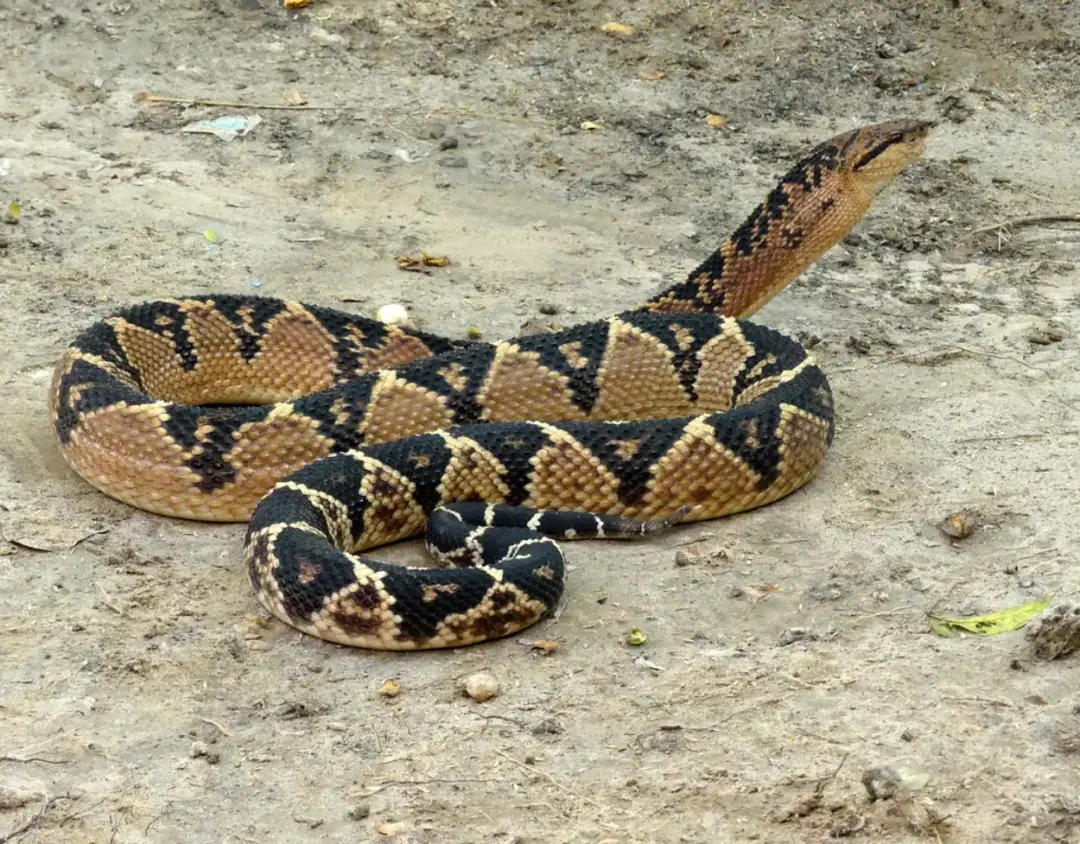
Bushmasters are among the largest venomous vipers in the Americas. They belong to the genus Lachesis and inhabit tropical forests, including parts of the Amazon basin.
Unlike many snakes that escape immediately when disturbed, bushmasters may remain motionless, relying on camouflage to avoid detection. Their coloration often blends with fallen leaves and forest vegetation.
These snakes are venomous ambush predators that feed mainly on small mammals and other suitable prey. Because of their size and venom, accidental encounters require considerable caution.
Fer-de-Lance Snakes
Fer-de-lance snakes belong to the genus Bothrops, a group of pit vipers that includes several medically important species in South America.
They typically inhabit forest floors, vegetation edges, and areas where rodents and other prey are abundant. Their camouflage makes them difficult to notice among leaves and branches.
Fer-de-lance snakes use specialized heat-sensitive pits to detect warm-blooded animals. Their venom helps immobilize prey and begins the digestive process. Encounters can be dangerous, making awareness and appropriate footwear important when walking through rainforest environments.
Coral Snakes
Coral snakes belong to the family Elapidae and are recognized by their distinctive patterns of contrasting colored bands. Several species inhabit tropical South American forests.
Unlike some larger vipers, coral snakes are generally secretive and spend much of their time hidden beneath vegetation, leaf litter, or other natural cover.
They possess potent neurotoxic venom that affects the nervous system. Although bites are relatively uncommon, they require immediate medical attention. Their colorful appearance should never be considered a reason to handle or approach them.
Other Rainforest Snake Species
The Amazon also supports numerous additional snakes, including water-associated species, slender colubrids, and other specialized rainforest reptiles. Some are adapted to hunting frogs and fish, while others feed on lizards, insects, birds, or small mammals.
This diversity demonstrates how snakes have evolved to occupy different ecological positions within the Amazon Basin.
2. Venomous Snakes in the Amazon
Venomous snakes are an important part of Amazonian biodiversity. Their venom is primarily an adaptation for capturing prey and defending themselves when necessary.
Several medically important venomous snakes inhabit Amazonian environments. These include bushmasters, fer-de-lance species, and coral snakes.
Vipers generally possess specialized venom-delivery fangs and can produce venom that damages tissues and affects blood clotting. Coral snakes, meanwhile, are associated with neurotoxic venom that can interfere with normal nerve and muscle function.
Understanding the difference between these groups is useful for anyone exploring tropical forests. However, identifying a snake based on color, head shape, or body patterns is not a reliable way to determine whether it is dangerous.
Many harmless snakes resemble venomous species, and some venomous snakes have patterns that can be difficult to recognize. Therefore, the safest approach is to avoid all unfamiliar snakes.
Snake encounters are more likely when people walk through dense vegetation, move objects without checking underneath, or disturb areas where snakes are resting. Maintaining distance and following experienced local guides can substantially reduce unnecessary risks.
3. Nonvenomous Snakes in the Amazon
Nonvenomous snakes play an essential role in maintaining the ecological balance of tropical forests. Although they do not use venom to immobilize their prey, many possess other highly developed hunting adaptations.
Anacondas and boa constrictors are among the most recognizable examples. Their powerful muscles allow them to capture prey through constriction, making them effective predators in aquatic and terrestrial environments.
Other nonvenomous snakes use speed, camouflage, climbing abilities, and specialized feeding behaviors to locate food. Some hunt frogs near wetlands, while others search for birds and small mammals among tree branches.
These animals contribute to natural population control, particularly among rodents and other small vertebrates. Without predators such as snakes, certain prey populations could increase significantly and affect the balance of rainforest ecosystems.
Nonvenomous does not mean harmless to handle. Large constrictors can inflict serious injuries, and even smaller snakes may bite when threatened. Wild snakes should always be observed without physical contact.
4. Where Do Snakes Live in the Amazon Rainforest?
One of the most interesting characteristics of Amazonian snakes is their ability to occupy different habitats. The rainforest is not a uniform environment; it contains numerous ecological zones that provide food, shelter, and suitable conditions for different species.
Snakes in Rainforest Trees
Arboreal snakes spend considerable time in branches, vines, and vegetation. Their bodies are adapted to climbing, while their coloration helps them blend into leaves and tree bark.
These environments provide access to birds, bats, lizards, and other animals that become potential prey.
Snakes Near Rivers, Lakes, and Wetlands
Aquatic and semi-aquatic environments support species such as anacondas. These snakes use the water to move efficiently, remain concealed, and approach prey.
Rivers, oxbow lakes, marshes, and flooded forest areas provide particularly important habitats for snakes that depend on aquatic environments.
Snakes on the Forest Floor
Many Amazon snakes are terrestrial and spend their time moving through leaf litter, fallen branches, and dense vegetation.
The forest floor offers shelter from predators and provides access to rodents, amphibians, and other small animals. Some venomous species also use this environment to ambush prey.
Snakes in Flooded Forests
Seasonal flooding creates temporary aquatic habitats throughout parts of the Amazon. During periods of high water, animals may move between submerged vegetation, river channels, and elevated areas.
These changing conditions influence how snakes find food and shelter. Some species are particularly adapted to wet environments, while others remain associated with drier forest areas.
5. Snakes in the Peruvian Amazon
The Peruvian Amazon is an important region for studying tropical reptile biodiversity. Its combination of lowland rainforest, wetlands, rivers, and seasonal floodplains creates suitable environments for numerous snake species.
Snake Biodiversity in Madre de Dios
Madre de Dios is known for its extensive rainforest ecosystems and exceptional wildlife diversity. Its forests contain different habitats that support snakes with terrestrial, aquatic, and arboreal lifestyles.
The region includes rivers, small streams, oxbow lakes, and dense tropical vegetation. These environments provide food and shelter for many reptiles, including constrictors, vipers, and other rainforest snakes.
Snakes in Tambopata
Tambopata is particularly interesting for wildlife observation because its protected forests contain a wide variety of natural habitats.
Visitors exploring the region may encounter reptiles along forest trails, near water bodies, or among vegetation. However, sightings are unpredictable, and many snake species remain concealed during daylight hours.
The presence of snakes in Tambopata highlights the importance of maintaining healthy rainforest habitats and protecting the ecological relationships between predators and prey.
Wildlife Around Puerto Maldonado
Puerto Maldonado serves as an important gateway to the Peruvian Amazon. The surrounding region includes forests, rivers, and wetlands where numerous reptile species live.
Exploring these environments with knowledgeable guides can help visitors understand the diversity of Amazonian wildlife, including the different adaptations that allow snakes to survive in tropical conditions.
6. What Do Amazon Snakes Eat?
The diet of Amazonian snakes varies according to species, size, habitat, and hunting behavior. As predators, they consume different animals and contribute to maintaining ecological balance.
Small mammals and rodents: Many snakes feed on mice, rats, and other small mammals. These animals are important prey for boas, vipers, and several other rainforest species.
Birds and eggs: Arboreal snakes and some terrestrial species hunt birds and occasionally consume eggs. Their climbing abilities provide access to nests and elevated vegetation.
Amphibians and reptiles: Frogs, toads, lizards, and smaller snakes are common prey for several Amazonian species. These food sources are particularly important in humid environments where amphibians are abundant.
Fish and aquatic prey: Some snakes are adapted to aquatic hunting and consume fish or other animals associated with rivers, lakes, and wetlands.
These feeding relationships demonstrate how snakes connect different levels of the rainforest food web.
7. Snake Behavior and Adaptations
Amazonian snakes possess numerous adaptations that allow them to survive in challenging tropical environments.
Camouflage and Hunting Strategies
Camouflage is one of the most effective survival adaptations among rainforest snakes. Their patterns and coloration help them disappear against leaves, branches, tree bark, and muddy ground.
Some species actively search for prey, while others use ambush strategies, remaining motionless until an appropriate animal approaches.
Nocturnal and Daytime Activity
Snake activity varies considerably between species. Some are primarily nocturnal and become active after sunset, when temperatures are more favorable and certain prey animals are moving.
Others are active during daylight hours or display different activity patterns depending on weather, temperature, and seasonal conditions.
This diversity explains why rainforest wildlife observations can vary between daytime walks and nighttime excursions.
Reproduction and Survival
Most Amazonian snakes reproduce sexually, but reproductive strategies differ between species. Some lay eggs, while others give birth to live young.
The availability of suitable shelter, food, and environmental conditions influences reproductive success. Young snakes must quickly develop the ability to avoid predators and locate food.
These adaptations help maintain snake populations throughout the changing conditions of the Amazon rainforest.
8. Are Snakes in the Amazon Dangerous to Humans?
Some snakes in the Amazon are potentially dangerous, particularly venomous vipers and coral snakes. Nevertheless, most encounters between people and wild snakes do not involve deliberate aggression.
Snakes generally prefer avoiding larger animals, including humans. Bites commonly occur when a snake is accidentally stepped on, touched, cornered, or disturbed.
When exploring rainforest trails, visitors should wear closed footwear, use a flashlight in low-light conditions, avoid putting their hands into holes or dense vegetation, and remain on established paths.
If a snake is encountered, maintain a safe distance and allow it to move away naturally. Never attempt to capture, kill, photograph at close range, or handle a wild snake.
What to Do After a Snakebite
A suspected venomous snakebite is a medical emergency, even when symptoms initially appear mild.
The person should be moved away from the snake and transported to an appropriate medical facility as quickly and safely as possible. Keep the affected person calm, minimize movement, and immobilize the bitten limb in a comfortable position.
Remove rings, watches, or tight clothing near the affected area before swelling develops. Do not cut the wound, attempt to suck out venom, apply ice, use electric shocks, or apply a tourniquet.
Do not attempt to catch or kill the snake. If it can be photographed safely from a distance, the image may help medical professionals, but treatment should never be delayed to identify the animal.
Medical professionals must evaluate the bite and determine whether antivenom or other treatment is necessary.
9. Why Are Snakes Important to the Amazon Ecosystem?
Snakes are essential components of rainforest biodiversity. Although they sometimes have a negative reputation, their ecological functions are extremely valuable.
One of their most important contributions is controlling populations of rodents and other small animals. By consuming these species, snakes help maintain natural population levels and influence the distribution of prey throughout the forest.
They are also an important food source for other predators, including large birds of prey, mammals, and larger reptiles. This makes them an integral part of the Amazon rainforest food chain.
Snakes also contribute to ecological balance by connecting different habitats and feeding groups. Their presence provides valuable information about the health and diversity of natural environments.
Snake Conservation and Habitat Protection
Deforestation, habitat fragmentation, agricultural expansion, pollution, and direct persecution threaten many rainforest animals, including snakes.
Protecting Amazonian forests is therefore essential for maintaining healthy reptile populations. Conservation efforts should focus on preserving natural habitats, reducing unnecessary wildlife disturbance, and educating communities and visitors about the ecological importance of snakes.
Responsible tourism can support these goals by encouraging wildlife observation without capturing, feeding, or disturbing animals.
10. Frequently Asked Questions About Snakes in the Amazon
What is the largest snake in the Amazon?
The green anaconda is generally considered the largest snake in the Amazon by body mass and overall girth. It inhabits rivers, swamps, marshes, and flooded forests. Although exceptionally large individuals have been reported, reliable measurements are important when evaluating claims about their size.
Are all snakes in the Amazon venomous?
No. Many Amazonian snakes are nonvenomous. Anacondas and boa constrictors, for example, capture their prey through constriction rather than venom. However, several venomous species also inhabit the rainforest, so unfamiliar snakes should never be handled.
Are anacondas dangerous to humans?
Anacondas are powerful nonvenomous constrictors capable of injuring people. However, they generally avoid human contact and do not typically consider humans prey. Maintaining distance and never attempting to approach or handle them is essential.
Where are snakes commonly found in the Amazon?
Snakes inhabit different rainforest environments, including trees, forest floors, riverbanks, swamps, wetlands, and flooded forests. Their distribution depends on species-specific habitat requirements, food availability, and environmental conditions.
Are there snakes in the Peruvian Amazon?
Yes. The Peruvian Amazon supports a diverse variety of snakes, including anacondas, boas, vipers, coral snakes, and numerous other rainforest species. Regions such as Madre de Dios and Tambopata contain habitats suitable for many different reptiles.
Can tourists see snakes during Amazon rainforest tours?
Yes, although sightings are never guaranteed. Some visitors encounter snakes during guided forest walks, nighttime wildlife observations, or excursions near wetlands and rivers. Experienced guides can help identify animals while maintaining appropriate safety distances.
What should you do if you see a snake in the jungle?
Stop, maintain your distance, avoid sudden attempts to approach it, and allow the snake to move away. Never touch, provoke, or attempt to capture it. Follow your guide’s instructions and remain on established trails.
Conclusion: Understanding the Snakes of the Amazon Rainforest
The snakes in the Amazon represent an extraordinary part of the rainforest’s biodiversity. From enormous green anacondas and powerful boa constrictors to colorful tree boas, bushmasters, and coral snakes, these reptiles demonstrate the remarkable adaptations that allow wildlife to thrive in tropical environments.
Their presence across trees, rivers, wetlands, and forest floors highlights the ecological complexity of the Amazon Basin. Beyond their fascinating appearance and hunting abilities, snakes perform essential functions by controlling prey populations and supporting natural food chains.
For travelers exploring the Peruvian Amazon, learning about these animals provides a deeper appreciation of the rainforest and its wildlife. Whether visiting Madre de Dios, Tambopata, or the forests surrounding Puerto Maldonado, responsible observation and respect for natural habitats are essential.
Protecting snakes means protecting the broader rainforest ecosystem. By understanding their behavior, avoiding unnecessary encounters, and supporting wildlife conservation, visitors can help preserve the incredible biodiversity that makes the Amazon one of the most remarkable natural environments on Earth.