
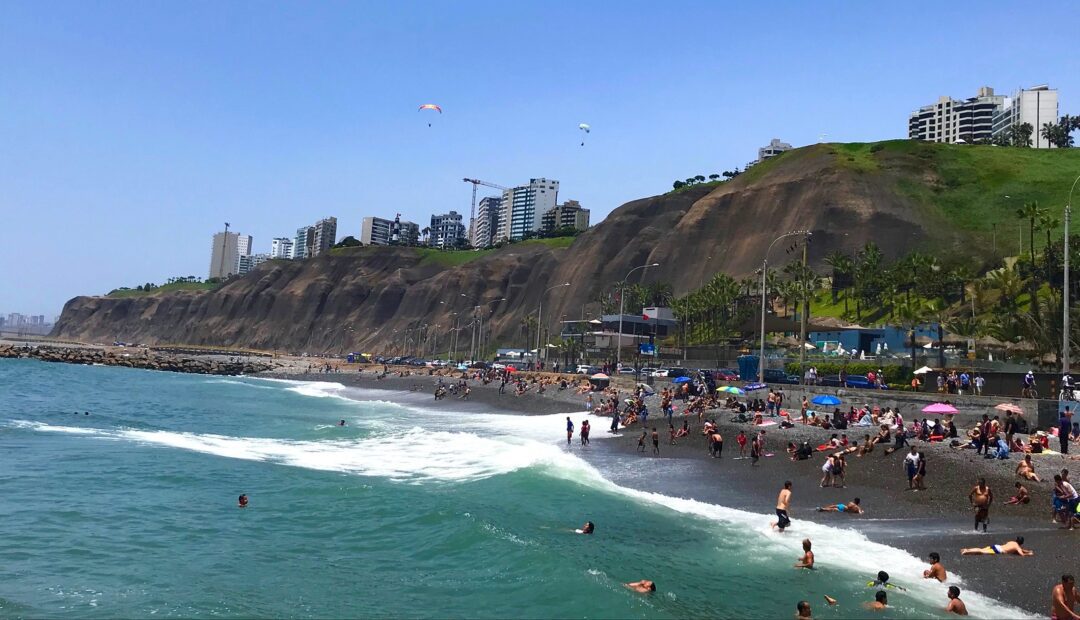
Lima, the capital of Peru, is a fascinating destination where ancient civilizations, Spanish colonial heritage, modern urban development, and vibrant cultural traditions come together. Located along the Pacific coast of western South America, Lima is the country’s largest city and its principal political, economic, commercial, and cultural center. Known as the City of Kings, it has played an important role in shaping Peru’s history and continues to influence the country’s development.
An overview of Lima reveals a city of remarkable contrasts. Historic colonial buildings stand alongside contemporary skyscrapers, traditional markets coexist with modern shopping districts, and ancient archaeological complexes are surrounded by expanding urban neighborhoods. Beyond its historical importance, Lima is internationally recognized for its diverse gastronomy, museums, artistic communities, and coastal scenery.
The city also serves as an important gateway for travelers exploring Peru. Many international visitors arrive in Lima before continuing their journeys toward the Andes, the Sacred Valley, Machu Picchu, the southern desert, or the Amazon rainforest. Its transportation connections, accommodation options, and cultural attractions make it an essential destination for understanding the country.
Table of Contents
Whether you are interested in Peruvian history, architecture, traditional cuisine, geography, or modern urban life, Lima offers countless opportunities to discover the country’s identity. Understanding its location, climate, population, economy, and cultural heritage provides a deeper appreciation of why Lima remains one of the most significant cities in South America.
1. Where Is Lima Located in Peru?
Lima is situated on the central western coast of Peru, overlooking the Pacific Ocean. It occupies a strategic geographical position between the coastal desert and the foothills of the Andes Mountains. Its location has contributed to its historical importance as a center for administration, trade, transportation, and international connections.
The city developed around several river valleys that cross the coastal desert before reaching the Pacific Ocean. The Rímac River is particularly important because its valley supported settlements long before the Spanish established the colonial capital.
Lima is surrounded by a landscape characterized by dry coastal plains, desert hills, river valleys, and oceanfront cliffs. Although the city receives very little rainfall, its proximity to the Pacific Ocean creates distinctive atmospheric conditions, including high humidity, winter fog, and occasional drizzle.
Lima’s Geographic Location on the Pacific Coast
Lima’s coastal location has influenced its history, economy, and lifestyle. The Pacific Ocean provides opportunities for fishing, maritime commerce, recreational activities, and tourism. Coastal districts feature promenades, parks, beaches, and scenic viewpoints overlooking the ocean.
The Costa Verde is one of the city’s most recognizable coastal areas. This stretch of coastline features cliffs, beaches, recreational spaces, and roads connecting several important districts.
The ocean also contributes to the city’s climate. Cold ocean currents influence atmospheric temperatures and help create the cloudy conditions frequently experienced during the winter months.
The Rímac River Valley and Surrounding Landscape
The Rímac River is one of the most important geographical features of Lima. Its valley provided water and fertile land for agricultural communities that occupied the region before the arrival of the Spanish.
Historically, river valleys supported irrigation systems, agricultural production, and settlements throughout the coastal desert. Today, the river remains an important component of the metropolitan environment and water supply system.
Other important river valleys include the Chillón and Lurín valleys. Together, these geographical areas have influenced the development of settlements, agricultural activities, and urban expansion.
Lima Metropolitan Area and Administrative Boundaries
Metropolitan Lima includes numerous districts with different characteristics, economic activities, and population densities. These districts form a large urban environment extending beyond the original colonial settlement.
The metropolitan region includes historic neighborhoods, financial districts, residential communities, industrial areas, commercial centers, and coastal developments.
Nearby Callao is an important constitutional province and port area closely connected to Lima’s metropolitan economy. Its seaport and international airport infrastructure contribute significantly to transportation and commercial activities.
2. History of Lima: From Ancient Civilizations to Modern Capital
The history of Lima began long before its establishment as a Spanish colonial city. The region was home to ancient communities that developed sophisticated agricultural systems, ceremonial centers, and settlements supported by coastal river valleys.
These early civilizations contributed to the cultural foundations of the region. Their archaeological remains demonstrate that the central Peruvian coast was an important area of human settlement and cultural development.
Pre-Columbian Civilizations and Early Settlements
Before the Spanish conquest, the Lima region was occupied by several indigenous societies. These communities developed agricultural practices adapted to the dry coastal environment.
The Ichma culture was particularly important in the central coastal region. Its people established settlements, ceremonial structures, and agricultural systems supported by river valleys.
One of the most significant archaeological characteristics of ancient Lima is the presence of large adobe structures known as huacas. These monumental complexes served religious, administrative, and ceremonial purposes.
Archaeological remains throughout the metropolitan area demonstrate the importance of the region before European colonization.
The Ichma Culture and Ancient Lima
The Ichma culture developed in the valleys surrounding present-day Lima, particularly the Rímac and Lurín regions. Its settlements reflected an organized society with agricultural production, religious practices, and regional exchange networks.
The ancient ceremonial center of Pachacamac, located south of modern Lima, became one of the most important religious destinations on the central coast.
Its influence extended across different periods of Andean history, making it an essential archaeological site for understanding pre-Columbian societies.
Archaeological Sites and Pre-Inca Heritage
Lima contains numerous archaeological sites that reveal its ancient past. These include ceremonial pyramids, adobe platforms, residential structures, and historical settlements.
Huaca Pucllana is one of the most recognizable archaeological complexes within the modern city. Its monumental architecture demonstrates the sophisticated construction techniques used by ancient coastal societies.
These archaeological sites provide valuable information about religious beliefs, agricultural practices, social organization, and the development of early urban settlements.
Spanish Foundation of Lima in 1535
Lima was founded by Spanish conquistador Francisco Pizarro on January 18, 1535. Its original name was Ciudad de los Reyes, meaning City of Kings.
The Spanish selected the location because of its strategic position, access to the Pacific coast, and proximity to the Rímac River. These characteristics made it suitable for establishing an administrative and commercial center.
Following its foundation, Lima gradually developed into the principal Spanish settlement in South America.
Lima During the Spanish Colonial Period
During the colonial period, Lima became the capital of the Viceroyalty of Peru and an important center of Spanish political and religious authority.
Its importance extended across much of South America. Government institutions, churches, monasteries, educational establishments, and commercial organizations contributed to its development.
The colonial city became known for its impressive architecture, large public squares, religious buildings, and traditional residential houses.
Spanish colonial influences transformed the urban landscape, while indigenous, African, and other cultural traditions continued contributing to the city’s identity.
Lima and Peruvian Independence in 1821
Peru declared its independence on July 28, 1821, under the leadership of José de San Martín.
The independence movement transformed Lima’s political and administrative position. The city became the capital of the newly independent Republic of Peru.
During the nineteenth century, Lima experienced political changes, economic transformations, and infrastructure development.
The introduction of new transportation systems, commercial institutions, and public services contributed to its gradual modernization.
Lima’s Transformation Into a Modern Metropolitan City
During the twentieth century, Lima experienced substantial population growth and geographical expansion.
Migration from different regions of Peru contributed to the development of new residential neighborhoods and commercial areas. People moved to the capital seeking employment, education, healthcare, and improved economic opportunities.
This demographic transformation created a culturally diverse metropolitan environment.
Today, Lima combines historical neighborhoods with modern business districts, residential developments, transportation infrastructure, and expanding commercial areas.
3. Geography and Natural Environment of Lima
Lima’s geography is characterized by a coastal desert environment influenced by the Pacific Ocean and the Andes Mountains.
Unlike many other major cities in tropical South America, Lima experiences extremely limited rainfall despite its relatively high atmospheric humidity.
Its geographical characteristics have influenced settlement patterns, water availability, agricultural practices, and urban development.
The Coastal Desert Landscape
Lima is located within the Peruvian coastal desert, one of the driest environments in South America.
The surrounding landscape includes sandy plains, rocky hills, desert vegetation, and river valleys. These conditions have historically encouraged communities to develop irrigation systems to support agriculture.
The desert environment also contributes to the city’s distinctive appearance, especially in areas where urban development meets natural hills and coastal terrain.
Rivers, Valleys, and Surrounding Ecosystems
The Rímac, Chillón, and Lurín river valleys are essential geographical features of metropolitan Lima.
These valleys provide water resources and support agricultural activities in surrounding areas. Historically, they also facilitated the development of ancient settlements.
The river ecosystems are important for regional biodiversity, although urban expansion and pollution have created environmental challenges.
Lima’s Pacific Ocean Coastline
The Pacific coastline is one of Lima’s most attractive geographical features.
Coastal districts provide access to oceanfront promenades, beaches, recreational facilities, and scenic viewpoints.
The coastline also supports fishing activities and contributes to the region’s culinary traditions.
Costa Verde and Its Coastal Cliffs
Costa Verde is a well-known coastal area featuring steep cliffs, beaches, recreational spaces, and ocean views.
It connects several districts and provides opportunities for walking, cycling, surfing, and enjoying the coastal environment.
The area is particularly popular among residents and visitors interested in outdoor activities.
Beaches and Marine Ecosystems
Lima’s beaches provide opportunities for surfing, swimming in designated areas, and other recreational activities.
The Pacific Ocean supports marine ecosystems that include fish, seabirds, and other coastal wildlife.
Fishing has historically played an important role in the local economy and continues to influence traditional Peruvian cuisine.
Environmental Challenges and Urban Sustainability
Rapid urbanization has created environmental challenges throughout metropolitan Lima.
Air pollution, traffic congestion, waste management, water scarcity, and pressure on natural ecosystems are among the city’s most important concerns.
Because Lima receives little rainfall, water management is particularly important.
Sustainable urban planning, improved public transportation, efficient water use, and protection of coastal environments are essential for the city’s long-term development.
4. Climate and Weather in Lima
Lima has a mild desert climate influenced by the cold waters of the Pacific Ocean.
Although the city is located in a tropical latitude, its weather is considerably cooler and more humid than many other coastal destinations in the region.
The climate is characterized by warm summers, cool winters, limited rainfall, and frequent atmospheric cloud cover.
Understanding Lima’s Desert Climate
Lima’s geographical location creates a distinctive climate in which high humidity occurs alongside very little precipitation.
The cold Humboldt Current influences coastal temperatures and contributes to the formation of low clouds and atmospheric moisture.
These conditions make Lima different from other desert environments, where dry air and extreme daytime temperatures are more common.
Summer and Winter Weather Patterns
Lima generally experiences two main seasonal periods: summer and winter.
Summer usually extends from December through April, bringing warmer temperatures and more sunshine.
Winter generally occurs from May through November, with cooler conditions, cloudy skies, and higher humidity.
Temperature and Sunshine During Summer
During summer, temperatures commonly range from approximately 24°C to 30°C, although conditions vary.
The coastal districts become particularly attractive during this period because of the clearer skies and warmer oceanfront environment.
Residents and visitors often enjoy outdoor activities, beaches, coastal walks, and recreational spaces.
Winter Humidity, Fog, and Garúa
Winter in Lima is characterized by cloudy skies, cool temperatures, and persistent atmospheric moisture.
Garúa is the local term used for a very light drizzle or fine mist that frequently occurs during this period.
Although rainfall is generally limited, the high humidity can make the air feel colder than expected.
Best Time to Visit Lima
The period from December through April is generally considered favorable for visitors who prefer warmer weather and clearer skies.
May through November can also be an interesting time to explore the city, especially for travelers interested in museums, historical attractions, gastronomy, and cultural experiences.
The ideal travel period depends on personal preferences and planned activities.
5. Population and Metropolitan Development
Lima is Peru’s largest population center and one of the most important metropolitan areas in South America.
Its population has increased significantly over the past decades due to natural demographic growth and migration from different regions of the country.
The metropolitan area includes residential neighborhoods, commercial districts, industrial zones, and rapidly expanding urban communities.
Population of Lima and Its Metropolitan Area
Metropolitan Lima has a population of approximately 10 million residents, depending on the statistical year and geographical definition used.
Its demographic importance makes it the largest concentration of people in Peru.
The population includes individuals and families from the coast, Andes, and Amazon regions, contributing to the city’s cultural diversity.
Demographics and Cultural Diversity
Lima’s population reflects the diversity of Peruvian society.
Residents have different regional backgrounds, cultural traditions, languages, and family histories.
Spanish is the primary language used in everyday communication, although Quechua, Aymara, and other languages are also spoken by communities originating from different parts of Peru.
This cultural diversity influences food, music, festivals, artistic expression, and daily urban life.
Urban Growth and Migration Patterns
Migration has been an important factor in Lima’s metropolitan development.
During the twentieth century, many families moved from rural areas and smaller cities to the capital in search of employment, education, and better access to public services.
These movements contributed to the expansion of residential settlements and the development of new commercial centers.
Today, Lima continues to experience urban growth, creating opportunities and challenges related to housing, transportation, infrastructure, and public services.
Modern Infrastructure and City Expansion
Lima has developed an extensive urban infrastructure network that includes roads, hospitals, universities, commercial centers, public transportation systems, and industrial facilities.
The expansion of residential and commercial districts has transformed the city’s geographical structure.
However, differences in infrastructure quality and access to public services remain important urban planning concerns.
6. Culture, Traditions, and Lifestyle in Lima
Lima is one of the most culturally diverse cities in Peru.
Its identity reflects centuries of indigenous traditions, Spanish colonial influences, African heritage, Asian migration, and contemporary international connections.
This combination creates a distinctive cultural environment visible in its architecture, cuisine, festivals, music, and everyday lifestyle.
Peruvian Cultural Heritage in Lima
Lima plays an important role in preserving and promoting Peruvian cultural heritage.
Its historic buildings, museums, archaeological sites, and cultural institutions provide opportunities to explore different periods of the country’s history.
Traditional celebrations and religious festivals remain important elements of community life.
Indigenous, Spanish, African, and Asian Influences
The cultural identity of Lima has developed through the interaction of different communities.
Indigenous traditions contributed agricultural knowledge, traditional ingredients, and cultural practices.
Spanish colonization introduced new architectural styles, religious institutions, and social structures.
African heritage influenced music, dance, and gastronomy, while Chinese and Japanese migration contributed significantly to the city’s culinary diversity.
These cultural influences continue to shape modern Lima.
Traditional Festivals and Celebrations
Religious and cultural celebrations are important aspects of life in Lima.
The procession of the Lord of Miracles is one of the city’s most significant religious events. It attracts large numbers of participants and reflects the historical importance of Catholic traditions.
Other celebrations include national holidays, traditional dances, music festivals, and cultural events.
Art, Music, and Contemporary Cultural Life
Lima has a vibrant artistic environment that includes galleries, theaters, cultural centers, museums, and independent creative communities.
Barranco is particularly recognized for its artistic atmosphere and cultural activities.
Music styles such as Afro-Peruvian rhythms, criollo music, and contemporary Latin American genres contribute to the city’s cultural identity.
Everyday Lifestyle in Lima
Daily life in Lima combines traditional customs with modern urban activities.
Residents participate in commercial activities, family gatherings, cultural celebrations, outdoor recreation, and social events.
The city’s diverse neighborhoods offer different lifestyles, ranging from busy commercial centers to quieter residential areas and coastal communities.
7. Economy and Importance of Lima to Peru
Lima is the principal economic center of Peru and plays a major role in national commerce, financial services, manufacturing, transportation, and tourism.
Its concentration of government institutions, corporate offices, universities, and commercial organizations makes it central to the country’s economic development.
Lima as Peru’s Financial and Business Center
Many of Peru’s major financial institutions and businesses operate in Lima.
The San Isidro district is particularly important because it contains corporate offices, financial institutions, and professional services.
Other commercial areas contribute to retail activities, business operations, and international investment.
Trade, Commerce, and Industrial Activities
Lima supports a wide range of commercial and industrial activities.
Important sectors include retail, manufacturing, construction, food processing, transportation, telecommunications, and professional services.
Its large consumer market also makes the metropolitan region an important destination for national and international businesses.
Tourism and the Hospitality Industry
Tourism contributes to Lima’s economy through accommodation, restaurants, transportation, cultural attractions, and recreational activities.
The city attracts international visitors interested in Peruvian history, gastronomy, architecture, and cultural experiences.
Its position as a major international arrival point also supports tourism throughout the country.
International Trade and Port Connectivity
The nearby port of Callao is one of Peru’s most important maritime trade centers.
It supports the movement of imported and exported goods and provides important connections with international markets.
The port’s proximity to Lima contributes to the metropolitan area’s commercial and logistical importance.
Employment and Economic Development
Lima offers employment opportunities across different economic sectors.
These include financial services, education, healthcare, manufacturing, hospitality, technology, and public administration.
However, informal employment, economic inequality, and unequal access to opportunities remain significant challenges.
8. Main Districts and Neighborhoods of Lima
Lima is divided into numerous districts, each with its own historical background, architecture, economic activities, and lifestyle.
Some neighborhoods are particularly popular among visitors because of their attractions, accommodation options, restaurants, and cultural environments.
Miraflores: Coastal Views and Tourist Attractions
Miraflores is one of Lima’s most recognized districts.
Located along the Pacific coastline, it features oceanfront parks, shopping areas, restaurants, hotels, and recreational spaces.
Its scenic coastal environment makes it popular for walking, cycling, paragliding, and enjoying ocean views.
The district also provides convenient access to several important tourist attractions.
Barranco: Art, Culture, and Bohemian Lifestyle
Barranco is known for its artistic atmosphere, colorful streets, historic houses, and cultural activities.
The neighborhood contains galleries, independent shops, traditional restaurants, and entertainment venues.
Its architecture reflects historical influences, while its creative communities contribute to its contemporary identity.
The district is particularly attractive to visitors interested in art, photography, music, and local culture.
San Isidro: Business and Financial District
San Isidro is an important commercial and financial district.
It contains corporate offices, embassies, luxury hotels, residential areas, and green spaces.
The neighborhood is also known for El Olivar Park, a historic green area featuring olive trees and walking paths.
Historic Centre of Lima: Colonial Architecture and Heritage
The Historic Centre of Lima preserves much of the city’s Spanish colonial heritage.
Its main attractions include Plaza Mayor, historic churches, government buildings, and traditional colonial architecture.
The area provides valuable insight into Lima’s development during the colonial period.
Its architectural and historical importance makes it one of the city’s most significant cultural destinations.
Other Important Districts of Metropolitan Lima
Other districts contribute to the diversity and economic importance of metropolitan Lima.
These include:
- Surco, known for residential areas and commercial centers.
- San Borja, recognized for green spaces and residential development.
- La Molina, featuring residential communities and educational institutions.
- Pueblo Libre, associated with historical attractions and museums.
- Callao, important for maritime transportation and commercial activities.
Each district contributes to the metropolitan region’s social and economic structure.
9. Tourism and Famous Attractions in Lima
Lima offers an extensive range of historical, cultural, archaeological, and recreational attractions.
Visitors can explore colonial architecture, ancient ceremonial centers, museums, coastal parks, and traditional neighborhoods.
The city also provides opportunities to experience Peruvian gastronomy and learn about the country’s cultural heritage.
Plaza Mayor and the Historic Centre
Plaza Mayor is one of the most important historical spaces in Lima.
It is surrounded by significant colonial and republican buildings, including the Government Palace, Cathedral of Lima, and Municipal Palace.
The square played an important role in the foundation and development of the colonial city.
Today, it remains a central location for cultural activities and historical tourism.
Larco Museum and Pre-Columbian Collections
Lima has several important museums dedicated to the history and archaeology of ancient Peru.
The Larco Museum is particularly recognized for its collections of pre-Columbian ceramics, textiles, metalwork, and archaeological objects.
These collections help visitors understand the artistic traditions and social organization of ancient Andean civilizations.
Huaca Pucllana Archaeological Complex
Huaca Pucllana is an important archaeological complex located in the Miraflores district.
Its monumental adobe pyramid demonstrates the architectural abilities of ancient coastal civilizations.
The site provides information about ceremonial activities, religious traditions, and settlement patterns that existed before the Spanish conquest.
Parque del Amor and Miraflores Malecón
The Parque del Amor is a popular coastal attraction featuring artistic decorations, landscaped areas, and impressive ocean views.
The surrounding Malecón offers walking paths, gardens, and recreational spaces overlooking the Pacific Ocean.
These areas are particularly attractive during sunny afternoons and summer evenings.
Barranco’s Cultural and Artistic Attractions
Barranco provides a different perspective on Lima through its artistic communities, traditional architecture, and cultural atmosphere.
Visitors can explore historic streets, galleries, independent shops, and public spaces.
The neighborhood is especially popular among travelers interested in photography, art, and contemporary Peruvian culture.
Museums, Churches, and Historical Landmarks
Lima contains numerous museums, churches, monasteries, and historic buildings.
These attractions provide insight into colonial architecture, religious traditions, archaeology, and the development of modern Peruvian society.
Exploring different cultural institutions is an excellent way to understand the city’s historical significance.
Day Trips and Experiences Around Lima
Visitors with additional time can explore destinations around metropolitan Lima.
Coastal areas, archaeological complexes, nearby beaches, and traditional settlements provide opportunities to discover the wider region.
These excursions offer a different perspective on the geography and cultural history of central coastal Peru.
10. Food and Gastronomy: Why Lima Is Famous for Its Cuisine
Lima is widely recognized as one of the world’s important gastronomic destinations.
Its culinary identity reflects indigenous ingredients, Spanish cooking traditions, African influences, and Chinese and Japanese contributions.
The city’s location along the Pacific coast also provides access to a wide variety of seafood.
Traditional Peruvian Dishes
Lima offers an impressive selection of traditional dishes that reflect the country’s regional diversity.
Some of the most recognizable include ceviche, lomo saltado, causa limeña, anticuchos, and ají de gallina.
These dishes combine local ingredients with cooking techniques developed through centuries of cultural exchange.
Ceviche and Coastal Seafood
Ceviche is one of Peru’s most famous traditional dishes.
It is typically prepared using fresh fish marinated in lime juice and combined with onions, chili peppers, and other ingredients.
Its connection to the Pacific coast makes it an important part of Lima’s culinary identity.
Lomo Saltado and Other Traditional Meals
Lomo saltado is another well-known Peruvian dish.
It combines beef, onions, tomatoes, and seasonings, usually served with rice and French fries.
Its preparation reflects Chinese culinary influences within Peruvian cuisine.
Other traditional dishes include causa limeña, anticuchos, and papa a la huancaína.
Lima’s Culinary Heritage and International Influences
Lima’s gastronomy reflects centuries of interaction between different cultures.
Indigenous ingredients such as potatoes, corn, chili peppers, and native fruits remain essential to traditional cooking.
Spanish, African, Chinese, and Japanese influences have also contributed to the development of distinctive culinary styles.
This cultural combination has helped establish Lima as an important international food destination.
Food Markets and Local Restaurants
Traditional food markets provide opportunities to discover fresh ingredients, regional products, and everyday Peruvian cooking.
Restaurants throughout Lima offer everything from traditional family recipes to contemporary culinary experiences.
Exploring local food establishments is one of the best ways to understand the city’s cultural diversity.
Lima as an International Gastronomic Destination
Lima has developed an international reputation for culinary innovation and traditional cuisine.
Its restaurants, chefs, food markets, and gastronomic institutions attract visitors interested in discovering Peruvian flavors.
The city’s culinary scene also contributes significantly to tourism, employment, and cultural promotion.
11. Transportation and Urban Infrastructure
Lima has an extensive transportation network connecting residential districts, commercial areas, tourist attractions, and surrounding regions.
Its infrastructure includes an international airport, highways, public transportation systems, and maritime facilities.
Understanding the transportation network helps visitors move around the metropolitan area more efficiently.
Jorge Chávez International Airport
Jorge Chávez International Airport is Peru’s principal international aviation gateway.
It connects Lima with destinations across South America, North America, Europe, and other international regions.
Many travelers begin their Peruvian journeys in Lima before continuing toward destinations such as Cusco, Arequipa, Ica, and the Amazon.
Public Transportation in Lima
Public transportation plays an important role in the daily lives of Lima’s residents.
The metropolitan region uses buses, urban rail services, taxis, and other transportation options.
However, traffic congestion can affect journey times, especially during peak commuting periods.
Metropolitano Bus System
The Metropolitano is a bus rapid transit system that connects several important parts of the metropolitan area.
It uses dedicated bus lanes along major routes to improve transportation efficiency.
Lima Metro and Urban Rail
Lima’s urban rail network provides transportation connections between different districts.
The expansion of the metro system is an important part of the city’s long-term transportation development strategy.
Taxis, Ride-Hailing Services, and Private Transport
Taxis and ride-hailing services are widely used throughout Lima.
They provide convenient transportation options for visitors traveling between hotels, restaurants, airports, and tourist attractions.
Travelers should use reliable transportation providers and confirm fares or booking details before beginning a journey.
Road Connectivity and Traffic Conditions
Lima’s road network connects its major commercial, residential, and industrial districts.
However, congestion is a common challenge due to the city’s large population and high number of vehicles.
Planning journeys outside peak traffic periods can help reduce travel times.
Getting Around Lima as a Visitor
Visitors can explore many central attractions through a combination of walking, public transportation, and taxis.
Miraflores and Barranco are particularly suitable for walking between several attractions.
For longer journeys, travelers should consider traffic conditions and the distance between districts.
12. Practical Travel Information: What Visitors Should Know
Understanding practical information before visiting Lima can make a trip more comfortable and enjoyable.
Travelers should consider language, currency, accommodation, transportation, safety, and local customs.
Languages Spoken in Lima
Spanish is the principal language spoken in Lima.
English is understood in some hotels, restaurants, and tourist-oriented businesses, although visitors may find it useful to learn basic Spanish expressions.
Quechua, Aymara, and other indigenous languages are also spoken by residents from different regions of Peru.
Currency and Everyday Expenses
The official currency of Peru is the Peruvian sol.
Travelers can find ATMs, currency exchange services, and card payment facilities throughout major commercial and tourist districts.
Everyday expenses vary depending on accommodation, restaurants, transportation, and planned activities.
Safety and Common Travel Precautions
Like other large metropolitan cities, Lima requires visitors to remain aware of their surroundings.
Travelers should protect personal belongings, avoid displaying expensive valuables unnecessarily, and use reliable transportation.
It is also advisable to research accommodation locations and follow local guidance when exploring unfamiliar neighborhoods.
Accommodation and Tourist Areas
Lima offers accommodation options for different budgets and travel preferences.
Miraflores is particularly popular among international visitors because of its restaurants, hotels, coastal attractions, and transportation connections.
Barranco offers a cultural atmosphere, while San Isidro provides access to business facilities and quieter residential surroundings.
The Historic Centre is an option for travelers interested in colonial architecture and historical attractions.
Cultural Etiquette and Local Customs
Respecting local traditions is important when visiting Lima.
Travelers should be polite when interacting with residents, dress appropriately when entering religious buildings, and ask permission before photographing individuals.
Understanding local dining customs and cultural practices can also improve interactions with communities.
Essential Travel Tips for First-Time Visitors
First-time visitors can benefit from several practical recommendations:
- Carry a small amount of local currency for everyday purchases.
- Keep important travel documents secure.
- Plan transportation journeys according to traffic conditions.
- Learn basic Spanish phrases.
- Bring comfortable walking shoes for exploring historic districts.
- Carry a light jacket during the cooler winter months.
- Allow enough time to explore the city’s museums and archaeological attractions.
- Try traditional Peruvian dishes and local culinary specialties.
13. Interesting Facts About Lima, Peru
Lima has many fascinating characteristics that make it different from other South American capitals.
Its historical importance, coastal geography, cultural diversity, and gastronomic reputation contribute to its international recognition.
Lima’s Historical Nickname: City of Kings
Lima was originally founded as Ciudad de los Reyes, meaning City of Kings.
The name reflects its establishment during the Spanish colonial period and its early importance as an administrative center.
Its Unique Coastal Desert Climate
Although Lima is located in a tropical region, it receives very little rainfall.
Its climate is influenced by the cold Pacific Ocean current, which contributes to high humidity, cloudy winters, and mild temperatures.
Lima’s Archaeological Heritage
Ancient archaeological structures are found throughout metropolitan Lima.
These sites demonstrate that the region supported organized societies, religious centers, and agricultural communities long before Spanish colonization.
Its International Gastronomic Reputation
Lima is recognized internationally for its diverse culinary traditions.
Its food culture combines indigenous ingredients, coastal seafood, and influences from several immigrant communities.
Lima’s Role in South American History
During the Spanish colonial period, Lima became one of the most important political and administrative centers in South America.
Its influence extended beyond modern Peruvian borders and shaped regional political and commercial relationships.
14. Frequently Asked Questions About Lima, Capital of Peru
1. Where is Lima located in Peru?
Lima is located on the central western coast of Peru, overlooking the Pacific Ocean. It lies within a coastal desert region and is surrounded by river valleys, including the Rímac, Chillón, and Lurín valleys.
2. Why is Lima the capital of Peru?
Lima became the capital during Spanish colonial rule after its foundation in 1535. Its strategic coastal position and administrative importance helped establish it as the principal political center. It retained this position after Peru declared independence in 1821.
3. What is Lima famous for?
Lima is famous for its colonial architecture, archaeological heritage, museums, coastal scenery, vibrant neighborhoods, and internationally recognized Peruvian cuisine. It is also an important political, financial, and cultural center.
4. What is the population of Lima?
Metropolitan Lima has approximately 10 million inhabitants, depending on the statistical year and geographical definition. It is Peru’s largest urban area and contains a significant proportion of the country’s population.
5. What language is spoken in Lima?
Spanish is the main language spoken in Lima. However, Quechua, Aymara, and other indigenous languages are also spoken by communities originating from different regions of Peru.
6. What is the climate like in Lima?
Lima has a mild desert climate with warm summers and cool, humid winters. Summer generally occurs from December through April, while winter extends from May through November. The city receives very little rainfall but frequently experiences cloudy skies and coastal fog.
7. Is Lima worth visiting?
Yes. Lima is worth visiting because it offers a combination of historical attractions, archaeological sites, museums, traditional neighborhoods, coastal scenery, and exceptional culinary experiences. It is also an excellent introduction to Peruvian history and culture.
8. What are the best neighborhoods in Lima?
Miraflores, Barranco, and San Isidro are among the most popular neighborhoods for visitors. Miraflores offers coastal attractions and accommodation, Barranco is known for art and culture, and San Isidro is recognized for its business district and green spaces.
9. What food is Lima famous for?
Lima is famous for ceviche, lomo saltado, causa limeña, anticuchos, and ají de gallina. Its cuisine reflects indigenous, Spanish, African, Chinese, and Japanese influences.
10. How many days should you spend in Lima?
Two to three days are generally sufficient to explore the city’s main attractions, historic center, museums, coastal districts, and culinary experiences. Visitors interested in exploring additional neighborhoods and archaeological sites may benefit from staying longer.
11. Is Lima a good starting point for exploring Peru?
Yes. Lima is Peru’s main international gateway and an important transportation hub. Travelers can continue from the capital toward Cusco, Machu Picchu, Arequipa, the Nazca Lines, Ica, and destinations in the Peruvian Amazon.
12. What is the best time of year to visit Lima?
December through April is generally the best period for visitors who prefer warmer temperatures and clearer skies. May through November is cooler and more humid, with frequent cloud cover and occasional coastal drizzle.
15. Understanding Lima, Peru’s Vibrant Capital
An overview of Lima, the capital of Peru, reveals a city shaped by ancient civilizations, Spanish colonial history, cultural diversity, and modern urban development. Its geographical location along the Pacific coast has influenced its economy, settlement patterns, transportation systems, and relationship with the rest of the country.
From its pre-Columbian archaeological sites to its historic colonial center, Lima preserves important elements of Peru’s cultural heritage. Its neighborhoods offer contrasting experiences, including the coastal attractions of Miraflores, the artistic atmosphere of Barranco, the financial district of San Isidro, and the architectural treasures of the Historic Centre.
Beyond its historical and cultural significance, Lima is a major economic center and an important gateway for international travelers. Its gastronomy, museums, transportation connections, and diverse urban environment make it an essential destination for anyone interested in understanding Peru.
For travelers planning to explore the country, spending time in Lima provides a valuable introduction to Peruvian society before discovering the Andes, ancient archaeological destinations, desert landscapes, and Amazon rainforest.
Ultimately, Lima is much more than Peru’s administrative capital. It is a city where history, geography, culture, and contemporary life combine to create one of the most distinctive urban destinations in South America.