
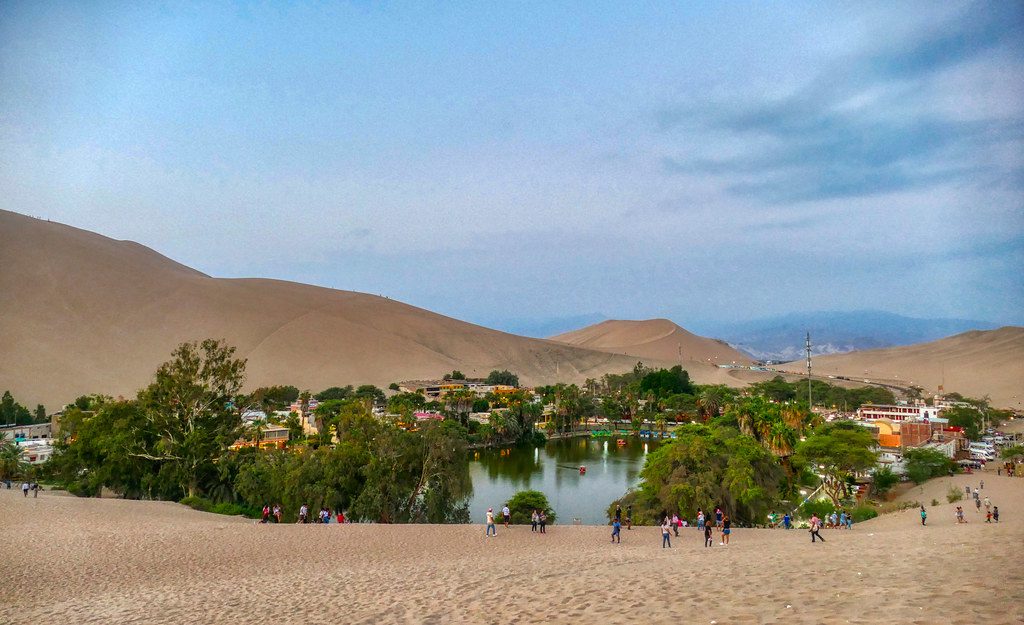
Ica, Peru, is one of the most fascinating destinations on the country’s southern coast, offering an extraordinary combination of desert landscapes, ancient civilizations, traditional vineyards, and exciting outdoor adventures. Famous for the spectacular Huacachina Oasis, enormous golden sand dunes, and its long-standing wine and Pisco traditions, Ica provides travelers with experiences that are very different from those found in Peru’s mountainous regions and tropical rainforest.
Located approximately four hours south of Lima by road, Ica is an excellent destination for visitors seeking adventure, cultural discoveries, beautiful landscapes, and authentic Peruvian traditions. Whether you want to ride through the desert in a dune buggy, try sandboarding, explore ancient archaeological sites, or enjoy traditional Peruvian cuisine, this region offers something for almost every traveler.
Beyond its famous oasis, Ica is also a gateway to extraordinary destinations such as Paracas, the Ballestas Islands, and the mysterious Nazca Lines. These attractions make the region an important stop on a journey through southern Peru.
Table of Contents
Where Is Ica, Peru?
Ica is located on the southern-central coast of Peru, approximately 300 kilometers south of Lima. It is the capital of the Ica Region, an extensive territory characterized by arid desert landscapes, fertile agricultural valleys, coastal ecosystems, and remarkable archaeological heritage.
The city of Ica sits in a fertile valley surrounded by the Peruvian coastal desert. Although rainfall is extremely limited, irrigation systems supplied by rivers descending from the Andes have supported agriculture for centuries.
The region includes several important provinces, including Ica, Pisco, Chincha, Palpa, and Nasca. Each has its own attractions, traditions, and historical significance.
Geographic Location and Landscape
The geography of Ica is particularly interesting because it combines different environments within a relatively compact region. Travelers can move from dry desert landscapes to productive agricultural valleys and Pacific coastal environments within a few hours.
The coastal desert is characterized by sandy plains, rocky hills, enormous dunes, and occasional vegetation adapted to extremely dry conditions.
The surrounding agricultural valleys are famous for producing grapes, asparagus, olives, and other crops. These fertile areas contrast beautifully with the golden desert mountains that dominate the landscape.
Understanding the Difference Between Ica City and Ica Region
When planning a trip, it is important to understand that Ica can refer to both the city and the larger administrative region.
Ica City is the regional capital and a convenient base for visiting nearby attractions, particularly Huacachina Oasis and traditional vineyards.
The wider Ica Region includes destinations such as Paracas, Pisco, Chincha, and Nasca. These locations offer additional opportunities to explore coastal wildlife, archaeological monuments, and traditional communities.
Understanding this distinction helps travelers organize their itineraries and avoid assuming that every attraction is located within the city itself.
Why Visit Ica? Discover the Desert Jewel of Peru
Ica is one of Peru’s most distinctive travel destinations because it combines natural beauty, adventure tourism, historical heritage, and gastronomy.
Unlike the high-altitude landscapes of Cusco or the tropical forests of the Amazon, Ica introduces visitors to an entirely different environment: the Pacific coastal desert.
A Unique Combination of Desert and Oasis
One of the most remarkable features of Ica is the presence of Huacachina, a picturesque oasis surrounded by enormous sand dunes.
The contrast between the green palm trees, the lagoon, and the surrounding desert creates an unforgettable landscape. Visitors can enjoy peaceful walks around the water, photograph the dunes, or participate in exciting desert activities.
Adventure, History, and Cultural Experiences
Ica offers opportunities for travelers with different interests. Adventure enthusiasts can experience dune buggy rides and sandboarding, while history lovers can discover archaeological sites associated with ancient civilizations.
Visitors interested in local traditions can explore vineyards, learn about Pisco production, and sample regional specialties.
The Home of Peruvian Pisco and Wine
The Ica Valley is one of Peru’s most important wine-producing areas and is strongly associated with the development of the country’s traditional grape-based spirit, Pisco.
The region’s vineyards and wineries preserve production traditions that have developed over several centuries.
Best Places to Visit in Ica, Peru
There are numerous attractions throughout the region, ranging from natural landscapes to historical monuments and cultural landmarks.
Huacachina Oasis
Huacachina is undoubtedly the most famous attraction in Ica and one of the most recognizable landscapes in Peru.
Located approximately five kilometers from Ica City, this small oasis is surrounded by palm trees, restaurants, hotels, and enormous desert dunes.
Its lagoon is the central feature of the settlement, creating a striking contrast with the dry environment surrounding it.
Visitors can walk around the lagoon, enjoy local restaurants, relax at accommodation overlooking the water, or explore the surrounding dunes.
The History and Legend of Huacachina
Huacachina has long been associated with local legends and stories explaining the origin of its lagoon.
One popular legend tells of a beautiful woman who transformed into the lagoon while escaping after the loss of her beloved. The story has become part of the destination’s cultural identity and contributes to its romantic atmosphere.
Historically, Huacachina developed as a recreational destination because of its water and vegetation in the middle of an otherwise dry landscape.
The Lagoon, Palm Trees, and Surrounding Sand Dunes
The lagoon is surrounded by palm trees and other vegetation that create a small green oasis within the desert.
The enormous dunes surrounding Huacachina provide excellent opportunities for photography, sunset observation, and adventure sports.
The best moments to appreciate the scenery are often early morning and late afternoon, when sunlight creates beautiful golden tones across the sand.
The Ica Desert and Its Giant Sand Dunes
The desert landscapes surrounding Ica are among the region’s most impressive natural features.
These dunes have been shaped by wind over long periods, creating constantly changing formations that can reach considerable heights.
Some dunes are popular with adventure enthusiasts, while others remain relatively isolated and provide opportunities for peaceful desert exploration.
The landscape is particularly attractive to photographers because of the contrast between the golden sand, blue sky, and distant mountain silhouettes.
Plaza de Armas of Ica
The Plaza de Armas is an important historical and social meeting point in the city.
Surrounded by buildings, shops, restaurants, and traditional streets, the square provides an opportunity to observe everyday life in Ica.
It is a convenient place to begin exploring the city’s historic center and discover its architecture, local businesses, and traditional atmosphere.
Regional Museum of Ica
The Regional Museum of Ica is an important cultural attraction for visitors interested in the ancient civilizations of southern Peru.
Its collections help explain the development of the Paracas and Nazca cultures through archaeological objects, textiles, ceramics, and other historical materials.
Visiting the museum provides valuable context before exploring the archaeological sites scattered throughout the region.
Sanctuary of the Lord of Luren
The Sanctuary of the Lord of Luren is one of the most important religious landmarks in Ica.
The Lord of Luren is deeply connected to the religious traditions of the local population, and celebrations dedicated to this figure attract numerous devotees.
The sanctuary represents an important part of the region’s spiritual and cultural identity.
Traditional Vineyards and Wineries
The agricultural valleys around Ica are famous for their vineyards and traditional wineries.
Visitors can discover how grapes are cultivated, learn about traditional fermentation and distillation techniques, and understand the importance of wine and Pisco production.
Some wineries also offer tastings and explanations of the different grape varieties used in regional production.
Cerro Blanco and Its Impressive Desert Landscape
Cerro Blanco, located near Nasca, is famous for its enormous sand dune and spectacular desert scenery.
It is a popular destination for experienced adventure enthusiasts interested in trekking and sandboarding.
Climbing the dune requires physical preparation, sufficient water, and appropriate guidance because of the demanding sandy terrain.
Best Things to Do in Ica, Peru
Ica offers a wide variety of activities, allowing travelers to combine adventure, relaxation, and cultural exploration.
Experience Dune Buggy Adventures
Dune buggy rides are among the most popular activities in Huacachina.
These specially designed vehicles travel across the desert dunes, climbing steep sandy slopes and descending at high speeds.
The experience combines adventure with spectacular views of the surrounding desert.
Most excursions include several stops where visitors can photograph the scenery and enjoy sandboarding.
Travelers should always choose responsible operators with appropriate vehicles, safety equipment, and experienced drivers.
Try Sandboarding in the Ica Desert
Sandboarding is another unforgettable activity in the desert.
Similar to snowboarding, the sport involves sliding down sand dunes using a specially designed board.
Beginners can usually start with smaller dunes before attempting steeper slopes.
Visitors should wear comfortable clothing, protect their skin from the sun, and follow the instructions provided by their guides.
Enjoy a Desert Sunset
Watching the sunset over the Ica desert is one of the simplest yet most rewarding experiences in the region.
As the sun descends toward the horizon, the sand changes color from bright gold to orange, pink, and reddish tones.
The elevated dunes surrounding Huacachina provide excellent viewpoints for appreciating these changing colors.
Photographers particularly enjoy this moment because the soft afternoon light creates dramatic shadows across the desert.
Visit Traditional Pisco and Wine Vineyards
Exploring the vineyards is an excellent way to understand the agricultural and cultural traditions of Ica.
Many wineries provide guided visits where travelers can learn about grape cultivation, harvesting, fermentation, and distillation.
These experiences also introduce visitors to the history of Pisco, an important symbol of Peruvian identity.
Discover the History of Ancient Civilizations
Ica is an excellent destination for travelers interested in archaeology.
The region was home to several important civilizations, including the Paracas, Nazca, and Chincha cultures.
Their archaeological heritage includes impressive geoglyphs, ceremonial centers, burial sites, pottery, textiles, and ancient agricultural systems.
Exploring these sites provides a fascinating introduction to the history of pre-Columbian Peru.
Explore Local Markets and Traditional Food
Local markets and restaurants offer opportunities to discover the flavors of Ica.
Traditional dishes combine regional ingredients, agricultural products, and cooking techniques passed down through generations.
Visitors should try local specialties such as carapulcra, sopa seca, pallares, and traditional sweets.
Explore the Natural Attractions Around Ica
The Ica Region offers more than desert scenery. Its coastline contains important protected areas and ecosystems that support a remarkable diversity of marine wildlife.
Paracas National Reserve
Paracas National Reserve is one of the most important protected natural areas on Peru’s southern coast.
Located near the city of Pisco, the reserve protects extensive desert landscapes, coastal habitats, beaches, and marine environments.
Its scenery is particularly impressive because the desert meets the Pacific Ocean, creating a landscape of cliffs, beaches, rocky formations, and open sea.
Coastal Landscapes and Desert Beaches
Paracas is famous for its beautiful beaches and dramatic coastal formations.
Some beaches feature unusual colors caused by geological materials, while others are surrounded by cliffs and desert hills.
The reserve provides excellent opportunities for landscape photography, sightseeing, and nature exploration.
Wildlife and Marine Biodiversity
The coastal ecosystems support numerous marine species and seabirds.
Depending on the season and conditions, visitors may encounter sea lions, Humboldt penguins, pelicans, flamingos, and other coastal birds.
The reserve is also important for marine conservation and scientific research.
Ballestas Islands
The Ballestas Islands are among the most famous wildlife attractions in southern Peru.
Located off the coast of Paracas, these rocky islands provide habitat for large colonies of marine animals and seabirds.
Boat excursions allow visitors to observe the wildlife from a respectful distance.
Sea Lions, Humboldt Penguins, and Marine Birds
One of the main attractions is the presence of South American sea lions, which can frequently be seen resting on rocks or swimming around the islands.
Visitors may also observe Humboldt penguins, Peruvian boobies, pelicans, cormorants, and other seabirds.
The islands are particularly interesting for nature enthusiasts and photographers.
Boat Excursions and Wildlife Watching
Boat trips generally depart from the Paracas area and travel around the islands.
During the excursion, visitors can observe rock formations, marine animals, and the famous Candelabro geoglyph on the coastal hillside.
Because wildlife activity varies, sightings are never guaranteed.
San Fernando National Reserve
San Fernando National Reserve is another important protected area within the Ica Region.
It combines desert landscapes, coastal cliffs, beaches, and marine ecosystems.
The reserve is known for its wildlife, including sea lions, marine birds, and other species associated with the Pacific coastline.
Its relatively remote location makes it attractive to travelers seeking less crowded natural environments.
Desert Ecosystems and Coastal Wildlife
The Ica Region demonstrates how wildlife adapts to different environmental conditions.
While the desert supports species adapted to limited water availability, the coastal areas provide important feeding and breeding environments for marine animals and birds.
This combination makes the region particularly interesting for visitors interested in biodiversity and ecological conservation.
Archaeological Sites and Ancient Cultures of Ica
The archaeological heritage of Ica is among the richest on the Peruvian coast.
Several ancient civilizations developed sophisticated societies in this challenging environment, leaving behind impressive monuments, textiles, pottery, and engineering achievements.
The Paracas Civilization
The Paracas civilization flourished along Peru’s southern coast and is particularly famous for its extraordinary textiles and burial traditions.
Paracas artisans produced finely woven fabrics decorated with colorful figures, animals, and geometric designs.
Their achievements demonstrate advanced knowledge of textile production and artistic expression.
The Nazca Civilization
The Nazca civilization developed in the desert valleys of southern Peru.
It is particularly famous for its pottery, irrigation systems, ceremonial centers, and monumental geoglyphs.
The Nazca people developed techniques that allowed agriculture to flourish despite extremely dry environmental conditions.
Nazca Lines and Geoglyphs
The Nazca Lines are among the most extraordinary archaeological attractions in Peru.
These enormous geoglyphs were created by removing the darker surface stones to reveal lighter soil underneath.
The designs represent animals, plants, geometric shapes, and other figures.
Some of the most recognizable include the hummingbird, monkey, spider, and condor.
The best way to appreciate many of the figures is through an aerial flight, although observation towers provide views of selected geoglyphs.
Cahuachi Ceremonial Center
Cahuachi was an important ceremonial center associated with the Nazca civilization.
The archaeological complex contains monumental adobe structures, ceremonial platforms, and large architectural formations.
It is believed to have played an important religious and ceremonial role.
Its location in the desert demonstrates the impressive organizational abilities of the ancient societies that developed in the region.
Chauchilla Cemetery
The Chauchilla Cemetery is an archaeological site near Nasca known for its ancient burial practices.
The dry desert environment helped preserve human remains, textiles, and other archaeological materials.
The site provides valuable information about the funerary customs and cultural traditions of ancient communities.
Ancient Aqueducts of Cantalloc
The Cantalloc Aqueducts demonstrate the engineering knowledge developed by the Nazca civilization.
These underground water channels were designed to transport water through an arid landscape.
Spiral-shaped access points allowed people to reach and maintain the water system.
The aqueducts illustrate how ancient communities adapted to environmental challenges and developed sustainable agricultural practices.
Chincha Culture and Huaca La Centinela
The Chincha civilization developed along the southern coastal region and became an important commercial and political society.
Huaca La Centinela is one of its most significant archaeological sites.
The complex contains adobe structures and monumental platforms that provide insight into the political, economic, and religious organization of the ancient Chincha people.
Ica’s Wine Culture and Traditional Pisco Production
Ica is widely recognized as one of Peru’s most important wine-producing regions.
Its agricultural valleys have favorable conditions for grape cultivation, and its vineyards are closely connected to the history of Pisco.
Why Ica Is Famous for Pisco
Pisco is Peru’s traditional grape-based spirit and an important symbol of national identity.
The Ica region has played a major role in its production for centuries.
Its vineyards produce several grape varieties used to create different styles of Pisco, each with distinctive characteristics.
How Traditional Pisco Is Produced
Traditional Pisco production begins with harvesting mature grapes.
The grapes are crushed to extract their juice, which is then fermented before being distilled.
The resulting spirit develops its characteristics through the production process and the grape varieties used.
Traditional production methods remain an important part of the region’s cultural heritage.
Visiting Vineyards and Wine Cellars
Visiting a traditional vineyard is one of the most enjoyable cultural experiences in Ica.
Guided tours introduce visitors to grape cultivation, fermentation, distillation, and the history of local production.
Some establishments also offer tastings of wines and different Pisco varieties.
These visits provide an opportunity to understand the relationship between agriculture, regional identity, and traditional craftsmanship.
The Ica Grape Harvest Festival
The Ica Grape Harvest Festival, known as the Festival de la Vendimia, celebrates the region’s viticultural heritage.
It traditionally takes place around March, when the grape harvest is an important seasonal event.
Festivities may include grape stomping, traditional music, dancing, competitions, food, and Pisco tastings.
It is an excellent opportunity to experience the region’s traditions and festive atmosphere.
Traditional Food and Gastronomy in Ica
The gastronomy of Ica reflects the agricultural richness and cultural diversity of southern Peru.
Traditional recipes combine local ingredients with culinary influences that have developed over generations.
Carapulcra and Sopa Seca
Carapulcra is one of the most representative dishes of the region.
It is traditionally prepared with dried potatoes, peanuts, spices, and meat.
Sopa seca is often served alongside carapulcra and consists of seasoned noodles prepared with herbs and other ingredients.
Together, these dishes form a traditional combination particularly associated with the Chincha and Ica areas.
Pallares and Traditional Regional Dishes
Pallares are an important agricultural product in the region.
These large beans are used in several traditional preparations and are valued for their nutritional content.
Other regional dishes incorporate fresh vegetables, local grains, meats, and products from the surrounding agricultural valleys.
Tejas and Chocotejas
Tejas and chocotejas are among the most famous traditional sweets from Ica.
Tejas are typically made with a sweet filling covered in a sugar-based coating.
Chocotejas are chocolate-covered variations filled with ingredients such as pecans, caramel, and dried fruits.
They are popular souvenirs and gifts for visitors exploring the region.
Pisco Sour and Regional Drinks
The Pisco Sour is one of Peru’s best-known cocktails.
It is traditionally prepared using Pisco, lime juice, syrup, egg white, and bitters.
Visitors to Ica can also discover different Pisco varieties and regional wines through tastings and vineyard experiences.
Weather and Best Time to Visit Ica, Peru
Ica has a predominantly arid desert climate, characterized by limited rainfall, abundant sunshine, and relatively warm temperatures.
Its dry conditions make it an attractive destination throughout the year.
Ica’s Desert Climate
The region experiences very little rainfall compared with many other destinations in Peru.
Temperatures vary depending on the season, location, and time of day.
Summer generally brings hotter conditions, while winter months tend to be cooler, particularly during the evenings.
Visiting During Summer
Summer in Peru generally extends from December through March.
During this period, Ica experiences warmer temperatures, making it popular for desert adventures, outdoor activities, and beach visits.
Travelers should bring sunscreen, sunglasses, and plenty of water.
Visiting During Winter
The cooler months offer comfortable conditions for exploring archaeological sites, vineyards, and desert landscapes.
Evenings can become chilly, so carrying a light jacket is recommended.
Sandstorms, Wind, and Weather Considerations
Wind can occasionally create challenging conditions in desert environments.
Visitors should protect their eyes and cameras from blowing sand, especially during outdoor activities.
For dune buggy rides and sandboarding, it is important to follow local safety instructions and use appropriate equipment.
How to Get to Ica from Lima and Other Destinations
Ica is relatively easy to reach from Lima, making it a popular destination for short trips and longer southern Peru itineraries.
Traveling from Lima to Ica by Bus
Traveling by bus is one of the most common ways to reach Ica.
The journey generally takes approximately four to five hours, depending on traffic, departure location, and road conditions.
Several intercity transportation services operate along the Pan-American Highway.
Traveling by Private Car
Travelers can also reach Ica by private vehicle.
The journey follows the Pan-American Highway south from Lima and passes through coastal desert landscapes and agricultural valleys.
A private vehicle offers greater flexibility for visiting vineyards and attractions outside the main urban areas.
Getting Around Ica and Huacachina
Within Ica, visitors can use taxis and local transportation to reach different attractions.
Huacachina is only a short drive from the city center.
Organized excursions are particularly convenient for visiting vineyards, remote dunes, and other attractions where transportation may be limited.
Traveling Between Ica, Paracas, and Nasca
Ica is an excellent base for exploring other destinations in southern Peru.
Paracas and Pisco are located north of Ica, while Nasca is located farther south.
Travelers can combine these destinations into a multi-day journey featuring desert adventures, marine wildlife, and ancient archaeological attractions.
How Many Days Do You Need in Ica?
The ideal length of a visit depends on the attractions travelers want to explore.
A short visit can cover Huacachina and the main attractions of Ica City, while longer itineraries provide opportunities to explore Paracas and Nasca.
One-Day Ica and Huacachina Itinerary
A one-day itinerary is suitable for travelers with limited time.
Visitors can explore Ica City, visit a traditional vineyard, and spend the afternoon enjoying the dunes of Huacachina.
A sunset buggy excursion and sandboarding experience can provide an exciting conclusion to the day.
Two-Day Ica and Paracas Itinerary
Two days allow visitors to explore a wider selection of attractions.
The first day can include Ica City, a vineyard visit, and Huacachina.
The second day can be dedicated to Paracas National Reserve and a boat excursion to the Ballestas Islands.
Three-Day Southern Peru Desert Adventure
Three days provide more flexibility and allow travelers to discover the region at a comfortable pace.
A possible itinerary includes:
Day one: Explore Ica City, visit vineyards, and enjoy Huacachina.
Day two: Discover Paracas National Reserve and the Ballestas Islands.
Day three: Travel toward Nasca to explore archaeological attractions and the famous Nazca Lines.
This itinerary combines adventure, nature, history, and regional culture.
Where to Stay in Ica, Peru
Choosing the right accommodation depends on the activities and destinations included in your itinerary.
Accommodation in Huacachina
Huacachina is an excellent option for travelers who want to stay close to the desert dunes.
The area offers accommodation ranging from budget hostels to comfortable hotels.
Staying near the lagoon makes it easy to enjoy restaurants, nightlife, and desert excursions.
Hotels in Ica City
Ica City offers accommodation suitable for travelers interested in exploring the urban center and surrounding vineyards.
It can also be a practical choice for visitors using intercity transportation.
Accommodation in Paracas
Paracas is a convenient destination for travelers planning to visit the Ballestas Islands and Paracas National Reserve.
The area offers accommodation options ranging from simple guesthouses to more comfortable coastal hotels.
Choosing the Best Location for Your Trip
For desert adventures, Huacachina is particularly convenient.
For exploring archaeological sites and city attractions, Ica City provides a useful base.
For marine wildlife excursions, Paracas is often the most practical option.
Practical Travel Tips for Visiting Ica
A little preparation can make a significant difference when exploring the desert.
What to Pack for the Desert
Recommended items include:
- Lightweight and comfortable clothing.
- Sunglasses with UV protection.
- Sunscreen and a hat.
- Comfortable walking shoes.
- A reusable water bottle.
- A light jacket for cooler evenings.
- A camera or smartphone.
- A small backpack for excursions.
Safety During Desert Adventures
Desert activities can be exciting, but visitors should prioritize safety.
Choose responsible tour operators, follow the driver’s instructions, and use appropriate safety equipment.
For sandboarding, beginners should start with smaller dunes and practice under supervision.
Avoid climbing remote dunes alone, particularly during hot conditions.
Photography Tips
Ica offers excellent opportunities for landscape photography.
Early morning and late afternoon are ideal for capturing the desert under softer natural light.
The lagoon, surrounding palm trees, dune formations, and coastal scenery all provide attractive photographic subjects.
Protect cameras and electronic equipment from sand and dust.
Responsible Tourism and Environmental Protection
The desert and coastal ecosystems are important natural environments that require responsible tourism practices.
Visitors should avoid leaving rubbish, disturbing wildlife, or damaging archaeological structures.
During marine excursions, maintaining a respectful distance from animals helps minimize disturbance.
Supporting responsible local businesses also contributes to the conservation of regional cultural and natural heritage.
Is Ica Worth Visiting?
Ica is absolutely worth visiting for travelers who want to experience a different side of Peru.
Its combination of enormous sand dunes, the beautiful Huacachina Oasis, traditional vineyards, ancient archaeological sites, and coastal wildlife creates a remarkably diverse travel destination.
Adventure enthusiasts can enjoy dune buggy rides and sandboarding, while culture lovers can discover the history of the Paracas, Nazca, and Chincha civilizations.
Visitors interested in gastronomy can explore traditional dishes and learn about the region’s famous Pisco production.
Ica is also an excellent destination for travelers combining Lima, Paracas, and Nasca into a southern Peru itinerary.
Although Huacachina is its most recognizable attraction, exploring beyond the oasis reveals a much richer destination filled with history, nature, and authentic regional traditions.
For anyone planning a trip through Peru, Ica deserves a place on the itinerary.
Frequently Asked Questions About Ica, Peru
Where is Ica located in Peru?
Ica is located on the southern-central coast of Peru, approximately 300 kilometers south of Lima. It is the capital of the Ica Region and is surrounded by desert landscapes, agricultural valleys, and coastal ecosystems.
What is Ica famous for?
Ica is famous for Huacachina Oasis, enormous desert dunes, sandboarding, dune buggy adventures, traditional vineyards, Pisco production, and its archaeological heritage.
Is Huacachina worth visiting?
Yes. Huacachina is one of Peru’s most distinctive natural attractions. Its lagoon, palm trees, and surrounding sand dunes create a beautiful desert landscape. Visitors can enjoy photography, buggy rides, sandboarding, and sunset excursions.
How far is Ica from Lima?
Ica is approximately 300 kilometers south of Lima. Traveling by bus or car generally takes around four to five hours, depending on traffic and road conditions.
How many days should I spend in Ica?
One day is sufficient to explore Huacachina and some of the main attractions in Ica. Two or three days are recommended for including vineyards, Paracas, the Ballestas Islands, and nearby archaeological attractions.
What is the best month to visit Ica?
Ica can be visited throughout the year because of its predominantly dry climate. December through March is generally warmer, while the cooler months offer comfortable conditions for outdoor exploration.
Can you go sandboarding in Ica?
Yes. Sandboarding is one of the most popular activities around Huacachina. Visitors can slide down the surrounding dunes using specially designed boards, usually as part of organized desert excursions.
Can you visit the Nazca Lines from Ica?
Yes. Nasca is accessible from Ica by road, making it possible to organize a day trip or include it in a longer southern Peru itinerary. Visitors can explore selected observation points or arrange scenic flights over the geoglyphs.
What animals can you see around Ica?
The coastal environments around Ica support sea lions, Humboldt penguins, pelicans, flamingos, cormorants, and other marine birds. The desert and agricultural valleys also support wildlife adapted to arid conditions.
Is Ica suitable for families?
Yes. Ica offers family-friendly activities such as visiting Huacachina, exploring vineyards, enjoying local cuisine, and discovering museums. Families should choose age-appropriate desert excursions and follow safety recommendations.
What traditional food should I try in Ica?
Some of the most representative regional specialties include carapulcra, sopa seca, pallares, tejas, and chocotejas. Visitors should also experience traditional Pisco-based drinks and regional wines.
Is Ica safe for tourists?
Ica is a popular destination for domestic and international travelers. As with any tourist destination, visitors should take normal precautions, use reliable transportation, keep valuables secure, and choose responsible operators for adventure activities.