
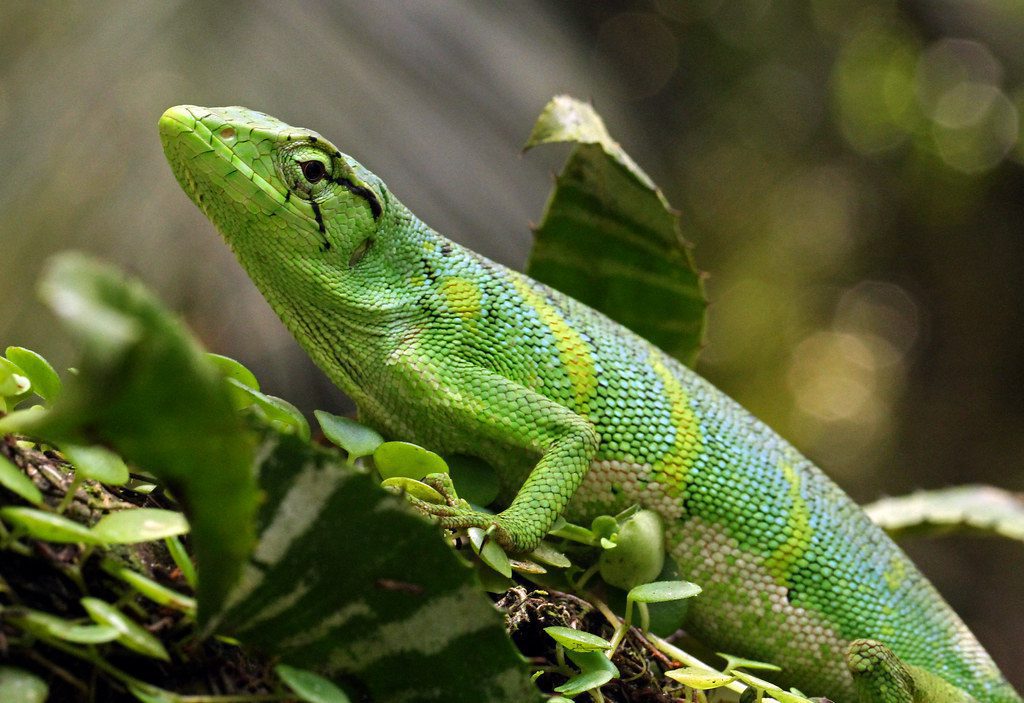
The Tambopata rainforest, located in southeastern Peru, is one of the most fascinating wildlife environments in the Amazon Basin. Its extensive tropical forests, winding rivers, freshwater lakes, wetlands, and flooded landscapes provide suitable habitats for an extraordinary variety of wildlife, including numerous reptiles. From powerful anacondas and impressive caimans to colorful lizards and freshwater turtles, these animals are an important part of the region’s biodiversity.
Tambopata reptiles occupy different ecological environments, including forest floors, tree branches, riverbanks, and aquatic ecosystems. Some are highly specialized hunters, while others depend on vegetation, insects, fish, or small animals for survival. Their adaptations allow them to thrive in an environment characterized by high humidity, warm temperatures, seasonal flooding, and dense vegetation.
Exploring the reptiles of Tambopata provides an opportunity to understand the complexity of Amazonian ecosystems and the important relationships between predators, prey, plants, and freshwater habitats.
1. Why Is Tambopata an Important Habitat for Reptiles?
Tambopata is an important wildlife region in Madre de Dios, southeastern Peru. Its tropical rainforest landscape includes numerous habitats that support different reptile species. The combination of warm temperatures, abundant rainfall, freshwater environments, and dense vegetation creates favorable conditions for snakes, lizards, turtles, and caimans.
Unlike environments where reptiles depend on only one type of habitat, Tambopata offers a variety of ecological conditions. Aquatic reptiles can inhabit rivers and lakes, while terrestrial species explore the forest floor, and arboreal reptiles spend much of their lives among branches and vegetation.
Location and tropical rainforest environment
The Tambopata region forms part of the southwestern Amazon rainforest, where tropical vegetation provides shelter, food, and breeding environments for reptiles. The forest contains different vegetation layers, from the shaded ground to the upper canopy.
These layers create opportunities for reptiles with different lifestyles. Ground-dwelling snakes can move through leaf litter, while climbing species use branches and tree trunks to search for prey. Lizards often occupy sunny openings, fallen logs, and vegetation where they can regulate their body temperature.
Rivers, oxbow lakes, wetlands, and flooded forests
Freshwater environments are particularly important for Amazon rainforest reptiles. Rivers, seasonal wetlands, and oxbow lakes provide habitats for caimans, aquatic turtles, and other species that depend on water.
Oxbow lakes are especially interesting because they form when rivers change their course and leave behind isolated or partially connected bodies of water. These environments support fish, insects, amphibians, and other animals that become food sources for aquatic reptiles.
Climate and environmental conditions
Tambopata’s tropical climate provides relatively warm conditions throughout the year. Reptiles are ectothermic animals, meaning their body temperature depends largely on external environmental conditions.
Sunlight, shade, water temperature, and seasonal changes influence their daily activity. Some species become more active during warmer periods, while others use shaded areas or water to avoid overheating.
2. Snakes Found in Tambopata
Snakes are among the most fascinating reptiles of the Amazon rainforest. Their bodies are adapted to different environments, including forests, wetlands, riverbanks, and aquatic habitats.
Some snakes are powerful constrictors that capture prey using muscular strength, while venomous species rely on specialized venom-delivery systems. Their diets can include rodents, birds, lizards, amphibians, and other animals.
Green anaconda
The green anaconda is one of the most impressive snakes associated with the Amazon Basin. It is a massive, nonvenomous constrictor that spends considerable time in freshwater environments, including swamps, slow-moving rivers, and flooded forests.
Its heavy body, olive-green coloration, and dark markings help it blend into aquatic vegetation. This camouflage is particularly useful when approaching prey or remaining hidden beneath the water’s surface.
Green anacondas capture prey through constriction. Their diet can include fish, birds, and various mammals, depending on the animal’s size and available food sources. Their ability to remain partially submerged makes them highly adapted to wetland environments.
Boa constrictor
The boa constrictor is another remarkable snake found in South American tropical environments. It is a nonvenomous predator that uses its muscular body to capture and subdue prey.
Boas are capable climbers and can occupy forest vegetation, tree branches, and terrestrial environments. Their coloration varies, but brown, tan, and reddish patterns often help them blend into fallen leaves and tree bark.
Their diet includes small mammals, birds, and other appropriately sized animals. By controlling populations of smaller vertebrates, boas contribute to the balance of rainforest food webs.
Rainbow boa
Rainbow boas are known for their attractive coloration and iridescent appearance. Their scales can reflect light and produce colorful visual effects, particularly under suitable lighting conditions.
These snakes are associated with humid tropical forest environments and can occupy terrestrial and vegetation-rich habitats. They are nonvenomous constrictors that feed on small vertebrates.
Their patterned bodies provide camouflage among leaves, branches, and forest vegetation.
Venomous snakes of the Amazon
The Amazon rainforest contains several medically important venomous snake groups. These include bushmasters, coral snakes, and lanceheads.
Bushmasters: Bushmasters are large venomous snakes associated with tropical forests. They are generally secretive and spend much of their time hidden among vegetation and forest-floor debris.
Coral snakes: Coral snakes are recognized by their distinctive colored bands. Their patterns vary among species, and they are generally secretive animals that feed on other small vertebrates, including other reptiles.
Lanceheads: Lanceheads belong to a group of pit vipers that includes species inhabiting different parts of tropical South America. They use specialized heat-sensitive organs to detect warm-blooded prey.
These snakes are important rainforest predators. However, visitors should never attempt to approach, handle, or identify unfamiliar snakes based only on their coloration.
3. Lizards of the Tambopata Rainforest
Lizards are another important component of Tambopata’s reptile diversity. They occupy different habitats and display a wide range of body shapes, sizes, colors, and feeding strategies.
Some species spend most of their time on the forest floor, while others climb trees, explore branches, or inhabit vegetation near freshwater environments.
Green iguanas
Green iguanas are large arboreal lizards associated with tropical forests and vegetation-rich environments.
Their strong limbs, sharp claws, and long tails help them climb trees and move through branches. Their green coloration provides camouflage among leaves and vegetation.
Green iguanas are primarily herbivorous, feeding on leaves, flowers, and other plant material. Their ability to use elevated vegetation allows them to occupy habitats that differ from those used by ground-dwelling reptiles.
Caiman lizards
Caiman lizards are impressive reptiles associated with freshwater environments in South America.
They have powerful jaws, muscular bodies, and distinctive scales that provide a somewhat armored appearance. Their strong tails help them move through water, while their limbs allow them to navigate vegetation and riverbanks.
Caiman lizards are particularly interesting because their diets can include freshwater snails and other hard-shelled aquatic animals. Their strong jaws help them process prey that many other predators cannot easily consume.
Tegus and ground-dwelling lizards
Tegus are large South American lizards that occupy terrestrial environments. They use their strong legs and claws to move through forest floors, dig, and search for food.
Depending on the species and life stage, their diet may include insects, fruits, eggs, and small vertebrates.
Other ground-dwelling lizards occupy leaf litter, fallen branches, and forest openings. Their smaller bodies allow them to move through narrow spaces and avoid predators.
Small forest and arboreal lizards
Tambopata’s vegetation provides numerous microhabitats for smaller lizards.
Some species climb tree trunks and branches, while others remain close to the ground. Their diets commonly include insects and other small invertebrates.
These reptiles help regulate insect populations and serve as prey for snakes, birds, and larger rainforest predators.
4. Turtles and Tortoises of Tambopata
Freshwater turtles and terrestrial tortoises are important members of Amazonian reptile communities. They occupy different habitats and have specialized feeding and reproductive behaviors.
While freshwater turtles spend much of their time in rivers, lakes, and wetlands, tortoises are primarily terrestrial animals.
Yellow-spotted river turtles
Yellow-spotted river turtles are among the recognizable freshwater turtles of the Amazon region.
They have distinctive yellow markings on their heads and are associated with rivers, lakes, and other freshwater habitats. Their aquatic lifestyle allows them to move through water in search of food and suitable places to rest.
Their diet can include aquatic vegetation, fruits, insects, and other small animals.
South American river turtles
Large South American river turtles are important inhabitants of Amazonian freshwater ecosystems.
They depend on rivers and surrounding sandy beaches for feeding and reproduction. Many species use exposed riverbanks and sandbars as nesting environments.
Their reproductive cycles are influenced by seasonal changes in water levels. Suitable nesting beaches are particularly important because flooding or disturbance can affect the survival of eggs and hatchlings.
Matamata turtles
The matamata turtle is one of the most unusual freshwater turtles in South America.
Its flattened head, long neck, irregular shell, and rough skin create an appearance that resembles submerged vegetation or decaying leaves.
This unusual appearance provides camouflage in freshwater environments. The matamata is an ambush predator that captures aquatic prey using a rapid suction-feeding technique.
Rather than actively chasing fish over long distances, it waits for prey to approach before suddenly opening its mouth and drawing water and prey inside.
Red-footed tortoises
Red-footed tortoises are terrestrial reptiles associated with tropical South American forests.
They are recognized by the reddish or orange markings on their limbs and their domed shells. Their diet includes fruits, leaves, flowers, and other plant material.
Fallen fruits on the rainforest floor provide important food sources. These tortoises also contribute to seed dispersal when they consume fruits and later deposit seeds in different locations.
5. Caimans of Tambopata
Caimans are among the most recognizable aquatic reptiles of the Amazon rainforest. These crocodilian predators inhabit rivers, lakes, wetlands, and flooded forests.
They are adapted to aquatic environments, with powerful tails, muscular bodies, and eyes and nostrils positioned toward the upper part of their heads. This arrangement allows them to remain mostly submerged while observing their surroundings.
Black caimans
The black caiman is one of the largest crocodilian species in South America.
Its dark coloration helps it blend into shadowy aquatic environments, while its powerful jaws allow it to capture a wide variety of prey.
Black caimans can consume fish, birds, reptiles, and mammals. Larger individuals are capable of capturing substantial prey, making them important predators in Amazonian freshwater ecosystems.
Their presence is particularly important because they help regulate populations of other aquatic and terrestrial animals.
Spectacled caimans
Spectacled caimans are widespread in tropical South America and are associated with different freshwater habitats.
They are generally smaller than large adult black caimans and can occupy rivers, lakes, swamps, and wetlands.
Their name comes from a raised bony ridge between their eyes that resembles a pair of spectacles.
Their diet includes fish, insects, crustaceans, amphibians, and other small animals. Their adaptability allows them to occupy a variety of freshwater environments.
Caimans and aquatic food chains
Caimans occupy an important position in rainforest food webs. As predators, they help regulate populations of aquatic animals and contribute to the ecological balance of freshwater ecosystems.
Young caimans can become prey for larger predators, while adults may face fewer natural threats.
Their presence also reflects the importance of healthy aquatic habitats, including sufficient food resources, suitable nesting environments, and relatively undisturbed waterways.
6. Where Do Reptiles Live in Tambopata?
Tambopata’s reptiles occupy several different environments. Understanding these habitats helps explain why the region supports such a variety of reptile species.
Amazon rainforest floor
The forest floor provides shelter for terrestrial snakes, tortoises, and many smaller lizards.
Fallen leaves, decomposing wood, tree roots, and natural cavities create hiding places that protect reptiles from predators and environmental conditions.
The abundance of insects, rodents, and other small animals also provides important food sources.
Riverbanks and freshwater habitats
Riverbanks support numerous aquatic and semi-aquatic reptiles.
Caimans use these environments for resting, hunting, and nesting, while freshwater turtles search for food and suitable resting areas.
Vegetation along riverbanks provides shade and protection, creating important transition zones between aquatic and terrestrial ecosystems.
Oxbow lakes and wetlands
Oxbow lakes and wetlands are among the most interesting environments for observing aquatic reptiles.
These habitats provide fish, insects, and other prey animals that support freshwater predators.
Water levels change throughout the year, influencing where reptiles feed, move, and reproduce.
Tree canopies and vegetation
The forest canopy provides habitats for climbing snakes and arboreal lizards.
Branches, leaves, and tree cavities create shelter and hunting opportunities. These elevated environments also help reptiles avoid some ground-based predators.
7. How Do Reptiles Survive in the Amazon Rainforest?
Reptiles possess several adaptations that help them survive in the demanding conditions of tropical rainforests.
Camouflage and protective coloration
Camouflage is one of the most effective survival strategies among rainforest reptiles.
Green coloration allows some lizards to blend into foliage, while brown and patterned snakes can become difficult to distinguish from branches, roots, and fallen leaves.
Aquatic species also benefit from coloration that helps them remain concealed in muddy or vegetation-filled water.
Hunting and feeding strategies
Different reptile species use specialized techniques to capture food.
Anacondas rely on constriction, venomous snakes use venom to immobilize prey, and caimans use powerful jaws to capture aquatic and terrestrial animals.
Matamata turtles employ ambush hunting and suction feeding, while insect-eating lizards actively search vegetation and forest-floor habitats.
Temperature regulation
Unlike mammals and birds, reptiles do not maintain a constant internal body temperature through metabolic heat production.
Instead, they use external environmental conditions to regulate their body temperature.
Some reptiles bask in sunlight to warm themselves, while others move into shaded areas or water when temperatures become too high.
Aquatic and arboreal adaptations
Aquatic reptiles possess physical characteristics that support movement and survival in water. Powerful tails, streamlined body shapes, and specialized feeding structures help them exploit freshwater environments.
Arboreal reptiles, meanwhile, use strong limbs, claws, and body structures that allow them to climb and remain attached to vegetation.
These adaptations demonstrate how different reptile species occupy specialized ecological niches within the same rainforest.
8. Why Are Reptiles Important to the Tambopata Ecosystem?
Reptiles contribute to the ecological balance of Tambopata through their roles as predators, prey, and consumers of plant material.
Their ecological importance extends beyond individual species because they participate in interconnected food webs that link terrestrial and aquatic environments.
Controlling prey populations
Many reptiles feed on insects, rodents, fish, and other small animals.
By regulating these populations, they contribute to the natural balance of rainforest communities.
Snakes, for example, help control populations of small mammals, while insect-eating lizards contribute to regulating invertebrate communities.
Maintaining aquatic and terrestrial food webs
Caimans and aquatic turtles connect freshwater environments with surrounding forests.
Some reptiles feed on animals that depend on aquatic vegetation, while others consume fruits and plant material that originate in terrestrial habitats.
This movement of energy between environments contributes to the complexity of Amazonian food webs.
Their role as predators and prey
Reptiles are important food sources for other rainforest animals.
Young snakes, turtles, lizards, and caimans can become prey for birds, mammals, and larger reptiles.
At the same time, adult reptiles can become powerful predators that influence the distribution and abundance of other species.
9. Threats and Conservation of Tambopata Reptiles
Despite the ecological importance of reptiles, Amazonian species face several environmental challenges.
Protecting their habitats is essential for maintaining the biodiversity and ecological functions of Tambopata.
Deforestation and habitat fragmentation
Deforestation can destroy nesting areas, feeding environments, and shelter for reptiles.
The removal of vegetation also changes local temperatures, humidity, and the availability of suitable microhabitats.
Habitat fragmentation can isolate populations and reduce opportunities for movement and reproduction.
Pollution and changes to freshwater ecosystems
Freshwater pollution can affect aquatic reptiles by contaminating their food sources and habitats.
Changes to rivers, lakes, and wetlands can also influence nesting areas, water quality, and prey availability.
Maintaining healthy freshwater environments is especially important for caimans and river turtles.
Illegal wildlife trade
Some reptiles are captured for the exotic pet trade, their skins, or other commercial purposes.
Unregulated collection can reduce wild populations and interfere with natural reproductive cycles.
Protecting vulnerable species requires effective monitoring, responsible wildlife management, and awareness of the ecological consequences of illegal trade.
Protecting reptile habitats
Conservation efforts should prioritize the protection of forests, rivers, wetlands, and nesting environments.
Responsible wildlife observation, environmental education, and sustainable tourism can help increase awareness of the importance of reptile conservation.
Preserving natural habitats benefits not only reptiles but also the many other species that depend on Tambopata’s interconnected ecosystems.
10. Frequently Asked Questions About Tambopata Reptiles
What reptiles live in Tambopata?
Tambopata’s reptile diversity includes snakes, lizards, freshwater turtles, tortoises, and caimans. Representative Amazonian reptiles include anacondas, boas, spectacled caimans, black caimans, river turtles, and various forest lizards.
Are there anacondas in Tambopata?
Yes, green anacondas are associated with the Amazon Basin, including suitable wetland and freshwater environments in the Peruvian Amazon. They are powerful nonvenomous constrictors that spend considerable time in or near water.
Are there dangerous snakes in Tambopata?
The Amazon rainforest contains venomous snakes, including lanceheads, bushmasters, and coral snakes. Visitors should avoid approaching or handling snakes and should follow local wildlife safety recommendations.
Can you see caimans in Tambopata?
Caimans inhabit suitable rivers, lakes, and wetlands in the Tambopata region. They are often most noticeable near freshwater environments, although their camouflage and behavior can make them difficult to observe.
What turtles live in the Tambopata rainforest?
Amazonian freshwater environments support different river turtle species, including yellow-spotted river turtles and other South American freshwater turtles. Terrestrial tortoises, such as red-footed tortoises, also inhabit tropical forest environments.
Where can you find reptiles in Tambopata?
Reptiles occupy several habitats, including rainforest floors, riverbanks, oxbow lakes, wetlands, and tree vegetation. Their distribution depends on food availability, water conditions, shelter, and reproductive requirements.
Are reptiles active during the day or at night?
Reptile activity varies by species. Some lizards are primarily active during daylight, while many snakes are nocturnal or most active during cooler periods. Caimans may hunt at night, although their activity patterns can vary depending on environmental conditions.
Why are reptiles important to the Amazon rainforest?
Reptiles help maintain ecological balance by controlling prey populations, participating in food webs, and supporting interactions between aquatic and terrestrial environments. Some also contribute to seed dispersal through fruit consumption.