
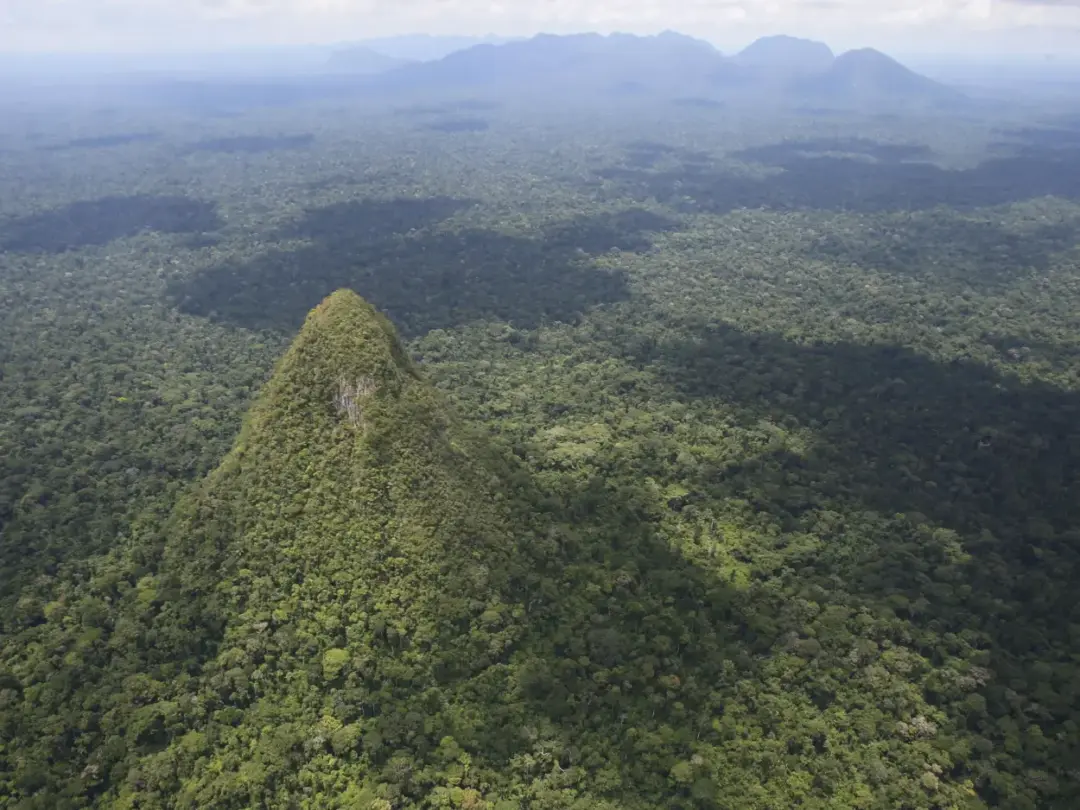
The pyramids in the Amazon are among the most fascinating subjects in South American archaeology. Although the Amazon rainforest is famous for its extraordinary biodiversity, enormous rivers, and indigenous cultures, it also contains evidence of ancient civilizations that constructed monumental earthworks, geometric enclosures, elevated platforms, and complex settlements. Some of these structures resemble pyramids, while others reveal sophisticated architectural and engineering techniques that transformed the landscape thousands of years ago.
Archaeological discoveries in Brazil, Bolivia, and other parts of the Amazon Basin have challenged the traditional idea that the rainforest was inhabited only by small, isolated communities. Researchers have identified enormous earthworks, ceremonial centers, agricultural systems, and organized settlements that demonstrate how ancient populations adapted to tropical environments.
However, it is important to understand that most structures described as Amazonian pyramids are not identical to the stone pyramids of Egypt or Central America. Many are constructed from earth, clay, and other natural materials. Some are monumental platforms or conical mounds, while others are geometric constructions surrounded by trenches and embankments.
These discoveries provide a fascinating window into the history of the Amazon and the remarkable societies that existed long before European arrival.
Are There Really Pyramids in the Amazon?
Yes, pyramid-shaped structures and monumental mounds exist in parts of the greater Amazon region. Archaeologists have discovered ancient earthen constructions that include elevated platforms, conical mounds, geometric enclosures, and ceremonial structures.
One of the most important areas for understanding these discoveries is the Bolivian Amazon, particularly the Llanos de Mojos region. Here, ancient communities constructed enormous earthen mounds that served as elevated settlements and important centers of social organization.
Some of these mounds have pyramid-like shapes, with elevated surfaces and carefully modified slopes. Archaeological research has also revealed interconnected settlements, canals, reservoirs, and agricultural landscapes.
The Brazilian Amazon contains another remarkable category of ancient structures: geometric earthworks. These constructions include circular, square, and polygonal enclosures created through extensive excavation and the movement of soil.
Therefore, while the phrase pyramids in Amazon is useful for describing certain monumental structures, it should not be interpreted as evidence that the rainforest contains extensive stone pyramid complexes identical to those found in other ancient civilizations.
Understanding Amazonian Pyramids and Ancient Earthworks
Amazonian earthworks are human-made modifications of the landscape created for residential, agricultural, defensive, ceremonial, and social purposes.
Unlike conventional stone monuments, many Amazonian structures were constructed using locally available materials. Communities moved large quantities of earth to create raised platforms, embankments, ditches, and artificial elevations.
Some structures were designed to provide protection against seasonal flooding. Others created elevated spaces for houses, public gatherings, or ceremonial activities.
These constructions demonstrate that ancient Amazonian societies understood their environment and developed practical solutions for living in regions characterized by heavy rainfall, seasonal flooding, and dense vegetation.
Why Amazonian Structures Are Different from Egyptian Pyramids
The main difference is their architecture, construction materials, and possible functions.
Egyptian pyramids were predominantly monumental stone structures associated with royal burials and religious beliefs. In contrast, Amazonian monumental architecture often involved earth, clay, elevated platforms, canals, and geometric enclosures.
Some Amazonian mounds were designed as residential platforms, while others may have supported ceremonial or political activities.
Their construction required considerable labor, organization, knowledge of local geography, and an understanding of water management.
Although these structures may look different, they demonstrate the architectural abilities of ancient societies that developed sophisticated construction methods within their respective environments.
Ancient Civilizations That Built Structures in the Amazon
The Amazon Basin was home to diverse pre-Columbian societies with different languages, traditions, architectural styles, and settlement patterns.
For many years, the tropical rainforest was incorrectly portrayed as an environment incapable of supporting large or complex populations. Archaeological evidence has significantly changed this understanding.
Ancient communities developed agricultural systems, constructed permanent settlements, managed forests, and created monumental structures.
The Casarabe Culture of the Bolivian Amazon
The Casarabe culture is one of the most important archaeological examples of monumental construction in the Amazon region.
It flourished in the Llanos de Mojos, in present-day Bolivia, approximately between 400 and 1450 CE.
Its settlements included enormous earthen platforms, elevated structures, canals, reservoirs, and interconnected communities. Some of the largest archaeological complexes extended across hundreds of hectares.
One particularly interesting characteristic is the presence of monumental platform mounds and conical pyramid-shaped structures.
These constructions were part of an organized settlement system that included different levels of population centers.
Archaeological investigations have revealed that the communities understood how to modify their surroundings to accommodate settlement, agriculture, transportation, and water management.
The discoveries demonstrate that ancient Amazonian societies could create large architectural landscapes without relying on stone construction.
Ancient Communities of the Brazilian Amazon
Brazil contains some of the most remarkable archaeological evidence of ancient human occupation in the Amazon.
The state of Acre is particularly important because of its geometric earthworks, commonly known as geoglyphs.
These structures include enormous circular, square, and polygonal enclosures surrounded by excavated ditches and raised earthen boundaries.
Some measure hundreds of meters across.
Their precise geometric arrangements suggest that their builders possessed sophisticated knowledge of measurement, planning, and coordinated construction.
Archaeological evidence indicates that many of these structures were associated with ceremonial and public activities rather than ordinary residential occupation.
The discoveries also reveal that ancient communities actively managed their forest environments while maintaining substantial areas of woodland.
Indigenous Societies and Pre-Columbian Settlements
The ancient Amazon was not occupied by a single civilization. Instead, it contained numerous indigenous societies that developed different forms of architecture and landscape management.
Some communities lived in fortified settlements surrounded by ditches. Others constructed raised villages, agricultural platforms, and interconnected residential areas.
These settlements were often located near rivers, lakes, and productive agricultural environments.
Their inhabitants relied on fishing, hunting, gathering, farming, and extensive knowledge of rainforest resources.
The archaeological record demonstrates that indigenous populations developed complex relationships with the natural environment and created cultural landscapes that remain visible today.
The Most Important Ancient Structures in the Amazon
The Amazon contains several important categories of archaeological structures that help researchers understand ancient architecture and settlement organization.
Although not all these constructions are pyramids, they provide evidence of monumental building traditions throughout the region.
Monumental Mounds of Llanos de Mojos
The Llanos de Mojos, located in northeastern Bolivia, contain some of the most impressive monumental earthen structures associated with ancient Amazonian societies.
These mounds, commonly called lomas, were constructed through the accumulation and intentional movement of earth.
Some developed into enormous elevated platforms that supported residential buildings, public spaces, and other activities.
Recent archaeological research using airborne laser technology has revealed previously hidden architectural features, including conical structures, platform mounds, and interconnected settlement complexes.
The Casarabe settlements demonstrate that monumental architecture existed in the Amazon centuries before European colonization.
Some structures have been described as conical pyramids because of their shape and elevated construction.
These discoveries are especially important because they demonstrate that ancient communities could organize large construction projects in tropical environments.
Geometric Earthworks of Acre
<PRIVATE_PERSON> The geometric earthworks of Acre are among the most visually distinctive archaeological features of the Amazon.
They are generally characterized by large geometric shapes formed through excavated trenches and raised boundaries.
Common designs include circles, squares, rectangles, and polygons.
Many of these structures were constructed on elevated areas of the landscape, creating clearly defined spaces within the surrounding forest.
Their exact purposes varied and remain subjects of archaeological investigation. Evidence suggests that some functioned as ceremonial centers or locations for important social gatherings.
The structures also indicate that ancient builders possessed considerable knowledge of geometry and landscape organization.
More than 450 pre-Columbian geometric enclosures have been documented in the broader Acre region, revealing the impressive scale of ancient construction activities.
Ancient Settlements and Earthworks of the Upper Xingu
The Upper Xingu region of Brazil provides additional evidence of complex ancient Amazonian settlement systems.
Archaeological research has identified large settlements connected through roads and causeways, with some communities surrounded by defensive ditches.
These settlements demonstrate organized patterns of occupation and relationships between neighboring communities.
Instead of isolated villages, some areas contained interconnected settlements that formed extensive regional networks.
Their inhabitants developed infrastructure that supported movement, communication, agriculture, and social organization.
These discoveries have helped researchers understand that ancient Amazonian communities could organize their settlements across large geographical areas.
Ancient Agricultural Platforms and Raised Fields
Not every monumental structure in the Amazon was designed for ceremonial or residential purposes.
Ancient agricultural engineering was also an essential part of Amazonian architecture.
In seasonally flooded environments, communities constructed elevated agricultural platforms to improve drainage and protect crops from excessive water.
These raised fields were often connected through canals and causeways.
Such systems allowed people to cultivate productive land in challenging environments while managing seasonal water fluctuations.
The scale of these constructions demonstrates an impressive understanding of soil conditions, hydrology, and agricultural planning.
How Were Ancient Amazonian Structures Built?
Ancient Amazonian societies used construction techniques adapted to the environmental conditions of the rainforest.
Their architecture relied heavily on earth, clay, vegetation, wood, and other locally available resources.
Rather than transporting enormous quantities of stone over long distances, builders modified the existing landscape to create elevated platforms, defensive enclosures, and monumental structures.
Construction Materials and Engineering Techniques
Earth was one of the most important construction materials.
Builders excavated soil from selected areas and used it to create raised platforms, embankments, and mounds.
In some locations, the excavated material was arranged into carefully planned geometric shapes.
Wood and vegetation may also have been incorporated into residential buildings and other structures, although organic materials rarely survive for long periods in tropical environments.
The combination of natural materials and organized labor allowed ancient communities to construct impressive monuments without sophisticated metal machinery.
Mathematics, Geometry, and Landscape Planning
The geometric earthworks of the Amazon provide evidence of advanced planning.
Circular and square structures required builders to understand proportions, distances, orientation, and spatial organization.
The regularity of some enclosures suggests that construction was not random.
Instead, communities likely used practical measuring methods and shared knowledge to maintain consistent shapes and dimensions.
The construction of large monuments also required coordinated labor and decisions about where structures should be located.
These skills demonstrate the intellectual and technical achievements of ancient Amazonian societies.
The Role of Water Management
Water management was particularly important because large parts of the Amazon experience seasonal flooding.
Ancient communities developed systems of canals, reservoirs, raised fields, and elevated settlements to adapt to these conditions.
Canals helped move water through agricultural landscapes, while raised platforms provided places to live above flood-prone ground.
Some causeways also connected settlements across wetlands and seasonally inundated areas.
These systems demonstrate that ancient inhabitants understood the seasonal behavior of rivers and developed infrastructure to manage environmental challenges.
Archaeological Discoveries Beneath the Amazon Rainforest
One of the greatest challenges in Amazonian archaeology is the dense vegetation that covers ancient structures.
Rainforest trees, roots, and vegetation can conceal enormous archaeological features, making traditional ground exploration difficult.
However, modern technology has transformed how researchers investigate the region.
How LiDAR Technology Reveals Ancient Structures
LiDAR is a remote-sensing technology that uses laser pulses to measure distances and generate detailed three-dimensional representations of the landscape.
When used from aircraft, it can help researchers identify ground formations beneath dense forest vegetation.
This technology has revealed ancient platforms, settlement layouts, roads, defensive features, and monumental mounds that were difficult to identify through conventional surveys.
Research in the Bolivian Amazon has demonstrated the importance of LiDAR for understanding the size and organization of ancient settlements.
More recent investigations in southwestern Amazonia have also expanded the known distribution of prehistoric earthworks.
A major 2026 archaeological study reported more than 20,000 pre-Columbian earthworks across southwestern Amazonia, emphasizing the extraordinary scale of ancient human landscape modification.
These findings do not mean that 20,000 pyramids have been discovered. They include different types of archaeological structures, such as geometric enclosures, embankments, and other earthworks.
Satellite Images and Aerial Archaeology
Satellite imagery has also become an important tool for discovering ancient structures.
From above, researchers can identify unusual geometric patterns, vegetation differences, and landscape formations that may indicate buried archaeological remains.
Some geometric enclosures become easier to recognize when surrounding vegetation has been reduced or when aerial photographs provide a clearer perspective.
Combining satellite imagery with field investigations allows researchers to identify potential archaeological sites and determine their characteristics.
New Discoveries and the Scale of Ancient Settlements
New archaeological investigations continue to reveal that ancient Amazonian societies were more diverse and organized than previously understood.
The discovery of large settlement networks, monumental mounds, and geometric earthworks has changed how researchers interpret the history of the rainforest.
These findings suggest that ancient populations modified extensive areas of the Amazon landscape over many centuries.
Rather than being an untouched wilderness, the rainforest contains cultural landscapes shaped by generations of indigenous inhabitants.
Why Did Ancient Amazonian Civilizations Build These Structures?
The purposes of Amazonian monuments varied depending on their location, construction, and cultural context.
Some were associated with everyday settlement activities, while others may have served ceremonial, political, defensive, or agricultural functions.
Understanding their purposes helps explain why ancient communities invested so much labor in modifying their environment.
Religious and Ceremonial Purposes
Some geometric enclosures and monumental mounds appear to have been associated with ceremonial activities.
Their organized shapes and distinctive locations suggest that certain spaces held special cultural importance.
Communities may have used these places for gatherings, rituals, celebrations, and activities connected with their spiritual traditions.
However, not every geometric structure was necessarily religious, and interpretations must be based on archaeological evidence.
Political and Social Organization
Large construction projects required cooperation between many individuals.
The creation of monumental mounds, canals, and settlements suggests that communities developed systems for organizing labor and coordinating collective activities.
Some structures may have served as important public spaces where people gathered for political decisions, social exchanges, and community events.
The scale of these projects demonstrates that ancient Amazonian societies possessed organizational abilities that allowed them to maintain complex settlements.
Agriculture, Defense, and Community Life
Other structures served practical purposes.
Raised agricultural fields improved cultivation in flooded environments, while defensive ditches helped protect certain settlements.
Elevated platforms provided stable residential areas, and canals supported transportation and water management.
Together, these structures demonstrate how ancient communities combined engineering, agriculture, architecture, and environmental knowledge.
Are There Ancient Pyramids in the Peruvian Amazon?
The Peruvian Amazon is an important region for archaeological research because it contains evidence of ancient human occupation, indigenous settlement, and long-term landscape modification.
However, it is important to distinguish documented archaeological sites from speculative claims about lost pyramids.
There is currently no established evidence of a major pyramid complex in the Peruvian Amazon comparable to the monumental pyramid-shaped structures documented in the Bolivian Llanos de Mojos.
Nevertheless, this does not mean that the Peruvian rainforest lacks ancient archaeological heritage.
Archaeological Evidence in Madre de Dios
Madre de Dios is one of Peru’s most important Amazonian regions because of its extensive rainforest, river systems, and indigenous cultural history.
The region contains archaeological potential associated with ancient human movement, settlement, and the use of natural resources.
Rivers such as the Madre de Dios and Tambopata have historically provided important transportation routes and access to forest resources.
These waterways supported communication between different communities and helped shape human occupation of the region.
Archaeological investigation in Madre de Dios can contribute to understanding how ancient populations adapted to tropical environments.
However, the presence of ancient human occupation should not automatically be interpreted as evidence of pyramids or monumental stone architecture.
Ancient Human Landscapes in the Peruvian Rainforest
The Peruvian Amazon contains landscapes that have been influenced by human activity over many generations.
Indigenous communities developed extensive knowledge of medicinal plants, edible fruits, forest resources, rivers, and seasonal environmental changes.
Their relationship with the rainforest involved more than simply using available resources. It also included managing vegetation, maintaining traditional territories, and adapting settlement patterns to local conditions.
Understanding these cultural landscapes is essential for appreciating the history of the Peruvian Amazon.
It also provides an important perspective on the relationship between archaeological heritage, biodiversity, and indigenous knowledge.
What Happened to the Ancient Amazonian Civilizations?
Many ancient Amazonian settlements changed or were abandoned over time.
However, the disappearance of particular settlement systems should not be confused with the disappearance of indigenous peoples or cultures.
Some communities reorganized their settlements, adapted their agricultural systems, or moved to different locations.
Environmental conditions, social changes, conflicts, and historical events all contributed to transformations in Amazonian societies.
Environmental Changes and Population Decline
Seasonal flooding, changing river systems, droughts, and other environmental pressures influenced settlement patterns throughout the Amazon.
Some communities developed sophisticated systems to manage these conditions, while others may have experienced difficulties maintaining particular agricultural or residential areas.
Environmental change was only one factor in the long-term transformation of ancient settlements.
Social organization, economic relationships, and regional interactions also played important roles.
European Arrival and Historical Transformation
European arrival brought profound changes to indigenous populations throughout South America.
Disease, violence, forced labor, displacement, and the disruption of traditional economic systems contributed to severe population declines in many areas.
As communities experienced these pressures, some ancient settlement systems were abandoned or transformed.
Nevertheless, indigenous peoples continued to maintain cultural traditions, languages, knowledge, and connections to their ancestral territories.
The history of the Amazon should therefore be understood as a continuing story of indigenous societies rather than a narrative of civilizations that simply vanished.
The Importance of Protecting Archaeological Heritage
Amazonian archaeological sites are important sources of information about human history and cultural diversity.
Deforestation, illegal land clearing, uncontrolled development, and looting can damage structures that have survived for centuries.
Protecting these places requires responsible research, conservation programs, and cooperation with indigenous communities.
Preserving archaeological heritage also helps future generations understand the remarkable achievements of the people who shaped the Amazon long before modern times.
Frequently Asked Questions About Pyramids in the Amazon
Are there actual pyramids in the Amazon rainforest?
Yes, pyramid-shaped earthen structures and monumental mounds have been discovered in the greater Amazon region, particularly in the Bolivian Amazon. However, most are constructed from earth rather than stone and have different architectural characteristics from Egyptian pyramids.
Where are the ancient Amazonian pyramids located?
Important pyramid-like structures and monumental earthworks have been documented in the Llanos de Mojos region of Bolivia. Other ancient structures are found in Acre and other parts of Brazil, including geometric enclosures, raised platforms, and ancient settlement complexes.
How old are the Amazonian structures?
Their ages vary considerably. Some geometric earthworks in southwestern Amazonia began appearing more than 2,500 years ago. The monumental Casarabe settlements in Bolivia date approximately from 400 to 1450 CE.
Who built the ancient structures in the Amazon?
They were constructed by different indigenous societies that inhabited the Amazon before European arrival. These included the Casarabe culture of Bolivia and numerous communities in the Brazilian Amazon that developed their own architectural and agricultural traditions.
Were there advanced civilizations in the Amazon?
Yes. Archaeological evidence demonstrates that ancient Amazonian populations developed organized settlements, monumental architecture, agricultural engineering, water-management systems, and extensive regional connections.
Their achievements demonstrate sophisticated environmental knowledge, social organization, and construction skills.
Can you visit ancient archaeological sites in the Amazon?
Some archaeological locations can be visited, depending on their accessibility, conservation status, and local regulations. However, many sites are located in remote areas or protected environments and are not developed for tourism.
Visitors should always follow local guidance and respect archaeological preservation rules.
Have scientists discovered new structures using LiDAR?
Yes. LiDAR surveys have revealed previously hidden mounds, platforms, roads, and settlement features beneath dense rainforest vegetation. Research published in 2026 reported more than 20,000 pre-Columbian earthworks across southwestern Amazonia, demonstrating the enormous scale of ancient landscape modification.
Conclusion: The Hidden History of Pyramids in the Amazon
The pyramids in the Amazon reveal a fascinating chapter of South American history that is still being investigated. Although most Amazonian monumental structures are different from traditional stone pyramids, their size, geometric precision, and construction techniques demonstrate the impressive abilities of ancient indigenous societies.
From the monumental mounds of the Bolivian Amazon to the geometric earthworks of Brazil, archaeological discoveries show that ancient populations developed organized settlements, sophisticated agricultural systems, and impressive construction projects.
Modern technologies such as LiDAR and satellite imagery are helping researchers uncover structures that remained hidden beneath rainforest vegetation for centuries.
The Amazon is therefore much more than a natural paradise filled with extraordinary wildlife and tropical vegetation. It is also an enormous historical landscape containing evidence of ancient civilizations, indigenous engineering, and human adaptation.
As archaeological research continues, more discoveries may reveal how these communities lived, organized their societies, and transformed the rainforest into one of the most remarkable cultural landscapes in the world.