
Puerto-Maldonado-Amazon-tours-logo-180x180 (1)
Whatsapp

Giant Otter: Facts, Characteristics, Habitat, Behavior and Conservation

The giant otter (Pteronura brasiliensis) is one of the most fascinating mammals inhabiting the Amazon rainforest. Known for its impressive size, playful personality, distinctive throat markings, and highly social behavior, this remarkable aquatic predator is an essential part of South America’s freshwater ecosystems. From the winding rivers of the Amazon Basin to the secluded oxbow lakes of Peru, giant otters occupy some of the richest wildlife habitats on Earth.
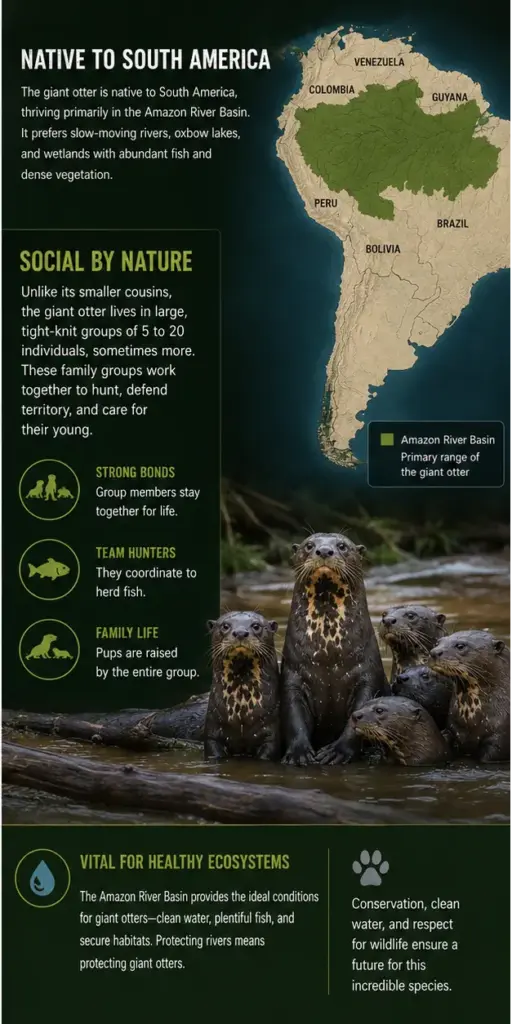
Unlike most members of the otter family, giant otters live in close-knit family groups, communicate through an extensive range of vocalizations, and cooperate when hunting fish. Their streamlined bodies, webbed feet, and powerful tails make them exceptionally adapted to swimming and navigating tropical waterways.

However, despite their remarkable adaptations, giant otters face serious conservation challenges. Habitat destruction, illegal gold mining, water pollution, fishing conflicts, and human disturbance threaten populations across their geographic range. The species is currently classified as Endangered on the IUCN Red List.

Exploring the giant otter’s characteristics, habitat, diet, behavior, reproduction, and ecological relationships helps us understand why protecting this extraordinary Amazonian mammal is so important. It also reveals the interconnectedness of wildlife and freshwater environments throughout the Peruvian Amazon.

1. Giant Otter Facts and Characteristics

The giant otter is the largest living otter species in the world and one of the most recognizable aquatic mammals of South America. Its impressive body size, social intelligence, and distinctive physical appearance make it a particularly interesting species for wildlife researchers and nature enthusiasts.

Table of Contents

What Is a Giant Otter?

The giant otter, scientifically known as Pteronura brasiliensis, is a carnivorous mammal belonging to the Mustelidae family. This family also includes weasels, badgers, martens, and other otter species.

Native to South America, giant otters inhabit freshwater environments throughout the Amazon, Orinoco, and parts of the Paraguay-Paraná river systems. They are semi-aquatic mammals, meaning they depend on both aquatic and terrestrial habitats for survival.

Unlike many other otter species, giant otters are highly social animals. They typically live in family groups consisting of a dominant breeding pair and their offspring from different breeding seasons. These groups cooperate in hunting, raising young, defending territories, and communicating.

Their scientific name reflects one of their most recognizable characteristics. The genus name Pteronura refers to their broad, flattened, wing-like tail, which helps propel and maneuver their bodies through the water.

Physical Characteristics of Giant Otters

Giant otters have elongated, muscular bodies adapted for efficient movement through freshwater environments. Adults generally measure approximately 1.5 to 1.8 meters from head to tail, although measurements vary among individuals. Their weight commonly ranges from approximately 22 to 34 kilograms.

Their fur is generally dark brown, with lighter cream, white, or beige markings along the throat and chest. These markings are particularly important because each individual has a distinctive pattern that researchers can use to identify and monitor animals in the wild.

Other important physical characteristics include:

  • A broad, flattened tail that provides propulsion and steering.
  • Short legs equipped with webbed feet.
  • Dense fur that provides insulation in tropical freshwater environments.
  • Strong jaws and sharp teeth for capturing and consuming fish.
  • Sensitive whiskers that help detect movements in the water.
  • Small ears and nostrils that can close during underwater swimming.

These adaptations allow giant otters to move efficiently between riverbanks, lagoons, flooded forests, and underwater hunting areas.

Interesting Facts About Giant Otters

Giant otters possess several remarkable characteristics that distinguish them from other Amazonian mammals.

One of their most fascinating features is their communication system. Researchers have documented numerous vocalizations, including whistles, barks, growls, and alarm calls. These sounds help family members coordinate movements, recognize one another, and respond to potential threats.

Another interesting characteristic is their cooperative lifestyle. Family members frequently hunt together, protect their territory, and participate in raising young otters.

Giant otters are also predominantly diurnal, meaning they are generally active during daylight hours. This behavior makes them particularly interesting for wildlife observation in protected areas of the Peruvian Amazon.

How Long Do Giant Otters Live?

The lifespan of giant otters varies depending on environmental conditions, food availability, disease, and exposure to human-related threats.

Wild individuals may live approximately 10 years or longer, although reliable information about maximum lifespan in natural conditions remains limited.

Survival is particularly important during the first months of life, when young otters depend heavily on their parents and other family members for food, protection, and learning essential survival skills.

2. Giant Otter Habitat and Geographic Distribution

The giant otter habitat consists primarily of freshwater environments surrounded by tropical vegetation. These ecosystems provide the fish they need to survive, suitable locations for resting and denning, and protected areas where family groups can establish territories.

Where Do Giant Otters Live?

Giant otters are native to South America, with their distribution extending across several countries, including Peru, Brazil, Bolivia, Colombia, Ecuador, Guyana, Suriname, Venezuela, French Guiana, and Paraguay.

Their geographic range is closely associated with major river systems and their surrounding wetlands.

The Amazon River Basin represents one of the most important regions for giant otter populations. Its extensive network of rivers, tributaries, lagoons, and flooded forests provides diverse freshwater habitats.

The Orinoco Basin and Pantanal wetlands also support important populations of this species.

Although giant otters historically occupied a wider geographic range, hunting and habitat degradation have contributed to their disappearance from some areas.

Giant Otter Habitat in the Amazon Rainforest

The Amazon rainforest provides an extraordinary combination of aquatic and terrestrial environments that support giant otter populations.

These mammals are particularly associated with:

Tropical rivers: Large rivers and their tributaries provide extensive hunting grounds and opportunities for movement between different habitats.

Oxbow lakes: Locally known in Peru as cochas, these lakes are formed when sections of winding rivers become isolated from the main channel. Their relatively calm waters and fish populations can make them particularly suitable habitats for giant otters.

Flooded forests: During the rainy season, rising water levels connect rivers, wetlands, and forest areas, creating additional aquatic environments.

Riverbanks: Vegetated banks provide resting areas, locations for dens, and suitable places for territorial activities.

The availability of fish, suitable denning locations, and relatively undisturbed shorelines strongly influences where giant otter families establish their territories.

Giant Otters in Peru

Peru contains some of the most important giant otter habitats in the Amazon Basin.

The southeastern region of Madre de Dios is particularly significant because its extensive river systems, wetlands, and oxbow lakes provide suitable conditions for this endangered mammal.

Important protected landscapes include Tambopata National Reserve and Manu National Park.

In Tambopata, giant otters are associated with freshwater lakes and river systems where fish are abundant and suitable nesting and resting areas are available.

Lake Sandoval is one of the best-known wildlife observation locations in the region. Visitors exploring its waters may have opportunities to observe giant otter family groups swimming, fishing, communicating, and resting along the shoreline.

Manu National Park also protects important giant otter habitats, particularly in its lowland Amazonian environments.

Environmental Conditions for Giant Otter Survival

Giant otters depend on several environmental conditions to maintain healthy populations.

First, freshwater quality is essential because pollution can affect fish populations and introduce harmful contaminants into aquatic food webs.

Second, sufficient fish availability is necessary to support the energy requirements of these active carnivores.

Third, suitable riverbanks and vegetation provide secure locations for dens, resting areas, and family activities.

Finally, relatively undisturbed habitats allow giant otter groups to maintain their territories and raise their young.

The protection of these environmental conditions is fundamental to giant otter conservation throughout the Amazon rainforest.

3. Giant Otter Diet and Hunting Behavior

Giant otters are specialized aquatic predators whose diet consists primarily of freshwater fish. Their hunting abilities, sensory adaptations, and cooperative behavior make them effective predators in tropical rivers and lakes.

What Do Giant Otters Eat?

Fish represent the main component of the giant otter diet.

Depending on geographic location, habitat conditions, and seasonal fish availability, their prey may include:

  • Catfish.
  • Cichlids.
  • Characins.
  • Piranhas.
  • Other freshwater fish species.

Occasionally, giant otters may consume crustaceans and other aquatic animals, although fish generally dominate their diet.

Their food preferences are influenced by the fish communities living in the rivers and lakes they inhabit.

Research in different South American freshwater environments has demonstrated that giant otters can adjust their prey selection according to local fish availability.

How Do Giant Otters Hunt?

Giant otters are skilled underwater hunters that use their streamlined bodies, webbed feet, and powerful tails to pursue fish.

They typically search for prey in rivers, lakes, and flooded areas, where they can maneuver through vegetation and underwater structures.

Their sensitive whiskers help detect movements and disturbances in the surrounding water. Their strong jaws and sharp teeth allow them to capture and hold slippery fish.

Although they frequently hunt individually, giant otters can also coordinate their activities with other members of their family group.

Cooperative hunting may help family members locate and capture prey more efficiently under certain conditions.

After catching fish, giant otters commonly consume their prey while floating at the water’s surface or resting on the riverbank.

Giant Otter Feeding Habits

Because giant otters are highly active mammals, they require considerable amounts of food to maintain their energy levels.

Their daily feeding activities are influenced by temperature, water conditions, prey availability, and the size of their family group.

Family members often hunt within their established territory, using familiar locations where fish populations are accessible.

Seasonal changes can influence the distribution of prey. During periods of flooding, fish may disperse across expanded aquatic environments, while dry-season conditions can concentrate fish in lakes and deeper water channels.

These changes can affect hunting opportunities and the amount of time giant otters spend searching for food.

Giant Otters and the Amazon Food Chain

As major fish predators, giant otters occupy an important position in Amazonian freshwater food webs.

Their feeding activities contribute to predator-prey relationships and form part of the ecological processes that shape aquatic communities.

However, their ecological role should not be understood as simply controlling fish populations. Their influence depends on the availability of prey, habitat conditions, and interactions with other predators.

Their presence can also provide valuable information about the condition of freshwater habitats because healthy giant otter populations generally require suitable aquatic environments and sufficient prey resources.

4. Giant Otter Behavior and Lifestyle

One of the most remarkable aspects of giant otters is their highly social behavior. Unlike many other members of the Mustelidae family, which are generally solitary, giant otters live in organized family groups with strong social relationships.

Social Structure and Family Groups

A typical giant otter family consists of a dominant breeding pair and their offspring from previous breeding seasons.

Group size varies according to environmental conditions, reproductive success, and the survival of young animals. Family groups may contain several individuals, with some documented groups numbering more than ten.

These family relationships are important for survival.

Older offspring frequently help their parents protect and care for younger pups. They may participate in hunting activities, provide food, and assist in teaching younger members how to navigate their aquatic environment.

This cooperative structure increases the opportunities for young otters to develop the skills needed to survive independently.

Giant Otter Communication

Giant otters are extremely vocal mammals.

Their communication system includes different sounds that help individuals coordinate activities and maintain social relationships.

Common vocalizations include:

  • Whistles used during social interactions.
  • Barks associated with alarm or territorial situations.
  • Growls during aggressive encounters.
  • Hisses and other warning sounds.
  • Softer calls used between family members.

Body movements and facial expressions also contribute to communication.

Their vocal behavior is particularly noticeable when a family group is resting, feeding, or responding to potential disturbances.

Territorial Behavior

Giant otter families establish and defend territories around important freshwater habitats.

These territories may include a central lake, sections of rivers, nearby streams, and suitable resting and denning areas.

Scent marking is an important component of territorial communication. Individuals use communal latrine sites where they deposit feces and scent-related secretions.

Vocalizations and coordinated group displays may also help communicate territorial boundaries.

When neighboring groups encounter one another, interactions can become aggressive because access to fish resources and suitable habitat is important for survival.

Daily Activities and Lifestyle

Giant otters are generally active during daylight hours.

Their daily routines may include swimming, hunting, grooming, resting, playing, and interacting with other family members.

They frequently use established resting locations along riverbanks and may return to familiar areas within their territories.

Play behavior is particularly noticeable among younger individuals. Pups and juveniles may chase one another, practice swimming, and interact with objects in the water.

These activities are not simply recreational. They also help young otters develop coordination and social skills.

5. Giant Otter Reproduction and Life Cycle

Giant otter reproduction depends on stable environmental conditions, sufficient food availability, and the survival of established family groups.

Their reproductive system is unusual among many carnivorous mammals because offspring from previous breeding seasons frequently remain with their parents and help care for younger siblings.

Giant Otter Mating and Breeding Behavior

Giant otters generally live in family groups organized around a dominant breeding pair.

These pairs are typically monogamous, and the dominant adults are responsible for producing offspring.

Reproductive activity can vary with geographic location and environmental conditions. In some regions, breeding occurs throughout the year, although seasonal patterns may be observed.

The stability of the family group is important because successful reproduction requires suitable habitat, sufficient prey, and safe locations for raising young.

Gestation and Birth of Giant Otter Pups

Following mating, female giant otters have a gestation period of approximately two months.

Females give birth in protected dens, often located along riverbanks or in areas surrounded by dense vegetation.

Litter size generally ranges from one to several pups, with two or three being common in many reports.

Newborn pups are highly dependent on their parents and remain inside the den during their earliest development.

Their survival depends on protection, maternal care, and the availability of suitable environmental conditions.

Parental Care and Family Protection

Both parents participate in raising young giant otters.

The dominant male and female protect the pups, provide food as they develop, and introduce them gradually to the aquatic environment.

Older offspring also contribute to family care.

This cooperative behavior is particularly important because young otters require considerable time to develop swimming, hunting, and social skills.

Family members may help protect pups from predators and disturbances while providing opportunities to learn through observation and interaction.

Growth and Development of Young Giant Otters

During their first weeks, pups remain primarily inside the den.

As they develop, they begin accompanying family members outside and gradually become familiar with their surroundings.

Swimming lessons and interactions with other family members are important stages of development.

Young otters learn to identify prey, move efficiently through water, and participate in hunting activities.

Although they become increasingly capable of finding food, juveniles may remain dependent on their family group for an extended period.

Eventually, some individuals disperse to establish or join other groups.

This process helps maintain genetic exchange between populations and contributes to the long-term survival of the species.

6. Giant Otter Conservation and Threats

Despite their impressive adaptations and ecological importance, giant otters remain vulnerable to environmental changes and human activities.

The species is classified as Endangered on the IUCN Red List, and its population trend is considered decreasing.

Conservation efforts are therefore essential to protect its remaining populations and the freshwater habitats on which it depends.

Why Are Giant Otters Endangered?

Historically, excessive hunting for the fur trade caused severe declines in giant otter populations throughout South America.

Their distinctive pelts were highly valued, and intensive exploitation resulted in local disappearances across parts of their former geographic range.

Although commercial hunting has been greatly reduced through conservation measures and international protection, giant otters continue to face multiple threats.

Habitat degradation, mining activities, pollution, fishing conflicts, and human disturbance affect populations in different parts of their range.

Main Threats to Giant Otters in the Amazon

Habitat destruction and deforestation

Deforestation changes the structure of riverbanks, removes vegetation, and can increase sediment entering freshwater environments.

These changes may affect the availability of suitable denning locations and reduce the quality of aquatic habitats.

Illegal gold mining and mercury contamination

Illegal gold mining is a serious environmental problem in parts of the Peruvian Amazon.

Some mining operations release mercury into the environment, where it can enter aquatic food webs and accumulate in organisms.

Because giant otters consume fish, contamination of aquatic ecosystems represents a potential risk to their health and the long-term survival of populations.

Water pollution

Agricultural runoff, mining waste, and other sources of contamination can reduce freshwater quality.

Pollution can also affect fish populations, indirectly influencing the availability of food for giant otters.

Fishing activities

Competition with local fisheries may create conflicts when giant otters consume fish species that people also depend on for food and income.

In some areas, negative perceptions of otters can lead to persecution.

Tourism and human disturbance

Unregulated tourism, excessive boat traffic, and close approaches to family groups can disturb resting, feeding, and breeding activities.

Responsible wildlife observation is therefore essential in sensitive habitats.

Giant Otter Conservation Status

The International Union for Conservation of Nature classifies the giant otter as Endangered.

This classification reflects historical population declines and continuing threats across its geographic range.

The species also receives protection through international wildlife trade regulations and national conservation laws in countries where it occurs.

In Peru, giant otters are protected under national wildlife legislation.

However, legal protection alone is not sufficient. Effective conservation requires habitat management, research, monitoring, environmental education, and cooperation between local communities and conservation organizations.

Conservation Programs and Protection Efforts

Several conservation approaches are important for protecting giant otters.

Protected areas help preserve freshwater habitats and reduce certain forms of human disturbance.

Scientific research allows specialists to monitor family groups, study their feeding behavior, and understand changes in population distribution.

In southeastern Peru, long-term research in Manu and Madre de Dios has contributed important knowledge about giant otter ecology and habitat requirements.

Environmental education is another essential component because local communities, guides, tourism operators, and visitors can all contribute to wildlife protection.

How Can We Help Protect Giant Otters?

Protecting giant otters requires collective action.

Travelers can support responsible wildlife tourism by choosing operators that respect wildlife observation guidelines and avoid disturbing animals.

Visitors should maintain a safe distance, avoid feeding wildlife, and never attempt to approach dens or separate family members.

Other important actions include supporting freshwater conservation, reducing pollution, promoting responsible resource management, and raising awareness about the environmental consequences of illegal mining.

Protecting giant otters also means protecting the rivers, lakes, forests, and countless other species that share their habitat.

7. Giant Otter Predators and Ecological Relationships

Giant otters occupy an important position in Amazonian ecosystems. Their relationships with predators, competitors, and other aquatic animals contribute to the complex ecological interactions of tropical freshwater environments.

What Are the Natural Predators of Giant Otters?

Adult giant otters are powerful animals that generally live in cohesive family groups.

Their size, sharp teeth, and cooperative behavior make them difficult prey for many predators.

Nevertheless, potential natural threats include large predators such as jaguars and black caimans, particularly when young or isolated individuals are involved.

Pups are especially vulnerable because they depend on adults for protection and have limited ability to escape dangerous encounters.

It is important to recognize that predation on giant otters is not necessarily common. Their family structure and defensive behavior provide significant protection.

Giant Otters and Jaguars

Jaguars are among the most powerful predators in the Amazon rainforest.

They inhabit many of the same freshwater environments as giant otters, particularly areas near rivers, lakes, and flooded forests.

Both species are highly adapted to their respective hunting environments.

Jaguars are capable swimmers and frequently hunt near water, while giant otters are specialized aquatic predators that spend much of their time in rivers and lakes.

Their shared habitat creates opportunities for occasional encounters, although they generally occupy different ecological niches.

Giant Otters and Other Aquatic Predators

The Amazon contains numerous aquatic and semi-aquatic predators.

The black caiman is one of the most important large reptiles in Amazonian freshwater ecosystems. It shares habitats with giant otters and may compete for some food resources.

Green anacondas also inhabit wetlands, swamps, and flooded environments where giant otters may be present.

Large predatory fish, including certain catfish species, contribute to the complex predator-prey relationships of Amazonian waters.

These interactions demonstrate how aquatic and terrestrial species depend on overlapping freshwater habitats.

The Ecological Role of Giant Otters

As predators, giant otters contribute to the functioning of freshwater food webs.

By consuming fish and other aquatic prey, they participate in natural predator-prey relationships that influence the distribution and behavior of other species.

Their dependence on healthy freshwater environments also makes them valuable subjects for ecological monitoring.

When suitable habitat, fish availability, and water quality decline, giant otter populations may experience negative consequences.

Consequently, conservation measures focused on giant otters can also benefit other aquatic mammals, fish, birds, reptiles, and plants.

8. Giant Otter Anatomy and Adaptations

The giant otter’s anatomy reveals how evolution has shaped a mammal capable of living and hunting efficiently in freshwater environments.

Its physical features allow it to swim rapidly, maneuver underwater, detect prey, and remain active in tropical aquatic habitats.

Body Structure and Physical Adaptations

The giant otter has an elongated, streamlined body that reduces resistance as it moves through water.

Its powerful tail is particularly important for propulsion and directional control.

Webbed feet help generate movement, while its flexible body allows it to turn quickly when pursuing fish.

Its limbs are relatively short compared with its body length, contributing to its streamlined appearance.

Together, these features make giant otters highly efficient swimmers.

Fur and Skin Adaptations

Unlike some aquatic mammals that depend heavily on thick layers of body fat for insulation, otters rely significantly on their fur.

The giant otter has dense fur that helps trap air close to the skin and provides insulation against heat loss in water.

Regular grooming is essential for maintaining the condition of the coat.

By cleaning and arranging their fur, giant otters help preserve its insulating properties and remove dirt or debris accumulated during aquatic activities.

Their dark coloration also helps distinguish them from many other mammals living along Amazonian waterways.

Sensory Adaptations for Aquatic Hunting

Giant otters use several sensory systems to locate prey and understand their surroundings.

Their whiskers, known as vibrissae, are particularly important because they can detect water movements and disturbances created by nearby fish.

Their eyes allow them to observe their surroundings both above and below the water surface.

Their hearing and communication abilities also help family members remain coordinated during hunting and other social activities.

These sensory adaptations are particularly useful in freshwater habitats where visibility may vary because of suspended sediments, vegetation, and changing water conditions.

Swimming and Diving Abilities

Giant otters are powerful swimmers capable of moving quickly through rivers and lakes.

Their webbed feet and muscular tails provide propulsion, while their flexible bodies help them change direction during underwater pursuits.

They can dive beneath the surface to capture fish and remain submerged while searching for prey.

Their nostrils and ears can close during underwater movement, helping prevent water from entering.

These adaptations make giant otters among the most specialized freshwater predators in South America.

The Amazon rainforest supports an extraordinary diversity of mammals, birds, reptiles, amphibians, and fish.

Although giant otters have unique ecological characteristics, they share their habitats with numerous species that contribute to the biodiversity of South American freshwater ecosystems.

Other Otter Species in South America

Several other otter species occur in South America.

The Neotropical otter (Lontra longicaudis) is one of the most widely distributed otters in the region. It inhabits rivers, streams, wetlands, and coastal environments.

The marine otter (Lontra felina) is adapted to coastal habitats along the Pacific coast of South America.

Both species belong to the Mustelidae family and are genuine relatives of the giant otter.

However, they differ in size, habitat preferences, social behavior, and ecological requirements.

Mammals Sharing the Amazon Habitat

Giant otters share the Amazon rainforest with numerous fascinating mammals.

Amazon river dolphin: Also known as the pink river dolphin, this freshwater mammal inhabits rivers and lakes throughout the Amazon and Orinoco basins.

Capybara: The world’s largest living rodent is frequently found near rivers, lakes, and wetlands, where it feeds on aquatic and terrestrial vegetation.

Jaguar: This powerful feline is an important predator in tropical forests and frequently hunts near freshwater environments.

Giant anteater: This specialized mammal feeds primarily on ants and termites and occupies grasslands, forests, and other habitats across South America.

South American tapir: This large herbivorous mammal contributes to forest ecology through its feeding activities and seed dispersal.

These species demonstrate the extraordinary diversity of mammals supported by Amazonian ecosystems.

Reptiles and Aquatic Animals

The Amazon’s freshwater environments are also home to numerous reptiles and aquatic animals.

The black caiman is one of the largest predators in the region and occupies rivers, lakes, and flooded forests.

The green anaconda is another impressive species associated with wetlands and slow-moving waterways.

Freshwater turtles contribute to aquatic ecosystems through their feeding activities, while piranhas and catfish represent important components of the Amazon’s fish diversity.

Many of these animals interact through shared food resources, habitat requirements, and predator-prey relationships.

Birds Found Near Giant Otter Habitats

Amazonian waterways attract a remarkable variety of birds.

Kingfishers are frequently associated with rivers and lakes, where they hunt fish from branches and exposed perches.

Herons search for aquatic prey along shallow shorelines, while anhingas dive underwater to capture fish.

Hoatzins inhabit vegetation surrounding wetlands and slow-moving rivers.

Macaws, parrots, and other tropical birds also contribute to the biodiversity of forests surrounding giant otter habitats.

The presence of these species highlights the importance of protecting entire freshwater landscapes rather than focusing on a single animal.

10. Giant Otters and Human Interaction

Human activities have a significant influence on giant otter populations throughout South America.

Although these animals generally avoid direct contact with people, their dependence on freshwater environments brings them into contact with fishing communities, tourism operators, researchers, and other human activities.

Human Activities Affecting Giant Otters

Several activities can negatively affect giant otters.

Fishing may create conflicts when otters consume fish that local communities depend on for their livelihoods.

Mining activities can introduce contaminants into rivers and wetlands, particularly when environmental regulations are ignored.

Deforestation and agricultural expansion can alter riverbanks and reduce the quality of aquatic habitats.

Unregulated boat traffic may disturb family groups, especially when vessels approach resting areas, feeding locations, or dens.

Reducing these pressures is essential for maintaining healthy giant otter populations.

Giant Otters and Indigenous Communities

Indigenous and local communities have long-standing relationships with the rivers and forests of the Amazon.

Traditional ecological knowledge can contribute valuable information about wildlife distribution, seasonal changes, fish populations, and environmental conditions.

Community participation is particularly important for conservation because people living near giant otter habitats are often among the first to notice changes in local wildlife.

Collaborative monitoring, environmental education, and sustainable resource management can help strengthen conservation efforts.

Respecting traditional knowledge and involving local communities in decision-making are essential components of long-term Amazon protection.

Can Giant Otters Be Dangerous to Humans?

Giant otters are wild predators with strong jaws and sharp teeth.

They are not normally interested in attacking humans, and most encounters involve animals swimming away, observing from a distance, or continuing their normal activities.

However, giant otters can become defensive when they perceive a threat to themselves, their territory, or their pups.

Approaching a family group too closely, attempting to touch an animal, or interfering with its movements can provoke defensive behavior.

Visitors should therefore maintain a respectful distance and follow the instructions of qualified wildlife guides.

Responsible Giant Otter Tourism

Wildlife tourism can contribute to conservation awareness and provide economic opportunities for communities living near protected areas.

In Peru, destinations such as Tambopata National Reserve and Manu National Park offer opportunities to learn about giant otters and other Amazonian wildlife.

Responsible observation should always prioritize animal welfare.

Visitors should avoid making loud noises, pursuing swimming otters, feeding wildlife, or approaching breeding dens.

Boat operators and guides should follow appropriate wildlife observation practices and allow animals to continue their natural activities without unnecessary disturbance.

When properly managed, ecotourism can help connect travelers with Amazon biodiversity while encouraging greater support for freshwater conservation.

11. Amazon Rainforest and Wildlife: The Giant Otter’s Ecosystem

The giant otter is closely connected to the ecological processes that sustain the Amazon rainforest.

Its habitat includes a complex network of rivers, lakes, wetlands, and flooded forests that support thousands of plant and animal species.

Understanding this broader ecosystem helps explain why giant otter conservation is important for the entire Amazon region.

The Amazon Rainforest as a Giant Otter Habitat

The Amazon rainforest contains one of the most extensive freshwater systems on Earth.

Its rivers and tributaries connect diverse habitats, creating opportunities for aquatic mammals, fish, reptiles, and birds.

Seasonal flooding transforms the landscape, allowing water to spread into forest areas and create temporary aquatic environments.

These seasonal changes influence fish distribution, feeding opportunities, and the availability of suitable habitats for giant otters.

The combination of aquatic resources and terrestrial vegetation makes the Amazon an essential environment for this endangered mammal.

Freshwater Ecosystems of the Peruvian Amazon

The Peruvian Amazon contains numerous freshwater environments that support giant otters and other aquatic wildlife.

In Madre de Dios, important rivers include the Madre de Dios and Tambopata, together with their tributaries and associated lakes.

Oxbow lakes are particularly valuable habitats because their relatively calm waters can support abundant fish populations.

Lake Sandoval, located within the Tambopata National Reserve, is one of the region’s best-known examples of an Amazonian oxbow lake.

These environments provide opportunities to observe a variety of wildlife, including giant otters, caimans, aquatic birds, and freshwater fish.

Amazon Wildlife and Biodiversity

The Amazon rainforest is home to an extraordinary variety of wildlife.

Its mammal communities include jaguars, tapirs, monkeys, sloths, capybaras, anteaters, and several species of otters.

Bird diversity is equally remarkable, with macaws, toucans, harpy eagles, kingfishers, and countless other species inhabiting different forest environments.

Reptiles and amphibians occupy rivers, wetlands, forest floors, and tree canopies.

Freshwater ecosystems support enormous fish diversity, including piranhas, catfish, and many other species.

These animals are connected through food webs, habitat relationships, and ecological processes.

The giant otter is one important component of this larger natural system.

Why Protecting Amazon Rainforest Biodiversity Matters

Protecting Amazon biodiversity means maintaining the ecological relationships that allow forests, rivers, and wildlife populations to function.

Healthy freshwater ecosystems provide habitats for aquatic mammals, support fish populations, and contribute to the environmental stability of surrounding forests.

When mining, deforestation, pollution, and unsustainable resource extraction damage these environments, the consequences extend beyond individual species.

Protecting giant otter habitats therefore contributes to broader conservation objectives.

Preserving rivers, wetlands, riparian forests, and oxbow lakes benefits countless other organisms and helps maintain the natural richness of the Peruvian Amazon.

12. Why the Giant Otter Is Important to Amazon Biodiversity

The giant otter is much more than an impressive aquatic predator. It represents the extraordinary biological diversity of the Amazon rainforest and illustrates the close relationship between freshwater ecosystems and the animals that depend on them.

Its physical adaptations, cooperative family structure, specialized diet, and complex communication system make it one of the most remarkable mammals of South America.

From the Amazon River Basin to the oxbow lakes of Tambopata and Manu, giant otters depend on healthy freshwater environments to hunt, reproduce, and maintain their family territories.

However, habitat destruction, pollution, mining, fishing conflicts, and human disturbance continue to threaten their survival.

Protecting this endangered species requires more than safeguarding individual animals. It means preserving the rivers, lakes, forests, and ecological relationships that sustain Amazonian wildlife.

Responsible ecotourism, scientific research, community participation, and effective environmental protection can all contribute to this objective.

For travelers exploring the Peruvian Amazon, observing giant otters in their natural habitat can be an unforgettable wildlife experience. More importantly, it offers an opportunity to understand why conservation matters and how protecting one remarkable mammal can help preserve an entire ecosystem.

The future of the giant otter is closely connected to the future of the Amazon rainforest. Protecting its habitat means protecting one of the world’s most extraordinary natural environments.


Frequently Asked Questions About Giant Otters

1. What is a giant otter?

The giant otter (Pteronura brasiliensis) is a large, semi-aquatic carnivorous mammal native to South America. It belongs to the Mustelidae family and is recognized as the largest living otter species. Giant otters inhabit rivers, lakes, and wetlands throughout the Amazon and other South American river basins.

2. Where do giant otters live?

Giant otters live in freshwater habitats across South America, particularly within the Amazon and Orinoco river basins and parts of the Paraguay-Paraná system. They inhabit rivers, oxbow lakes, lagoons, wetlands, and flooded forests in countries including Peru, Brazil, Bolivia, Colombia, and Ecuador.

3. How big is a giant otter?

Adult giant otters generally measure approximately 1.5 to 1.8 meters in total length, including the tail. Their weight commonly ranges between 22 and 34 kilograms. Males are generally larger and heavier than females.

4. What do giant otters eat?

Giant otters are primarily fish-eating carnivores. Their diet includes catfish, cichlids, characins, piranhas, and other freshwater fish. They occasionally consume other aquatic prey, depending on local food availability.

5. Do giant otters eat piranhas?

Yes. Piranhas can form part of the giant otter diet. These aquatic predators are capable of capturing different fish species, including piranhas, depending on their availability and the conditions in their habitat.

6. Why are giant otters endangered?

Giant otters are classified as Endangered because of historical hunting, habitat destruction, pollution, illegal mining, and human-wildlife conflicts. These threats affect their freshwater habitats, food resources, and ability to maintain stable family groups.

7. Do giant otters live in groups?

Yes. Giant otters are highly social mammals that typically live in family groups consisting of a dominant breeding pair and their offspring. Family members cooperate in hunting, communication, territorial defense, and raising young pups.

8. What are the natural predators of giant otters?

Potential natural predators include jaguars and large caimans, particularly when young or isolated individuals are involved. However, adult giant otters are powerful animals that benefit from their size and cooperative family behavior.

9. Can you see giant otters in Peru?

Yes. Giant otters can be observed in certain protected areas of the Peruvian Amazon, including Tambopata National Reserve and Manu National Park. Lake Sandoval is one of the best-known locations for wildlife observation, although sightings are never guaranteed.

10. Are giant otters dangerous to humans?

Giant otters generally avoid people, but they are wild predators capable of defending themselves and their young. Visitors should never approach, feed, touch, or disturb them. Observing them from a respectful distance is the safest approach.

11. How do giant otters communicate?

Giant otters communicate through whistles, barks, growls, alarm calls, and other vocalizations. They also use body language and scent marking to maintain social relationships and communicate territorial information.

12. How can we help protect giant otters?

People can help protect giant otters by supporting freshwater conservation, reducing pollution, promoting responsible tourism, protecting natural habitats, and supporting scientific research and community-based conservation initiatives.

13. What is the role of giant otters in the Amazon ecosystem?

Giant otters are important aquatic predators that participate in freshwater food webs through their feeding relationships with fish and other prey. Their dependence on healthy rivers and lakes also makes them valuable species for understanding and monitoring freshwater ecosystem conditions.

Leave a Comment

Mengapa Scatter Mahjong Ways Terasa Lebih Menegangkan dari Simbol Lain? Memahami RTP Slot Online Lewat Mahjong Ways Tanpa Salah Menafsirkan Angka Apakah Bermain Lama di Mahjong Ways Membuat Jackpot Lebih Mungkin? Benarkah Slot Gacor di Situs NUSAGG Memiliki Jam Khusus? Memahami simbol Scatter cara membaca RTP Mahjong Ways
iPhone 18 Pro Max dengan Chip A20 Pro, Mengapa Kualitas Animasi Mahjong Ways Tidak Hanya Bergantung pada Kekuatan Prosesor Mahjong Ways Terbuka pada Browser Android yang Jarang Diperbarui, Mengapa Versi Peramban Berpengaruh terhadap Kompatibilitas Halaman Ramalan Karier Zodiak Aries dan Virgo Menjelang Tahun Baru 2027, Spaceman Menghadirkan Gambaran tentang Ambisi dan Ketelitian Shio Hoki Kelinci dan Kambing pada Awal Tahun 2027, Mahjong Ways 2 Membuka Pembahasan tentang Perbedaan Kesempatan dan Keberuntungan Teknologi AI Pengenal Emosi dari Ekspresi Wajah, Mengapa Reaksi dalam Video Gates of Olympus Belum Tentu Mencerminkan Perasaan Sebenarnya Karakter Shio Macan dan Sosok Gatotkaca dalam Pewayangan, Menelusuri Makna Keberanian di Balik Tema Gates of Gatot Kaca 1000 Memilih Kapasitas Penyimpanan iPhone 18 Pro Max, Menghitung Kebutuhan Memori untuk Mahjong Ways 2 Ramalan Asmara Zodiak Scorpio dan Pisces Menjelang Desember 2026, Wild West Gold Menjadi Pembanding tentang Kepercayaan dan Kesetiaan Shio Naga dan Anjing dalam Hubungan Keluarga, Mahjong Ways 3 Membuka Pembahasan tentang Perbedaan Karakter dan Pengaruh Lingkungan Mahjong Ways dan Kalender Pergantian Shio Kuda menuju Kambing, Alasan Januari 2027 Belum Menandai Tahun Baru Imlek Pengaturan Tanggal dan Waktu Otomatis Android Sering Terlewat, Menelusuri Penyebab Kesalahan Waktu yang Tercatat pada Rekaman Mahjong Ways 3 Teknologi AI Pembuat Musik Digital, Mengenali Perbedaan Komposisi Buatan Mesin dengan Efek Audio dalam Sweet Bonanza Fitur Penggunaan Baterai Adaptif Android Jarang Dipahami, Mengenali Cara Sistem Mengelola Aktivitas Latar Belakang setelah Membuka Mahjong Ways 2 Pergantian Shio Kuda menuju Kambing Api pada 2027, Gates of Olympus 1000 Membuka Cerita tentang Perbedaan Simbol dalam Dua Kebudayaan Teknologi AI yang Mampu Mengubah Teks Menjadi Animasi, Menelusuri Keaslian Ilustrasi Astronaut Bertema SpacemanNaga dan Burung Hong dalam Satu Cerita, Perpaduan Simbol Keharmonisan yang Memperkaya Pembahasan Shio pada Mahjong WaysTeknologi Chipset 3 Nanometer pada Smartphone, Perkembangan Efisiensi Energi di Balik Aktivitas Digital Mahjong WaysPeralihan Menuju Tahun Kambing Api 2027, Perspektif Baru tentang Shio dan Simbol Harapan dalam Mahjong WaysMahjong Ways dan Keistimewaan Warna Merah dalam Budaya Asia, Perbedaan Makna antara Perayaan, Perlindungan, dan KeberuntunganKecanggihan Smartphone dengan Sensor Sentuhan Adaptif, Teknologi yang Menyesuaikan Respons Perangkat saat Mengakses Mahjong WaysLima Unsur Alam di Balik Karakter Shio, Hubungan Kayu, Api, Tanah, Logam, dan Air dengan Dunia Fantasi Mahjong WaysBukan Sekadar Hiasan Emas, Motif Ruyi Membawa Makna Harapan yang Menarik Dibandingkan dengan Ornamen Mahjong WaysDua Smartphone dengan Prosesor Berbeda Menjalankan Mahjong Ways, Peran Kecepatan Inti Tunggal dalam Pemrosesan Konten DigitalMahjong Ways dalam Perbincangan Shio Tahun 2027, Pertemuan Karakter Kambing Api dengan Harapan Memasuki Babak Kehidupan BaruSosok Naga dan Harimau sebagai Penyeimbang Kekuatan, Menggali Makna Dua Karakter Shio melalui Tema Mahjong WaysTeknologi AI pada Kamera Smartphone Mampu Memperbaiki Detail Gambar, Tantangan Menjaga Keaslian Dokumentasi Mahjong WaysDari Buah Persik hingga Jamur Lingzhi, Dua Lambang Umur Panjang yang Membawa Perspektif Berbeda dalam Pembahasan Mahjong WaysPerpaduan Shio dengan Filosofi Lima Warna, Menelusuri Makna Keseimbangan Alam melalui Dunia Fantasi Mahjong WaysMahjong Ways pada Smartphone dengan Sistem Pendingin Berlapis, Cara Material Termal Mengendalikan Panas dari Komponen ElektronikLambang Koin Berlubang Persegi dan Bentuk Lingkaran, Makna Langit serta Bumi dalam Pembahasan Mahjong WaysKapasitas RAM Besar Bukan Satu-satunya Keunggulan HP Modern, Peran Kecepatan Transfer Memori saat Menampilkan Mahjong WaysPergantian Unsur Api Menuju Tanah dalam Siklus Shio, Mahjong Ways sebagai Pengantar untuk Membaca Makna Perubahan dan PembaruanIkan Mas dan Naga dalam Legenda Gerbang Naga, Kisah Perjuangan di Balik Simbol Keberuntungan yang Dikaitkan dengan Mahjong WaysPerkembangan Teknologi Baterai Solid-State untuk Smartphone Masa Depan, Potensi Perubahan Ketahanan Perangkat dalam Aktivitas Digital Mahjong WaysDi Antara Lambang Kemakmuran dan Harapan Tahun Baru, Mahjong Ways Mempertemukan Filosofi Shio dengan Identitas Hiburan ModernAries atau Taurus di Perbatasan Tanggal Lahir, Sweet Bonanza Menjadi Latar Cerita Zodiak yang MembingungkanBayi Lahir Januari 2027 Masih Bershio Kuda, Gates of Olympus 1000 Jadi Pengantar Fakta Kalender ImlekDari Shio Berdasarkan Tanggal Lahir hingga Unsur Api dan Air, Mahjong Ways 3 Mengantar Pembahasan Identitas dalam Kalender TradisionalDi Balik Karakter Koboi Wild Bounty Showdown, Ada Perbedaan Menarik antara Lambang Sagitarius dan Filosofi Shio KudaFakta Unik di Balik Dua Belas Shio, Mengapa Kucing Tidak Masuk Kalender Tiongkok meski Motifnya Dekat dengan Dunia Mahjong Ways 2Fitur Pramuat Halaman Android Bisa Menyerap Data, Perlukah Dimatikan saat Mahjong Ways 2 DibukaHP Gaming Berlayar AMOLED atau IPS untuk Wild Bounty Showdown, Mana yang Nyaman Dipakai pada Malam HariKuota Tinggal 500 MB saat Mahjong Ways 3 Dibuka, Pengaturan Android Mana yang Perlu DiprioritaskanLaptop Gaming Tersambung ke TV saat Mahjong Ways 3 Dibuka, Mengapa Mode Duplikat Bisa Mengubah ResolusiMahjong Ways 2 Terasa Lemot setelah Update Android, Cara Memeriksa Cache sebelum Menyalahkan HPMahjong Ways di HP Dual SIM, Kartu Mana yang Terpotong Kuotanya saat Jaringan BeralihMahjong Ways Dibuka sambil HP Dicas di Kasur, Kebiasaan Kecil yang Membuat Suhu MeningkatMenyusun Harapan Tahun Baru 2027 Berdasarkan Ramalan Zodiak, Sweet Bonanza Mengingatkan Perbedaan antara Ekspektasi dan KenyataanNatal 2027 Menjelang Akhir Tahun Kambing Api, Mitos Shio Hoki dalam Video Sweet Bonanza Perlu Dibaca KritisPonsel Cepat Panas di Siang Hari, Mengapa Menonton Video Starlight Princess 60 FPS Bisa Menambah BebanRamalan Shio 2027 Mulai Ramai Dibicarakan, Mahjong Ways 3 Menjadi Pengantar untuk Membedakan Tradisi dan KebetulanShio Hoki 2027 Dibahas di Grup Keluarga, Mengapa Simbol Sweet Bonanza Tak Bisa Menentukan NasibZodiak Leo dan Shio Naga dalam Resolusi Tahun Baru 2027, Gates of Olympus Jadi Perbandingan Simbol Keberanian , Shio Berdasarkan Tanggal dan Jam Kelahiran, Gates of Olympus Menjadi Pembanding antara Sistem Astrologi Tiongkok dan Mitologi Yunani Di Balik Efek Cahaya Starlight Princess, Perbedaan antara Kecerahan Objek Digital dan Tingkat Kecerahan Layar HP Teknologi Penyimpanan Cache Browser dan Pengunduhan Ulang Aset, Menelusuri Alasan Mahjong Ways Bisa Memuat Lebih Cepat pada Kunjungan Berikutnya Ramalan Shio Ayam 2027 dan Filosofi Kedisiplinan dalam Budaya Tiongkok, Wild Bounty Showdown Menghadirkan Gambaran Berbeda tentang Ketepatan Waktu Fitur Indikator Privasi Android Jarang Diperhatikan, Arti Titik Hijau yang Muncul saat Merekam Tampilan Mahjong Ways 2 Dua Tangkapan Layar Mahjong Ways 3 Memiliki Waktu Berbeda, Mengenal Informasi yang Bisa Diungkap melalui Metadata Gambar Kode QRIS pada Poster Bertema Gates of Olympus 1000, Mengapa Tampilan Profesional Tidak Menjamin Keaslian Identitas Penerima Bonanza Gold dan Visual Logam Berkilau, Menelusuri Teknik Pencahayaan Digital yang Membuat Warna Emas Terlihat Lebih Hidup Bulan Kabisat dalam Kalender Imlek Sering Membingungkan, Mahjong Ways Membuka Pembahasan tentang Cara Membaca Tanggal Shio Zeus dalam Gates of Olympus dan Lambang Zodiak Taurus, Menelusuri Kisah Banteng dalam Mitologi Yunani Fitur Pengunci Aplikasi yang Jarang Diaktifkan, Membedakan Perlindungan Browser dengan Keamanan Akun Mahjong Ways Pesan Pengembalian Dana yang Membawa Nama Bonanza Gold, Waspadai Permintaan Kode OTP dan PIN Dompet Digital Tanggal Lahir untuk Menentukan Shio Sering Dibagikan di Internet, Mahjong Ways 2 Mengantar Pembahasan tentang Risiko Penyebaran Data Pribadi Lencana Bintang dalam Sejarah Koboi Amerika, Melihat Tema Wild Bounty Showdown dari Sudut Sejarah dan Budaya Populer Notifikasi dari Situs Mahjong Ways 3 Terus Bermunculan, Mengenal Pengaturan Izin Website yang Sering Terlewat pada Browser Android Teknologi PWM Dimming Redmi Note 15 Pro 5G, Mengenal Cara Layar Mengatur Cahaya saat Menampilkan Animasi Gates of Olympus 1000Dua Belas Shio Memiliki Pasangan dalam Tradisi Astrologi Tiongkok, Gates of Olympus Membuka Pembahasan tentang Hubungan AntarsimbolOPPO Find X10 Dibekali Teknologi ProXDR, Menelusuri Perbedaan Rentang Cahaya Layar dengan Kualitas Asli Video Mahjong Ways 3Ramalan Shio Ular 2027 dan Makna Perubahan dalam Cerita Rakyat, Wild Bounty Showdown Menjadi Pembanding tentang AdaptasiPengaturan Skala Animasi Android Jarang Diketahui, Mengapa Mengubahnya Tidak Otomatis Mempercepat Animasi Mahjong WaysBintang Keberuntungan dalam Ramalan Shio dan Astrologi, Starlight Princess Menghadirkan Perbedaan antara Simbol Fantasi dan KepercayaanMemori Android Mulai Penuh oleh Rekaman Mahjong Ways 3, Kenali Perbedaan Mengarsipkan Aplikasi dan Menghapus File MediaOPPO Reno15 5G Mendukung USB OTG, Perbedaan Menyalin dan Memindahkan Rekaman Mahjong Ways ke FlashdiskHuawei Mate 90 Air Memiliki Bodi Setebal 6,58 mm, Mengapa Ketipisan HP Saja Tidak Cukup untuk Menilai Suhu saat Menonton Gates of Olympus 1000Mahjong Ways 2 Terasa Tersendat meski Internet Stabil, Cara Membedakan Keterlambatan Respons Sentuhan dan Gangguan RenderingVivo V80 FE Mendukung Android 17, Mengenal Perbedaan Izin Mikrofon dan Audio Internal saat Merekam Video Sweet BonanzaLahir pada Tahun Shio yang Sama tetapi Memiliki Unsur Berbeda, Mahjong Ways 2 Mengantar Pembahasan Siklus Kalender 60 TahunanShio Harimau dan Monyet dalam Cerita Dua Belas Hewan, Wild West Gold Membuka Pembahasan tentang Keberanian dan KecerdikanRAM LPDDR5X pada POCO F8 Pro dan Perannya dalam Multitasking, Menelusuri Cara HP Menangani Browser yang Menampilkan Mahjong Ways 3Ramalan Shio Hoki 2027 Tidak Selalu Memiliki Versi yang Sama, Mahjong Ways Menjadi Latar Pembahasan tentang Perbedaan PenafsiranFitur Aksesibilitas Android yang Sering Terlewat, Cara Pembesaran Layar Memengaruhi Keterbacaan Simbol Mahjong Ways 2HP Mendadak Lag saat Membuka Galeri Berisi Ratusan Rekaman Sweet Bonanza, Mengapa Pembuatan Thumbnail Bisa Menambah Beban PerangkatSatu Keluarga Bisa Memiliki Empat Shio Berbeda, Mahjong Ways 3 Mengantar Pembahasan tentang Pohon Keluarga Berdasarkan Tahun KelahiranMemori HP Cepat Penuh karena Video Gates of Gatot Kaca 1000, Menelusuri File Duplikat yang Tersimpan di Galeri dan Folder PercakapanPenyimpanan Foto iPhone Bisa Dioptimalkan melalui iCloud, Hal yang Perlu Diperhatikan sebelum Menghapus Rekaman Starlight PrincessFitur Pengaturan Perangkat Audio Android Jarang Diketahui, Mengapa Suara Mahjong Ways Bisa Berbeda antara Speaker dan Earphone BluetoothRamalan Shio Kerbau 2027 dan Filosofi Ketekunan, Wild West Gold Menawarkan Gambaran Lain tentang Nilai Kerja KerasShio Hoki Berdasarkan Tahun Lahir dan Unsur Kayu, Mahjong Ways 2 Membuka Pembahasan tentang Makna Pertumbuhan dalam Tradisi TiongkokRamalan Shio Naga 2027 dan Gambaran Kepemimpinan dalam Cerita Tradisional, Wild Bounty Showdown Menghadirkan Karakter dengan Nilai BerbedaFitur Pemantauan Penggunaan Baterai Android yang Jarang Dibuka, Cara Membedakan Konsumsi Daya Browser dan Aktivitas Latar Belakang Mahjong Ways 3Redmi Note 15 Pro dan Pengaturan Kecerahan Otomatis, Mengapa Tampilan Mahjong Ways Bisa Mendadak Meredup meski Berada di Ruangan TerangTeknologi eSIM pada Smartphone dan Pergantian Jaringan Internet, Mengapa Lokasi Browser saat Membuka Mahjong Ways 3 Tidak Otomatis BerubahKata Sandi Mahjong Ways 2 Tersimpan Otomatis di HP, Mengapa Alamat Website Perlu Diperiksa sebelum Menggunakan Fitur AutofillDi Balik Desain Judul Gates of Gatot Kaca 1000, Peran Tipografi dan Ukuran Angka dalam Membangun Identitas Permainan DigitalRamalan Shio 2027 tentang Karier dan Kehidupan Pribadi, Wild West Gold Membuka Pembahasan tentang Perbedaan Nasihat Umum dan Prediksi Huawei Mate X8 Resmi Diperkenalkan dengan Layar Lipat 8,2 Inci, Menelusuri Perubahan Tampilan Mahjong Ways pada Dua Ukuran Layar Tanggal Lahir dan Pergantian Shio Tidak Selalu Mengikuti Tahun Masehi, Starlight Princess Membuka Cerita tentang Dua Sistem Kalender Snapdragon 8 Elite pada POCO F8 Pro, Mengapa Prosesor Kencang Bukan Satu-satunya Penentu Kelancaran Animasi Gates of Olympus Shio Hoki 2027 dan Makna Unsur Api dalam Budaya Tiongkok, Membaca Simbol Mahjong Ways 2 tanpa Mengaitkannya dengan Peluang Kemenangan Vivo V80 FE Hadir dengan OriginOS 7, Menelusuri Peran Sistem Operasi dalam Menampilkan Video Wild Bounty Showdown Shio Macan dan Kuda Sering Dikaitkan dengan Kebebasan, Wild West Gold Menghadirkan Gambaran Berbeda tentang Karakter Pemberani Redmi Note 15 Pro 5G Membawa Layar Beresolusi 1,5K, Mengapa Tangkapan Layar Mahjong Ways 3 Belum Tentu Lebih Tajam Warna Keberuntungan dalam Ramalan 12 Shio, Sweet Bonanza Menjadi Pembanding antara Makna Budaya dan Psikologi Warna Ramalan Shio 2027 dan Empat Musim dalam Kalender Tradisional, Gates of Olympus 1000 Menghadirkan Perspektif Mitologi yang Berbeda Teknologi DNS Pribadi pada HP Android Jarang Diperhatikan, Begini Kaitannya dengan Proses Memuat Halaman Wild Bounty Showdown Shio Berdasarkan Tanggal Lahir dan Perbedaan Patokan Imlek dengan Li Chun, Dua Pendekatan Kalender dalam Obrolan Mahjong Ways 2 Layar Luar dan Layar Dalam Huawei Mate X8 Memiliki Bentuk Berbeda, Bagaimana Video Starlight Princess Menyesuaikan Rasio Tampilan Shio Kambing Api dalam Ramalan 2027, Menelusuri Perbedaan Makna Unsur Api dengan Petir dalam Dunia Gates of Olympus Vivo V80 FE Memiliki Pilihan Penyimpanan 128 GB dan 256 GB, Menghitung Ruang yang Dibutuhkan untuk Menyimpan Rekaman Mahjong Ways 3 Mahjong Ways dan Tradisi Angka Keberuntungan Masyarakat Tiongkok, Mengapa Angka Favorit Tidak Menentukan Hoki Dua Belas Shio POCO F8 Pro Mengusung Penyimpanan UFS 4.1, Mengenal Perbedaan Kecepatan Membuka File dan Memuat Video Sweet Bonanza dari Internet Ramalan Shio Tikus 2027 dan Gambaran Kecerdikan dalam Cerita Rakyat, Wild West Gold Menawarkan Perbandingan Karakter yang Menarik Dari Layar Terlipat hingga Terbuka Lebar, Huawei Mate X8 Memunculkan Tantangan Tata Letak Mahjong Ways 2 pada Browser Satu Permainan dengan Banyak Cerita, Mahjong Ways dan Fenomena Ekspektasi yang Terbentuk Sebelum Sesi DimulaiMengejar Hasil yang Belum Tercapai dalam Mahjong Ways 2, Alasan Seseorang Sulit Menerima Keputusan untuk BerhentiDi Balik Istilah Modal Kembali, Ada Perhitungan Pengeluaran Mahjong Ways yang Sering Tidak Diperhatikan PemainMahjong Ways 2 dan Fenomena Menganggap Kerugian Sementara sebagai Bagian dari Perjalanan Menuju KemenanganBukan Sekadar Hiburan Pengisi Waktu, Mahjong Ways Membuka Pembahasan tentang Kebiasaan Mengambil Keputusan saat Sedang BosanSatu Cerita Kemenangan Bisa Mengubah Cara Pandang Banyak Orang, Fenomena Pengaruh Narasi dalam Perbincangan Mahjong WaysPerbedaan Keputusan saat Kondisi Tenang dan Tertekan, Mahjong Ways 2 dalam Kajian Perilaku Pengguna DewasaMisteri Rangkaian Hasil yang Terlihat Saling Melengkapi, Mahjong Ways dan Kecenderungan Manusia Mencari KeteraturanUang yang Belum Diterima Sudah Masuk Rencana Pengeluaran, Fenomena Harapan Finansial dalam Pembahasan Mahjong Ways 2Dari Istilah Pecah hingga Banjir Bonus, Perkembangan Bahasa Tidak Resmi dalam Percakapan Seputar Mahjong WaysBerita TerbaruResolusi Tahun Baru 2027 Berdasarkan Dua Belas Shio, Gates of Gatot Kaca 1000 Membuka Pembahasan tentang Nilai Keteguhan dalam Cerita TradisionalKamera Telefoto ZEISS pada Vivo X500, Mengapa Memotret Tampilan Bonanza Gold di Monitor Berbeda dengan Mengambil ScreenshotPenyimpanan Data Sistem iPhone Membengkak, Mengapa Menghapus Rekaman Mahjong Ways 3 Belum Tentu Mengurangi Kategori TersebutDua Belas Shio dan Makna Hewan dalam Cerita Keluarga, Starlight Princess Menghadirkan Kontras antara Simbol Tradisional dan Fantasi ModernMode Pembaca Safari Jarang Dimanfaatkan Pengguna iPhone, Begini Perbedaannya saat Membuka Artikel dan Halaman Interaktif Gates of OlympusAlways On Display pada Infinix Note Edge, Membedakan Konsumsi Daya Layar Siaga dengan Aktivitas Browser Mahjong Ways 2 Menyambut Natal 2026 Sambil Menonton Mahjong Ways, Mengapa Warna Emas Tidak Otomatis Menjadi Simbol Hoki Kuota Android Cepat Habis saat Membuka Mahjong Ways, Kenali Bedanya Data Latar Belakang dan Akses Aktif Sagitarius Sering Digambar sebagai Pemanah, Mengapa Perlengkapannya Berbeda dari Dunia Koboi Wild West Gold Mahjong Ways 2 Dibuka Saat Keluarga Mengecek Shio Bayi, Mengapa Tanggal Lahir Dekat Imlek Perlu Dihitung Cermat Menjelang Tahun Baru 2027, Gates of Olympus Jadi Pembanding antara Dewa Yunani dan Dua Belas Lambang Shio Saat Kue Natal Disajikan, Sweet Bonanza Mengundang Cerita tentang Warna Meriah dan Simbol Keberuntungan Siklus 60 Tahun Shio Menjelang 2027 lewat Obrolan Mahjong Ways 2, Mengapa Kambing Api Tak Datang Setiap 12 Tahun Menonton Wild Bounty Showdown pada Malam Pergantian Tahun, Mengapa Hitung Mundur Bukan Pertanda Nasib Pemain HP Android Rp1 Jutaan untuk Starlight Princess, Jangan Terkecoh Layar 120 Hz sebelum Memeriksa RAM Mahjong Ways 3 dan Dua Sebutan Shio 2027, Dari Kambing hingga Domba dalam Terjemahan Budaya Ramalan Shio November 2027 dan Mahjong Ways, Mengapa Cerita Masa Depan Tak Bisa Dibuktikan lewat Hasil Permainan Wild West Gold di HP Rp1 Jutaan Setelah Seharian Dipakai, Apa yang Membuat Browser Mulai Berat Usai Bertukar Kado Natal, Kisah Shio Anjing dan Wild West Gold Membuka Obrolan tentang Makna Kesetiaan Membaca Urutan 12 Shio saat Mahjong Ways 2 Terbuka, Kenapa Naga Berada setelah Kelinci Cara Menonton Sweet Bonanza tanpa Boros Kuota Android, Mengapa Kualitas Video Otomatis Bisa Menghabiskan Data Membaca Ramalan Zodiak Libra 2027, Gates of Olympus 1000 Memperlihatkan Dunia Mitologi yang Tidak Menentukan Nasib Fakta Shio Ayam dan Lambang Matahari, Mengapa Motif Mahjong Ways Tidak Bisa Dipakai Menentukan Tahun Lahir Saat Ramalan Shio Kerbau November 2027 Dibaca Bersama Wild Bounty Showdown, Mengapa Kerja Keras Tak Menjadi Rumus Kemenangan Shio Monyet dalam Cerita 12 Hewan, Mahjong Ways 3 Menjadi Latar Percakapan tentang Kecerdikan dan Hoki Malam Natal 2026 dan Zodiak Capricorn, Starlight Princess Mengingatkan Bedanya Bintang Fantasi dengan Kambing Laut Daftar Resolusi Tahun Baru 2027 Disusun Berdasarkan Shio, Mahjong Ways 2 dan Perbedaan Harapan dengan Prediksi Ramalan Shio November 2026 Menjelang Berakhir, Mahjong Ways di Tengah Pembahasan Nasihat Refleksi dan Klaim Hoki Cerita tentang Mahjong Ways Bisa Berubah Setelah Diceritakan Berkali-kali, Fenomena Penyederhanaan Informasi dari Mulut ke MulutMahjong Ways 2 dan Perbedaan Istilah Permainan Berbayar dengan Hiburan Gratis dalam Industri DigitalDi Tengah Banyaknya Pilihan Hiburan, Nama Mahjong Ways Memiliki Hubungan Unik dengan Ingatan terhadap Permainan KlasikSebuah Hadiah Bernilai Besar Belum Tentu Mengubah Kondisi Ekonomi Seseorang, Pelajaran Keuangan dari Mahjong WaysDua Generasi Membicarakan Mahjong dengan Pengertian Berbeda, Jarak antara Permainan Meja dan Mahjong Ways 2Mengurai Konsep Kelangkaan dalam Mahjong Ways, Mengapa Sesuatu yang Sulit Ditemui Sering Dianggap Lebih BernilaiMahjong Ways dan Fenomena Bahasa Iklan, Perbedaan antara Kalimat Persuasif dan Informasi yang Benar-benar TerukurBatas Penghasilan dan Pengeluaran dalam Kehidupan Modern, Menempatkan Aktivitas Mahjong Ways 2 di Luar Kebutuhan PokokDari Nama Produk hingga Hak Kekayaan Intelektual, Perjalanan Identitas Mahjong Ways dalam Industri HiburanTidak Semua Angka Besar Memiliki Arti Ekonomi yang Sama, Membaca Nilai Nominal dan Daya Beli dalam Pembahasan Mahjong WaysPerjalanan Mahjong Ways dari Nama Permainan Klasik hingga Menjadi Identitas Hiburan DigitalDi Balik Sebutan Mahjong, Ada Perbedaan Besar antara Permainan Empat Orang dan Konsep Mahjong Ways 2Menghitung Nilai Uang dari Waktu yang Dihabiskan untuk Mahjong Ways, Sebuah Perspektif Ekonomi dalam Kehidupan Sehari-hariDari Bahasa Mandarin ke Bahasa Indonesia, Istilah Mahjong Ways 2 Tidak Selalu Memiliki Terjemahan HarfiahSatu Nama Permainan Bisa Memiliki Banyak Versi, Mahjong Ways dan Tantangan Membedakan Produk Asli dari TiruanMengapa Mahjong Ways Tidak Bisa Disamakan dengan Kompetisi yang Mengandalkan Keterampilan PesertaMahjong Ways 2 dalam Fenomena Budaya Instan, Saat Keinginan Mendapatkan Hasil Cepat Bertemu KenyataanPerbedaan antara Pendapatan Tetap dan Hadiah Tidak Terduga dalam Pembahasan Ekonomi Mahjong WaysEmpat Arah Mata Angin dalam Permainan Mahjong Klasik dan Perbedaannya dengan Konsep Mahjong WaysDari Kesibukan Pagi hingga Waktu Istirahat Malam, Menempatkan Mahjong Ways 2 dalam Rutinitas Kehidupan ModernMahjong Ways 2 dan Konsep Kebebasan Memilih, Saat Keputusan Pribadi Berhadapan dengan Pengaruh LingkunganSatu Istilah Bisa Memiliki Arti Berbeda di Berbagai Negara, Menelusuri Keragaman Kosakata dalam Pembahasan Mahjong WaysMengukur Produktivitas Harian di Tengah Beragam Aktivitas Hiburan, Mahjong Ways 2 sebagai Bahan Refleksi Penggunaan WaktuDari Meja Permainan hingga Dunia Komersial, Perbedaan Fungsi Mahjong Klasik dan Mahjong Ways dalam Kehidupan MasyarakatMahjong Ways dan Fenomena Informasi Setengah Benar, Ketika Fakta Permainan Bercampur dengan Kesimpulan PribadiKonsep Nilai Relatif dalam Mahjong Ways 2, Mengapa Nominal yang Sama Bisa Terasa Berbeda bagi Setiap OrangDi Balik Popularitas Sebuah Nama, Mahjong Ways Membuka Pembahasan tentang Pengenalan Merek dalam Industri HiburanMahjong Ways 2 dan Persoalan Tanggung Jawab Individu, Menempatkan Pilihan Hiburan dalam Prioritas KehidupanPerbedaan Kejadian yang Mungkin Terjadi dan Kejadian yang Pasti Terjadi, Dasar Matematika dalam Pembahasan Mahjong WaysDari Pengalaman Individu hingga Cerita Kolektif, Mahjong Ways dan Mahjong Ways 2 dalam Perkembangan Budaya Percakapan ModernMahjong Ways dan Fenomena Hasil Kecil yang Terlihat Lebih Menarik karena Efek Perayaan dalam PermainanSatu Detik Sebelum Putaran Berakhir, Antisipasi Pemain Mahjong Ways 2 dalam Menunggu Kemunculan ScatterPerbedaan Hadiah Langsung dan Pengali Tambahan Menjadi Bagian Penting dalam Pembahasan Mahjong WaysDi Balik Istilah Free Spin Mahjong Ways 2, Mengenali Batas antara Putaran Tambahan dan Hadiah yang DiterimaRasa Penasaran terhadap Fitur yang Belum Pernah Muncul, Fenomena Psikologi dalam Pengalaman Bermain Mahjong WaysMahjong Ways 2 dan Perbedaan Makna Angka pada Panel Informasi PermainanSebuah Kombinasi Terlihat Menjanjikan sebelum Hasil Terungkap, Cara Ekspektasi Terbentuk dalam Mahjong WaysMenghitung Selisih Saldo sebelum dan Sesudah Putaran Mahjong Ways 2 untuk Memahami Hasil Bersih PermainanDari Rangkaian Pendek hingga Ronde Panjang, Durasi Mahjong Ways Tidak Selalu Mencerminkan Besarnya HadiahIstilah Scatter Hitam dalam Percakapan Mahjong Ways 2 dan Asal Mula Penyebutan yang Perlu DitelusuriMengapa Hasil Permainan yang Tidak Sesuai Harapan Bisa Memicu Keinginan Mengulang Mahjong WaysPerjalanan Satu Putaran Mahjong Ways 2 dari Awal hingga Penyelesaian Seluruh PerhitunganBukan Sekadar Nominal Besar, Mahjong Ways Menghadirkan Persoalan tentang Cara Pemain Menilai Kerugian dan HadiahPerbedaan Tingkat Kesulitan Memahami Aturan Mahjong Ways dan Mahjong Ways 2 bagi Pengguna BaruSensasi Menunggu Hasil dalam Mahjong Ways, Peran Ketidakpastian terhadap Respons Emosional PemainDi Tengah Rangkaian Permainan Mahjong Ways 2, Keterangan Pengali Perlu Dibaca Bersama Nilai Dasar KombinasiKeinginan Mengulangi Pengalaman Terbaik dalam Mahjong Ways dan Pengaruhnya terhadap Keputusan BerikutnyaMahjong Ways 2 dan Batas Maksimum Hadiah, Perbedaan Potensi Teoretis dengan Hasil yang Benar-Benar DiterimaAlasan Sebuah Putaran Mahjong Ways Dapat Terasa Berhasil meski Pengeluaran Lebih Besar daripada HadiahMembandingkan Harapan Sebelum Bermain dengan Kenyataan Setelah Sesi Mahjong Ways 2 BerakhirDari Gigi Taring hingga Bentuk Rahang, Penggambaran Harimau dalam Karya Bertema Wild Bandito dan Identitas Shio MacanMahjong Ways Dibuka saat Smartphone Sedang Memasang Pembaruan, Pengaruh Aktivitas Sistem terhadap Ketersediaan Sumber Daya PerangkatBentuk Pilar dan Hiasan Puncak Bangunan dalam Gates of Olympus, Detail Arsitektur Fantasi yang Membangun Kesan MegahSosok Anjing Penjaga dalam Cerita Petualangan Wild Bounty Showdown, Inspirasi Karakter yang Dikaitkan dengan Shio AnjingKomponen Smartphone Bisa Mengalami Korosi tanpa Kerusakan yang Langsung Terlihat, Risiko Perangkat Lembap saat Mengakses Sugar RushPermen Berbentuk Spiral dalam Sweet Bonanza, Cara Pengulangan Lengkungan Membentuk Identitas Objek DigitalShio Babi dan Penggambaran Karakter Bertubuh Bulat, Tantangan Menghadirkan Tokoh Mahjong Ways tanpa Stereotip BerlebihanLayar Pengganti pada HP Tidak Selalu Memiliki Spesifikasi Identik, Dampaknya terhadap Pengalaman Menampilkan Starlight PrincessDua Bentuk Mahkota dalam Karya Bertema Gates of Olympus, Perbedaan Atribut Raja dan Dewa dalam Penceritaan FantasiKarakter Shio Ular Bisa Digambarkan Tanpa Kesan Menyeramkan, Pendekatan Kreatif dalam Pengembangan Konten Mahjong Ways 2Teknologi Sensor Arus pada Smartphone, Cara Perangkat Mengawasi Penggunaan Energi ketika Wild Bounty Showdown TerbukaMotif Bulu dan Sayap dalam Treasures of Aztec, Hubungan Atribut Burung dengan Identitas Dunia Petualangan MesoamerikaDi Antara Sosok Hewan Nyata dan Karakter Imajinatif, Sugar Rush Membuka Ruang Kreativitas dalam Penggambaran Shio KelinciHP Refurbished dan HP Baru Bisa Memiliki Kondisi Komponen Berbeda, Pertimbangan Teknologi bagi Pengguna Mahjong WaysSosok Zeus dengan Rambut Putih dan Janggut Panjang, Gates of Olympus Menghadirkan Gambaran Usia melalui Identitas Tokohberita sepak bola Indonesia GameCheckUp - Berita Game Online Terbaru Artikel Kartun, Mainan, dan Makanan Favorit Anak – Nostalgia Jaman Dulu! Mia Baby Kids: Tips Perawatan & Perlengkapan Bayi Sanskari Saree: Inspirasi Fashion Wanita Anggun Breakfast at Lilly's: Resep MPASI & Menu Sehat Bayi Omega Strains: Tips Kesehatan, Fitness & Gaya Hidup Sehat Let's Get Sun Dried: Review Album, Berita & Playlist Musik PlayStoreAR: Review Aplikasi & Game Mobile Terbaik Shandiz Dallas: Resep & Kuliner Timur Tengah Top10VIP: Resort Mewah & Destinasi VIP Dunia Footrotatroll: Panduan Peternakan & Pertanian Siaga Api: Tips Keselamatan Kebakaran & Rumah Aman Bell Road Beef: Resep & Panduan Daging Sapi Desa Ubud: Panduan Wisata & Budaya Ubud Bali Beranda - Foodieku Kata-Kata Galau: Quotes Sedih, Cinta & Motivasi Beranda - Makan Yuk LaneID: Build Hero, Tier List & Tips Mobile Legends Monitory: Review Monitor, PC & Gadget Terbaru Ilmu Sehat: Portal Berita & Edukasi Kesehatan Urus Duit: Berita Keuangan & Cara Membangun Kekayaan Meongguk: Tips Merawat Kucing, Anjing & Peliharaan Bengkel Paham: Panduan Rawat & Servis Motor dan Mobil IDN Kripto: Berita Kripto Terbaru & Edukasi Investasi IDN Media: Berita Terkini Indonesia & Dunia Hari Ini Fairfield Local: Independent Guide to Downtown Fairfieldpower bonus Retail Watch: Retail Industry News & Consumer Rights Mommy A–Z: Panduan Kehamilan, Menyusui & Parenting Minnescoota: Dunia Skuter, Vespa & Motor Listrik Loppnas: Panduan Thrifting & Barang Preloved EssayLancers: Panduan Menulis Esai & Karier Freelance Writer
Mahjong Ways PG SOFT dan Pengaruh Iklan Hitung Mundur terhadap Keputusan Digital Transparansi Aturan Mahjong Ways PG SOFT melalui Desain Navigasi yang Jelas Mahjong Ways 2 PG SOFT dan Risiko Informasi Terpotong dalam Video Vertikal Aksesibilitas Mahjong Ways 2 PG SOFT melalui Pembaca Layar dan Deskripsi Tombol Mahjong Wins Pragmatic dan Kesalahan Menganggap Emoji sebagai Bukti Statistik Cuplikan Pencarian Mahjong Wins 3 Scatter Hitam dan Pentingnya Membaca Sumber Asli Festival Musikal Indonesia Berlangsung hingga 29 November Mengapa Audio Mahjong Ways Bisa Bikin Tegang Pameran Popularia Bongkar Sejarah Musik Indonesia Mengapa Mahjong Ways Juga Mengandalkan Nostalgia Visual BrightspotUTOPIA Ramai di Jakarta Apa Bedanya Produk Terkurasi dengan Promo Mahjong PGSOFT InJourney Salurkan Rp9 85 Miliar di Sekitar Bandara Mengapa Angka Besar Bukan Petunjuk Mahjong PGSOFT RI China Luncurkan Ekspedisi Laut Bersama Mengapa Data Samudra Lebih Mudah Diuji daripada Pola Mahjong Ways Adegan Twilight Mendadak Dikaitkan dengan James Bond Pola Tersembunyi Mahjong Ways Juga Nyata Mahjong Ways Punya Banyak Istilah Populer yang Ternyata Berbeda dari Bahasa Resmi Permainannya Mengenal Cara Mahjong Ways Menghitung Pembayaran ketika Beberapa Kombinasi Terbentuk dalam Waktu Bersamaan Mahjong Ways 2 dan Keunikan Susunan Lima Gulungan yang Tidak Seluruhnya Memiliki Jumlah Simbol Sama Mengapa Memahami Mahjong Ways dari Aturan Dasarnya Bisa Memberikan Perspektif yang Berbeda Ada Perbedaan Menarik antara Simbol Scatter Mahjong Ways yang Muncul pada Putaran Awal dan Rangkaian Tumble Mahjong Ways Memiliki Karakter Visual yang Tetap Bisa Dikenali meski Ditampilkan dalam Ukuran Miniatur Mengapa Satu Screenshot Mahjong Ways Bisa Menyimpan Lebih Banyak Informasi daripada yang Terlihat Sekilas Teknologi Game Engine Menyimpan Peran Besar di Balik Tampilan Permainan Digital seperti Mahjong Ways Mahjong Ways dan Era Ketika Kualitas Game Digital Mulai Dipahami dari Kejelasan Informasinya Teknologi AI Object Tracking Bisa Mengikuti Pergerakan Simbol Mahjong Ways dalam Sebuah Rekaman Video Tidak Semua Game Digital Membutuhkan Grafis Realistis dan Mahjong Ways Menawarkan Perspektif Desain yang Berbeda Mengapa Teknologi Game Mode pada Smartphone Tidak Selalu Memberikan Perubahan yang Sama saat Mengakses Mahjong Ways Mahjong Ways dan Keunikan Desain Game yang Tidak Membutuhkan Karakter Utama untuk Membangun Identitas Visual Perkembangan Teknologi AI Upscaling Membuat Ilustrasi Mahjong Ways Berukuran Kecil Bisa Ditampilkan dengan Detail Lebih Besar Ada Perbedaan Besar antara Kecepatan Internet dan Kecepatan Respons Layar saat Mengakses Mahjong Ways Never Surrender Puncaki Netflix Indonesia Mengapa Cerita Bisa Diprediksi tapi Mahjong Ways Tidak 37 Film Tayang Sepanjang November Mengapa Banyak Pilihan Tak Sama dengan Banyak Peluang di Mahjong PGSOFT Code Kunst Gandeng Jungkook BTS hingga DPR Ian Mengapa Kolaborasi Audio Mahjong PGSOFT Bisa Terasa Kuat UNION Luncurkan Digital Hub Esports Mengapa Mahjong PGSOFT Tak Bisa Dinilai dari Skill Pemain Mobil Listrik Lepas E6 Punya 256 Warna Ambient Mengapa Mahjong PGSOFT Juga Mengandalkan Efek Visual Penjualan MG Naik 187 Persen Bisakah Persentase Besar Dibaca sebagai Sinyal Mahjong Ways Video Scatter Hitam Mahjong Wins 3 Sering Diputar Ulang Mengapa Satu Rekaman Tidak Bisa Membuktikan Frekuensi Kemunculan Simbol Istilah Volatilitas Mahjong Wins Pragmatic Sering Disamakan dengan RTP Mengapa Kedua Konsep Statistik Ini Tidak Memiliki Arti yang Sama Cuplikan Mahjong Ways 2 PG SOFT Ramai dalam Video Pendek Mengapa Konten 15 Detik Tidak Cukup untuk Menilai Mekanisme Permainan Teknologi Sensor Hall Effect pada Smartphone dan Perbedaan Deteksi Magnet dengan Hasil Mahjong Ways PG SOFT Riset Microchannel Cooling dan Potensi Sistem Pendinginan Mikro untuk Smartphone yang Menampilkan Mahjong Ways 2 PG SOFT Teknologi Kamera Event Based dan Perbedaannya dengan Perekaman Video Animasi Mahjong Wins Pragmatic Fenomena Frame Pacing dan Penyebab Animasi Scatter Hitam Mahjong Wins 3 Terlihat Tersendat Teknologi Mikrofon MEMS Beamforming dan Pentingnya Pemeriksaan Keaslian Audio Video Mahjong Wins Pragmatic Teknologi DVFS pada Chip Smartphone dan Perbedaan Performa Animasi dengan Hasil Scatter Hitam Mahjong Wins 3 X Fokus pada Video Vertikal Rekaman Mahjong Ways Viral Bisa Dipercaya Robot Physical AI Semakin Pintar Bergerak Bisakah Membaca Simbol Mahjong PGSOFT Galaxy Z Fold8 Ultra Setipis 4 1 Mm Simbol Mahjong Ways Bakal Lebih Memukau Nvidia Dilaporkan Setop Kirim Server AI ke RI Ada Apa dengan Teknologi Mahjong PGSOFT Indonesia Bidik Data Center 31 33 GW Rahasia RNG Mahjong Ways Bisa Terbuka AI WhatsApp Bisa Layani Pelanggan 24 Jam Promosi Mahjong PGSOFT Makin Sulit Dicek Teknologi Display Tone Mapping Membantu Menjelaskan Perbedaan Detail Cahaya dan Bayangan pada Tampilan Mahjong Ways Dari Sketsa Digital hingga Palet Warna Begini Proses Kreatif yang Bisa Menghasilkan Ilustrasi Bertema Mahjong Ways Perkembangan Teknologi WebGPU Membawa Harapan Baru bagi Pengolahan Grafis Game Berbasis Browser seperti Mahjong Ways Mengenal Prinsip Golden Ratio yang Menjadi Referensi Menarik dalam Menyusun Komposisi Ilustrasi Digital Bertema Mahjong Ways Teknologi AI Speech Recognition Membantu Mengubah Pembahasan Lisan Mahjong Ways Menjadi Informasi Digital yang Mudah Ditelusuri Filosofi Feng Shui tentang Lima Unsur Alam Menawarkan Inspirasi Kreatif dalam Pengembangan Seni Digital Bertema Mahjong Ways Mahjong Wins Pragmatic dan Pengaruh Pengulangan Informasi di Media Sosial Pembahasan Tombol Turbo Mahjong Wins Pragmatic dan Probabilitas Permainan Transparansi Promosi Mahjong Wins Pragmatic dan Etika Konten Bersponsor Risiko Panduan Berbayar Scatter Hitam Mahjong Wins 3 dengan Janji Prediksi Kontras Visual Mahjong Wins 3 Scatter Hitam dan Persepsi Simbol Langka Algoritma Rekomendasi Mahjong Wins 3 Scatter Hitam dan Persepsi Popularitas The Binding of Isaac Hapus Musik AI Seberapa Asli Efek Suara Mahjong PGSOFT Dune Awakening Siapkan Ekspansi Gratis Simbol Mahjong PGSOFT Tak Ikut Berubah Worst Class Ever Tembus Sejuta Kopi Apa Rahasia Visual yang Bikin Mahjong Ways Diingat Survei Ungkap Hampir 95 Persen Pengguna Internet RI Pakai AI Bisakah Membaca RNG Mahjong Ways Dukcapil Siapkan Scan Iris Mata Seaman Apa Situs yang Mengaku Mahjong PGSOFT ASUS ProArt GR1X Berbasis RTX Spark Masuk RI Bisakah AI Memahami Mahjong Ways Mahjong Ways Memiliki Cara Tersendiri dalam Menghitung Kombinasi tanpa Bergantung pada Garis Pembayaran Tradisional Mengapa Nilai Multiplier Mahjong Ways yang Sama Bisa Menghasilkan Perhitungan Pembayaran yang Berbeda Keunikan Mahjong Ways Terletak pada Cara Simbol Baru Mengisi Ruang Kosong setelah Kombinasi Terbentuk Angka Besar dalam Mahjong Ways Memiliki Makna yang Berbeda ketika Dibaca sebagai Potensi dan Hasil Aktual Mengenal Perbedaan Simbol Bernilai Tinggi dan Rendah yang Membentuk Karakter Permainan Mahjong Ways Mahjong Ways Punya Cara Unik dalam Menampilkan Perubahan Multiplier tanpa Menghilangkan Identitas Visual Permainannya Auto Spin Mahjong Ways PG SOFT dan Pentingnya Kendali Durasi serta Pengeluaran Resolusi 4K Mahjong Ways 2 PG SOFT dan Cara Menilai Keaslian Rekaman Menguji Klaim Akun Baru Mahjong Wins Pragmatic dan Perubahan Probabilitas Pola Gacor Mahjong Wins Pragmatic dan Pengaruh Bias Konfirmasi pada Prediksi Risiko Pesan WhatsApp Mahjong Wins 3 Scatter Hitam yang Mengarah ke Grup Tertutup Keamanan Kode QR Mahjong Wins 3 Scatter Hitam dan Risiko Tautan Berbahaya Revitalisasi Candi Jago Capai 85 Persen Apa Bedanya Relief Kuno dengan Simbol Mahjong PGSOFT Quasar Rekor Ditemukan 630 Juta Tahun usai Big Bang Mengapa Pola Mahjong Ways Tak Bisa Dibaca Serupa China Umumkan Kru Antariksa Baru Mengapa Presisi Misi Tak Sama dengan RNG Mahjong PGSOFT Garuda Indonesia Diminta Jadi Maskapai Kelas Dunia Apa Pelajaran untuk Pengalaman Mahjong PGSOFT Tarif Transportasi Nataru Dapat Stimulus Mengapa Bonus Mahjong PGSOFT Perlu Dibaca Berbeda Investasi Ekonomi Biru RI Tembus US 5 1 Miliar Jangan Samakan dengan Klaim Untung Mahjong PGSOFT Perbedaan antara Jumlah Putaran dan Jumlah Tumble Mahjong Ways Menyimpan Penjelasan yang Menarik Mahjong Ways 2 Punya Cara Menarik dalam Mempertemukan Kesederhanaan Simbol dengan Animasi yang Dinamis Mengenal Arti Huruf Mandarin yang Menjadi Bagian dari Keunikan Simbol Mahjong Ways Mahjong Ways Menunjukkan Bagaimana Satu Identitas Visual Bisa Dibangun dari Berbagai Bentuk Simbol Angka Pengali Mahjong Ways Memiliki Urutan Tersendiri yang Membuat Setiap Tahapan Menarik untuk Dipelajari Dari Bentuk Persegi hingga Ornamen Emas Begini Karakter Artistik yang Membedakan Mahjong Ways Mode Fokus Android Mahjong Ways PG SOFT dan Dampak Gangguan Notifikasi Digital Layar Sentuh Mahjong Ways 2 PG SOFT dan Risiko Kesalahan Input Pengguna Mahjong Wins Pragmatic dan Pentingnya Menghitung Biaya Administrasi Transaksi Teknik Crop Video Mahjong Wins Pragmatic dan Risiko Hilangnya Informasi Penting 13 UMKM Indonesia Jajaki Pasar Jepang Mengapa Promosi Mahjong PGSOFT Tak Bisa Asal Klaim Aceh Berpotensi Jadi Basis Energi Hijau untuk AI Apa Hubungannya dengan Server Mahjong PGSOFT Guru Paruh Waktu Kaltim Diarahkan Jadi Penuh Waktu Mengapa Konsistensi Tak Sama dengan RNG Mahjong Ways Produktivitas Padi Parigi Moutong Tembus 8 Ton per Hektare Bisakah Angkanya Jadi Kode Mahjong Ways Angka yang Terlihat Fantastis dalam Mahjong Ways 2 Menjadi Lebih Mudah Dipahami ketika Mengetahui Satuan Perhitungannya Mengulik Keunikan Mahjong Ways yang Mengubah Susunan Simbol tanpa Harus Memulai Putaran Baru Mahjong Ways dan Cara Menarik Memahami Perbedaan antara Peluang Sebuah Kejadian dan Frekuensi Kemunculannya Mengenal Arti Karakter Fa yang Menjadi Salah Satu Inspirasi Simbol dalam Mahjong Ways Mahjong Ways Membawa Karakter Permainan Klasik ke Dunia Digital tanpa Kehilangan Ciri Khasnya Ada Cerita Menarik di Balik Simbol Bambu yang Menghiasi Tampilan Mahjong Ways Mahjong Ways 2 Menghadirkan Perubahan Visual yang Membuat Setiap Tahapan Permainan Lebih Mudah Dibedakan Mengenal Bahasa Visual Mahjong Ways yang Mampu Menyampaikan Informasi tanpa Banyak Tulisan Mengapa Simbol Lingkaran Mahjong Ways Memiliki Tampilan yang Begitu Khas dalam Dunia Permainan Digital? Mahjong Ways dan Seni Menghadirkan Nuansa Kemewahan melalui Detail Visual yang Tidak Berlebihan Rupiah Menguat ke Rp18 330 per Dolar Mengapa Angka Kurs Tak Bisa Jadi Kode Mahjong Ways Cashback Perhiasan Tembus Rp2 5 Juta Mengapa Promo Mahjong PGSOFT Harus Punya Syarat Sejelas Ini Vivo X500 Pro Max Bawa Kamera Khusus Konser Rekaman Mahjong PGSOFT Makin Sulit Dibedakan dari Editan Indonesia Science Center di TMII Direvitalisasi Mengapa Klaim Pola Mahjong PGSOFT Juga Perlu Pendekatan Ilmiah Mahjong Ways 2 PG SOFT Memiliki Simbol Emas Khusus pada Reel Ketiga Saat Free Spins Mengapa Fitur Ini Sering Disalahartikan sebagai Pola Menang Mahjong Wins Pragmatic Menggunakan Simbol Emas dan Scatter Mengapa Kombinasi Visual yang Menarik Tidak Bisa Dijadikan Rumus PrediksiRisiko File PDF Mahjong Wins 3 Scatter Hitam dari Grup Online Tidak Terverifikasi Mahjong Wins 3 Scatter Hitam dan Cara Membedakan Live Streaming dengan Rekaman Lama Fenomena Meme Mahjong Wins 3 Scatter Hitam dan Penyebaran Klaim di Media Sosial Penipuan Kode OTP Mahjong Wins 3 Scatter Hitam dan Keamanan Verifikasi Akun Verifikasi Sertifikat Keamanan Mahjong Wins 3 Scatter Hitam dan Kredibilitas Situs 50 tahun RI UAE mahjong ways 487 mahasiswa unnes mahjong pgsoft kepiting gesang papua mahjong ways pola ilmiah Pelabuhan Dwikora Raih Penghargaan Pelabuhan Sehat Label Aman Mahjong PGE Raih Peringkat BBB Mengapa Rating Kredit Tak Bisa Menjadi Petunjuk Mahjong Ways Ada Filosofi Kesederhanaan yang Menarik di Balik Bentuk Simbol Klasik Mahjong Ways Ada Keunikan Tersendiri ketika Simbol Mahjong Ways Dibandingkan dengan Bentuk Aslinya dalam Permainan Tradisional Di Balik Efek Cahaya Mahjong Ways Ada Perbedaan Menarik antara Penanda Visual dan Informasi Pembayaran Ketika Warna Emas Menjadi Identitas Mahjong Ways dan Bukan Sekadar Pelengkap Tampilan Lebih dari Sekadar Permainan Digital Mahjong Ways Menyimpan Perpaduan Seni Klasik dan Matematika Modern Chatbot AI Mahjong Ways PG SOFT dan Pentingnya Memeriksa Sumber Informasi Risiko Sesi Login Mahjong Ways 2 PG SOFT pada Perangkat yang Digunakan Bersama Memahami Istilah Cashback Mahjong Wins Pragmatic dan Risiko Kerugian Finansial Bahaya Video Deepfake Mahjong Wins 3 Scatter Hitam yang Mengatasnamakan Tokoh Terkenal Mahjong Wins 3 Scatter Hitam dan Cara Menilai Keakuratan Artikel dengan Tanggal Baru ASEAN Dorong Protokol Lawan Scam Lintas Negara Situs Mahjong Bali Perketat Pemeriksaan Warga Asing Mengapa Verifikasi Identitas Penting di Situs Mahjong PGSOFT Dana Asing US 1 25 Miliar Masuk SRBI Mengapa Angka Pasar Tak Bisa Menebak Mahjong Ways Mangucita Festival Libatkan 80 Pelaku Kreatif Mengapa Promosi Mahjong PGSOFT BI Pasang Asumsi Rupiah 2027 Rp17 800 Rp18 200 Bisakah Angka Ekonomi Menjadi Pola Mahjong Ways Mahjong Ways 2 Memiliki Cara Menarik untuk Memperlihatkan Perubahan Nilai tanpa Mengubah Bentuk Dasar Simbol Apa yang Membuat Sistem Ways dalam Mahjong Ways Berbeda dari Cara Menghitung Kombinasi secara Diagonal Mahjong Ways Menyimpan Detail Menarik tentang Bagaimana Satu Rangkaian Permainan Menghasilkan Nilai Akumulatif Mengapa Simbol Mahjong Ways yang Berada di Gulungan Terakhir Memiliki Peran Berbeda dari Gulungan Pertama Mahjong Ways dan Keunikan Cara Mata Manusia Mengikuti Pergerakan Simbol dari Atas ke Bawah Game Digital Kini Tidak Selalu Membutuhkan Instalasi dan Mahjong Ways Menjadi Contoh Menarik Perubahan Ini Mengapa Tampilan Mahjong Ways Bisa Terasa Berbeda setelah Smartphone Mendapat Pembaruan Sistem Operasi Era Game Berukuran Ringan Membuka Perspektif Baru tentang Efisiensi Desain Digital seperti Mahjong Ways Ada Alasan Mengapa Desain Game seperti Mahjong Ways Tetap Mengandalkan Simbol meski Teknologi Grafis Semakin Canggih Teknologi AI Kini Bisa Mengubah Gambar Menjadi Animasi dan Membuka Peluang Kreatif bagi Ilustrasi Bertema Mahjong Ways Mahjong Ways dan Fenomena Game Portrait yang Mengubah Cara Desainer Memanfaatkan Ruang pada Layar Smartphone Smartphone dengan Chipset Serupa Ternyata Bisa Memberikan Pengalaman Visual Mahjong Ways yang Berbeda Mengenal Dunia Game Localization yang Membuat Informasi Mahjong Ways Dapat Dipahami oleh Pengguna Berbagai Negara Penjualan Android Turun ke 74 Persen Apakah Pengalaman Mahjong PGSOFT Ikut Berubah Veronika Bluetooth Viral sampai Malaysia Mengapa Audio Mahjong PGSOFT Juga Mudah Menempel di Ingatan The Remarried Empress Picu Desakan Season 2 Mengapa Kode Adegan Berbeda dari Pola Mahjong Ways Boom Clap Puncaki Lagu Viral TikTok Indonesia Bisakah Musik Mengubah Sensasi Mahjong PGSOFT IPB Ungkap 51 8 Persen Gula Tambahan Berasal dari Dapur Mengapa Angka Ini Bukan Pola Mahjong Ways Huruf Unicode yang Terlihat Sama Bisa Dipakai Meniru Nama Website Mengapa Desain Tautan Mahjong Wins Pragmatic Perlu Memperhatikan Serangan Homoglyph View Transitions API Bisa Membuat Pergantian Halaman Terlihat Mulus Mengapa Animasi Website Mahjong Ways 2 PG SOFT Tidak Membuktikan Situs Tersebut ResmiMahjong Ways Memperlihatkan Betapa Pentingnya Desain Ikon dalam Dunia Game yang Semakin Mengutamakan Layar Sentuh Teknologi Digital Watermark Membawa Cara Baru untuk Mengenali Asal Sebuah Ilustrasi Bertema Mahjong Ways Mengapa Desainer Game Modern Masih Memanfaatkan Bentuk Geometris Sederhana seperti yang Terlihat dalam Mahjong Ways Mahjong Ways dan Teknologi Cloud Storage yang Mengubah Cara Komunitas Mendokumentasikan Konten Gaming Satu Animasi Mahjong Ways Bisa Terlihat Sederhana meski Proses Pengembangan Grafisnya Melibatkan Banyak Tahapan Teknologi AI Text to Speech Membuka Alternatif Baru dalam Penyajian Panduan Digital tentang Mahjong Ways Mahjong Ways dan Fenomena Cross Platform yang Membuat Dunia Gaming Tidak Lagi Terbatas pada Satu Jenis Perangkat The Witcher 4 Disebut Melompat Jauh Apa Beda dengan Mahjong Ways SecurXcess Luncurkan Analis Siber AI Bisakah Situs Mahjong Palsu Terdeteksi Indonesia Bawa Pariwisata Inklusif ke Abu Dhabi Apa Kaitannya dengan Tema Mahjong Ways Toshiba Pamerkan TV Gaming Mini LED Efek Mahjong PGSOFT Jadi Lebih Dramatis Timnas Esports Pakai AI Bisakah Rahasia RNG Mahjong Terbaca Merasa Bisa Mengendalikan Risiko Lebih Baik dari Orang Lain Mengapa Optimism Bias Relevan dalam Keputusan Bermain Mahjong Ways 2 PG SOFT Screenshot Scatter Hitam Mahjong Wins 3 yang Viral Hanya Menampilkan Sebagian Pengalaman Mengapa Survivorship Bias Bisa Membentuk Ekspektasi Keliru Hadiah Instan Terasa Lebih Menarik daripada Tabungan Masa Depan Mengapa Present Bias Perlu Dipahami dalam Promosi Mahjong Ways 2 PG SOFT
SEO ALAY