
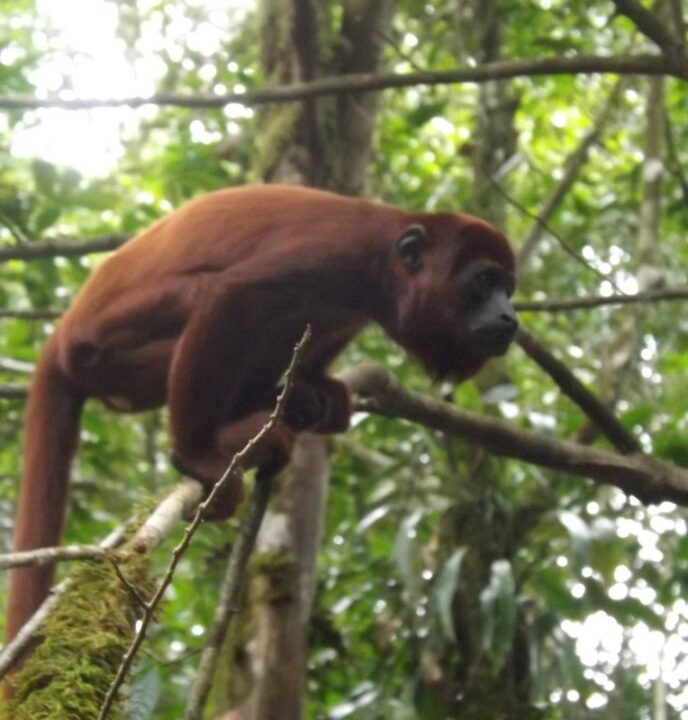
Deep in the heart of the Amazon rainforest, an extraordinary sound echoes through the towering trees. It is a deep, powerful roar that travels across rivers, dense vegetation, and miles of tropical forest. This remarkable sound belongs to the howler monkey, one of the most fascinating primates inhabiting Central and South America’s tropical rainforests.
Known for their incredibly loud vocalizations, howler monkeys are an essential part of the Amazon rainforest ecosystem. These tree-dwelling primates spend most of their lives high above the forest floor, feeding on leaves, fruits, and flowers while moving through the rainforest canopy. Their distinctive calls help them communicate with other groups, establish territories, and maintain social relationships.
However, there is much more to these remarkable animals than their famous howling. From their specialized digestive systems and prehensile tails to their complex social behavior and contribution to seed dispersal, howler monkeys have developed fascinating adaptations that allow them to survive in challenging rainforest environments.
In the Peruvian Amazon, particularly around Tambopata National Reserve, Manu National Park, and Puerto Maldonado, these primates form an important part of the region’s extraordinary wildlife diversity.
Whether you are a wildlife enthusiast, nature photographer, researcher, or adventurous traveler, understanding the howler monkey offers a fascinating opportunity to discover the hidden world of Amazon rainforest primates.
1. What Is a Howler Monkey?
The howler monkey is a New World primate belonging to the Atelidae family and the genus Alouatta. These mammals are recognized for their powerful vocalizations, distinctive facial features, long tails, and ability to live in the upper layers of tropical forests.
Howler monkeys inhabit different environments throughout Central and South America, including tropical lowland forests, flooded forests, and mountainous woodland habitats.
Unlike some other primates that frequently travel between trees, howler monkeys generally adopt a relatively slow-moving arboreal lifestyle. They spend considerable time resting, feeding, and maintaining social relationships within their groups.
Table of Contents
Their distinctive vocalizations are among the most recognizable sounds of the tropical rainforest.
Scientific Classification of Howler Monkeys
Understanding their scientific classification helps explain their relationship with other primates.
- Kingdom: Animalia
- Phylum: Chordata
- Class: Mammalia
- Order: Primates
- Family: Atelidae
- Genus: Alouatta
The genus Alouatta includes several recognized species, each displaying different physical characteristics, geographical distributions, and habitat preferences.
As members of the Atelidae family, howler monkeys share evolutionary relationships with other large New World primates, including spider monkeys and woolly monkeys.
Physical Characteristics and Appearance
Howler monkeys have several distinctive physical features that make them relatively easy to recognize.
Their bodies are covered with thick fur, which varies in color depending on the species. Some have reddish or golden-brown coats, while others display black, dark brown, or mixed-colored fur.
Their faces are generally dark, with relatively short snouts and expressive eyes.
Adult individuals have strong limbs that help them climb and move between branches. Their long tails are particularly important for maintaining balance and supporting their weight while feeding.
Body Size, Weight, and Fur Color
Body size varies among different howler monkey species. Adult animals generally measure approximately 40–70 centimeters in body length, excluding the tail, although measurements differ between species and individuals.
Their weight also varies, with some species and populations showing noticeable differences between adult males and females.
Fur color provides another useful identification characteristic. Red howler monkeys commonly have reddish coats, while black howler monkeys have predominantly dark fur.
These variations reflect the diversity found within the Alouatta genus.
Prehensile Tail and Its Importance
One of the most remarkable adaptations of howler monkeys is their prehensile tail.
This powerful tail functions almost like an additional hand, helping them grip branches, stabilize their bodies, and maintain balance while moving through the forest canopy.
The underside of the tail contains a sensitive gripping surface that improves their ability to hold onto branches.
This adaptation is particularly useful when feeding because howler monkeys can support their bodies while reaching for leaves, flowers, and fruits.
Enlarged Hyoid Bone and Vocal Anatomy
The enlarged hyoid bone is one of the most distinctive anatomical characteristics of howler monkeys.
This specialized bone structure helps create a resonating chamber that amplifies their vocalizations.
Combined with their developed vocal apparatus, it allows these primates to produce remarkably loud calls.
Their vocal anatomy explains why their roars can travel considerable distances through dense rainforest vegetation.
Different Species of Howler Monkeys
Several howler monkey species inhabit different parts of the Americas.
Some notable examples include:
- Red howler monkey.
- Black howler monkey.
- Mantled howler monkey.
- Brown howler monkey.
- Yucatán black howler monkey.
- Colombian red howler monkey.
Each species has its own geographical distribution, physical characteristics, and ecological preferences.
Their diversity makes the genus Alouatta an important component of Neotropical biodiversity.
2. Where Do Howler Monkeys Live? Habitat and Geographic Distribution
Howler monkeys inhabit tropical and subtropical forests throughout Central and South America.
Their distribution includes countries with extensive rainforest ecosystems, where suitable trees, food resources, and connected forest habitats support their populations.
They are particularly associated with tropical forests because these environments provide abundant vegetation, feeding opportunities, and elevated branches for resting and movement.
Howler Monkey Habitat in the Amazon Rainforest
The Amazon rainforest provides important habitat for several howler monkey species.
This enormous tropical ecosystem contains different forest environments, including permanently flooded forests, seasonal wetlands, riverbanks, and upland forests.
Howler monkeys can occupy different forest types depending on their species and local environmental conditions.
Tropical Lowland Forests
Tropical lowland forests provide favorable conditions for howler monkeys because they contain abundant trees and diverse vegetation.
These forests offer leaves, flowers, fruits, and branches that support their feeding and movement.
Their dense vegetation also provides resting locations and protection from potential predators.
Flooded Forests and Riparian Habitats
Flooded forests and riverbank vegetation are important habitats in many Amazonian landscapes.
Seasonal flooding changes the availability and distribution of food resources, influencing where animals spend their time.
Howler monkeys living in these environments depend on trees that remain accessible during changing water levels.
Riparian forests also connect different habitat areas, helping maintain ecological continuity.
Forest Canopy and Tree-Dwelling Environments
Howler monkeys are primarily arboreal animals, meaning they spend most of their lives in trees.
The forest canopy provides their main feeding and resting environment.
Living above the ground allows them to access leaves and fruits while reducing their exposure to some terrestrial threats.
Their strong limbs and prehensile tails help them move safely through interconnected branches.
Where to Find Howler Monkeys in Peru
Peru contains extensive tropical forest ecosystems that support remarkable primate diversity.
The southeastern Amazon region is particularly important for wildlife observation and rainforest conservation.
Howler Monkeys in Tambopata National Reserve
Tambopata is one of Peru’s most remarkable wildlife destinations.
Its extensive forests, rivers, wetlands, and diverse vegetation provide habitats for several primate species.
Howler monkeys may be observed resting in the canopy, feeding on leaves, or producing territorial calls from elevated branches.
Early morning excursions can provide opportunities to hear their vocalizations before seeing the animals.
Howler Monkeys in Manu National Park
Manu contains an extraordinary variety of tropical habitats and supports numerous mammal species.
Its extensive forest ecosystems provide suitable environments for different primates, including howler monkeys.
Wildlife observation in Manu can reveal fascinating aspects of their feeding behavior, social interactions, and movement through the canopy.
Wildlife Habitats Around Puerto Maldonado
Puerto Maldonado serves as an important gateway to the southeastern Peruvian Amazon.
The surrounding forests contain diverse habitats that support monkeys, birds, reptiles, amphibians, and other rainforest wildlife.
River excursions, forest walks, and guided wildlife observation can help visitors explore these ecosystems.
However, sightings are never guaranteed because wild animals move freely through extensive forest environments.
Howler Monkey Adaptations to Different Forest Environments
Howler monkeys have developed several adaptations that allow them to survive in changing rainforest conditions.
Their ability to consume different types of vegetation helps them take advantage of seasonal food resources. Their prehensile tails support movement through branches, while their specialized digestive systems allow them to process large quantities of leaves.
Their relatively slow-moving lifestyle also helps conserve energy when food quality is low.
These adaptations are particularly important in tropical forests, where rainfall, flooding, temperature, and vegetation availability change throughout the year.
3. What Do Howler Monkeys Eat? Diet and Feeding Habits
The howler monkey has a predominantly herbivorous diet consisting mainly of leaves, fruits, flowers, and other plant materials.
Unlike many fruit-eating primates, howler monkeys depend heavily on foliage. Their ability to consume leaves allows them to survive in environments where fruit availability changes throughout the seasons.
Their feeding habits also influence forest ecology because they help distribute seeds and contribute to vegetation dynamics.
Main Food Sources of Howler Monkeys
The diet of howler monkeys varies depending on their habitat, species, and seasonal food availability.
Although leaves are often their primary food source, they also consume fruits and flowers whenever these resources are available.
Young Leaves and Forest Foliage
Young leaves are among the most important food sources for howler monkeys.
Compared with mature foliage, young leaves often contain fewer structural fibers and may be easier to digest.
They can also provide valuable nutrients, including proteins and minerals.
Howler monkeys spend considerable time searching for suitable foliage throughout the forest canopy.
Their specialized digestive systems help them process plant material that many other mammals cannot efficiently use.
Tropical Fruits and Wild Berries
Fruits provide an additional source of energy and nutrients.
Howler monkeys consume different tropical fruits depending on seasonal availability and the vegetation growing within their habitat.
Fruit consumption is particularly important because it provides natural sugars and other nutrients that complement their leaf-based diet.
They may also consume flowers and other soft plant materials when available.
Flowers, Seeds, and Other Plant Materials
Flowers are another component of their diet.
During flowering seasons, howler monkeys may feed on blossoms from different rainforest trees.
They can also consume certain seeds and other plant parts.
This dietary flexibility allows them to use a variety of food resources throughout the year.
How Howler Monkeys Find and Consume Food
Howler monkeys generally search for food within familiar areas of the forest canopy.
Their feeding movements are influenced by the availability of suitable trees and the nutritional value of different plants.
Canopy Foraging and Feeding Behavior
Their prehensile tails and strong limbs help them reach branches that contain edible vegetation.
They often move slowly between feeding locations, carefully selecting leaves and fruits.
Unlike highly active primates that travel extensively throughout the day, howler monkeys frequently spend long periods feeding and resting.
Their feeding behavior reflects the relatively low energy content of many leaves.
Seasonal Food Availability
Rainforest vegetation changes throughout the year.
Some trees produce abundant fruits during particular seasons, while others develop new leaves or flowers at different times.
Howler monkeys adjust their feeding habits according to these changes.
This flexibility helps them maintain access to food even when preferred resources become less abundant.
Digestive Adaptations for a Leaf-Based Diet
Leaves contain cellulose and other structural compounds that are difficult for mammals to digest.
Howler monkeys have specialized digestive systems that help them obtain nutrients from fibrous vegetation.
Their enlarged digestive tract and microbial fermentation processes support the breakdown of plant material.
These adaptations allow them to obtain energy from leaves that many other primates consume only in smaller quantities.
Because leaf digestion takes time, howler monkeys often rest for extended periods after feeding.
Their relatively low-energy lifestyle is closely connected to their nutritional strategy.
4. Howler Monkey Behavior: Social Groups, Communication, and Daily Life
Howler monkey behavior is shaped by their social relationships, feeding requirements, and life in the rainforest canopy.
They are generally social animals that live in groups containing multiple individuals.
Their daily activities include feeding, resting, grooming, moving between trees, and communicating through vocalizations.
Although they are not constantly active, their behavior reveals a complex relationship with their environment.
Social Structure and Group Dynamics
Howler monkeys usually live in social groups, although group size and composition vary among species and populations.
These groups may contain adult males, adult females, juveniles, and infants.
Living in groups provides opportunities for social interaction and communication while helping individuals maintain relationships within their community.
Family Groups and Social Relationships
Social groups often include several related and unrelated individuals.
Members interact through grooming, proximity, vocal communication, and shared feeding areas.
Young monkeys remain close to their mothers during early development and gradually become more independent.
Social relationships help maintain group cohesion and influence how individuals use their habitat.
Dominance Hierarchy and Group Interactions
Some howler monkey groups display dominance relationships, particularly among adult males.
Competition may occur over access to food, reproductive opportunities, or social position.
Vocalizations can help establish boundaries and reduce the need for direct physical confrontations.
Interactions vary depending on species, group composition, and environmental conditions.
Daily Activity Patterns
Howler monkeys follow daily routines influenced by temperature, food availability, and environmental conditions.
They are generally active during daylight hours.
Their activities often alternate between feeding, resting, and moving through the canopy.
Morning Resting and Feeding Habits
Early morning is an important period for rainforest wildlife activity.
Howler monkeys may begin their day by producing loud calls that communicate their presence to neighboring groups.
After vocalizing, they often move between feeding locations or remain in trees where food is available.
The cooler temperatures of the morning can make feeding and movement more comfortable.
Movement Through the Forest Canopy
Howler monkeys move through trees using their strong limbs and prehensile tails.
They generally travel quadrupedally along branches, carefully distributing their weight while maintaining balance.
Their movements are often deliberate rather than fast.
This behavior helps them conserve energy and safely navigate complex rainforest vegetation.
Communication and Vocal Behavior
Communication plays an essential role in howler monkey society.
They use loud calls, facial expressions, body movements, and physical interactions to communicate with other members of their groups.
Their vocalizations are particularly important when individuals need to establish their location or communicate with neighboring groups.
Territorial Calls and Group Communication
Howler monkeys produce loud vocalizations that help communicate territorial information.
These calls can indicate the presence of a group and help neighboring animals recognize occupied forest areas.
Territorial communication can reduce unnecessary encounters between competing groups.
It also helps individuals maintain awareness of other monkeys living nearby.
Why Do Howler Monkeys Howl?
Howler monkeys howl primarily to communicate with other groups and establish their presence.
Their calls are particularly common during periods of territorial interaction.
They may also vocalize in response to nearby groups, environmental disturbances, or changes in social activity.
These powerful sounds help maintain communication across forest environments where thick vegetation makes visual contact difficult.
How Far Can Their Calls Travel?
Howler monkey calls can travel considerable distances through suitable forest environments.
Their effective range depends on several factors, including vegetation density, weather conditions, topography, and the strength of the vocalization.
The amplified sound produced by their specialized vocal anatomy allows other monkeys to detect their presence without needing to approach closely.
This ability is especially valuable in large tropical forests where groups may occupy separate areas.
5. Why Do Howler Monkeys Howl? Understanding Their Famous Calls
The powerful calls of howler monkeys are among the most recognizable sounds of the Neotropical rainforest.
Their vocalizations can resemble deep roars, growls, or prolonged howls.
For visitors exploring the Amazon, hearing these calls is often one of the most memorable wildlife experiences.
However, these sounds serve important biological and social purposes.
The Science Behind Their Loud Vocalizations
Howler monkeys possess specialized anatomical structures that allow them to produce exceptionally powerful sounds.
Their vocal system includes a developed larynx and an enlarged hyoid bone.
Together, these structures create the conditions necessary for producing low-frequency vocalizations.
The Role of the Enlarged Hyoid Bone
The hyoid bone is located in the throat region and supports structures involved in vocalization.
In howler monkeys, it is unusually enlarged compared with many other primates.
This enlargement creates a resonating chamber that amplifies the sound produced by the vocal system.
The size and structure of this anatomical feature differ between species and sexes.
Vocal Anatomy and Sound Production
When a howler monkey produces a call, air moves through its respiratory and vocal structures.
The resulting sound is amplified by the specialized resonating anatomy.
The low-frequency quality allows their calls to travel through dense forest environments.
This adaptation is one of the most remarkable examples of specialized communication among rainforest mammals.
When and Why Howler Monkeys Make Their Calls
Howler monkeys can vocalize at different times of the day.
However, their calls are particularly noticeable during the early morning and around periods of territorial interaction.
Morning Calls in the Amazon Rainforest
The Amazon rainforest often becomes filled with animal sounds during the early morning.
Birds begin calling, insects become active, and howler monkeys may produce powerful vocalizations from the treetops.
These calls create a distinctive morning jungle chorus.
For wildlife enthusiasts, listening carefully can help identify the presence of monkeys before they become visible.
Territorial Communication Between Groups
Neighboring groups may exchange calls to communicate their locations.
These vocal interactions can help establish boundaries and reduce direct competition.
Rather than constantly moving into neighboring territories, groups can communicate from a distance.
Responses to Nearby Groups and Environmental Changes
Howler monkeys may increase their vocal activity when they detect other groups nearby.
Their calls can also occur in response to disturbances or changes in their immediate environment.
Although vocalization is an important part of their behavior, not every call indicates aggression.
Many vocal exchanges simply communicate presence and location.
Howler Monkey Calls as Part of the Jungle Soundscape
The vocalizations of howler monkeys contribute to the ecological character of tropical forests.
Their calls can be heard alongside birds, frogs, insects, and other mammals.
In the Amazon, these sounds provide an opportunity to understand how wildlife communicates across different forest habitats.
Listening to the rainforest is often just as rewarding as observing its animals.
6. Howler Monkey Adaptations for Survival in the Rainforest
Surviving in a tropical rainforest requires specialized physical and behavioral characteristics.
Howler monkeys possess several adaptations that help them move through trees, obtain food, communicate, and maintain social relationships.
These features make them well suited to an arboreal lifestyle.
Physical Adaptations
Their physical characteristics are closely connected to their dependence on trees and vegetation.
Prehensile Tail for Balance and Movement
The prehensile tail is one of their most important adaptations.
It functions as an additional gripping structure, helping them hold branches and maintain stability while feeding.
This ability allows howler monkeys to reach food located on branches that would otherwise be difficult to access.
Strong Limbs for Climbing
Their limbs are adapted for climbing and supporting their bodies while moving through trees.
Their hands and feet help them grip branches, while their muscular limbs provide stability.
These features are especially important when navigating the irregular structure of rainforest canopies.
Specialized Digestive System
Their digestive system allows them to process large amounts of fibrous vegetation.
Microorganisms in their digestive tract help break down plant materials and release nutrients.
This adaptation provides access to food resources that may be less attractive to other primates.
Behavioral Adaptations
Physical characteristics alone do not explain how howler monkeys survive.
Their behavior also plays an important role in adapting to rainforest conditions.
Arboreal Lifestyle and Canopy Movement
Living primarily in trees provides access to food and resting locations.
It also reduces exposure to some ground-dwelling predators.
Their careful movement through the canopy helps them use interconnected branches efficiently.
Group Living and Social Protection
Social groups provide opportunities for communication and awareness of surrounding animals.
Individuals can respond to changes in their environment while maintaining contact with other members.
Group living also supports social learning and the development of young monkeys.
Energy Conservation Through Resting Behavior
Howler monkeys spend considerable time resting.
This behavior is closely related to their leaf-based diet, which provides relatively low concentrations of available energy.
By reducing unnecessary movement, they can conserve energy and maintain their daily nutritional requirements.
How Adaptations Help Howler Monkeys Survive Seasonal Changes
Rainforest conditions change throughout the year.
Rainfall influences vegetation growth, fruit production, flooding, and the distribution of food resources.
Howler monkeys respond through flexible feeding behavior and movement between suitable feeding areas.
Their ability to consume different types of vegetation helps them survive when particular food sources become scarce.
Together, these adaptations support their long-term survival in changing tropical environments.
7. The Role of Howler Monkeys in the Amazon Rainforest Ecosystem
Howler monkeys are important members of the Amazon rainforest ecosystem.
Their feeding habits, movement patterns, and interactions with other organisms contribute to ecological processes that help maintain tropical forest biodiversity.
Although they are often recognized for their loud calls, their ecological importance extends far beyond communication.
Howler Monkeys and Seed Dispersal
One of their most valuable ecological contributions is seed dispersal.
When howler monkeys consume fruits, they may swallow seeds that later pass through their digestive systems.
These seeds can be deposited in different locations through their droppings.
This process helps distribute plant species across the forest.
How Fruit Consumption Supports Forest Regeneration
Many rainforest trees depend on animals to transport their seeds away from parent plants.
Seed dispersal can reduce competition between young plants and established trees.
It may also increase the chances that seeds reach suitable locations for germination.
By consuming different fruits, howler monkeys participate in this natural process of forest regeneration.
Seed Distribution Across the Forest
As howler monkeys move between feeding locations, they can transport seeds across different parts of their habitat.
The distance traveled and the types of seeds dispersed depend on their feeding patterns and movement.
This ecological relationship demonstrates how primates contribute to the reproduction and distribution of tropical vegetation.
Their Role in the Rainforest Food Web
Howler monkeys occupy an important position in the rainforest food web.
They consume plant material and, in turn, may become prey for natural predators.
Their presence contributes to the transfer of energy between different levels of the ecosystem.
Relationships with Predators
Natural predators may include large birds of prey, wild cats, and other animals capable of hunting primates.
Young individuals can be particularly vulnerable.
Their arboreal lifestyle, social communication, and awareness of their surroundings help reduce some predation risks.
Their Contribution to Ecosystem Balance
Howler monkeys influence vegetation through their feeding activities.
By consuming leaves, flowers, and fruits, they participate in the natural cycling of nutrients and the movement of plant seeds.
Their droppings also return organic material to the forest environment.
These interactions help maintain the complex ecological relationships that characterize tropical rainforests.
Why Howler Monkeys Matter for Amazon Biodiversity
The Amazon rainforest contains countless interconnected species.
Each organism contributes to the functioning of this environment through feeding, reproduction, competition, and other ecological relationships.
Howler monkeys are one important part of this biological network.
Protecting their populations also means protecting the trees, food resources, and connected forest habitats on which many other species depend.
Their conservation is therefore closely connected to the wider protection of Amazon biodiversity.
8. Howler Monkey Reproduction, Babies, and Life Cycle
The reproduction and development of howler monkeys reveal another fascinating aspect of their biology.
Like other mammals, they give birth to live young and provide parental care during the early stages of life.
Infant monkeys depend heavily on their mothers for protection, transportation, and nourishment.
As they grow, they gradually develop the physical abilities and social skills needed to become independent members of their groups.
Mating and Reproductive Behavior
Howler monkey reproduction varies among species.
In many populations, social relationships and interactions between adult males and females influence mating opportunities.
Females generally give birth to a single infant after a gestation period that varies depending on the species.
Reproductive timing may be influenced by environmental conditions, food availability, and individual health.
Howler Monkey Babies
Baby howler monkeys are among the most fascinating sights in the rainforest.
Newborns are relatively small and depend on their mothers for almost everything during their early development.
Newborn Characteristics
Infant howler monkeys usually have soft fur and a body structure adapted for clinging to their mothers.
During their first weeks and months, they remain close to the mother while developing coordination and strength.
Their ability to grip fur and maintain contact is essential for safe transportation through the canopy.
Maternal Care and Infant Development
Mother howler monkeys provide protection, nourishment, and physical contact.
Infants initially depend on their mothers for milk and gradually begin exploring their surroundings.
As they become stronger, they start observing other group members and learning important behaviors.
These early experiences help them understand social relationships and develop the skills required for life in the rainforest.
Growth, Independence, and Life Expectancy
Young howler monkeys become increasingly independent as they develop.
They gradually improve their climbing abilities, feeding skills, and communication.
The transition to adulthood depends on species, sex, and environmental conditions.
In the wild, howler monkeys may live for approximately 15–20 years or longer, although lifespan varies considerably.
Access to food, habitat quality, disease, predation, and human-related threats all influence survival.
9. Are Howler Monkeys Endangered? Threats and Conservation
Howler monkeys face several threats throughout their geographical distribution.
Although some populations remain relatively stable, others are affected by habitat destruction, hunting, disease, and environmental changes.
Their dependence on forest ecosystems makes them particularly vulnerable to large-scale deforestation and habitat fragmentation.
Understanding these threats is essential for developing effective conservation strategies.
Major Threats to Howler Monkey Populations
The survival of howler monkeys depends on the availability of healthy and connected forest habitats.
When these environments are damaged or destroyed, populations may become isolated and lose access to important food resources.
Deforestation and Habitat Destruction
Deforestation is one of the most significant threats to tropical rainforest wildlife.
Forests are cleared for agriculture, cattle ranching, roads, settlements, and other human activities.
When trees disappear, howler monkeys lose their feeding areas, resting locations, and movement routes.
Large-scale forest destruction can reduce available habitat and make it difficult for populations to survive.
Forest Fragmentation and Habitat Loss
Forest fragmentation occurs when large continuous forests become divided into smaller isolated patches.
This can happen through road construction, agricultural expansion, logging, and infrastructure development.
For arboreal primates, fragmentation creates serious challenges.
Separated forest patches may prevent individuals from moving safely between feeding areas or finding potential mates.
Small isolated populations can also become more vulnerable to environmental changes and genetic problems.
Hunting and Human-Wildlife Conflict
Hunting remains a concern for some primate populations.
In certain areas, monkeys may be hunted for food or captured for illegal wildlife trade.
Human-wildlife conflict can also occur when expanding settlements overlap with natural habitats.
Reducing these pressures requires community participation, responsible land management, and stronger protection of wildlife habitats.
Climate Change and Environmental Pressures
Climate change can influence tropical forest ecosystems through changes in rainfall patterns, temperature, and seasonal conditions.
Extended droughts, severe flooding, and changes in vegetation can affect food availability.
Because howler monkeys depend heavily on forest plants, environmental changes may influence their feeding behavior and reproductive success.
Howler Monkey Conservation in Peru
Peru contains extensive protected rainforest landscapes that provide important habitat for wildlife.
Conservation initiatives in these regions help protect forest ecosystems and the species that depend on them.
Protected Rainforest Areas
Protected natural areas help maintain important habitats for howler monkeys and other Amazonian wildlife.
Tambopata and Manu are particularly valuable because they contain extensive forest environments and high biodiversity.
Protecting these landscapes helps preserve feeding areas, breeding habitats, and ecological connections between forest communities.
Wildlife Conservation Programs
Wildlife conservation efforts may include habitat monitoring, scientific research, environmental education, and community participation.
Monitoring primate populations helps researchers understand changes in distribution, behavior, and habitat use.
Conservation programs can also support responsible land management and reduce pressure on vulnerable ecosystems.
Sustainable Tourism and Forest Protection
Responsible wildlife tourism can create economic opportunities for local communities while encouraging rainforest conservation.
Nature-based tourism helps visitors understand the importance of protecting wildlife and maintaining healthy ecosystems.
When tourism is carefully managed, it can support local livelihoods and increase awareness of environmental challenges.
How Travelers Can Help Protect Howler Monkeys
Visitors exploring the Amazon can contribute to wildlife conservation through responsible behavior.
Some practical actions include:
- Choose responsible rainforest excursions.
- Observe wild monkeys from a respectful distance.
- Never feed wild primates.
- Avoid touching or attempting to capture animals.
- Do not purchase products made from wildlife.
- Follow the guidance of trained local naturalists.
- Support tourism activities that respect forest conservation.
- Avoid disturbing animals during feeding or resting.
Even small actions can help reduce human pressure on vulnerable wildlife.
10. Where to See Howler Monkeys in the Peruvian Amazon
The Peruvian Amazon is one of the most rewarding destinations for discovering tropical wildlife.
Its extensive forests, rivers, wetlands, and diverse vegetation create habitats for numerous primate species.
For visitors interested in howler monkey watching, southeastern Peru offers opportunities to explore some of the region’s most remarkable rainforest environments.
Although wildlife sightings are never guaranteed, understanding where these primates live can improve the chances of observing them.
Spotting Howler Monkeys in Tambopata National Reserve
Tambopata is an important wildlife destination in southeastern Peru.
Its tropical forests contain diverse vegetation and provide habitat for several species of primates.
Howler monkeys can sometimes be observed high in the trees, where they feed, rest, and communicate with neighboring groups.
Rainforest Trails and River Habitats
Exploring rainforest trails with an experienced guide can reveal signs of wildlife activity.
Look toward the upper branches, where howler monkeys often remain partially hidden by foliage.
Riverbanks and forest edges can also provide opportunities to observe wildlife, depending on local habitat conditions.
Listening for their distinctive calls is often one of the best ways to identify their presence.
Guided Wildlife Observation
Experienced naturalists can help visitors recognize animal sounds, movement patterns, and feeding behavior.
They may also explain how primates interact with their environment.
Early morning excursions are particularly interesting because many rainforest animals become active during the cooler hours.
Patience and quiet observation are essential when searching for wild monkeys.
Howler Monkey Watching in Manu National Park
Manu contains extensive tropical forest ecosystems with exceptional wildlife diversity.
Its different elevations and forest environments support numerous mammals, birds, and other wildlife.
Howler monkeys form part of this remarkable biological community.
Biodiversity and Primate Habitats
The diversity of vegetation throughout Manu provides different food resources for primates.
Howler monkeys use the forest canopy for feeding, resting, and communication.
Their presence contributes to the ecological relationships that make the region so biologically important.
Jungle Excursions and Wildlife Photography
Wildlife photography in Manu requires patience, observation, and an understanding of animal behavior.
Visitors should use appropriate camera equipment and avoid approaching animals too closely.
Photographing howler monkeys in their natural environment can provide valuable opportunities to appreciate their adaptations and social interactions.
Wildlife Watching Around Puerto Maldonado
Puerto Maldonado provides access to a variety of rainforest environments in southeastern Peru.
The surrounding region contains rivers, lakes, wetlands, and tropical forests that support diverse wildlife.
Visitors can explore these habitats through guided excursions and forest walks.
Amazon River and Forest Excursions
River journeys provide an opportunity to experience the Amazon landscape from a different perspective.
Visitors can observe forest vegetation, birds, reptiles, and other animals along riverbanks.
Howler monkeys may sometimes be heard or spotted in trees near the water.
Eco-Lodges and Guided Jungle Experiences
Staying in a rainforest lodge can provide additional opportunities to experience wildlife.
Guided walks allow visitors to explore different forest habitats while learning about local biodiversity.
Naturalists can help identify primates, explain their feeding behavior, and describe the importance of forest conservation.
Tips for Observing Howler Monkeys Responsibly
Responsible wildlife observation helps protect animals while creating a more meaningful experience for visitors.
Consider these recommendations:
- Start wildlife excursions early in the morning.
- Listen carefully for distinctive howling sounds.
- Look toward the upper forest canopy.
- Use binoculars to observe animals without approaching them.
- Keep conversations quiet during wildlife encounters.
- Avoid flash photography when it may disturb animals.
- Never feed or touch wild monkeys.
- Follow the instructions of experienced naturalists.
- Respect restricted areas and protected habitats.
- Allow animals to move freely without interference.
The most rewarding wildlife encounters happen when visitors respect the natural behavior of animals.
11. 15 Fascinating Facts About Howler Monkeys
Howler monkeys are among the most interesting primates of the tropical Americas. Their anatomy, communication, feeding habits, and social behavior make them unique members of rainforest ecosystems.
Here are 15 fascinating facts about these remarkable animals.
1. They are among the loudest land animals.
Howler monkeys produce exceptionally powerful vocalizations that can travel long distances through tropical forests. Their calls are particularly noticeable during the early morning.
2. Their calls can travel considerable distances.
Their specialized vocal anatomy allows them to produce deep sounds that can be heard across large forest areas, depending on environmental conditions.
3. They possess an enlarged hyoid bone.
This unusual anatomical feature acts as a resonating chamber, helping amplify their vocalizations.
4. They have prehensile tails.
Their powerful tails function almost like an additional hand, allowing them to grip branches and maintain balance while moving through trees.
5. They spend most of their lives in trees.
Howler monkeys are primarily arboreal animals. The forest canopy provides their main feeding, resting, and movement environment.
6. Leaves are an important part of their diet.
Unlike many fruit-dependent primates, howler monkeys consume substantial quantities of foliage, including young leaves and other plant materials.
7. They live in social groups.
Their groups allow individuals to communicate, maintain social relationships, and share forest habitats.
8. Their calls help establish territories.
Vocal communication allows neighboring groups to recognize one another’s presence and can reduce unnecessary physical encounters.
9. They inhabit different tropical forest environments.
Depending on the species, howler monkeys can live in lowland rainforests, seasonal forests, flooded forests, and other tropical habitats.
10. They contribute to seed dispersal.
By eating fruits and passing seeds through their digestive systems, they help distribute plant species throughout their habitat.
11. Different species have different fur colors.
Some howler monkeys have reddish coats, while others are black, brown, or display mixed coloration.
12. They have specialized digestive adaptations.
Their digestive systems help them process fibrous vegetation and obtain nutrients from leaves.
13. They conserve energy through resting.
Their leaf-based diet provides relatively limited available energy, encouraging a lifestyle that includes considerable resting.
14. Their presence supports rainforest biodiversity.
Their feeding activities and ecological relationships contribute to the natural functioning of tropical forest ecosystems.
15. They are an important part of Amazon wildlife heritage.
Howler monkeys represent the extraordinary biological diversity of the Amazon and are among the most recognizable primates of its forests.
12. Frequently Asked Questions About Howler Monkeys
What Is a Howler Monkey?
A howler monkey is a New World primate belonging to the genus Alouatta and the Atelidae family. It is recognized for its exceptionally loud vocalizations, prehensile tail, arboreal lifestyle, and predominantly plant-based diet. These primates inhabit tropical forests throughout Central and South America.
Where Do Howler Monkeys Live?
Howler monkeys live in tropical and subtropical forests across Central and South America. Their habitats include the Amazon rainforest, tropical lowland forests, flooded forests, and other wooded environments. In Peru, they occur in several Amazonian regions, including Tambopata and Manu.
What Do Howler Monkeys Eat?
Howler monkeys primarily eat leaves, fruits, flowers, and other plant materials. Young leaves are particularly important because they can provide valuable nutrients. Their specialized digestive systems help them process fibrous vegetation and survive in forests where fruit availability changes throughout the year.
Why Do Howler Monkeys Howl?
Howler monkeys howl mainly to communicate with neighboring groups and establish their presence within forest territories. Their vocalizations help individuals recognize occupied areas and maintain distance from competing groups. Their enlarged hyoid bone helps amplify these distinctive sounds.
How Loud Is a Howler Monkey’s Call?
Howler monkeys produce some of the loudest vocalizations among land animals. Under suitable conditions, their calls can travel considerable distances through tropical forests. The actual distance depends on vegetation density, weather, topography, and the strength of the call.
Are Howler Monkeys Dangerous to Humans?
Howler monkeys generally avoid direct interactions with humans and are not naturally aggressive toward people. However, like all wild animals, they can defend themselves if threatened or cornered. Visitors should maintain a respectful distance, avoid feeding them, and never attempt to touch or capture them.
How Long Do Howler Monkeys Live?
Howler monkeys can live approximately 15–20 years or longer, depending on their species and environmental conditions. Their lifespan is influenced by food availability, habitat quality, disease, predation, and human-related pressures. Individuals living in protected environments may experience different survival conditions from those in fragmented forests.
Do Howler Monkeys Live in Groups?
Yes. Howler monkeys generally live in social groups containing adult males, females, juveniles, and infants. Group size and composition vary depending on species and habitat conditions. Members communicate through vocalizations, physical interactions, and social behaviors such as grooming.
Are Howler Monkeys Endangered?
The conservation status of howler monkeys varies between species. Some populations are relatively stable, while others face significant threats from deforestation, habitat fragmentation, hunting, and disease. Protecting tropical forests and maintaining connected wildlife habitats are essential for their long-term survival.
Where Can You See Howler Monkeys in Peru?
Howler monkeys can be found in several tropical forest regions of Peru. Tambopata National Reserve, Manu National Park, and forests surrounding Puerto Maldonado offer opportunities to explore habitats where these primates occur. Guided wildlife excursions and early morning observation can improve the chances of spotting them.
What Is the Purpose of a Howler Monkey’s Tail?
A howler monkey’s prehensile tail helps it grip branches, maintain balance, and support its body while moving through trees. The tail is particularly useful when feeding because it allows the animal to hold onto branches while reaching for leaves and fruits.
What Is the Difference Between Male and Female Howler Monkeys?
Differences between male and female howler monkeys depend on the species. In some species, males are noticeably larger than females and may have different fur coloration. Males and females also display different reproductive roles, although both participate in the social life of their groups.
13. Final Thoughts: Protecting the Howler Monkeys of the Amazon Rainforest
The howler monkey is one of the most extraordinary inhabitants of the Amazon rainforest. Its powerful vocalizations, specialized anatomy, fascinating feeding habits, and social behavior make it an important member of tropical forest ecosystems.
From the moment its deep calls echo through the forest canopy to the sight of an adult carrying its young between branches, observing these primates provides a remarkable glimpse into the complexity of rainforest life.
Beyond their fascinating appearance and behavior, howler monkeys play an important ecological role. Their feeding activities contribute to seed dispersal, vegetation dynamics, and the natural relationships that sustain tropical biodiversity.
However, their survival depends on healthy forests. Deforestation, habitat fragmentation, hunting, and environmental changes continue to threaten wildlife populations across many parts of the Americas.
Protecting these primates requires more than preserving individual animals. It means conserving the entire ecosystem that supports them, including rainforest trees, rivers, food resources, and interconnected habitats.
For travelers exploring the Peruvian Amazon, destinations such as Tambopata, Manu, and Puerto Maldonado offer opportunities to discover the incredible diversity of tropical wildlife.
Responsible wildlife tourism can help visitors appreciate these animals while supporting the importance of rainforest conservation. Observing howler monkeys in their natural environment, listening to their extraordinary calls, and understanding their ecological importance can create a lasting connection with nature.
Ultimately, protecting the howler monkey means protecting one of the Amazon rainforest’s most remarkable voices and preserving the biodiversity of this extraordinary ecosystem for future generations.