
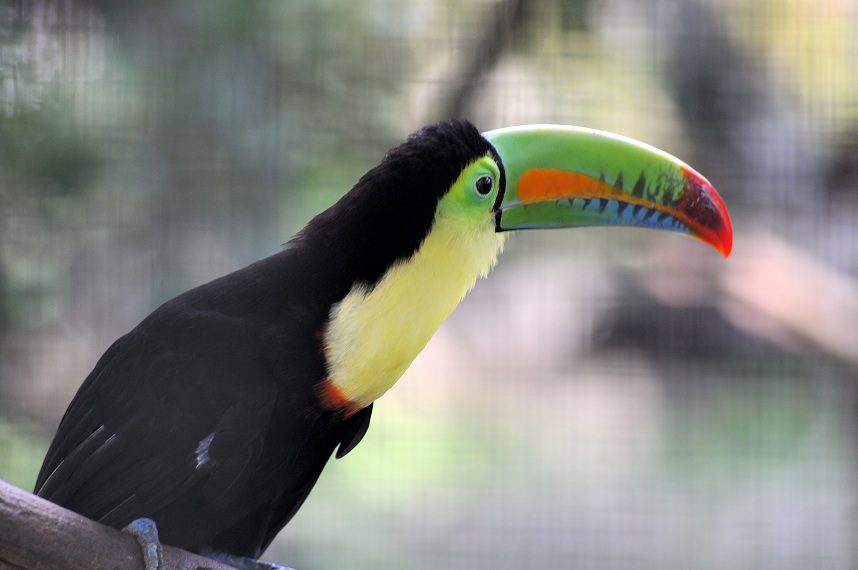
Toucans are among the most recognizable and fascinating birds in the tropical forests of Central and South America. Famous for their enormous, brightly colored bills, striking plumage, and distinctive calls, these remarkable birds are an important part of rainforest biodiversity. Their unusual appearance makes them instantly recognizable, but their biology, behavior, and ecological importance are equally fascinating.
Belonging to the family Ramphastidae, toucans inhabit a variety of tropical environments, including the Amazon rainforest, humid lowland forests, mountain forests, and wooded areas throughout the Neotropics. They spend most of their lives in trees, where they search for food, communicate with other birds, establish territories, and raise their young.
Although their large bills are their most famous physical characteristic, toucans have many other remarkable adaptations. Their lightweight bill helps them reach food on distant branches, their specialized feet provide a secure grip on tree limbs, and their feeding habits contribute to the dispersal of seeds throughout tropical ecosystems.
Table of Contents
Most toucan species consume a diet dominated by fruit, although insects, small reptiles, eggs, and nestlings may also form part of their food intake. This varied diet allows them to exploit different food sources depending on seasonal availability and their surrounding habitat.
Toucans are also important indicators of rainforest health. Their presence reflects the availability of suitable nesting cavities, fruit-producing trees, and relatively healthy forest ecosystems. However, deforestation, habitat fragmentation, illegal wildlife trafficking, and environmental changes threaten many tropical bird populations.
Understanding toucans means exploring more than their colorful appearance. Their anatomy, feeding strategies, social interactions, reproductive cycles, and ecological relationships reveal how these extraordinary birds survive in one of the world’s most complex natural environments.
1. Toucan Facts and General Characteristics
1.1 Scientific Classification and Taxonomy
Toucans belong to the biological family Ramphastidae, a group of tropical birds characterized by large bills, compact bodies, colorful plumage, and predominantly arboreal lifestyles.
This family belongs to the order Piciformes, which also includes woodpeckers and several other groups of specialized tree-dwelling birds.
The family Ramphastidae contains several genera, including Ramphastos, Pteroglossus, Aulacorhynchus, and Selenidera. These genera include different species with variations in body size, coloration, bill shape, and geographic distribution.
Although individual species may look very different, they share several important characteristics, particularly their specialized bills, climbing abilities, and preference for forested environments.
1.2 Physical Appearance and Body Structure
Toucans have compact bodies, relatively short wings, rounded tails, and strong feet adapted for gripping branches. Their colorful plumage commonly combines black, white, yellow, green, orange, and red.
Their most distinctive feature is their oversized bill, which can be almost as long as their body in some species.
Despite its impressive dimensions, the bill is relatively lightweight. Its internal structure contains a network of keratin-supported compartments that provide strength without requiring a heavy solid structure.
The feathers around the head, throat, chest, and tail often display contrasting patterns that help distinguish individual species.
1.3 Size, Weight, and Wingspan
The physical dimensions of toucans vary considerably depending on the species.
The Toco Toucan is among the largest members of the family, measuring approximately 55–65 centimeters in length. Smaller toucanets may measure around 30 centimeters or less.
Body weight also varies. Larger species can weigh approximately 500–900 grams, while smaller species generally weigh considerably less.
Their wings are relatively short and rounded, making them better suited to maneuvering through forest vegetation than sustained long-distance flight.
Toucans generally move between trees using short flights, hopping, and climbing.
1.4 Lifespan and Survival
The lifespan of toucans depends on species, habitat conditions, food availability, predation, and other environmental factors.
In captivity, some toucans can live for approximately 15–20 years or longer when provided with appropriate nutrition, veterinary care, and suitable living conditions.
Their lifespan in the wild is more difficult to establish because individuals face natural predators, environmental disturbances, diseases, and competition for resources.
Successful survival depends on access to fruit-producing trees, secure nesting cavities, and suitable forest habitat.
1.5 Differences Between Male and Female Toucans
Male and female toucans often have very similar external appearances. In many species, their plumage and bill coloration are difficult to distinguish visually.
Some species display subtle differences in body size, bill proportions, or other physical characteristics, but these differences are not always reliable for identifying an individual’s sex.
Behavioral observations and scientific techniques may be necessary to determine sex accurately.
This similarity is common among tropical birds and means that identifying breeding pairs through appearance alone can be challenging.
2. Toucan Habitat and Geographic Distribution
2.1 Where Do Toucans Live?
Toucans are native to tropical and subtropical regions of Central and South America. Their geographic distribution extends from southern Mexico through Central America and across much of northern and central South America.
They inhabit countries including Peru, Brazil, Colombia, Ecuador, Venezuela, Bolivia, Costa Rica, Panama, and several others.
Different species occupy different ecological regions. Some are strongly associated with humid lowland rainforests, while others inhabit foothill forests, montane environments, and cloud forests.
Their distribution is closely connected to the availability of food, suitable vegetation, and natural nesting cavities.
2.2 Toucans in the Amazon Rainforest
The Amazon rainforest is one of the most important habitats for toucan diversity. Its extensive vegetation, warm temperatures, abundant rainfall, and enormous variety of fruit-producing plants create favorable conditions for numerous species.
Amazonian toucans occupy different forest layers, although many species spend considerable time in the middle and upper canopy.
They move between fruiting trees, search for insects among branches, and use natural cavities in tree trunks for nesting.
In Peru, toucans can be observed in several Amazonian regions, particularly areas containing extensive forest cover and diverse tropical vegetation.
The forests surrounding Tambopata, Manu, and Puerto Maldonado provide important habitats for different members of the toucan family.
2.3 Tropical Rainforest Canopy
The forest canopy is one of the most important environments for toucans.
This upper vegetation layer receives abundant sunlight and supports numerous fruit-producing trees, epiphytes, insects, and other organisms.
Toucans use the canopy to search for food, communicate, move between trees, and avoid certain ground-dwelling predators.
Their ability to move through dense vegetation allows them to exploit food resources that may be inaccessible to many terrestrial animals.
However, different species may use different forest layers depending on their feeding strategies and habitat preferences.
2.4 Secondary Forests and Forest Edges
Although many toucans depend on mature tropical forests, some species can also occupy secondary forests and forest edges.
Secondary forests develop after natural or human disturbances and may contain abundant vegetation and fruit-producing plants.
These environments can provide temporary or permanent feeding opportunities, especially when mature forests remain nearby.
Nevertheless, secondary forests do not always provide the same nesting opportunities, food diversity, or ecological stability as undisturbed habitats.
The survival of toucan populations therefore depends on maintaining connected forest landscapes rather than relying exclusively on isolated patches of vegetation.
2.5 Elevation and Environmental Conditions
Different toucan species occupy different elevation ranges.
Many Amazonian species prefer warm lowland environments, while certain toucanets inhabit cooler mountain forests at higher elevations.
Temperature, humidity, vegetation composition, and food availability influence their distribution.
Species living in montane forests may have different physical characteristics and feeding behaviors from those inhabiting lowland rainforest ecosystems.
This variation demonstrates how the toucan family has adapted to a wide range of tropical environments.
3. Toucan Diet and Feeding Behavior
3.1 What Do Toucans Eat?
Toucans are primarily frugivorous birds, meaning that fruit makes up a significant proportion of their natural diet. They consume a wide variety of tropical fruits, including berries, figs, palm fruits, and other fleshy fruits produced by rainforest trees.
Their feeding habits are closely connected to the seasonal availability of food. During periods when certain fruit species become abundant, toucans may concentrate their feeding activities around particular trees.
Although fruit is their principal food source, toucans are not exclusively vegetarian. They also consume insects, spiders, small reptiles, amphibians, eggs, and occasionally young birds.
This opportunistic feeding strategy allows them to obtain additional nutrients when fruit is scarce or when animal prey becomes available.
3.2 Fruit Consumption in Tropical Forests
The Amazon rainforest contains thousands of plant species that produce fruits at different times of the year. This diversity provides toucans with numerous feeding opportunities.
Figs are particularly important food resources for many tropical birds because fig-producing trees can provide fruit during periods when other food sources are limited.
Palm fruits, wild berries, and fruits from native rainforest trees also contribute to their diet.
Toucans generally select fruits based on accessibility, size, nutritional content, and availability.
Their feeding activities often take place high above the forest floor, where they can reach fruiting branches using their long bills.
3.3 How Toucans Use Their Large Bills to Feed
The toucan’s enormous bill is an important feeding adaptation.
Its length allows the bird to reach fruits located on thin branches or distant portions of trees without moving its entire body into potentially unstable positions.
This ability can reduce the effort required to obtain food and helps toucans exploit resources that may be difficult for smaller-billed birds to reach.
Toucans generally use the tip of their bills to grasp fruit. They may toss food upward before swallowing it, allowing the fruit to move toward the back of the mouth.
Their bills also help them manipulate food and remove edible portions from fruits.
Despite their impressive appearance, these bills are not designed for cracking every type of hard seed or nut.
3.4 Insects and Small Animal Prey
In addition to fruit, toucans consume various small animals.
Their animal-based food sources may include beetles, caterpillars, grasshoppers, spiders, small lizards, and other accessible invertebrates.
Some larger species also prey on the eggs and nestlings of other birds.
This behavior is particularly important during breeding periods when additional protein may help meet nutritional demands.
By consuming insects and other small animals, toucans participate in the regulation of certain invertebrate populations and contribute to the complex feeding relationships of tropical forests.
3.5 Seasonal Feeding Patterns
Food availability in tropical forests changes throughout the year.
Although the Amazon does not experience the same pronounced seasonal patterns as temperate environments, rainfall fluctuations influence flowering, fruit production, and the availability of different food sources.
Toucans respond to these changes by adjusting their feeding locations and exploiting alternative food sources.
When one tree species produces abundant fruit, groups of birds may repeatedly visit the same feeding location.
When fruit becomes less available, they may expand their search areas or consume a greater proportion of insects and other animal foods.
3.6 Seed Dispersal and Forest Regeneration
One of the most important ecological contributions of toucans is seed dispersal.
When they consume fruits, they frequently swallow seeds that pass through their digestive systems and are later deposited in different locations.
This process, known as endozoochory, helps plants reproduce and colonize new areas.
Because toucans move between trees and forest patches, they can transport seeds away from the parent plant.
Seed dispersal is especially important in tropical forests because it contributes to vegetation regeneration, plant diversity, and the recovery of disturbed environments.
By spreading seeds from fruit-producing trees, toucans help maintain the ecological processes that support rainforest biodiversity.
4. Toucan Behavior and Lifestyle
4.1 Arboreal Lifestyle
Toucans are highly adapted to life in trees. Their arboreal lifestyle allows them to access food, establish nesting locations, and avoid many dangers found on the forest floor.
They spend much of their daily activity moving through branches, searching for fruits, resting, and interacting with other members of their species.
Their strong feet and specialized toes provide an effective grip on branches.
Unlike birds that spend considerable time walking on the ground, toucans are primarily adapted to climbing, hopping, and moving through vegetation.
4.2 Social Behavior and Group Dynamics
Many toucans are social birds that may be observed in pairs or small groups.
Depending on the species and environmental conditions, they can form loose feeding groups that move between fruiting trees.
Social interactions may include vocal communication, mutual awareness, coordinated movement, and territorial displays.
Living in groups can provide advantages, including improved awareness of predators and greater opportunities to locate food.
However, group size and social organization vary considerably among different species.
Some toucans are more frequently observed in pairs, particularly during breeding periods.
4.3 Vocalizations and Communication
Toucans produce distinctive calls that help them communicate through dense rainforest vegetation.
Their vocalizations can include croaking sounds, rattling calls, barking notes, and other repetitive noises.
These sounds may serve several purposes, including maintaining contact between individuals, communicating territorial boundaries, attracting mates, and warning other birds about potential dangers.
Because dense vegetation limits visibility, sound is an important communication method in tropical forests.
Toucans may also use body movements, bill positioning, and other visual signals during social interactions.
4.4 Territorial Behavior
Some toucan species defend feeding areas, nesting locations, or other important resources.
Territorial behavior may become particularly noticeable during breeding periods when suitable tree cavities are limited.
Individuals can use vocalizations, displays, and aggressive interactions to discourage competitors.
Competition for nesting cavities is especially important because toucans generally depend on existing holes in trees rather than excavating their own nesting chambers.
The availability of suitable cavities can therefore influence where individuals establish breeding territories.
4.5 Daily Activity Patterns
Toucans are generally diurnal, meaning they are active during daylight hours.
Their daily activities often begin with movement between roosting locations and feeding areas.
During the morning, they may search for fruit, explore the canopy, and communicate with other individuals.
Feeding and social interactions continue throughout the day, depending on food availability and environmental conditions.
During periods of intense heat or heavy rainfall, they may reduce their activity and seek shelter among dense vegetation.
At night, toucans typically rest inside natural cavities or protected tree locations.
4.6 Flight and Movement Through the Forest
Toucans are capable of flight, but their relatively short, rounded wings are not particularly suited to sustained long-distance travel.
Instead, they commonly use short flights between neighboring trees.
Their flight patterns often involve several rapid wingbeats followed by brief gliding movements.
Their strong feet also allow them to hop along branches and move between different levels of vegetation.
This combination of climbing and short-distance flight is effective in dense rainforest environments, where long uninterrupted flight paths may be limited.
4.7 Roosting Behavior
Toucans frequently use natural cavities in trees as resting and sleeping locations.
These cavities offer protection from rain, wind, and certain predators.
Some species may share roosting cavities with other individuals, sometimes positioning themselves in compact arrangements.
Their flexible bodies and ability to tuck their bills close to their bodies help them fit into relatively small spaces.
Roosting inside tree cavities also connects their daily behavior with their reproductive ecology because similar natural cavities may later be used for nesting.
5. Toucan Reproduction and Life Cycle
5.1 Breeding Season and Courtship
Toucan breeding seasons vary depending on the species and geographic location.
In tropical environments, reproduction is often influenced by rainfall patterns, food availability, and local environmental conditions.
Courtship behavior may involve vocal communication, mutual displays, and interactions between potential breeding partners.
Some toucans also participate in food exchanges during courtship, offering fruits to their partners.
These interactions can strengthen pair associations and help establish reproductive relationships.
5.2 Nesting Behavior and Tree Cavities
Unlike many woodpeckers, toucans generally do not excavate their own nesting holes.
Instead, they use natural cavities formed by decaying wood, broken branches, or previous excavation activities by other birds.
Suitable nesting cavities are essential for successful reproduction.
A good cavity provides protection for eggs and developing chicks while reducing exposure to harsh weather and predators.
Toucans may reuse nesting locations when conditions remain suitable.
However, competition for these limited spaces can occur between different bird species and even among members of the same family.
5.3 Egg Laying and Clutch Size
Female toucans generally lay a small clutch of eggs inside a natural tree cavity.
Clutch size varies among species, but many toucans typically produce between two and four eggs.
The eggs are generally white and have a smooth appearance.
The number of eggs produced may depend on species-specific reproductive characteristics, environmental conditions, and food availability.
Successful egg development requires stable incubation conditions and sufficient protection from predators.
5.4 Incubation and Parental Care
Both male and female toucans generally participate in incubation and parental care.
The breeding adults take turns maintaining the appropriate conditions inside the nest.
After the eggs hatch, the parents provide food to their developing chicks.
Young toucans initially depend entirely on adult care because they are unable to feed themselves or regulate their body temperature effectively.
The adults continue bringing food into the nesting cavity, often consisting of fruit and small animal prey.
Their contribution is essential for chick growth and development.
5.5 Development of Toucan Chicks
Newly hatched toucan chicks are relatively helpless.
They generally have closed eyes, limited mobility, and little feather development.
During the first stages of life, they depend on their parents for warmth, protection, and nourishment.
As they grow, their feathers gradually develop, their muscles become stronger, and they begin displaying the physical characteristics of adult birds.
Their bills are initially much smaller and less developed than those of mature individuals.
This gradual development prepares young toucans for life in the forest canopy.
5.6 Fledging and Juvenile Development
After spending several weeks inside the nest, young toucans begin leaving their nesting cavities.
The timing varies by species, but fledging generally occurs after approximately six to nine weeks.
Even after leaving the nest, juveniles may continue depending on their parents for food and protection.
They gradually improve their flying abilities, develop independent feeding strategies, and learn to recognize suitable food sources.
Juvenile development is an important stage because young birds must learn how to navigate complex forest environments while avoiding predators.
5.7 Sexual Maturity and Reproductive Success
Toucans generally require time to reach reproductive maturity.
The exact age varies among species and is influenced by their development, body size, and environmental conditions.
Successful reproduction depends on multiple factors, including access to nesting cavities, sufficient food, suitable habitat, and protection from predators.
Habitat destruction can reduce breeding opportunities by eliminating mature trees containing natural cavities.
Maintaining healthy forest environments is therefore essential for the long-term reproductive success of toucan populations.
6. Toucan Anatomy and Unique Adaptations
6.1 The Large and Lightweight Bill
The toucan’s enormous bill is its most recognizable anatomical feature and one of the most remarkable adaptations among tropical birds.
Although the bill appears heavy, it is relatively lightweight because its internal structure contains a network of bony supports and air-filled compartments covered by keratin.
This construction provides structural strength while reducing the weight that the bird must carry.
The bill can represent a substantial proportion of the bird’s total body length, giving toucans a distinctive appearance.
Its shape and size vary among species, reflecting differences in feeding strategies and evolutionary adaptations.
6.2 Why Do Toucans Have Such Large Beaks?
The large bill serves several important functions.
First, it allows toucans to reach fruits located on branches that might otherwise be difficult to access.
Second, it helps them manipulate food and collect fruits without moving their entire bodies toward potentially unstable branches.
Third, scientific research has demonstrated that the bill plays an important role in thermoregulation.
The large surface area of the bill allows toucans to release body heat by adjusting blood circulation through its tissues.
This ability helps them manage body temperature in warm tropical environments.
Therefore, the bill is not simply a feeding tool. It is a multifunctional structure that contributes to feeding efficiency, heat regulation, and survival.
6.3 Thermoregulation and Heat Regulation
Toucans live in environments where temperatures can become high, particularly in exposed sections of the forest canopy.
Maintaining a stable internal body temperature is essential for normal physiological activity.
Their bills contain blood vessels that allow heat exchange with the surrounding environment.
When the bird needs to release excess heat, blood circulation through the bill can increase, allowing more warmth to escape.
When temperatures become cooler, blood flow can decrease, reducing heat loss.
This biological mechanism makes the bill an important thermoregulatory organ.
The ability to regulate heat exchange through the bill is especially interesting because it demonstrates how a specialized physical feature can serve multiple evolutionary purposes.
6.4 Keratin Structure and Bill Strength
The outer surface of the toucan’s bill consists primarily of keratin, the same structural protein found in feathers, claws, and other bird structures.
Beneath this outer layer, the bill contains a complex internal framework that helps distribute mechanical forces.
This combination provides a balance between strength and lightweight construction.
The bill must withstand repeated contact with fruits, branches, and other objects without becoming excessively heavy.
Its structure is an example of how natural selection can produce efficient biological designs adapted to specific ecological functions.
6.5 Specialized Tongue and Food Manipulation
Toucans possess long, narrow tongues with a feather-like appearance along their edges.
This structure helps them manipulate food inside the mouth.
The tongue contributes to positioning fruits and other food items before swallowing.
Because toucans frequently consume fruits of different sizes and shapes, effective food manipulation is an important part of their feeding strategy.
Their combination of a long bill and specialized tongue allows them to collect and process food while remaining perched in the forest canopy.
6.6 Zygodactyl Feet and Branch-Gripping Ability
Another important toucan adaptation is the arrangement of their toes.
Toucans have zygodactyl feet, meaning that two toes point forward and two point backward.
This arrangement provides a strong grip on branches and helps maintain balance while moving through vegetation.
Their feet are particularly useful when climbing, hopping, and resting on uneven surfaces.
The arrangement also allows them to maintain secure positions while feeding or manipulating fruits with their bills.
6.7 Feather Insulation and Colorful Plumage
Toucan feathers serve several functions, including insulation, protection, and communication.
Their plumage may contain combinations of black, white, yellow, green, orange, and red.
Some species have brightly colored throat patches or contrasting markings around the eyes and bill.
These color patterns are useful for identifying species and may contribute to visual communication between individuals.
Feathers also help maintain body temperature by trapping air close to the skin.
Regular feather maintenance is important because damaged or poorly maintained plumage can reduce insulation and affect flight performance.
6.8 Flight Adaptations and Body Balance
Toucans have compact bodies, relatively short wings, and strong legs.
These characteristics are useful for maneuvering through dense vegetation.
Their flight is generally adapted to moving between trees rather than traveling continuously over long distances.
Their tail also contributes to balance during perching and movement.
The combination of wing structure, body proportions, and strong feet allows toucans to exploit the three-dimensional environment of tropical forests.
7. Toucan Predators and Ecological Relationships
7.1 Natural Predators of Toucans
Despite their large bills and colorful appearance, toucans face threats from several natural predators.
Predatory birds, climbing mammals, and certain reptiles may hunt adult toucans, eggs, or chicks.
Large birds of prey, including harpy eagles, can capture birds moving through the forest canopy.
Other predators may target nesting cavities, where eggs and young chicks are especially vulnerable.
Predation pressure varies depending on the habitat, species, and availability of alternative prey.
7.2 Harpy Eagles and Forest Raptors
Large forest raptors are among the most important natural predators of medium-sized and large canopy birds.
Their powerful talons, excellent vision, and ability to maneuver through forest environments make them effective hunters.
Harpy eagles are particularly associated with mature tropical forests and can capture a variety of arboreal animals.
Although toucans are not necessarily their primary prey, they may become targets when encountered during hunting activities.
7.3 Snakes and Arboreal Mammals
Some snakes are capable of climbing trees and reaching nesting cavities.
These predators may consume eggs, chicks, or adult birds depending on their size and hunting abilities.
Arboreal mammals can also present a danger to toucan nests.
Certain climbing mammals search tree cavities for eggs and young birds, creating additional pressure on breeding populations.
The risk of predation is one reason why suitable nesting locations and effective parental care are important for reproductive success.
7.4 Competition for Food and Nesting Cavities
Toucans share their habitats with many other fruit-eating birds and cavity-nesting species.
Competition can occur when multiple animals depend on the same fruit-producing trees or limited nesting spaces.
Parrots, woodpeckers, aracaris, and other forest birds may use similar food resources or compete for available tree cavities.
The intensity of competition depends on local species diversity, food abundance, and the availability of suitable nesting sites.
Mature forests generally provide more feeding and nesting opportunities than highly disturbed landscapes.
7.5 Role in Tropical Food Webs
Toucans occupy an important position within tropical rainforest food webs.
As fruit consumers, they depend on plants for much of their energy.
At the same time, they help distribute seeds and provide prey opportunities for certain predators.
Their consumption of insects and small animals creates additional ecological connections.
These relationships demonstrate that toucans are not isolated members of the ecosystem. They participate in interconnected biological processes that influence plant reproduction, animal populations, and forest structure.
7.6 Importance for Forest Regeneration
Seed dispersal is one of the most significant ecological services provided by toucans.
By transporting seeds between different trees and forest areas, they contribute to plant establishment and vegetation diversity.
Some seeds may be deposited in locations where competition with the parent plant is reduced.
This process can improve opportunities for new plants to develop.
Over time, seed dispersal contributes to the regeneration of tropical forests and helps maintain the diversity of native vegetation.
8. Toucan Species and Diversity
The toucan family contains several genera and numerous species distributed throughout Central and South America.
Although they share distinctive anatomical characteristics, different species exhibit considerable variation in body size, bill shape, coloration, and habitat preferences.
8.1 Toco Toucan
The Toco Toucan is one of the largest and most recognizable members of the family.
It is famous for its enormous orange bill, black body, white throat, and blue skin around the eyes.
This species primarily inhabits open woodlands, forest edges, savannas with trees, and tropical forest environments.
Its distribution includes several parts of central and eastern South America.
Its large size and striking appearance make it one of the most familiar tropical birds.
8.2 Keel-Billed Toucan
The Keel-Billed Toucan is famous for its colorful bill, which combines several shades of green, orange, yellow, and red.
Its body is predominantly black, with a bright yellow throat and chest.
It inhabits humid tropical forests in Central America and parts of northern South America.
Its feeding behavior is largely frugivorous, although it also consumes insects and small animal prey.
8.3 Channel-Billed Toucan
Channel-billed toucans are large forest birds with distinctive bills featuring characteristic grooves or channels.
They inhabit tropical forests in northern South America and the Amazon region.
Their diet consists mainly of fruit, although they may also consume insects and other small animals.
Their strong association with forest habitats makes them vulnerable to the effects of large-scale deforestation.
8.4 Chestnut-Mandibled Toucan
This large toucan is recognized by its impressive bill, which contains chestnut and yellow coloration.
It inhabits humid tropical forests in parts of Central America and northwestern South America.
Its diet includes a variety of rainforest fruits and occasional animal prey.
Its large body and prominent bill make it an important member of tropical forest bird communities.
8.5 Emerald Toucanets
Emerald toucanets are smaller members of the toucan family.
They generally display green plumage, compact bodies, and relatively short bills compared with larger toucans.
Many species inhabit humid mountain forests and foothill environments.
Their smaller size allows them to exploit feeding locations and vegetation structures that may be less accessible to larger species.
8.6 Aracaris and Toucan Diversity
Aracaris are members of the same family and share several important characteristics with larger toucans.
They generally have more slender bodies, longer tails relative to body size, and distinctive bill patterns.
Some species display colorful breast bands and contrasting markings.
Aracaris occupy tropical forests and frequently feed on fruits, insects, and other small food sources.
Their diversity demonstrates the wide range of ecological adaptations found within Ramphastidae.
9. Toucan Conservation and Environmental Threats
9.1 Are Toucans Endangered?
The conservation status of toucans varies depending on the species.
Some species maintain relatively stable populations across extensive geographic ranges, while others face greater pressure from habitat destruction, hunting, and wildlife trafficking.
Not every toucan species is endangered, but many depend on tropical forest ecosystems that are increasingly affected by human activities.
Monitoring population trends is important for identifying species experiencing significant declines.
Conservation assessments consider factors such as geographic distribution, population size, reproductive success, habitat quality, and the rate of environmental change.
9.2 Deforestation and Habitat Destruction
Deforestation is one of the most serious threats facing tropical forest birds.
Large areas of rainforest are cleared for agriculture, cattle ranching, infrastructure development, mining, and other human activities.
When mature trees disappear, toucans lose feeding areas, nesting cavities, and important resting locations.
The removal of fruit-producing trees also reduces food availability.
Because different species depend on particular forest conditions, extensive deforestation can affect their populations in different ways.
Protecting large areas of natural forest is essential for maintaining healthy toucan populations.
9.3 Habitat Fragmentation
Habitat fragmentation occurs when continuous forest landscapes become divided into smaller, isolated patches.
Road construction, agricultural expansion, settlements, and other developments can create barriers between previously connected habitats.
For toucans, fragmentation can reduce access to feeding locations and suitable breeding areas.
Smaller forest patches may also contain fewer mature trees with appropriate nesting cavities.
Isolated populations can become more vulnerable to environmental disturbances and changes in food availability.
Maintaining forest corridors is an important conservation strategy because these connections allow wildlife to move between different habitat areas.
9.4 Illegal Wildlife Trade
The illegal capture and trade of wild birds represent another threat to certain toucan populations.
Their colorful appearance and unusual bills make them attractive to people seeking exotic pets.
Capturing wild individuals can remove breeding adults from natural populations and disrupt local ecological relationships.
Transporting wild birds can also expose them to stress, injuries, disease, and unsuitable living conditions.
Preventing illegal wildlife trafficking requires effective enforcement, habitat protection, public education, and responsible wildlife tourism.
9.5 Climate Change and Environmental Changes
Climate change can influence tropical forest ecosystems through changes in rainfall, temperature, drought frequency, and vegetation composition.
These environmental changes may affect fruit production and the availability of nesting locations.
If flowering and fruiting patterns change, toucans may experience differences in food availability throughout the year.
Extreme weather events can also damage trees and destroy natural nesting cavities.
The long-term effects will vary depending on species distribution, habitat conditions, and the ability of populations to adapt to changing environments.
9.6 Conservation Programs and Protected Areas
Protected areas play an essential role in preserving tropical bird populations.
National parks, biological reserves, and conservation territories help protect forest habitats from uncontrolled exploitation.
These areas can maintain large populations of fruit-producing trees, suitable nesting locations, and diverse wildlife communities.
Scientific research and biodiversity monitoring also help conservation organizations understand population changes and identify important habitats.
Protecting natural forest landscapes is particularly important for species that depend on mature trees and relatively undisturbed ecosystems.
9.7 Sustainable Tourism and Community Participation
Responsible ecotourism can contribute to rainforest conservation by creating economic opportunities connected to wildlife protection.
Birdwatching, guided nature excursions, wildlife photography, and environmental education can encourage visitors to appreciate tropical biodiversity.
Local communities can benefit from conservation-oriented tourism through employment, guiding services, accommodation, transportation, and other activities.
However, tourism must be managed carefully to avoid disturbing nesting sites, damaging vegetation, or stressing wildlife.
Responsible tourism combines environmental protection with economic benefits for communities living near tropical forests.
10. Toucans in the Peruvian Amazon
10.1 Toucan Diversity in Peru
Peru is one of the most biologically diverse countries in the world, particularly because of its extensive Amazonian forests and varied geographic environments.
Its tropical ecosystems support numerous toucan species and other members of the Ramphastidae family.
The country’s Amazon region contains lowland forests, river systems, wetlands, flooded forests, and foothill environments.
These habitats provide food, nesting locations, and movement corridors for different tropical bird populations.
The diversity of vegetation also supports a large variety of fruit-producing trees that form an important part of toucan diets.
10.2 Toucans in Tambopata
The Tambopata region in southeastern Peru is known for its exceptional biodiversity.
Its extensive tropical forests provide habitats for numerous birds, mammals, reptiles, amphibians, and insects.
Toucans are among the fascinating canopy birds that visitors may encounter during wildlife observation activities.
They can sometimes be seen moving between fruiting trees, resting on exposed branches, or calling from elevated positions.
The diversity of forest habitats makes Tambopata an important destination for observing tropical bird communities.
10.3 Toucans in Manu National Park
Manu National Park contains an extraordinary variety of tropical ecosystems.
Its protected forests extend across different elevations, creating habitats for lowland rainforest birds and species associated with mountain environments.
Toucans are part of this remarkable bird diversity.
The park’s extensive vegetation provides important feeding opportunities and natural nesting locations.
Its combination of lowland forests, foothills, and mountain ecosystems also demonstrates how geographic elevation influences bird distribution and biodiversity.
10.4 Birdwatching in Puerto Maldonado
Puerto Maldonado provides access to several important Amazonian wildlife destinations.
The surrounding forests offer opportunities to observe toucans and other tropical birds in their natural environments.
Early morning excursions are particularly useful for birdwatching because many species become active during the first hours of daylight.
Visitors may observe birds feeding, flying between trees, communicating, or resting in the forest canopy.
Experienced local guides can help identify species by their calls, physical characteristics, and behavior.
Birdwatching also provides an opportunity to learn about the relationships between tropical birds, fruit-producing trees, and rainforest conservation.
10.5 Responsible Wildlife Observation
Observing toucans in their natural habitats should always be conducted responsibly.
Visitors should avoid approaching nesting cavities, feeding wild birds, making excessive noise, or attempting to attract animals through artificial methods.
Using binoculars and cameras with appropriate zoom capabilities allows visitors to observe birds without disturbing them.
Maintaining a respectful distance is particularly important during breeding periods.
Responsible wildlife observation helps protect natural behavior while allowing visitors to appreciate the extraordinary biodiversity of tropical forests.
11. Interesting and Lesser-Known Facts About Toucans
Toucans have several unusual characteristics that make them among the most fascinating birds in the world.
11.1 Their Bills Help Control Body Temperature
One of the most surprising discoveries about toucans is that their bills function as heat-exchange organs.
By adjusting blood circulation through the bill, they can increase or decrease heat loss depending on environmental conditions.
11.2 They Sleep Inside Tree Cavities
Toucans frequently use natural holes in trees as sleeping locations.
Some individuals tuck their bills against their bodies and position their tails in ways that allow them to fit inside surprisingly small spaces.
11.3 They Are Important Seed Dispersers
Their fruit-based diet makes toucans valuable contributors to tropical forest regeneration.
By consuming fruits and depositing seeds in different locations, they help plants reproduce and spread throughout the forest.
11.4 Their Bills Are Strong but Lightweight
Although their bills appear massive, their internal structure contains lightweight supporting elements.
This allows toucans to use large bills without carrying the weight of a solid structure of similar dimensions.
11.5 They Are Not Particularly Strong Long-Distance Flyers
Their wings are relatively short and rounded.
They generally prefer short flights between trees, making them well adapted to moving through dense forest vegetation.
11.6 They Have Unusual Feet
Their zygodactyl feet have two forward-facing toes and two backward-facing toes.
This arrangement helps them maintain a secure grip on branches.
11.7 Their Diet Includes More Than Fruit
Although fruit dominates their diet, toucans also consume insects, spiders, small reptiles, eggs, and occasionally young birds.
This makes them opportunistic feeders rather than strict fruit specialists.
11.8 Their Calls Can Be Heard Through Dense Forests
Toucans produce distinctive vocalizations that help individuals communicate when vegetation makes visual contact difficult.
Their calls are an important part of the soundscape of tropical forests.
12. Frequently Asked Questions About Toucans
12.1 Where Do Toucans Live?
Toucans live primarily in tropical and subtropical forests of Central and South America. Their habitats include the Amazon rainforest, humid lowland forests, mountain forests, and wooded areas.
Countries such as Peru, Brazil, Colombia, Ecuador, and Costa Rica contain important toucan habitats.
12.2 What Do Toucans Eat?
Toucans primarily eat tropical fruits, including figs, berries, palm fruits, and other rainforest vegetation.
They also consume insects, spiders, small reptiles, eggs, and occasionally young birds.
Their varied diet allows them to adapt to seasonal changes in food availability.
12.3 Why Do Toucans Have Such Big Beaks?
Their large bills help them reach distant fruits, manipulate food, and regulate body temperature.
The bill’s internal structure is lightweight but strong, allowing the bird to carry it without excessive energy costs.
12.4 How Many Species of Toucans Are There?
The family Ramphastidae contains approximately 40 species, although the exact number depends on the taxonomic classification used.
These species are distributed across different tropical environments in Central and South America.
12.5 Are Toucans Found in the Amazon Rainforest?
Yes. Numerous toucan species inhabit the Amazon rainforest.
They occupy different forest layers and feed on fruits, insects, and other small animals.
The Amazon provides important feeding, breeding, and resting habitats for these birds.
12.6 How Long Do Toucans Live?
Their lifespan varies according to species and environmental conditions.
Some individuals in captivity can live approximately 15–20 years or longer with appropriate care.
Their lifespan in the wild is influenced by predation, disease, habitat quality, and food availability.
12.7 How Do Toucans Reproduce?
Toucans generally reproduce by laying eggs inside natural cavities in trees.
Many species lay between two and four eggs.
Both parents usually participate in incubation and feeding the chicks until they become sufficiently developed to leave the nest.
12.8 Do Toucans Eat Other Birds?
Yes. Although fruit is their primary food source, some toucans consume eggs and young birds.
This behavior provides an additional source of protein and demonstrates their opportunistic feeding strategy.
12.9 What Are the Main Predators of Toucans?
Potential predators include large birds of prey, climbing mammals, and certain snakes.
Eggs and chicks are particularly vulnerable because they remain inside nesting cavities and cannot escape independently.
12.10 Are Toucans Important for the Environment?
Yes. Toucans contribute to tropical forest ecosystems through seed dispersal, fruit consumption, and their participation in natural food webs.
Their movements help distribute seeds, supporting plant reproduction and forest regeneration.
12.11 Can Toucans Fly?
Yes. Toucans can fly, although their flight is generally characterized by short distances between trees.
Their wings and body proportions are well adapted to maneuvering through dense vegetation rather than sustained long-distance flight.
12.12 What Is the Largest Toucan?
The Toco Toucan is generally considered the largest toucan species.
It can reach approximately 55–65 centimeters in length and is particularly recognizable because of its enormous orange bill.
Conclusion: Why Toucans Are Essential to Tropical Rainforest Biodiversity
Toucans are extraordinary tropical birds whose colorful appearance represents only a small part of their biological importance. Their unusual anatomy, feeding strategies, social behavior, and reproductive adaptations demonstrate how wildlife evolves to survive in complex rainforest environments.
Their enormous bills are among the most fascinating adaptations in the bird world. These lightweight structures help them reach distant fruits, manipulate food, and regulate body temperature. Their specialized feet, compact bodies, and short-distance flight abilities also allow them to navigate dense forest vegetation efficiently.
Beyond their physical characteristics, toucans play an important ecological role. Their fruit-based diets make them valuable seed dispersers, helping native plants reproduce and supporting the regeneration of tropical forests. Through these activities, they contribute to the biodiversity and ecological balance of the Amazon and other Neotropical environments.
However, their future depends on the protection of healthy forest ecosystems. Deforestation, habitat fragmentation, illegal wildlife trade, and environmental changes continue to threaten tropical biodiversity.
Protecting mature forests, maintaining wildlife corridors, supporting conservation initiatives, and promoting responsible ecotourism are essential steps toward preserving toucan populations.
From the towering trees of the Amazon rainforest to the humid forests of Central America, toucans remain remarkable symbols of tropical biodiversity. Understanding their lives helps us appreciate the interconnected relationships that sustain rainforest ecosystems and the importance of protecting these extraordinary natural environments for future generations.