
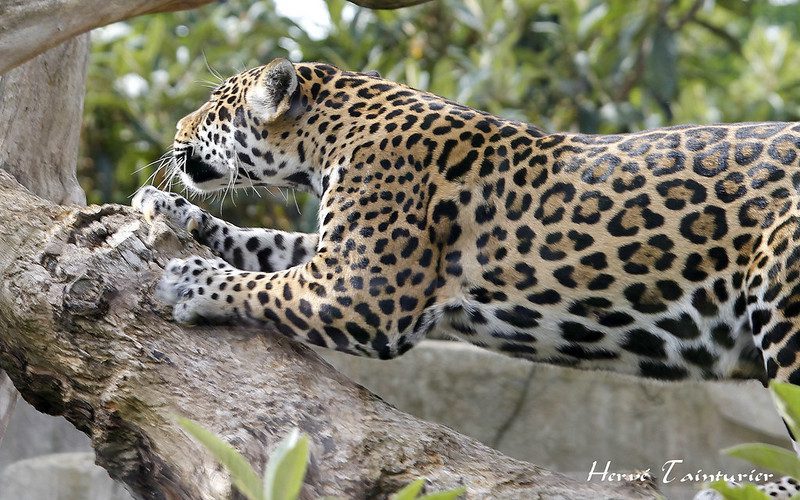
The jaguar is one of the most powerful and fascinating predators in the animal kingdom. Recognized by its muscular body, golden-yellow coat, and distinctive black rosette patterns, this magnificent wild cat inhabits forests, wetlands, grasslands, and river ecosystems throughout Central and South America. As the largest native cat in the Americas, the jaguar plays an essential role in maintaining healthy wildlife populations and preserving the ecological balance of tropical environments.
Scientifically known as Panthera onca, the jaguar belongs to the Felidae family and is closely related to other large cats, including lions, tigers, leopards, and snow leopards. However, it has unique physical adaptations that make it an exceptional hunter. Its powerful jaws, strong canine teeth, muscular limbs, and remarkable swimming ability allow it to capture prey both on land and in water.
The Amazon rainforest is one of the most important habitats for jaguars, providing abundant prey, dense vegetation, freshwater sources, and large territories. Countries such as Peru, Brazil, Colombia, Ecuador, and Bolivia support important jaguar populations. Protected areas, including the Tambopata National Reserve and Manu National Park in Peru, help conserve the ecosystems these animals depend on.
Table of Contents
From their hunting strategies and reproductive behavior to their impressive size and conservation challenges, jaguars offer an extraordinary example of adaptation and survival in the wild.
What Is a Jaguar?
The jaguar is a large carnivorous mammal belonging to the genus Panthera. It is the only living member of this genus native to the Americas and is considered one of the continent’s most important apex predators.
Jaguars are recognized by their robust bodies, broad heads, powerful jaws, relatively short legs, and spotted coats. Their appearance provides excellent camouflage in tropical forests, where sunlight passing through vegetation creates patterns of light and shadow.
Unlike many other large cats, jaguars are particularly comfortable around water. They frequently swim across rivers, hunt aquatic animals, and rest near riverbanks. This ability gives them access to a wide variety of prey, including fish, turtles, caimans, and capybaras.
Jaguar Scientific Name and Classification
The scientific name of the jaguar is Panthera onca. Its classification places it among the largest members of the cat family.
| Classification | Scientific group |
|---|---|
| Kingdom | Animalia |
| Phylum | Chordata |
| Class | Mammalia |
| Order | Carnivora |
| Family | Felidae |
| Genus | Panthera |
| Species | Panthera onca |
The jaguar is one of five living species in the genus Panthera, alongside the tiger, lion, leopard, and snow leopard.
Although jaguars and leopards look similar, they are different species that evolved in separate geographical regions. Jaguars naturally occur in the Americas, whereas leopards are native to Africa and parts of Asia.
Is a Jaguar a Mammal?
Yes. Jaguars are mammals because they give birth to live young, feed their babies with milk, have hair or fur, and maintain a relatively stable internal body temperature.
Female jaguars provide parental care after birth, protecting their cubs and teaching them essential survival skills as they grow.
Is a Jaguar a Big Cat?
Yes. The jaguar is classified as a big cat because it belongs to the genus Panthera. It is the largest native wild cat in the Americas and generally ranks as the third-largest living cat species after the tiger and lion.
An important characteristic of big cats is their specialized vocal anatomy, which allows species such as jaguars, lions, tigers, and leopards to produce powerful vocalizations.
Jaguar Size, Weight, and Physical Characteristics
Jaguars have a compact, muscular body designed for strength, agility, and powerful attacks. Their physical structure makes them excellent hunters capable of pursuing prey through dense rainforest vegetation, swimming across rivers, and moving quietly through their territories.
Male jaguars are generally larger and heavier than females, although their measurements vary considerably depending on geographical location, habitat, and food availability.
How Big Is a Jaguar?
Adult jaguars typically measure approximately 1.1 to 1.85 meters (3.6–6.1 feet) in head-and-body length. Their tails add another 45–75 centimeters (18–30 inches).
Their shoulder height generally ranges from 63 to 76 centimeters (25–30 inches). Jaguars have relatively short legs compared with some other large cats, giving them a low, powerful appearance.
How Much Does a Jaguar Weigh?
An adult jaguar usually weighs between 45 and 120 kilograms (100–265 pounds). Males are typically heavier than females, and some individuals can exceed this range.
Jaguars living in productive wetland environments, such as the Pantanal, can grow particularly large because of abundant prey and favorable feeding conditions. Populations in some forest habitats tend to have smaller average body sizes.
Jaguar Fur and Rosette Patterns
One of the most recognizable characteristics of a jaguar is its golden-yellow coat covered with black spots and rosettes.
These markings are not simply decorative. They provide camouflage, helping the animal blend into the vegetation, shadows, and changing light conditions of tropical forests.
Each jaguar has a unique pattern of spots, making these markings useful for identifying individual animals during wildlife research and camera-trap monitoring.
Why Do Jaguars Have Spots?
Jaguars have evolved spotted coats because these patterns provide effective camouflage in their natural habitats.
The rosettes break up the outline of their bodies, making them difficult to distinguish among leaves, branches, grasses, and forest shadows.
Their coat coloration can vary depending on geographical location and individual genetics. Some jaguars have lighter golden fur, while others display darker yellow or brown tones.
What Are Jaguar Rosettes?
Rosettes are circular or irregular black markings that surround smaller spots of darker fur.
Unlike leopard rosettes, which generally lack central spots, jaguar rosettes commonly contain one or more smaller black spots inside them.
These distinctive patterns are among the most useful characteristics for distinguishing jaguars from other spotted big cats.
Black Jaguar and Melanism
Black jaguars are real jaguars with a genetic condition called melanism.
Melanism causes an unusually high concentration of dark pigmentation in the animal’s fur, producing a predominantly black appearance.
Although their coats look almost completely black, their characteristic rosette patterns can still be seen under suitable lighting.
Black jaguars are sometimes called black panthers. However, this expression does not describe a separate species. It is a common name used for melanistic leopards and jaguars.
Melanism is particularly interesting in tropical rainforest environments because darker coloration can make these animals appear almost invisible in shaded vegetation.
Jaguar Anatomy and Physical Adaptations
Several anatomical characteristics make jaguars exceptional predators.
- Powerful jaws: Their strong jaw muscles allow them to deliver devastating bites.
- Large canine teeth: Sharp teeth help them grasp, puncture, and kill prey.
- Muscular shoulders: Strong upper-body muscles support climbing, swimming, and capturing large animals.
- Retractable claws: Sharp claws provide traction and help secure struggling prey.
- Strong hind legs: Powerful back legs support jumping, acceleration, and sudden attacks.
- Large paws: Their paws help distribute body weight and provide stability across different surfaces.
- Short, muscular body: Their compact build provides strength and maneuverability in dense vegetation.
How Strong Is a Jaguar’s Bite?
The jaguar is famous for its exceptionally powerful bite relative to its body size.
Its strong jaw muscles and broad skull allow it to generate considerable pressure when biting. This adaptation helps it capture prey protected by thick skin, shells, or heavy armor.
Unlike many other big cats that typically kill large prey by suffocation through a throat bite, jaguars are known for using bites directed toward the skull or neck in certain hunting situations.
This specialized technique is particularly effective against some armored reptiles and mammals.
Where Do Jaguars Live?
Jaguars are native to Central and South America, with their geographical distribution extending from Mexico through much of the Amazon basin and into northern Argentina.
Their habitats include tropical rainforests, wetlands, flooded forests, dry woodlands, grasslands, and areas surrounding freshwater ecosystems.
Jaguars require environments that provide sufficient prey, water, vegetation for cover, and large areas in which to establish territories.
Jaguar Habitat in the Amazon Rainforest
The Amazon rainforest represents one of the most important habitats for jaguars. Its enormous geographical area, extensive river networks, and remarkable biodiversity provide suitable conditions for these predators.
The Amazon basin contains a wide variety of ecosystems, including:
- Terra firme forests that remain above seasonal floodwaters.
- Floodplain forests that become submerged during high-water periods.
- Swamp forests with waterlogged soils.
- Riverbanks and oxbow lakes.
- Seasonal wetlands and natural grasslands.
- Dense tropical vegetation and forest clearings.
These habitats provide food and shelter for many animals that form part of the jaguar’s diet.
Jaguars frequently use riverbanks, forest trails, and natural clearings to move through their territories. Waterways are particularly important because they support prey species such as capybaras, caimans, fish, and turtles.
Where Do Jaguars Live in Peru?
Peru is an important country for jaguar conservation because it contains extensive areas of Amazon rainforest.
The country’s southeastern Amazon region, particularly Madre de Dios, supports important wildlife habitats where jaguars coexist with giant otters, tapirs, peccaries, monkeys, capybaras, and numerous bird species.
Some of the important protected landscapes associated with jaguar conservation include:
Tambopata National Reserve
The Tambopata National Reserve protects extensive tropical rainforest in southeastern Peru. Its ecosystems include rivers, lakes, wetlands, and dense forest vegetation.
The region supports diverse wildlife populations and provides suitable habitat for jaguars and many other Amazon rainforest mammals.
Jaguars are elusive animals in Tambopata, so visitors are more likely to encounter their tracks, footprints, or other signs of activity than see one directly.
Manu National Park
Manu National Park is one of the most biologically diverse protected areas in Peru. It contains a remarkable range of habitats, from lowland Amazon rainforest to mountainous cloud forests.
Its extensive protected landscapes provide important habitat for large mammals, including jaguars.
Other Amazonian Regions
Jaguars also inhabit other areas of the Peruvian Amazon, including remote forests in Loreto, Ucayali, and parts of the Madre de Dios region.
The connectivity of these forests is essential because jaguars need large territories and the ability to move between different habitats.
Jaguar Distribution in Central and South America
Historically, jaguars occupied a much larger geographical range than they do today.
Their distribution extended from the southwestern United States through Mexico and Central America, reaching much of South America.
Today, important populations remain in:
- Brazil
- Peru
- Bolivia
- Colombia
- Ecuador
- Venezuela
- Guyana
- Suriname
- French Guiana
- Paraguay
- Belize
- Guatemala
- Honduras
- Mexico
- Costa Rica
- Panama
- Argentina
Brazil contains a particularly important portion of the remaining jaguar population, especially within the Amazon and Pantanal ecosystems.
What Type of Habitat Do Jaguars Prefer?
Jaguars are adaptable predators, but they generally favor habitats with dense vegetation, freshwater availability, and abundant prey.
Their preferred environments often include:
- Tropical rainforests with thick vegetation.
- Wetlands with rivers, lakes, and marshes.
- Flooded forests with abundant aquatic wildlife.
- Tropical dry forests with sufficient prey populations.
- Grasslands and savannas near forest cover.
- Mangrove ecosystems and coastal wetlands.
Water availability is especially important because jaguars are excellent swimmers and frequently hunt near rivers and lakes.
What Do Jaguars Eat?
Jaguars are carnivorous mammals that eat a wide variety of animals. Their diet includes mammals, reptiles, fish, and birds, making them highly adaptable hunters.
As apex predators, they occupy an important position in tropical food chains and help regulate populations of other wildlife species.
Their hunting opportunities depend on the habitat, availability of prey, seasonal changes, and individual hunting territories.
What Animals Do Jaguars Eat?
The jaguar’s diet can include more than 80 recorded prey species across its geographical range.
Some of its most important prey animals include:
| Prey animal | Habitat or characteristics |
|---|---|
| Capybara | Wetlands and riverbanks |
| Caiman | Rivers, lakes, and swamps |
| Peccary | Tropical forests |
| Deer | Forests and grasslands |
| Tapir | Tropical forests and wetlands |
| Armadillo | Forest floors and grasslands |
| Giant anteater | Savannas and forest edges |
| Turtles | Freshwater ecosystems |
| Fish | Rivers and lakes |
| Monkeys | Tropical forest canopy |
| Birds | Forests and wetlands |
Jaguars do not depend on a single prey species. Their ability to exploit different food sources helps them survive in several types of ecosystems.
Jaguars and Capybaras
Capybaras are among the important prey animals for jaguars, particularly in wetlands and riverine habitats.
These large rodents spend much of their time near water, where they feed on grasses and aquatic vegetation.
Jaguars can approach them through thick vegetation or along riverbanks before launching a sudden attack.
Jaguars and Caimans
One of the most remarkable aspects of jaguar hunting behavior is its ability to capture caimans.
Unlike many terrestrial predators, jaguars regularly hunt large reptiles in aquatic environments.
Their powerful jaws and strong teeth allow them to attack prey with thick skin and protective body structures.
This behavior demonstrates how jaguars have adapted to life in wetlands and river ecosystems.
Jaguars and Peccaries
Peccaries are pig-like mammals that live in groups throughout tropical forests.
They represent an important food source for jaguars in several Amazonian habitats.
Hunting peccaries can be challenging because these animals often move together and can defend themselves using strong jaws and sharp teeth.
Jaguars and Turtles
Jaguars are among the few large terrestrial predators capable of breaking through the protective shells of certain turtles.
They may capture freshwater turtles along riverbanks and use their powerful jaws to access the edible parts inside.
This specialized feeding behavior illustrates the extraordinary strength of their skull and jaw structure.
How Do Jaguars Hunt?
Jaguars are ambush predators. Instead of chasing prey over long distances, they generally rely on stealth, camouflage, patience, and sudden attacks.
Their hunting strategy involves several stages:
- Locating prey: Jaguars use their excellent hearing, eyesight, and sense of smell to detect potential food.
- Approaching quietly: They move slowly through vegetation, minimizing noise and avoiding detection.
- Waiting for an opportunity: The animal may remain hidden until prey comes within striking distance.
- Launching an attack: Jaguars use powerful legs and sharp claws to capture their target.
- Delivering the bite: Their strong jaws help immobilize and kill the prey.
Their muscular bodies are especially effective during short bursts of movement, although they are not built for prolonged pursuit like cheetahs.
Are Jaguars Nocturnal?
Jaguars are generally described as predominantly nocturnal and crepuscular animals, meaning they are often active at night and around sunrise and sunset.
However, their activity patterns can vary depending on prey availability, human disturbance, habitat conditions, and geographical location.
In areas with less human activity, jaguars may also hunt during daylight hours.
Do Jaguars Hunt in Water?
Yes. Jaguars are excellent swimmers and frequently hunt near or inside water.
They can cross rivers, swim between forested areas, and capture aquatic or semiaquatic animals.
Their ability to hunt both terrestrial and aquatic prey gives them a significant advantage in the Amazon rainforest and Pantanal wetlands.
Jaguar Behavior and Lifestyle
Jaguars are solitary animals that generally prefer to live and hunt independently. Unlike lions, which form social groups called prides, jaguars spend most of their lives alone except during mating periods and when females raise their cubs.
Their behavior is strongly influenced by territorial boundaries, prey availability, habitat conditions, and reproductive cycles.
Are Jaguars Solitary Animals?
Yes. Adult jaguars are primarily solitary mammals. Each individual generally occupies a home range that may overlap with the territories of other jaguars.
Males typically maintain larger territories than females, and their ranges may overlap with those of several females.
Jaguars communicate their presence through scent marking, urine, scratches on trees, and vocalizations.
Jaguar Territorial Behavior
Territorial behavior is essential for maintaining access to food, shelter, and potential mates.
Jaguars use several methods to communicate with other individuals:
- Scratching tree trunks.
- Leaving scent marks.
- Depositing urine and feces.
- Producing vocalizations.
- Patrolling established trails.
- Leaving footprints along riverbanks and muddy forest paths.
These behaviors help reduce unnecessary confrontations and communicate territorial boundaries.
Jaguar Sounds and Vocalizations
Jaguars produce several sounds to communicate with other individuals.
Their most recognizable vocalization is a deep, powerful call often described as a roar or growl.
Other sounds include:
- Grunting.
- Growling.
- Snorting.
- Chuffing.
- Short contact calls.
Vocalizations are particularly important during mating periods and territorial interactions.
Can Jaguars Climb Trees?
Yes. Jaguars are capable climbers and can use trees to rest, observe their surroundings, or access particular hunting locations.
Although they are powerful terrestrial predators, their muscular limbs and sharp retractable claws help them climb suitable tree trunks and branches.
However, jaguars generally spend much of their time on the forest floor, where they search for prey and travel through their territories.
Can Jaguars Swim?
Jaguars are excellent swimmers and are among the most aquatic members of the big cat family.
They regularly cross rivers, swim through wetlands, and move between forested areas separated by water.
Swimming is also an important part of their hunting strategy because it allows them to capture fish, turtles, caimans, and other aquatic animals.
Jaguar Reproduction and Life Cycle
Jaguars reproduce sexually, and females generally raise their cubs without assistance from males.
Reproduction is not restricted to a single breeding season throughout the entire species’ geographical range. Mating can occur during different periods depending on environmental conditions and food availability.
Jaguar Mating Behavior
Male and female jaguars usually live independently, but they come together during mating periods.
Females communicate their reproductive condition through scent marking and vocalizations.
After mating, the male generally separates from the female, leaving her responsible for pregnancy, birth, and raising the young.
Jaguar Gestation Period
The gestation period of a jaguar is approximately 90–110 days.
After pregnancy, the female searches for a protected location where she can give birth.
Suitable locations may include dense vegetation, hollow trees, secluded forest areas, and other natural shelters.
Baby Jaguar: What Are Jaguar Cubs Like?
Baby jaguars are called cubs. They are born with their eyes closed and depend entirely on their mother for food, warmth, and protection.
A typical litter contains one to four cubs, although two cubs are common.
During the first weeks of life, the mother keeps her babies hidden in a protected den while she searches for food.
Jaguar Cub Development
Jaguar cubs develop rapidly during their first year.
- Birth: Cubs are small, vulnerable, and completely dependent on their mother.
- First weeks: Their eyes open, and they gradually become more responsive to their surroundings.
- Two to three months: They begin exploring outside the den and may start eating solid food.
- Three to six months: They become increasingly active and begin developing coordination and hunting-related skills.
- Six to twelve months: They accompany their mother more frequently and observe her hunting behavior.
- Around 18–24 months: Young jaguars generally become independent and begin establishing their own territories.
How Long Do Jaguars Live?
Jaguars generally live approximately 12–15 years in the wild, although individual lifespans vary.
In captivity, where animals receive regular veterinary care and food, some jaguars can live beyond 20 years.
Their lifespan depends on several factors, including:
- Food availability.
- Habitat quality.
- Injuries and disease.
- Competition with other predators.
- Human-related threats.
- Access to suitable territories.
Jaguar Adaptations and Unique Abilities
Jaguars possess remarkable adaptations that allow them to survive in some of the most challenging tropical environments.
Their physical characteristics, hunting strategies, sensory abilities, and behavioral flexibility make them highly successful predators.
Powerful Bite and Jaw Structure
The jaguar’s bite is one of its most remarkable physical adaptations.
Its broad skull and strong jaw muscles generate considerable biting power, helping it capture prey with thick skin, shells, and protective armor.
This adaptation is particularly useful when hunting caimans and turtles.
Excellent Night Vision
Like other cats, jaguars have specialized eyes that allow them to see effectively under low-light conditions.
Their large pupils and light-sensitive retinas help them detect movement in dim environments.
This ability is particularly useful when hunting during nighttime and twilight hours.
Camouflage in Tropical Forests
Their spotted coats help them blend into the natural surroundings of tropical forests.
The combination of dark rosettes and golden fur breaks up their body outline, making it difficult for prey to detect them among vegetation and shadows.
Strong Swimming Ability
Unlike some other large cats, jaguars frequently enter rivers, lakes, and wetlands.
Their swimming ability allows them to access different hunting grounds and exploit aquatic food sources.
Powerful Muscular Body
Their compact, muscular structure provides the strength needed to capture large prey.
Rather than relying on prolonged running, jaguars depend on explosive movements, powerful forelimbs, and strong jaws.
Are Jaguars Dangerous?
Jaguars are powerful wild predators capable of causing serious injuries to humans. However, they generally avoid people and rarely seek human contact.
Most jaguars live in remote natural habitats where they can hunt and establish territories without interacting with humans.
Encounters are uncommon, particularly in dense rainforest environments where these animals are naturally elusive.
Do Jaguars Attack Humans?
Jaguar attacks on humans are uncommon, but they can occur under certain circumstances.
Potential risk factors include:
- Approaching a jaguar too closely.
- Cornering or threatening the animal.
- Approaching a female with cubs.
- Attempting to feed or touch a wild jaguar.
- Surprising an animal at close range.
- Interfering with a jaguar’s prey.
When exploring jaguar habitats, visitors should always follow experienced wildlife guides, maintain a safe distance, and never attempt to approach or provoke these animals.
Jaguar vs. Leopard: What Is the Difference?
Jaguars and leopards are frequently confused because they share similar physical characteristics, including spotted coats, muscular bodies, and comparable hunting behaviors.
However, they belong to different species and inhabit different continents.
| Characteristic | Jaguar | Leopard |
|---|---|---|
| Scientific name | Panthera onca | Panthera pardus |
| Native range | Central and South America | Africa and Asia |
| Body structure | Stockier and more muscular | Generally slimmer |
| Head | Broad and robust | More slender |
| Rosettes | Usually contain central spots | Generally lack central spots |
| Swimming | Excellent swimmer | Capable swimmer |
| Main habitats | Rainforests, wetlands, grasslands | Forests, savannas, mountains |
| Hunting style | Ambush predator | Ambush predator |
| Diet | Mammals, reptiles, fish, birds | Mammals, birds, reptiles |
Jaguar vs. Tiger
The tiger is generally larger and heavier than the jaguar.
Tigers are native to Asia, while jaguars inhabit the Americas.
Both are solitary predators with powerful bodies, but their coat patterns are very different. Tigers have dark vertical stripes, whereas jaguars have distinctive rosette markings.
Jaguar vs. Lion
Lions are highly social cats that usually live in groups, whereas jaguars are primarily solitary.
Lions inhabit parts of Africa and a small region of India, while jaguars are found in Central and South America.
Jaguars are generally smaller than adult lions but have exceptionally powerful jaws relative to their body size.
Jaguar vs. Puma
Jaguars and pumas are two important large cats found in the Americas.
The puma, also known as the cougar, mountain lion, or Puma concolor, has a generally uniform coat without the distinctive black rosettes of a jaguar.
Jaguars are typically more heavily built, while pumas have longer legs and a more slender body.
Are Jaguars Endangered?
Jaguars are classified as Near Threatened on the International Union for Conservation of Nature Red List. However, their populations face significant conservation challenges throughout much of their geographical range.
The species has experienced population declines and local disappearances in several areas because of habitat destruction, deforestation, illegal hunting, and conflicts with humans.
Protecting jaguars requires conserving large natural habitats and maintaining connections between different forest ecosystems.
Main Threats to Jaguar Populations
Deforestation
Deforestation is one of the most serious threats to jaguars.
Agricultural expansion, cattle ranching, logging, mining, and infrastructure development contribute to the destruction of tropical forests.
When forests disappear, jaguars lose hunting grounds, shelter, and access to suitable territories.
Habitat Fragmentation
Habitat fragmentation occurs when large natural ecosystems become divided into smaller, isolated areas.
Roads, agricultural fields, settlements, and other developments can prevent jaguars from moving between suitable habitats.
This isolation can reduce genetic diversity and make populations more vulnerable to extinction.
Illegal Hunting and Poaching
Although jaguars are legally protected in many countries, illegal hunting continues to threaten the species.
Jaguars may be killed for their body parts or because they are considered a threat to livestock.
The illegal wildlife trade can also increase pressure on vulnerable populations.
Human-Wildlife Conflict
Conflicts between jaguars and people frequently occur in areas where agricultural activities expand into natural habitats.
Jaguars sometimes attack livestock, particularly when their natural prey becomes scarce or when domestic animals are left unprotected near forest edges.
This can lead to retaliatory killings.
Jaguar Conservation Efforts
Protecting jaguars requires cooperation between governments, conservation organizations, researchers, local communities, and landowners.
Important conservation strategies include:
- Establishing protected natural areas.
- Preventing illegal hunting.
- Protecting rainforest habitats.
- Maintaining wildlife corridors.
- Monitoring populations with camera traps.
- Reducing conflicts between jaguars and livestock owners.
- Supporting sustainable land-use practices.
- Protecting natural prey populations.
- Promoting environmental education.
Why Are Jaguars Important to the Ecosystem?
Jaguars play a vital ecological role as apex predators.
By hunting different prey species, they help regulate wildlife populations and contribute to the natural balance of tropical ecosystems.
Their presence can influence the behavior and distribution of other animals, creating ecological effects throughout the food web.
Jaguars are also considered important indicators of ecosystem health because they require extensive habitats with sufficient prey and relatively intact natural environments.
Protecting jaguars therefore helps conserve many other Amazon rainforest animals and their habitats.
Jaguars in the Amazon Rainforest
The Amazon rainforest is one of the world’s most important ecosystems for jaguars. Its extensive tropical forests, freshwater rivers, wetlands, and extraordinary biodiversity provide suitable conditions for these large predators.
Jaguars are particularly associated with areas containing dense vegetation and abundant prey.
What Role Do Jaguars Play in the Amazon Food Chain?
Jaguars occupy the highest levels of many Amazonian terrestrial food chains.
They prey on herbivores and other animals, helping maintain ecological balance and influencing wildlife populations.
Their diet connects different parts of the ecosystem, including:
- Terrestrial mammals.
- Aquatic reptiles.
- Freshwater fish.
- Forest-dwelling birds.
- Wetland animals.
As apex predators, jaguars can influence the behavior of other species and contribute to healthy ecosystem functioning.
Other Animals That Share the Jaguar’s Habitat
The Amazon rainforest contains thousands of animal species that share ecosystems with jaguars.
Some notable examples include:
Giant Otter
A large semiaquatic mammal that lives in family groups and hunts fish in Amazonian rivers and lakes.
Tapir
A large herbivorous mammal that feeds on leaves, fruits, and vegetation throughout tropical forests.
Black Caiman
A large aquatic reptile that inhabits rivers, lakes, and wetlands and can also become prey for jaguars.
Capybara
The world’s largest living rodent, commonly found near rivers and wetlands.
Peccary
A social mammal that travels in groups and feeds on fruits, seeds, roots, and other vegetation.
These animals form part of the complex ecological relationships that make the Amazon one of the richest wildlife environments on Earth.
Can You See Jaguars in the Amazon Rainforest?
Seeing a wild jaguar in the Amazon is possible, but it is relatively uncommon.
Jaguars are naturally elusive and generally avoid humans. Their camouflage, solitary behavior, extensive territories, and low population density in many areas make direct sightings challenging.
Wildlife researchers often use camera traps to monitor jaguar activity and identify individual animals.
Visitors exploring protected rainforest areas may occasionally discover jaguar footprints, tracks, scratches on trees, or other evidence of their presence.
In regions such as Tambopata and Manu, guided wildlife excursions provide opportunities to explore natural jaguar habitats while observing other Amazon rainforest species.
20 Interesting Facts About Jaguars
Jaguars are among the most fascinating mammals in the Americas. Their anatomy, behavior, hunting techniques, and ecological importance make them particularly interesting subjects for wildlife enthusiasts.
Here are 20 interesting jaguar facts:
- Largest wild cat in the Americas: The jaguar is the largest native feline species in North and South America.
- Scientific name: Its scientific name is Panthera onca.
- Powerful bite: Jaguars have exceptionally strong jaws relative to their body size.
- Excellent swimmers: They frequently swim across rivers and wetlands.
- Unique markings: Every jaguar has a distinctive pattern of rosettes.
- Black jaguars exist: Some individuals have melanism, producing predominantly black fur.
- Solitary lifestyle: Adult jaguars generally live and hunt alone.
- Ambush hunters: They rely on stealth and sudden attacks rather than prolonged chases.
- Aquatic predators: Their diet includes caimans, turtles, and fish.
- Strong climbers: They can climb trees using their muscular limbs and sharp claws.
- Wide distribution: They inhabit several countries throughout Central and South America.
- Amazon connection: The Amazon rainforest supports important jaguar populations.
- Territorial animals: They use scent marking and scratches to communicate.
- Female parental care: Mothers raise their cubs independently.
- Small litters: Females usually give birth to one to four cubs.
- Powerful teeth: Their canine teeth help capture and immobilize prey.
- Habitat diversity: Jaguars can inhabit rainforests, wetlands, grasslands, and dry forests.
- Ecological importance: They help regulate prey populations as apex predators.
- Conservation concerns: Habitat destruction and human-wildlife conflict threaten their survival.
- Cultural importance: Jaguars have played important roles in the mythology and traditions of several Indigenous civilizations in the Americas.
Frequently Asked Questions About Jaguars
What Is a Jaguar?
A jaguar is a large carnivorous mammal belonging to the genus Panthera. It is native to Central and South America and is recognized by its muscular body, golden coat, black rosettes, and powerful jaws.
Where Do Jaguars Live?
Jaguars live throughout parts of Central and South America. Their habitats include tropical rainforests, wetlands, flooded forests, grasslands, and dry woodlands. The Amazon basin is one of their most important remaining habitats.
What Do Jaguars Eat?
Jaguars are carnivores that eat capybaras, caimans, peccaries, deer, tapirs, armadillos, turtles, fish, monkeys, and birds. Their diet depends on prey availability and their geographical location.
How Big Is a Jaguar?
Adult jaguars generally measure 1.1–1.85 meters in head-and-body length, with an additional 45–75 centimeters of tail length. Their shoulder height is approximately 63–76 centimeters.
How Much Does a Jaguar Weigh?
Most adult jaguars weigh approximately 45–120 kilograms. Males are usually larger than females, although body weight varies between populations.
How Strong Is a Jaguar?
Jaguars have exceptionally powerful jaws and a strong bite relative to their body size. Their muscular bodies, broad skulls, and large canine teeth make them highly effective predators.
Are Jaguars Dangerous to Humans?
Jaguars are powerful wild animals, but they generally avoid people. Attacks are uncommon, although approaching, cornering, or provoking a jaguar can be dangerous.
Are Jaguars Endangered?
Jaguars are currently classified as Near Threatened on the IUCN Red List. Their populations face threats from deforestation, habitat fragmentation, poaching, and human-wildlife conflict.
Can Jaguars Swim?
Yes. Jaguars are excellent swimmers and frequently cross rivers, hunt aquatic animals, and move through wetlands. Their swimming ability is an important adaptation for life in the Amazon rainforest.
Can Jaguars Climb Trees?
Yes. Jaguars can climb trees using their powerful limbs and retractable claws. They may climb to rest, observe their surroundings, or access particular hunting locations.
How Long Do Jaguars Live?
Jaguars generally live around 12–15 years in the wild. In captivity, some individuals can live beyond 20 years.
How Many Cubs Do Jaguars Have?
Female jaguars typically give birth to one to four cubs after a gestation period of approximately 90–110 days. Mothers raise their young independently.
What Is the Difference Between a Jaguar and a Leopard?
Jaguars are native to the Americas, while leopards live in Africa and Asia. Jaguars generally have stockier bodies and rosettes containing central spots, whereas leopard rosettes typically lack these central markings.
Is a Black Jaguar a Different Species?
No. A black jaguar is a melanistic individual of the species Panthera onca. Its dark coloration results from increased pigmentation, but it retains the characteristic jaguar markings.
What Is the Largest Jaguar Ever Recorded?
There is no universally accepted record establishing the largest jaguar ever recorded. However, particularly large males, especially those from productive wetland habitats, can weigh more than 120 kilograms.
Are Jaguars Found in Peru?
Yes. Jaguars inhabit several regions of the Peruvian Amazon, including Madre de Dios, Loreto, and other forested areas. Tambopata National Reserve and Manu National Park protect important jaguar habitats.
What Is the Jaguar’s Role in the Ecosystem?
Jaguars are apex predators that help regulate populations of prey animals and contribute to ecological balance. Their presence is also an important indicator of healthy, connected natural habitats.
Conclusion: Why Jaguars Are Important to the Amazon Rainforest
The jaguar is much more than an impressive predator. It is an essential part of the ecological balance of tropical forests, wetlands, and river ecosystems throughout the Americas.
Its powerful body, exceptional hunting abilities, swimming skills, and adaptability make it one of the most successful predators in the Amazon rainforest. From hunting capybaras along riverbanks to capturing caimans in freshwater environments, the jaguar demonstrates remarkable adaptations for surviving in diverse ecosystems.
However, deforestation, habitat fragmentation, illegal hunting, and human-wildlife conflict continue to threaten jaguar populations. Protecting this magnificent animal requires preserving large areas of tropical rainforest, maintaining wildlife corridors, and supporting sustainable conservation practices.
By protecting jaguars, we also help conserve countless other Amazon rainforest animals and the extraordinary biodiversity of one of the world’s most important natural environments.