
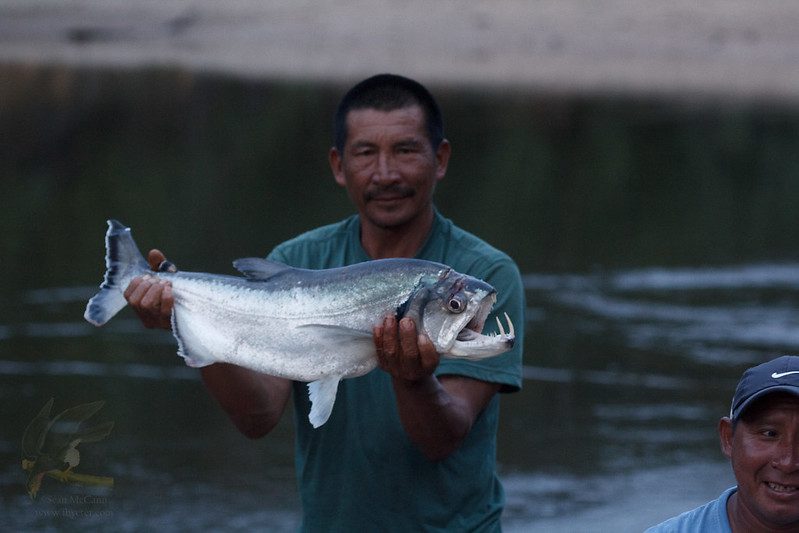
The Payara is one of the most fascinating predatory freshwater fish found in the rivers of South America. Recognized for its enormous fang-like teeth, streamlined body, and impressive hunting abilities, this remarkable fish has earned a reputation as one of the Amazon’s most unusual aquatic predators. Scientifically known as Hydrolycus scomberoides, the Payara belongs to the Cynodontidae family and inhabits freshwater environments throughout the Amazon and Orinoco river basins.
Its distinctive appearance makes it instantly recognizable among other tropical freshwater fish. Unlike many river species that rely on smaller teeth arranged in multiple rows, the Payara possesses two prominent fangs extending from its lower jaw. These specialized teeth are adapted to help it capture and hold slippery fish, making it an effective hunter in the complex underwater world of Amazonian rivers.
Beyond its impressive appearance, the Payara plays an important role in freshwater food webs. Its feeding habits, habitat preferences, and interactions with other aquatic animals make it an interesting subject for wildlife enthusiasts, researchers, and sport fishermen.
Table of Contents
From the deep channels of the Amazon River to the flowing tributaries of the Orinoco basin, the Payara represents the extraordinary diversity of South American freshwater ecosystems.
1. What Is a Payara?
The Payara is a carnivorous freshwater fish native to tropical South America. It is particularly famous for its elongated lower-jaw fangs, which give it an unusual appearance and distinguish it from many other Amazonian fish.
As an active fish predator, it feeds primarily on other aquatic species. Its body structure, powerful swimming abilities, and specialized teeth allow it to pursue and capture prey in rivers where currents, underwater obstacles, and changing water conditions influence hunting behavior.
The Payara belongs to the Cynodontidae family, a group of predatory fish found in South American freshwater systems. Members of this family are characterized by their elongated bodies, prominent teeth, and adaptations for feeding on other fish.
Scientific Classification of the Payara
The scientific name of the Payara discussed in this article is Hydrolycus scomberoides. Its classification places it within the order Characiformes, an extensive group of freshwater fish that includes piranhas, tetras, and several other familiar South American species.
Its biological classification is:
| Classification | Scientific name |
|---|---|
| Kingdom | Animalia |
| Phylum | Chordata |
| Class | Actinopterygii |
| Order | Characiformes |
| Family | Cynodontidae |
| Genus | Hydrolycus |
| Species | Hydrolycus scomberoides |
This classification highlights its relationship with other ray-finned freshwater fish while distinguishing it from species belonging to different families.
Why Is the Payara Known as a Fearsome Predator?
The Payara’s reputation comes primarily from its unusual teeth and carnivorous feeding behavior. Its lower jaw carries two exceptionally long canine teeth that extend upward and are accommodated by openings in the upper jaw when its mouth closes.
These fangs help the fish secure prey during feeding. Combined with its streamlined body and muscular swimming structure, they make the Payara a highly specialized freshwater predator.
Its appearance is particularly impressive when viewed from the front, where the two long teeth are clearly visible. This distinctive feature has made it a popular subject in wildlife photography and documentaries about Amazon freshwater biodiversity.
Where Does the Name Payara Come From?
The name Payara is widely used in South American fishing communities and is particularly associated with the species Hydrolycus scomberoides. Regional common names can vary between countries and river systems.
In English-language fishing literature, the fish is also frequently called vampire fish because of its prominent fangs. This descriptive name reflects its unusual dental structure rather than any connection with mythical creatures.
2. Physical Characteristics and Anatomy of the Payara
The Payara has a distinctive physical appearance that reflects its lifestyle as an active fish-eating predator. Its elongated, streamlined body helps it move efficiently through flowing freshwater environments, while its powerful jaws and specialized teeth are adapted for capturing prey.
Its appearance can vary depending on age, habitat, and individual development, but several physical characteristics make it easy to distinguish from other Amazonian fish.
Body Shape and Size
The Payara possesses an elongated, laterally compressed body with a muscular structure that supports rapid swimming. Its general shape resembles that of other fast-moving predatory fish, allowing it to accelerate quickly when pursuing smaller aquatic animals.
Its scales are generally silver or metallic gray, sometimes displaying darker shades along the upper body. The reflective surface helps it blend with the changing light conditions of underwater environments.
Adult specimens can reach considerable lengths, although their actual size depends on environmental conditions, food availability, and individual development. Many commonly encountered specimens are smaller than the largest recorded individuals.
Its streamlined shape provides several advantages:
- Reduces resistance when swimming through water.
- Supports rapid acceleration during hunting.
- Helps maintain stability in river currents.
- Allows efficient movement through different water depths.
- Supports sudden directional changes when pursuing prey.
The Remarkable Fang-Like Teeth
The most recognizable feature of the Payara is undoubtedly its enormous canine teeth.
Two long fangs extend from the lower jaw, creating a dramatic appearance that has made this fish famous among freshwater anglers and wildlife enthusiasts.
These teeth are not simply decorative. They are specialized feeding structures that help the Payara capture and retain slippery prey.
When the mouth closes, the long lower-jaw fangs fit into corresponding openings in the upper jaw. This arrangement allows the fish to close its mouth without the teeth interfering with one another.
The structure is particularly useful when capturing other fish, which can otherwise escape easily because of their slippery bodies and rapid movements.
How Do the Payara’s Long Fangs Fit Into Its Mouth?
The Payara has anatomical openings in its upper jaw that accommodate the elongated lower canine teeth.
This adaptation allows the fish to maintain a functional mouth structure despite the extraordinary length of its fangs.
The teeth are especially noticeable in mature specimens, although their size and proportions can vary between individuals.
Fins, Scales, and Sensory Adaptations
Like other ray-finned fish, the Payara possesses several fins that contribute to movement, stability, and directional control.
Its tail fin provides much of the propulsion needed for swimming, while the other fins help maintain balance and maneuverability.
Its sensory systems are equally important. The lateral line system allows the fish to detect movements and vibrations in the surrounding water.
This capability is particularly valuable in river environments where visibility may change because of suspended sediment, vegetation, and seasonal variations in water conditions.
Together, its body structure, muscular swimming abilities, and sensory adaptations make the Payara well suited to life as a freshwater predator.
3. Where Does the Payara Live?
The Payara inhabits tropical freshwater environments in South America, particularly within the Amazon and Orinoco river basins.
These enormous drainage systems contain thousands of interconnected rivers, tributaries, lakes, and flooded forests that support an extraordinary variety of aquatic life.
The availability of prey, water depth, current strength, and seasonal flooding all influence the habitats occupied by this species.
Distribution Across the Amazon River Basin
The Amazon River basin provides an extensive freshwater environment for numerous predatory fish, including the Payara.
The system includes the main Amazon channel and a vast network of tributaries that flow through countries such as Peru, Brazil, Colombia, Ecuador, and Bolivia.
Different sections of this basin contain distinct aquatic habitats, ranging from deep river channels to smaller tributaries and seasonally flooded areas.
The Payara is associated with freshwater environments where suitable prey is available and water conditions allow effective movement and feeding.
The Amazon’s enormous size and ecological complexity make it one of the most important freshwater biodiversity regions in the world.
Payara Habitat in the Orinoco River Basin
The Orinoco basin is another major region associated with Payara populations.
Located primarily in Venezuela and Colombia, this extensive river system contains a variety of freshwater habitats, including large channels, tributaries, floodplains, and seasonal wetlands.
These environments provide opportunities for feeding, movement, and reproduction for many South American freshwater fish.
The Amazon and Orinoco basins are particularly important for understanding the distribution of predatory fish in tropical South America.
Preferred Freshwater Environments
The Payara is commonly associated with larger rivers and flowing freshwater habitats.
Depending on local environmental conditions, it may occupy:
- Deep river channels.
- Areas with strong or moderate currents.
- Rocky river sections.
- Channels containing abundant prey fish.
- Connected tributaries.
- Different depths within large freshwater systems.
The availability of prey is particularly important because the Payara depends on other fish as its primary food source.
Does the Payara Prefer Deep or Shallow Water?
The Payara can occupy different water depths depending on its habitat, prey availability, and environmental conditions.
Deeper river channels can provide suitable areas for movement and feeding, while other sections of a river may offer opportunities to pursue smaller fish.
Rather than depending on one specific depth, its distribution is influenced by the characteristics of the surrounding aquatic environment.
Environmental Conditions
The Amazon and Orinoco river systems experience seasonal variations that influence water levels, currents, and the availability of aquatic habitats.
During periods of increased rainfall, rivers expand into surrounding floodplains and forested areas. When water levels decrease, channels and other permanent aquatic habitats become more prominent.
These seasonal changes affect the movement and distribution of many fish species.
For the Payara, environmental conditions influence where prey is available and how efficiently it can hunt.
4. Diet and Feeding Behavior
The Payara is a specialized carnivorous fish whose diet consists mainly of other freshwater fish. Its hunting behavior reflects its position as an active predator within tropical river ecosystems.
Unlike fish that feed on aquatic plants, algae, or organic material, the Payara depends on animal prey to obtain the energy required for growth, movement, and reproduction.
Its powerful jaws, prominent canine teeth, and swimming abilities make it particularly effective at capturing smaller fish.
What Does the Payara Eat?
The Payara is primarily piscivorous, meaning that fish make up the main component of its diet.
Depending on its size, habitat, and prey availability, it may consume different species of small and medium-sized freshwater fish.
Its potential prey includes:
- Small schooling fish.
- Characins and other small freshwater species.
- Juvenile fish.
- Fish inhabiting river channels and tributaries.
- Other suitable aquatic prey.
The availability of food changes throughout the year as river levels fluctuate and fish populations move between different habitats.
During seasonal flooding, many fish enter flooded forests and connected waterways to feed and reproduce. These movements can influence the distribution of predators such as the Payara.
How Does the Payara Capture Its Prey?
The Payara uses a combination of visual detection, rapid swimming, and specialized teeth to capture other fish.
As an active predator, it must locate suitable prey, approach within striking distance, and use its powerful jaws to secure the target.
Its elongated fangs are particularly useful for gripping prey and preventing it from escaping during the capture process.
The fish’s streamlined body also helps it accelerate through the water when pursuing smaller animals.
Hunting Strategies and Feeding Adaptations
The Payara’s hunting behavior is closely connected to the physical characteristics of its environment.
In rivers containing abundant small fish, it can take advantage of prey movements and suitable feeding locations.
Its hunting strategies may include:
- Approaching prey before making a rapid strike.
- Pursuing individual fish.
- Taking advantage of areas where smaller fish concentrate.
- Using its teeth to secure prey after capture.
- Adjusting its movements to currents and underwater conditions.
Why Are the Payara’s Long Teeth Important When Hunting?
The Payara’s long teeth are specialized structures that help it capture and hold fish.
Many freshwater predators have relatively short teeth, but the Payara has developed exceptionally elongated lower-jaw canines.
These teeth create a distinctive feeding adaptation that is particularly useful when dealing with slippery prey.
Their unusual structure also explains why the species is so easily recognized among Amazonian freshwater predators.
Its Position in the Amazon Food Chain
As a fish-eating predator, the Payara occupies an important position within aquatic food webs.
It consumes smaller fish and interacts with other predators that depend on similar food resources.
These relationships contribute to the natural structure of freshwater communities.
The Payara is also part of a broader ecological system involving microorganisms, aquatic insects, small fish, larger predators, and other organisms that depend on healthy river habitats.
Its presence illustrates the complexity of Amazonian aquatic ecosystems, where species interact through feeding relationships and competition for resources.
5. Hunting Behavior and Survival Adaptations
The Payara’s anatomy and behavior are closely connected to its role as an active freshwater hunter. Its body is designed for movement, its teeth are adapted for capturing prey, and its sensory systems help it detect changes in the surrounding water.
These characteristics allow it to survive in rivers where prey animals are constantly moving and environmental conditions can change throughout the year.
Speed and Agility Underwater
The Payara possesses a streamlined body that helps reduce water resistance during swimming.
Its muscular structure and powerful tail provide the propulsion needed for rapid movement.
This combination is particularly valuable when pursuing smaller fish, which can make sudden directional changes to escape predators.
The ability to move efficiently through flowing water also allows the Payara to occupy different sections of a river without constantly fighting against the current.
However, its swimming speed should not be confused with a scientifically established maximum velocity. Reliable measurements of its top speed are limited.
Sensory Abilities and Prey Detection
Finding prey is one of the most important challenges faced by aquatic predators.
The Payara uses its sensory systems to identify potential food sources and respond to movement in its surroundings.
Its eyes allow it to detect visual information underwater, while the lateral line system helps sense changes in water movement and vibrations.
The lateral line is especially useful in aquatic environments because it provides information about nearby movement that may not always be easy to see.
These sensory abilities work together to help the fish navigate its habitat and locate potential prey.
Adaptations That Make the Payara an Effective Predator
Several physical characteristics contribute to the Payara’s hunting abilities.
Specialized teeth: Its elongated lower-jaw fangs help grip and secure prey.
Streamlined body: Its shape supports efficient swimming and rapid acceleration.
Muscular tail: Provides propulsion during pursuit and directional changes.
Sensory systems: Help detect movement and environmental changes.
Carnivorous feeding structure: Its mouth and jaws are adapted to capturing other fish.
Together, these adaptations make the Payara one of the most distinctive predatory fish in tropical South American rivers.
Natural Predators and Survival Challenges
Although the Payara is a capable predator, it is not necessarily at the top of every aquatic food web.
Smaller individuals may be vulnerable to larger fish and other aquatic predators.
Juvenile fish generally face greater risks because their smaller size limits their ability to defend themselves and capture prey.
Environmental changes also influence survival. Alterations in water quality, habitat availability, and food resources can affect fish populations throughout the Amazon basin.
Human activities, including pollution and habitat degradation, create additional challenges for freshwater wildlife.
6. Reproduction and Life Cycle
The reproductive biology of the Payara is part of the broader life cycle of tropical South American freshwater fish.
Like other ray-finned fish, it develops through different stages, beginning with early development and progressing through juvenile and adult phases.
Although detailed reproductive information for this particular species is less widely documented than for some commercially important fish, its life cycle is influenced by environmental conditions and access to suitable aquatic habitats.
Reproductive Behavior
Reproduction in freshwater fish can be influenced by seasonal changes in rainfall, water temperature, river levels, and habitat availability.
In tropical river systems, seasonal flooding creates important environmental changes that influence the reproductive cycles of many aquatic species.
For fish inhabiting the Amazon basin, rising water levels can expand available habitats and create new feeding and breeding opportunities.
The exact spawning locations and reproductive strategies of Payara should not be assumed to be identical to those of other fish in the Cynodontidae family.
Eggs and Early Development
Following fertilization, fish embryos develop inside eggs before hatching.
The developing embryos depend on suitable environmental conditions, including adequate oxygen levels and appropriate water quality.
After hatching, young fish enter an early developmental stage in which they gradually develop the physical structures needed for independent swimming and feeding.
At this stage, their survival depends on suitable habitat, available food, and protection from predators.
Juvenile Payara and Growth
Juvenile Payara undergo physical changes as they grow.
Their body proportions, swimming abilities, and feeding requirements change during development.
As they become larger, they can pursue a wider range of prey.
Their transition toward adult feeding behavior is associated with the development of the jaws, teeth, and muscular structure that characterize mature individuals.
Population Dynamics
Payara populations are influenced by several environmental factors:
- Availability of suitable freshwater habitats.
- Abundance of prey fish.
- Seasonal river fluctuations.
- Reproductive success.
- Natural predation.
- Human fishing activities.
Healthy river ecosystems provide the conditions necessary for fish populations to maintain themselves over time.
7. Ecological Importance of the Payara in the Amazon Rainforest
The Amazon rainforest is famous for its terrestrial wildlife, including jaguars, monkeys, macaws, giant otters, and countless other species. However, its rivers contain an equally fascinating world of aquatic biodiversity.
The Payara is one of the predators that contribute to the ecological complexity of these freshwater environments.
Its feeding behavior connects different levels of the aquatic food web, while its interactions with other fish help illustrate the relationships that sustain river ecosystems.
Its Role as a Freshwater Predator
The Payara feeds on smaller fish and therefore participates in the regulation of aquatic prey populations.
Predators are important components of natural ecosystems because they influence the abundance, distribution, and behavior of other animals.
However, their ecological role is not limited to controlling prey numbers. They also contribute to the movement of energy through food webs.
When a Payara consumes another fish, energy stored in that prey becomes available to support its own growth, movement, and reproduction.
This process forms part of the natural energy transfer that takes place throughout aquatic ecosystems.
Contribution to Amazon Aquatic Biodiversity
The Amazon basin contains one of the richest freshwater fish communities on Earth.
Its aquatic environments support thousands of fish species with different body structures, feeding strategies, and ecological roles.
Some species consume plants and fruits, while others feed on insects, microorganisms, or smaller fish.
The presence of specialized predators such as the Payara demonstrates the diversity of feeding adaptations that have evolved in these environments.
This biodiversity is essential to the ecological complexity of the Amazon River system.
Predator-Prey Relationships in Amazon Rivers
The Payara participates in a network of relationships involving smaller fish, competing predators, and other aquatic organisms.
Its presence is connected to the availability of suitable prey and the physical characteristics of its habitat.
Other predators may compete for similar food resources, while smaller fish develop different survival strategies to avoid being captured.
These interactions are part of the natural ecological balance that characterizes tropical freshwater environments.
The Payara and the Madre de Dios River Ecosystem
The Madre de Dios region of southeastern Peru is part of the southwestern Amazon basin and is recognized for its exceptional biodiversity.
Its rivers, tributaries, lakes, and flooded forests support numerous freshwater fish species.
The Madre de Dios River and its surrounding aquatic environments are particularly important for understanding the relationship between Amazonian wildlife and freshwater habitats.
For wildlife enthusiasts visiting Puerto Maldonado, exploring the region’s rivers offers an opportunity to discover an ecosystem that extends far beyond the more familiar animals of the rainforest canopy.
The aquatic world of Madre de Dios includes a remarkable variety of fish, amphibians, reptiles, and other organisms that depend on healthy freshwater environments.
Payara and other predatory fish form part of this larger biological community.
8. Payara and Other Predatory Fish of the Amazon
The Amazon River is home to numerous predatory fish, each with specialized physical characteristics and feeding strategies.
Although the Payara is famous for its long fangs, it shares its freshwater environment with other impressive species, including piranhas, peacock bass, and the enormous arapaima.
Comparing these fish helps illustrate the diversity of predatory adaptations found in South American rivers.
Payara vs. Piranha
The Payara and piranhas belong to the order Characiformes, but they belong to different families and have noticeably different feeding structures.
The Payara is characterized by its elongated lower-jaw fangs, while piranhas possess powerful jaws with closely arranged, triangular teeth.
Their feeding behaviors also differ.
Payara primarily capture individual fish, using their specialized teeth to hold prey. Piranhas have a wider range of feeding behaviors depending on the species, including consuming fish, insects, fruits, and other animal material.
Both groups contribute to the biodiversity and ecological relationships of Amazonian rivers.
Payara vs. Peacock Bass
Peacock bass belong to the cichlid family and are among the most recognizable predatory fish in tropical South America.
Unlike the Payara, they do not possess exceptionally elongated canine teeth.
Peacock bass have robust bodies, large mouths, and strong jaws adapted to capturing fish and other aquatic prey.
Both species are popular among sport fishermen because they offer challenging freshwater fishing experiences.
Their differences demonstrate how unrelated groups of fish can develop different physical adaptations to exploit similar food resources.
Other Predatory Freshwater Fish
The Amazon supports several other remarkable aquatic predators.
Arapaima: Arapaima are among the largest freshwater fish in the world. They have elongated bodies, large mouths, and the ability to breathe atmospheric air using a specialized modified swim bladder.
Redtail catfish: Redtail catfish are large freshwater predators recognizable by their broad heads, long barbels, and reddish tail fins.
Electric eel: Electric eels are specialized predators capable of generating powerful electrical discharges that help them locate, stun, and capture prey.
Each of these species demonstrates a different evolutionary approach to survival in tropical freshwater environments.
What Makes the Payara Different?
The Payara’s most important distinguishing feature is its unusual dental structure.
Its elongated lower-jaw fangs make it immediately recognizable and reflect a specialized feeding adaptation.
While many Amazon predators depend on powerful jaws, large mouths, or electrical abilities, the Payara is particularly notable for the way its teeth help it capture other fish.
This combination of anatomy and predatory behavior makes it one of the most visually distinctive freshwater species in South America.
9. Sport Fishing and Human Interaction
The Payara has become a highly sought-after species among freshwater sport fishermen because of its distinctive appearance, predatory behavior, and reputation as a challenging catch.
Its impressive teeth and strong swimming abilities make it particularly interesting to anglers who specialize in tropical freshwater fishing.
Sport fishing also creates opportunities for local communities to participate in nature-based tourism, provided that fishing activities are conducted responsibly.
Payara as a Sport Fishing Species
The Payara is especially popular among anglers interested in catching unusual predatory fish.
Its distribution across the Amazon and Orinoco river systems provides opportunities for fishing in different South American destinations.
Fishing for this species requires an understanding of river conditions, fish behavior, and suitable equipment.
Experienced local guides can help anglers identify promising fishing areas and understand seasonal variations in fish activity.
The species is also popular in specialist freshwater fishing communities because of its unusual appearance and impressive canine teeth.
Fishing Techniques and Equipment
Payara fishing generally requires equipment suitable for targeting strong, tooth-bearing freshwater predators.
Depending on the fishing location and technique, anglers may use:
- Strong fishing rods designed for freshwater predators.
- Reels with reliable drag systems.
- Braided fishing lines.
- Wire or other suitable bite-resistant leaders.
- Strong hooks.
- Artificial lures designed to imitate smaller fish.
Artificial lures are particularly useful because they can reproduce the movement and appearance of natural prey.
The selection of equipment should also consider local regulations, the size of fish expected in the area, and responsible handling practices.
Catch and Release Fishing
Catch and release is an important practice in recreational freshwater fishing.
When conducted correctly, it can help reduce the number of fish removed from natural populations.
However, releasing a fish does not guarantee its survival. Poor handling, prolonged exposure to air, unsuitable hooks, and physical injuries can cause serious stress.
Responsible anglers should:
- Use appropriate tackle to reduce unnecessary fighting.
- Avoid handling the fish more than necessary.
- Keep the fish in the water whenever possible.
- Use suitable tools to remove hooks.
- Avoid placing hands near its dangerous teeth.
- Follow local fishing regulations and seasonal restrictions.
These practices help reduce unnecessary harm to fish and support more responsible fishing tourism.
Importance to Amazon Fishing Communities
Sport fishing can provide economic opportunities for communities located near productive river systems.
Local guides, boat operators, accommodation providers, and other tourism businesses can benefit from visitors interested in freshwater wildlife.
When managed sustainably, fishing tourism can create additional economic incentives to protect rivers and maintain healthy aquatic habitats.
It can also encourage visitors to appreciate the importance of freshwater biodiversity beyond the more familiar terrestrial wildlife of the Amazon rainforest.
10. Conservation and Environmental Threats
The Amazon basin is one of the world’s most important freshwater biodiversity regions, but its aquatic ecosystems face increasing environmental pressures.
Although the Payara is a widespread South American freshwater fish, its long-term well-being depends on healthy rivers and suitable aquatic habitats.
Environmental degradation can affect not only individual fish species but also the entire food web that supports freshwater biodiversity.
Habitat Degradation
Habitat degradation is one of the major environmental concerns affecting Amazonian rivers.
Deforestation, infrastructure development, mining, and changes in river systems can alter the natural conditions required by aquatic organisms.
When forests surrounding rivers are cleared, several ecological processes can be affected.
These include:
- Increased soil erosion.
- Greater sediment entering waterways.
- Changes in water temperature.
- Alterations in natural river flows.
- Loss of connections between aquatic habitats.
Flooded forests and river margins are particularly important because they provide feeding and breeding environments for many fish species.
Protecting these habitats helps maintain the ecological processes that support Amazon freshwater biodiversity.
Water Pollution and Human Activities
Water pollution represents another important challenge for aquatic ecosystems.
Mining activities, agricultural runoff, untreated wastewater, and other sources of contamination can reduce water quality.
In some areas of the Amazon basin, gold mining has raised serious concerns about mercury contamination.
Mercury can enter aquatic food webs and accumulate in organisms over time, potentially affecting fish and animals that consume them.
Because predatory fish feed on other aquatic organisms, contaminants can move through food chains.
Maintaining water quality is therefore essential for the long-term health of Amazonian aquatic ecosystems.
Fishing Pressure
Fishing is an important economic and cultural activity throughout the Amazon region.
Many communities depend on freshwater fish as a source of food and income.
However, excessive fishing pressure can affect fish populations, particularly when harvesting is concentrated in specific locations or during sensitive reproductive periods.
Responsible fishing practices, local management measures, and compliance with fishing regulations are important for maintaining healthy populations.
Protecting Amazon Freshwater Biodiversity
Protecting the Payara also means protecting the rivers and aquatic environments where it lives.
Conservation efforts should consider the entire freshwater ecosystem rather than focusing on individual species alone.
Important measures include:
- Protecting river habitats and surrounding forests.
- Reducing pollution from mining and other activities.
- Maintaining natural river connectivity.
- Promoting responsible fishing.
- Supporting scientific monitoring of freshwater species.
- Encouraging sustainable tourism.
- Strengthening environmental education.
The future of Amazonian freshwater biodiversity depends on maintaining the ecological health of the river systems that support thousands of aquatic species.
Is the Payara Endangered?
It is important to distinguish between a species being exposed to environmental threats and being officially classified as endangered.
The conservation status of Hydrolycus scomberoides should be checked against the latest species-specific assessment from recognized conservation authorities.
It would be inaccurate to assume that the Payara is endangered simply because parts of the Amazon basin experience habitat degradation and pollution.
Nevertheless, protecting its freshwater habitats remains important for the long-term conservation of Amazonian wildlife.
11. Frequently Asked Questions About Payara
What Is a Payara Fish?
The Payara is a predatory freshwater fish native to tropical South America. Its scientific name is Hydrolycus scomberoides, and it belongs to the Cynodontidae family. It is particularly famous for its two exceptionally long lower-jaw fangs, which help it capture and hold other fish.
Where Does the Payara Live?
The Payara lives in freshwater environments across parts of the Amazon and Orinoco river basins. It inhabits tropical rivers, tributaries, and other connected aquatic environments in South America. Its distribution is influenced by water conditions, prey availability, and habitat characteristics.
Why Does the Payara Have Such Long Teeth?
The Payara has two elongated canine teeth extending from its lower jaw. These specialized structures help it capture and hold slippery fish. The upper jaw contains openings that accommodate the long teeth when the mouth closes, allowing the fish to use its unusual dental structure effectively.
What Does the Payara Eat?
The Payara is a carnivorous fish that primarily eats other freshwater fish. Its diet includes smaller fish and other suitable aquatic prey. Its feeding behavior is supported by its powerful jaws, elongated teeth, and ability to pursue prey underwater.
How Big Can a Payara Grow?
Adult Payara can reach considerable lengths, with large specimens approaching approximately one meter in exceptional cases. However, many individuals are substantially smaller. Their final size depends on factors such as age, food availability, habitat conditions, and individual development.
Is the Payara Dangerous?
The Payara is a specialized predator equipped with large, sharp teeth. Its primary hunting behavior involves capturing other fish rather than targeting humans. Nevertheless, its prominent fangs can cause serious injuries if someone handles it carelessly. Anglers should always use appropriate tools and avoid placing their hands near its mouth.
Is the Payara Related to Piranhas?
Yes, the Payara and piranhas share the same order, Characiformes. However, they belong to different families. Payara are members of Cynodontidae, whereas true piranhas belong to Serrasalmidae. Their teeth, body structures, and feeding behaviors are also different.
Can You Catch Payara in the Amazon River?
Yes. Payara are targeted by sport fishermen in different parts of the Amazon and Orinoco river systems. Anglers generally use strong fishing equipment and suitable lures to target these predatory fish. Responsible catch-and-release practices can help minimize unnecessary harm.
Is the Payara Endangered?
Its conservation status should be determined using the latest species-specific assessment from recognized conservation organizations. Although the Amazon basin faces threats such as deforestation, mining pollution, and habitat degradation, these regional environmental problems do not automatically mean that every freshwater species is endangered.
What Makes the Payara Unique Among Amazon Fish?
The Payara is especially unique because of its enormous lower-jaw fangs, specialized predatory anatomy, and fish-eating behavior. These characteristics distinguish it from many other freshwater species and make it one of the most recognizable predators inhabiting South American rivers.
12. Final Thoughts: The Remarkable Predator of Amazon Freshwater Ecosystems
The Payara is an extraordinary example of the biological diversity found in the rivers of the Amazon rainforest. Its elongated body, powerful swimming abilities, and remarkable fang-like teeth demonstrate how freshwater predators have developed specialized adaptations to survive in complex aquatic environments.
Beyond its unusual appearance, the Payara plays an important role in Amazonian food webs by feeding on other fish and participating in the natural relationships that sustain river ecosystems.
From the Amazon basin of Peru to the Orinoco waterways of Venezuela and Colombia, this remarkable predator represents the fascinating aquatic wildlife of tropical South America.
Understanding its biology, habitat, and ecological importance also highlights why protecting Amazonian rivers is essential for preserving the region’s extraordinary freshwater biodiversity.