
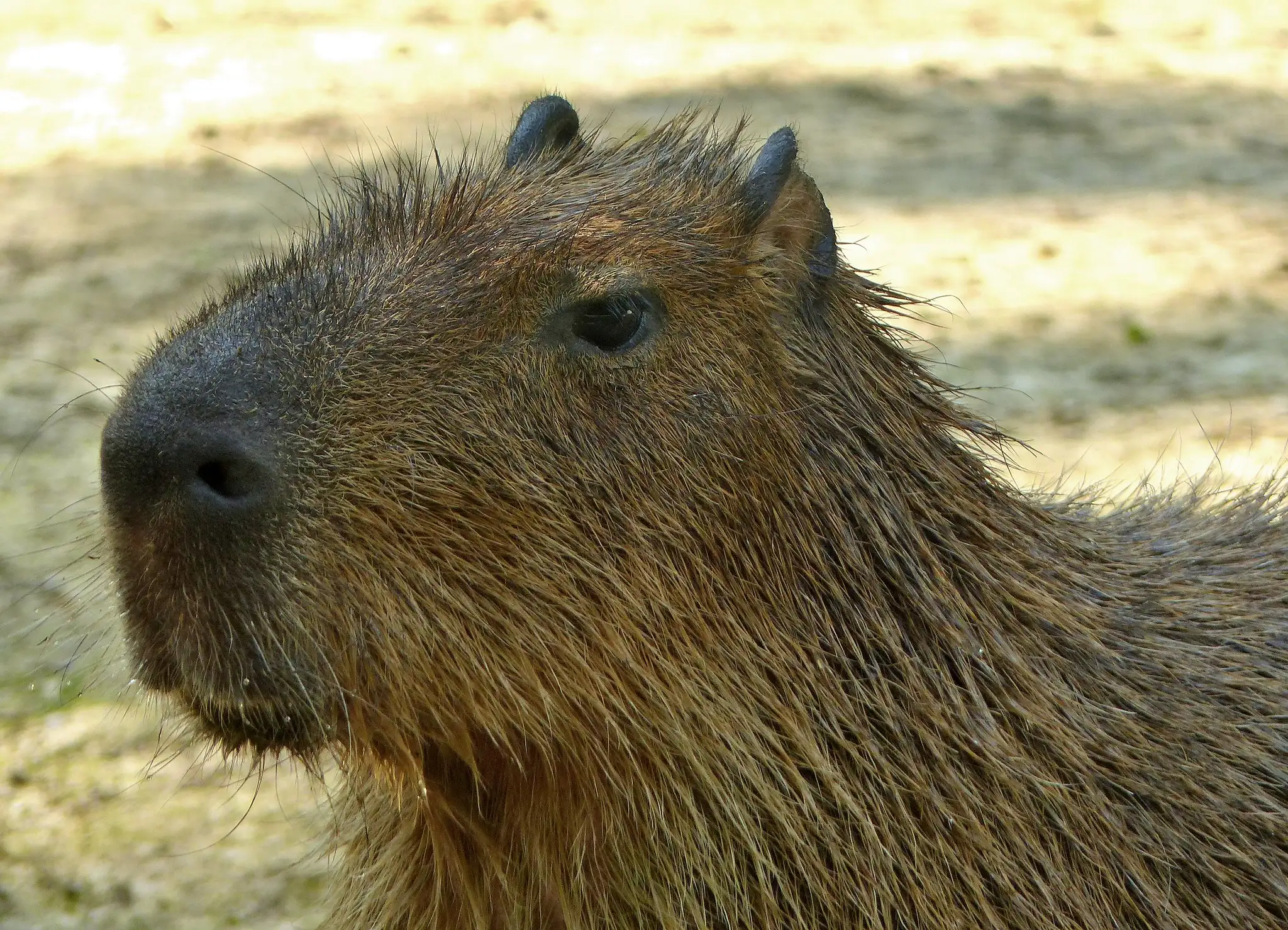
The capybara is one of the most fascinating animals in South America and holds the title of the world’s largest living rodent. Known for its gentle appearance, social personality, and remarkable swimming abilities, this semi-aquatic mammal inhabits wetlands, rivers, lakes, and tropical forests throughout much of the continent. Capybaras are especially common in the Amazon Basin, where they can often be spotted resting along riverbanks, grazing in open grasslands, or swimming through calm waterways.
Despite their impressive size, capybaras are generally peaceful herbivores that live in organized social groups. They have adapted exceptionally well to life near water, using rivers and lagoons to escape predators, regulate their body temperature, and find food. Their diet consists mainly of grasses and aquatic vegetation, while their webbed feet and specialized eyes, ears, and nostrils make them excellent swimmers.
But there is much more to discover about these remarkable rodents. How big can a capybara get? What do capybaras eat? Where do they live naturally? Are they friendly or dangerous to humans? Can you keep one as a pet? And are capybaras endangered?

In this complete guide, we explore capybara facts, size, habitat, diet, reproduction, behavior, predators, conservation, and their relationship with people. Whether you are interested in Amazon rainforest wildlife, animal biology, or simply curious about the world’s largest rodent, this article will help you understand everything about the capybara.
What Is a Capybara? Understanding the Capybara Animal
A capybara is a large, semi-aquatic mammal native to South America. It belongs to the rodent family Caviidae, which also includes guinea pigs and other cavies. Its scientific name is Hydrochoerus hydrochaeris, and it is recognized as the largest living rodent on Earth.

The capybara has a heavy, barrel-shaped body, short legs, small rounded ears, and a blunt muzzle. Its coarse brown or reddish-brown fur helps protect its skin in humid environments. Unlike many other mammals, its eyes, ears, and nostrils are positioned high on its head, allowing it to remain mostly submerged while still watching and listening for danger.
Table of Contents
Capybaras are highly adapted to aquatic environments. Their partially webbed feet help them swim efficiently, and they can remain underwater for several minutes when escaping predators. Although they spend considerable time in water, they are also comfortable walking across grasslands and forest edges in search of food.
Capybara Scientific Name and Classification
The scientific name of the capybara is Hydrochoerus hydrochaeris. Its classification is:
- Kingdom: Animalia
- Phylum: Chordata
- Class: Mammalia
- Order: Rodentia
- Family: Caviidae
- Genus: Hydrochoerus
- Species: Hydrochoerus hydrochaeris
There is also a smaller species known as the lesser capybara (Hydrochoerus isthmius), which inhabits parts of northern South America and Central America.
Where Are Capybaras From?
Capybaras are native to South America, where they inhabit tropical and subtropical regions with abundant freshwater. Their natural distribution includes countries such as Brazil, Peru, Colombia, Venezuela, Ecuador, Bolivia, Paraguay, Uruguay, and Argentina.
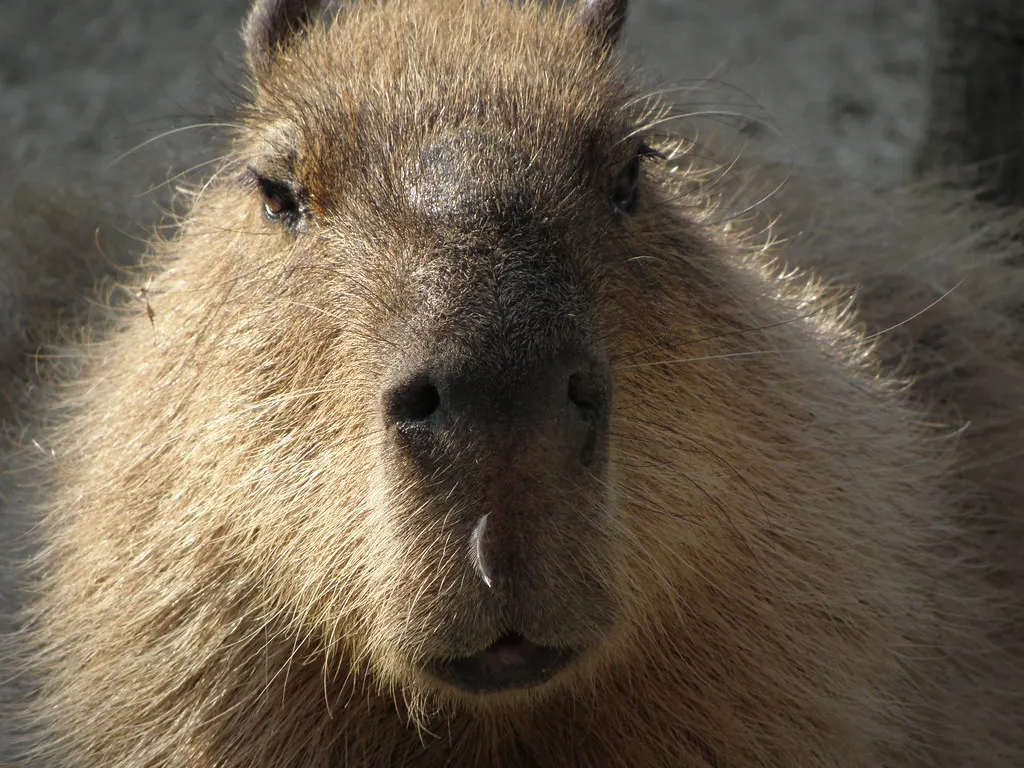
They are particularly associated with the Amazon Basin, the Pantanal wetlands, the Orinoco River region, and other large river systems.
In Peru, capybaras inhabit areas of the Amazon rainforest, especially near rivers, lagoons, marshes, and seasonally flooded forests. The waterways and wetlands surrounding Puerto Maldonado and the Tambopata region provide suitable environments for many semi-aquatic mammals, including capybaras.
Capybaras: The World’s Largest Rodents
Capybaras are famous because they are the largest living members of the rodent order. While mice, squirrels, guinea pigs, and beavers are also rodents, none of the living species reaches the typical body mass of an adult capybara.
Their large bodies, strong jaws, continuously growing teeth, and plant-based diet are characteristic of rodents. Their impressive size is particularly useful in open wetlands, where they can graze on abundant vegetation and travel between feeding areas and water.
Capybara Facts: Interesting Things to Know About Capybaras
Capybaras have several fascinating adaptations that make them unique among mammals. Their social behavior, swimming skills, digestive system, and relationship with other wildlife have made them popular subjects for wildlife enthusiasts and researchers.
Top 15 Interesting Capybara Facts
- Largest living rodent: Capybaras are the largest living rodents in the world.
- Excellent swimmers: Their partially webbed feet make them powerful swimmers.
- Semi-aquatic mammals: They spend much of their lives near rivers, lakes, marshes, and wetlands.
- Social animals: They usually live in groups rather than alone.
- Herbivorous diet: Their main food consists of grasses and aquatic plants.
- Specialized teeth: Their front teeth grow continuously throughout their lives.
- Long underwater stays: They can remain submerged for several minutes.
- Eyes above water: Their eyes, ears, and nostrils are positioned high on their heads.
- Communication: They use whistles, clicks, barks, and other vocalizations.
- Active at different times: They often feed during mornings and evenings, although activity varies with temperature and human disturbance.
- Excellent hearing: Their ears help them detect potential threats.
- Strong family bonds: Mothers and other group members help protect young capybaras.
- Fast runners: Despite their heavy bodies, they can run quickly when threatened.
- Important ecosystem members: Their grazing influences vegetation and they serve as prey for large predators.
- Coprophagy: They sometimes eat their own soft feces to obtain additional nutrients from plant material.
How Long Do Capybaras Live?
In the wild, capybaras generally live around 6 to 10 years, although lifespan varies depending on environmental conditions, predators, disease, and food availability.
In captivity, some individuals may live longer because they receive regular food, veterinary attention, and protection from natural predators.
How Fast Can Capybaras Run and Swim?
Although capybaras appear slow and relaxed, they can move surprisingly quickly when necessary. They can reach running speeds of approximately 35 kilometers per hour over short distances.
Their swimming abilities are even more impressive. Their partially webbed feet provide propulsion, while their streamlined movement allows them to travel efficiently through rivers and wetlands. When threatened by jaguars, caimans, or other predators, they often escape by entering the water and swimming away.
Do Capybaras Have Teeth?
Yes. Like other rodents, capybaras have large front incisors that grow continuously throughout their lives. These teeth are essential for cutting tough grasses and vegetation.
Their molars are adapted for grinding fibrous plant material. Because grasses can be abrasive, constant chewing helps maintain their teeth at a functional length.
Are Capybaras Social Animals?
Capybaras are highly social mammals. They commonly live in groups that may contain several individuals, although group size varies according to habitat, season, and local conditions.
A group often includes an adult male, several females, young adults, and juveniles. Group living provides protection because multiple individuals can watch for predators while others feed or rest.
Their social behavior also includes grooming, vocal communication, and close physical contact.
Capybara Size: How Big Is a Capybara?
One of the most common questions about this animal is: how big is a capybara? Its impressive body size is what distinguishes it from every other living rodent.
An adult capybara typically measures approximately 100–130 centimeters in body length and weighs between 35 and 66 kilograms. Some particularly large individuals can exceed this weight.
How Big Is a Capybara?
An adult capybara is approximately the size of a large dog, although its body shape is much heavier and more compact. It has a broad torso, relatively short legs, and a large head.
Its shoulder height is generally around 50–60 centimeters. This low body profile helps the animal move through dense vegetation and remain partially submerged in shallow water.
Capybara Size and Weight
| Physical characteristic | Typical measurement |
|---|---|
| Body length | 100–130 cm |
| Shoulder height | 50–60 cm |
| Adult weight | 35–66 kg |
| Maximum reported weight | Over 70 kg |
| Body shape | Large and barrel-shaped |
Measurements vary depending on sex, age, geographic location, and individual condition.
Male vs. Female Capybara Size
Male and female capybaras are similar in overall appearance and size. In many populations, males may be slightly heavier, although the difference is not always obvious.
Adult males have a distinctive scent gland on the upper part of their snout, known as a morillo. This gland is used for scent marking and communication with other members of the group.
Females do not have the same prominent morillo, making this one of the useful characteristics for distinguishing adult males from females.
Capybara Largest Size: How Big Can They Get?
The largest capybaras can weigh more than 70 kilograms, although this is above the typical adult range. Their large size is associated with abundant food, favorable environmental conditions, and individual genetics.
Despite being enormous compared with other rodents, capybaras are not the largest rodents that have ever existed. Fossil evidence reveals extinct giant rodents that were considerably larger than modern capybaras.
Capybara vs. Other Rodents: Size Comparison
Capybaras are much larger than common rodents such as rats, guinea pigs, and squirrels. They are also generally heavier than beavers and nutria.
Their size allows them to graze on large quantities of vegetation and makes them an important prey species for powerful Amazonian predators.
Where Do Capybaras Live? Habitat and Geographic Distribution
Capybaras live throughout much of South America, especially in areas with permanent access to freshwater. Their preferred habitats include rivers, lakes, swamps, marshes, flooded grasslands, and tropical forest edges.
They are highly adaptable animals, but water is essential to their survival. They depend on aquatic environments for protection, temperature regulation, and access to food.
Where Does a Capybara Live?
A capybara typically lives near freshwater environments where vegetation is abundant. It may establish its home range around a riverbank, lagoon, marsh, or wetland.
During the day, capybaras often rest in shaded areas near water. They may hide among tall grasses, aquatic plants, or forest vegetation before returning to open areas to feed.
When threatened, they quickly enter the water, where their swimming abilities give them an advantage over many land predators.
Where Do Capybaras Live in the Wild?
Wild capybaras inhabit several ecosystems across South America, including:
- Amazon rainforest: Rivers, oxbow lakes, flooded forests, and forest edges.
- Pantanal wetlands: Extensive marshes and seasonal floodplains in Brazil, Bolivia, and Paraguay.
- Orinoco Basin: Wetlands and grasslands in Venezuela and Colombia.
- Atlantic Forest region: River systems and wetlands in parts of eastern South America.
- South American grasslands: Open areas with ponds, streams, and seasonal wetlands.
Where Are Capybaras From? Countries and Regions
Capybaras are native to several South American countries, with particularly important populations in Brazil, Venezuela, Colombia, Peru, and Argentina.
Brazil has extensive capybara habitat, particularly in the Pantanal and Amazon regions. In Peru, capybaras are associated with lowland Amazonian environments where rivers and lagoons create ideal conditions for semi-aquatic wildlife.
Capybara Habitat: Wetlands, Rivers, Lakes, and Grasslands
Capybaras prefer habitats that combine open feeding areas with nearby water and protective vegetation.
Grasslands provide abundant food, while forests and shrubs offer shade and shelter. Rivers and lakes are essential for swimming, escaping predators, and regulating body temperature.
Seasonal changes can influence their movement. During the rainy season, flooded areas may provide new feeding opportunities, while dry-season conditions can concentrate capybaras around remaining water sources.
Do Capybaras Live in the Amazon Rainforest?
Yes. Capybaras are native to the Amazon Basin and can inhabit suitable environments throughout the region.
However, they are not restricted to deep, dense rainforest. They are more commonly associated with riverbanks, wetlands, open forest clearings, flooded grasslands, and lagoon edges where they can find food and access water.
In the Peruvian Amazon, the combination of rivers, oxbow lakes, and seasonal wetlands provides suitable habitat for these impressive rodents.
Do Capybaras Live in Water?
Capybaras do not live permanently underwater, but they are semi-aquatic mammals that spend considerable time swimming and resting in freshwater.
They usually sleep on land, often in protected vegetation close to water. When necessary, they can submerge their entire bodies and remain underwater for several minutes.
Why Do Capybaras Need Water to Survive?
Water serves several essential functions in capybara life:
- Protection: Swimming and diving help them escape predators.
- Temperature regulation: Water allows them to cool down during hot weather.
- Feeding: Aquatic vegetation is an important part of their diet.
- Movement: Rivers and wetlands provide access to different feeding and resting areas.
- Social behavior: Groups often gather around the same water sources.
What Do Capybaras Eat? Diet and Feeding Habits
Capybaras are herbivorous mammals that feed mainly on grasses, aquatic plants, and other types of vegetation. Their diet is closely connected to the wetlands and grasslands where they live. They spend several hours each day grazing, selecting plants that provide the nutrients and energy needed to maintain their large bodies.
Although capybaras are sometimes seen eating fruits and other vegetation, grasses make up the most important part of their natural diet.
What Do Capybaras Eat in the Wild?
Wild capybaras eat a variety of plants depending on the season and availability of food. Their preferred foods include:
- Fresh grasses growing along riverbanks and wetlands.
- Aquatic plants found in lakes, ponds, and marshes.
- Water plants and vegetation growing in flooded areas.
- Leaves and tender shoots from selected plants.
- Fruits and other seasonal vegetation when available.
- Agricultural crops in areas where their habitat overlaps with farmland.
Capybaras are selective grazers and often prefer young, nutritious grasses. Their strong incisors help them cut vegetation, while their molars grind tough plant fibers.
What Do Capybara Eat? Main Foods and Plants
The capybara diet changes depending on its environment. In tropical regions such as the Amazon Basin, these rodents have access to numerous grasses, aquatic plants, and seasonal vegetation.
During the rainy season, flooded grasslands and riverbanks may provide abundant fresh vegetation. During drier periods, capybaras often concentrate around permanent water sources where food and shelter remain available.
Their digestive system is specially adapted to extract nutrients from fibrous plant material, allowing them to survive on vegetation that many other mammals cannot digest efficiently.
Are Capybaras Herbivores?
Yes. Capybaras are herbivores, meaning they obtain their food from plants rather than hunting other animals.
They do not naturally prey on fish, birds, or mammals. Their teeth, digestive system, and feeding behavior are adapted to a plant-based diet.
Do Capybaras Eat Grass, Fruits, and Vegetables?
Grass is their primary food, but capybaras can also consume fruits, vegetables, leaves, and aquatic vegetation.
In captivity, their diet should be carefully managed to resemble their natural feeding habits. Grass and appropriate forage should form the foundation of their nutrition, rather than relying on sweet fruits or processed foods.
Do Capybaras Eat Their Own Poop? Understanding Coprophagy
Yes. Capybaras practice a digestive behavior known as coprophagy, which means consuming certain types of their own feces.
This may seem unusual, but it is an important nutritional adaptation. Plant material contains cellulose and other fibers that are difficult to digest completely during its first passage through the digestive system.
By eating soft feces produced during certain digestive cycles, capybaras can obtain additional nutrients and beneficial microorganisms. This behavior is also found in rabbits and some other herbivorous mammals.
What Do Baby Capybaras Eat?
Baby capybaras initially depend on their mother’s milk, but they begin nibbling on grass and other vegetation when they are still very young.
This early introduction to solid food allows them to gradually develop the digestive abilities required for an adult herbivorous diet. They may continue nursing while exploring and consuming plants alongside their mother and other members of the group.
Capybara Behavior: Are Capybaras Friendly?
Capybaras are well known for their calm appearance and social behavior. Their relaxed posture, gentle expressions, and tendency to coexist with other animals have made them famous around the world.
However, their peaceful reputation does not mean they are domesticated or always comfortable around humans. They remain wild animals with natural instincts, territorial behavior, and the ability to defend themselves.
Are Capybaras Friendly to Humans?
Capybaras can become accustomed to human presence, particularly in areas where they are not hunted or regularly disturbed. Some individuals living in parks, protected areas, or other human-modified environments may tolerate people at relatively close distances.
However, wild capybaras should not automatically be considered friendly or approachable. They may become frightened, stressed, or defensive if people attempt to touch, feed, or corner them.
The best way to observe capybaras is from a respectful distance, allowing them to behave naturally without interference.
Why Are Capybaras So Calm and Social?
Their calm behavior is closely connected to their group-living lifestyle. Living in groups helps capybaras detect danger and reduces the risk of an individual being caught by a predator.
They communicate through different sounds, including whistles, clicks, barks, and alarm calls. These vocalizations help group members maintain contact, recognize potential threats, and coordinate their movements.
Capybaras also spend time resting close together, grooming one another, and sharing feeding areas.
Do Capybaras Like Being Petted?
Some capybaras in controlled environments may become accustomed to gentle human contact, but this does not mean every individual enjoys being petted.
Wild capybaras generally prefer to maintain their natural space. Touching an unfamiliar animal can cause stress or trigger a defensive reaction.
Even seemingly relaxed capybaras can bite when frightened or uncomfortable. Visitors observing wildlife should avoid touching or feeding them.
Can Capybaras Bond With Humans?
Capybaras can recognize familiar people and may become comfortable with regular caregivers. Individuals raised in captivity under appropriate conditions sometimes develop strong relationships with their caretakers.
However, this should not be confused with domestication. Their social needs, large size, specialized diet, and dependence on water make them challenging animals to maintain in human environments.
Are Capybaras Friendly With Other Animals?
Capybaras often tolerate the presence of other species, especially when those animals do not represent a direct threat.
Photographs of birds resting on capybaras have become especially popular. Birds may use these large rodents as convenient resting platforms or take advantage of insects disturbed by their movements.
Other animals may also share their habitat because capybaras are generally not aggressive toward species that do not threaten them.
What Animals Live With Capybaras?
In South American wetlands, capybaras share their environment with numerous animals, including:
- Herons and egrets.
- Kingfishers and other waterbirds.
- Turtles and freshwater fish.
- Caimans.
- Giant otters.
- Howler monkeys and capuchin monkeys in nearby forest habitats.
- Deer and other grassland mammals.
These species form part of the same complex wetland ecosystem, although they do not necessarily interact directly.
Why Do Other Animals Sit on Capybaras?
Birds and other small animals are sometimes photographed sitting on capybaras because these rodents are large, relatively tolerant of nearby wildlife, and frequently rest in open areas.
Some birds may use them as convenient perches, while others benefit from feeding on insects disturbed by their grazing and movement.
This behavior contributes to the capybara’s reputation as one of the most sociable-looking animals in the animal kingdom.
Are Capybaras Dangerous? Risks, Defense, and Natural Predators
Capybaras are generally not aggressive toward humans, but they are powerful wild animals capable of defending themselves. Their strong jaws and sharp incisors can cause serious injuries if they bite.
Understanding their behavior is important, especially when observing them in natural environments such as the Amazon rainforest or the Pantanal wetlands.
Are Capybaras Dangerous to Humans?
Under normal circumstances, capybaras tend to avoid confrontation. They usually move away when they sense danger and may enter nearby water to escape.
However, they can become defensive when threatened, cornered, injured, or protecting their young. Large adult capybaras have considerable strength, so approaching or attempting to handle them is not recommended.
As with other wildlife, the safest approach is to observe them without disturbing their natural behavior.
Can Capybaras Bite?
Yes. Capybaras have powerful jaws and prominent front teeth designed for cutting tough vegetation.
Although they are herbivores, their incisors can inflict deep wounds. Biting may occur when an animal feels threatened, is handled incorrectly, or is competing with another capybara.
For this reason, visitors should never attempt to capture, restrain, or feed wild individuals.
Do Capybaras Attack People?
Attacks on humans are not typical capybara behavior. Most encounters end with the animal moving away or entering the water.
Aggressive behavior is more likely when people get too close to a mother with young, disturb a resting group, or attempt to handle an animal.
Giving capybaras enough space is the best way to avoid dangerous interactions.
How Do Capybaras Defend Themselves?
Capybaras rely on several natural defense mechanisms:
- Swimming: They quickly enter rivers and lakes to escape land predators.
- Diving: Their ability to remain underwater helps them avoid detection.
- Group vigilance: Several animals can watch for danger while others feed.
- Alarm calls: They produce vocal signals to warn nearby group members.
- Speed: They can run quickly over short distances when escaping threats.
Their brown fur also provides some camouflage among muddy riverbanks, vegetation, and grasslands.
What Animals Eat Capybaras?
Capybaras are an important food source for several large South American predators. Despite their impressive size, they can become vulnerable when young, isolated, injured, or caught away from water.
Their main natural predators include:
- Jaguars.
- Pumas.
- Green anacondas.
- Black caimans.
- Other large crocodilians in their geographic range.
Capybara Predators: Jaguars, Caimans, and Anacondas
The jaguar is one of the most important predators of adult capybaras in the Amazon rainforest and Pantanal. These powerful cats are excellent hunters and often target mammals that gather near rivers and wetlands.
Black caimans may attack capybaras that enter the water, particularly young or vulnerable individuals. Large anacondas can also prey on capybaras, especially smaller animals.
These predator-prey relationships help maintain the ecological balance of South American wetlands.
Are Capybaras Aggressive When Threatened?
Capybaras can display aggressive behavior when they feel threatened or when social competition occurs within a group.
Adult males may fight over territory, dominance, or access to females. During these encounters, they may chase, bite, or push one another.
Females can also become protective when their young are in danger. Although their usual behavior is peaceful, capybaras should always be treated as wild animals.
Baby Capybara: Birth, Growth, and Family Life
Baby capybaras are among the most recognizable young mammals in South America. They have soft brown fur, compact bodies, and the same general appearance as adults, but in a much smaller size.
Unlike many other large mammals, capybara babies are relatively well developed at birth. They can walk shortly after being born and begin exploring their surroundings while remaining close to their mother and the rest of the group.
What Is a Baby Capybara Called?
A baby capybara is commonly called a pup. Several pups are usually born together in a single litter.
They are born with their eyes open and a coat of fur, allowing them to move around and begin exploring soon after birth.
What Does a Baby Capybara Look Like?
A newborn capybara looks like a miniature version of an adult. It has a rounded body, short legs, small ears, and brown fur.
Baby capybaras are often seen walking together in groups, following their mothers and other adult females. Their small size makes them vulnerable to predators, so remaining close to the group provides additional protection.
How Big Is a Baby Capybara?
Newborn capybaras generally weigh around 1–2 kilograms. Their body length is considerably shorter than that of adults, but they grow quickly during their first months.
Their growth depends on genetics, maternal care, nutrition, and environmental conditions.
How Many Babies Do Capybaras Have?
Female capybaras usually give birth to litters of approximately four to five pups, although litter sizes can vary.
In favorable conditions, a female may produce more than one litter per year. The number of young that survive depends on food availability, predators, disease, and habitat conditions.
How Long Are Capybaras Pregnant?
The gestation period of a capybara is approximately five months, usually around 150 days.
After this period, the female gives birth in a sheltered location within or near the group’s home range. The pups are born relatively mature compared with many other rodents.
How Do Mother Capybaras Care for Their Babies?
Mother capybaras nurse their pups and keep them close during their early development. However, capybara family life is not limited to the mother and her offspring.
Other females in the group may also help protect and supervise the young. This social structure provides additional security against predators.
Young capybaras begin eating vegetation early, gradually becoming less dependent on milk as they grow.
When Do Baby Capybaras Become Adults?
Capybaras reach sexual maturity at different ages depending on sex, environmental conditions, and development. Females can mature relatively early, while males generally take longer to reach full reproductive maturity.
Even after becoming independent, young capybaras may remain within their social groups or move to neighboring groups as they develop.
Can You Have a Capybara as a Pet?
Capybaras have become popular on social media because of their calm appearance and friendly-looking interactions with people and other animals. This popularity has led many people to ask whether they can keep a capybara as a pet.
Although it is possible to keep capybaras in captivity under appropriate conditions, they are not ordinary domestic animals. Their large size, social needs, specialized diet, and dependence on freshwater make them difficult to care for.
Can You Own a Capybara as a Pet?
Whether you can own a capybara depends on the laws of your country, state, or region. Some jurisdictions permit private ownership under specific conditions, while others prohibit it or require special wildlife permits.
Before considering a capybara as a pet, potential owners must research local wildlife regulations and understand the animal’s long-term care requirements.
Are Capybaras Good Pets?
Capybaras may appear to be ideal pets because of their gentle personalities, but their needs are considerably more complicated than those of dogs, cats, or guinea pigs.
They are social animals that generally need companionship from other capybaras. Keeping one alone can cause stress and behavioral problems.
They also require a large outdoor area, access to suitable swimming water, appropriate vegetation, veterinary care, and protection from extreme temperatures.
How Much Does a Pet Capybara Cost?
The price of a captive-bred capybara varies significantly depending on the country, breeder, availability, and legal requirements.
However, the purchase price is only a small part of the total expense. Owners must also consider:
- Spacious outdoor enclosures.
- A large swimming pool or suitable pond.
- Food and specialized nutritional requirements.
- Veterinary examinations and medical treatment.
- Shelter and temperature management.
- Companionship and ongoing animal care.
Because of these requirements, maintaining capybaras can be considerably more expensive than caring for common household pets.
What Do You Need to Keep a Capybara?
Capybaras need an environment that allows them to express their natural behaviors. A suitable captive habitat should include:
- A large outdoor area for grazing and movement.
- A clean swimming area with safe entry and exit points.
- Shaded resting places and sheltered areas.
- Suitable grasses, hay, and other appropriate vegetation.
- Companionship from other capybaras.
- Access to veterinary professionals experienced with exotic mammals.
Do Capybaras Need a Swimming Pool?
Yes. Access to water is essential for capybaras. They use it to swim, escape perceived threats, and regulate their body temperature.
A suitable pool or pond should provide enough space for swimming and complete submersion. Water quality and cleanliness are also important for preventing health problems.
Can Capybaras Live Alone?
Capybaras are naturally social animals and generally should not be kept alone. In the wild, they live in groups that provide companionship, communication, and protection.
An isolated capybara may experience stress because it cannot interact with other members of its species. Keeping compatible individuals together is important for their welfare.
Is It Legal to Own a Capybara?
There is no universal law governing capybara ownership. Regulations vary between countries and even between individual states or provinces.
In some places, private ownership is permitted with wildlife licenses or special facilities. In others, keeping a capybara is restricted or prohibited.
Anyone interested in owning one should consult the relevant wildlife authorities before acquiring the animal.
Why Capybaras Are Not Suitable Pets for Everyone
The main challenge of keeping a capybara is providing the environment it needs throughout its life.
Unlike domesticated animals, capybaras have not undergone the same long history of selective breeding for life alongside humans. Their social, dietary, and environmental requirements remain closely connected to their natural habitats.
For most people, observing capybaras in wildlife sanctuaries or their natural South American environments is a more responsible way to appreciate these remarkable animals.
Are Capybaras Endangered? Conservation and Population
Capybaras are currently classified as a species of Least Concern on the International Union for Conservation of Nature (IUCN) Red List. This means they are not considered globally threatened with extinction based on their overall population and distribution.
Their adaptability and ability to reproduce in favorable environments have helped them maintain populations across much of South America.
However, this does not mean capybaras are free from environmental threats. Habitat destruction, hunting, road accidents, and wetland degradation can affect local populations.
Are Capybaras Endangered?
No. The common capybara (Hydrochoerus hydrochaeris) is not currently classified as endangered globally.
It remains widespread across South America, particularly in regions with abundant freshwater and vegetation.
Nevertheless, conservation efforts remain important because healthy capybara populations depend on the protection of rivers, wetlands, grasslands, and forest ecosystems.
What Is the Capybara Conservation Status?
The common capybara is classified as Least Concern on the IUCN Red List.
This classification reflects its broad geographic distribution and generally stable conservation status at the global level. However, individual populations may face local pressures depending on hunting practices, land-use changes, and habitat quality.
The lesser capybara (Hydrochoerus isthmius) has a more restricted geographic distribution and should not automatically be assumed to have the same population status or conservation needs.
How Many Capybaras Are Left in the World?
There is no reliable, comprehensive worldwide population estimate for all wild capybaras.
Their populations are distributed across enormous areas of South America, including wetlands, river systems, grasslands, and forest edges. Because they occupy such diverse environments, counting every individual would be extremely difficult.
Researchers generally assess populations through regional surveys, habitat studies, and wildlife monitoring rather than a single global census.
What Are the Main Threats to Capybaras?
Although capybaras are adaptable, several environmental pressures can affect their survival.
- Habitat destruction: Deforestation and agricultural expansion reduce natural feeding and resting areas.
- Wetland drainage: Removing water from wetlands destroys important capybara habitats.
- Hunting: Capybaras are hunted for their meat and hides in some regions.
- Road accidents: Roads crossing wetlands and forest areas can cause wildlife mortality.
- Water pollution: Contamination from agricultural and industrial activities can damage aquatic ecosystems.
- Climate change: Changes in rainfall and drought patterns can affect water availability and vegetation.
How Do Capybaras Survive in the Wild?
Capybaras survive through a combination of physical adaptations and social behavior.
Their ability to swim, dive, and remain underwater provides protection from land predators. Their herbivorous diet allows them to use abundant vegetation, while group living helps them detect potential danger.
They also reproduce relatively efficiently under favorable environmental conditions, helping maintain populations in suitable habitats.
How Can We Protect Capybaras and Their Habitat?
Protecting capybaras requires conserving the freshwater ecosystems on which they depend.
Important conservation actions include protecting wetlands, maintaining healthy river systems, reducing illegal hunting, and preserving natural vegetation around lakes and waterways.
Responsible wildlife tourism can also help raise awareness about Amazonian biodiversity and the importance of maintaining healthy habitats.
Do People Eat Capybara? Hunting, Meat, and Cultural Traditions
Yes. Capybara meat is consumed in certain parts of South America, where the animal has traditionally been hunted or raised for food. Its consumption is particularly associated with some regions of Venezuela, Colombia, and other areas where capybaras are part of local food traditions.
Although capybaras are widely recognized as wildlife attractions, they also have a long history of interaction with rural communities.
Do People Eat Capybara Meat?
Yes. Capybara meat is eaten in some South American countries. It is traditionally prepared in different ways, including roasting, drying, salting, and cooking in regional dishes.
Its consumption is especially associated with certain cultural and seasonal traditions.
What Does Capybara Meat Taste Like?
Descriptions of capybara meat commonly compare it to other lean meats, although flavor varies depending on preparation, diet, and cooking methods.
Like other wild meats, proper handling, inspection, and cooking are essential for food safety.
Where Is Capybara Meat Commonly Eaten?
Capybara meat is traditionally consumed in parts of Venezuela and Colombia, as well as some other South American regions.
In Venezuela, it has a particular association with Holy Week traditions, when capybara meat has historically been consumed as an alternative to other meats.
Is Capybara Meat Legal to Eat?
Legality depends on the country, region, hunting season, and source of the animal.
Some jurisdictions regulate capybara hunting and trade through permits, seasonal restrictions, or wildlife management programs. Others impose stricter protections.
Anyone considering consuming capybara meat should ensure that it comes from a legally authorized and properly inspected source.
Capybara Hunting and Traditional Uses in South America
Historically, capybaras have been hunted for meat and hides. Their hides have also been used in leather production.
In some regions, controlled harvesting and wildlife management programs have been developed to balance traditional use with conservation.
However, uncontrolled hunting and habitat destruction can threaten local populations, making responsible management essential.
Is Capybara Meat Sustainable?
Capybara meat may be produced through regulated wildlife management in certain areas, but sustainability depends on local population conditions and harvesting practices.
Responsible management requires monitoring populations, respecting hunting regulations, and maintaining the wetlands and grasslands where capybaras live.
Protecting their natural habitat remains important regardless of whether local communities use the species as a food resource.
Capybara vs. Other Animals: Comparisons and Differences
Capybaras are often compared with other rodents because of their body shape, teeth, and plant-based diet. However, their large size and semi-aquatic lifestyle make them quite different from many familiar mammals.
Capybara vs. Beaver: What’s the Difference?
Both capybaras and beavers are semi-aquatic rodents, but they belong to different families and have distinct physical adaptations.
Beavers have broad, flat tails that help them swim and construct dams. Capybaras have short, inconspicuous tails and do not build dams.
Beavers also have specialized behaviors associated with modifying waterways, while capybaras mainly graze on vegetation and use existing wetlands.
Capybara vs. Guinea Pig
Capybaras and guinea pigs are close relatives because both belong to the family Caviidae.
However, their sizes are dramatically different. Guinea pigs are small rodents commonly kept as pets, while adult capybaras can weigh more than 60 kilograms.
Both animals are herbivores, have continuously growing incisors, and display social behavior.
Capybara vs. Nutria
Nutria, also known as coypu, are semi-aquatic rodents native to South America. They have orange-colored incisors, long tails, and prominent whiskers.
Capybaras are much larger and have a heavier body with shorter legs. Both species inhabit wetlands and feed mainly on vegetation, but they belong to different rodent families you can see them if doing Amazon tour.
Capybara vs. Hippopotamus: Similarities and Differences
Capybaras and hippopotamuses are sometimes compared because both spend considerable time in water and have large, rounded bodies.
However, they are not closely related. Hippos are large African mammals belonging to the order Artiodactyla, while capybaras are South American rodents.
Both species depend on aquatic environments for important aspects of their daily lives, but their sizes, diets, evolutionary histories, and ecological roles are very different.
Frequently Asked Questions About Capybaras
What Is a Capybara?
A capybara is the world’s largest living rodent. It is a semi-aquatic herbivorous mammal native to South America, where it lives near rivers, lakes, wetlands, and grasslands.
Why Are Capybaras Called the World’s Largest Rodents?
Capybaras are called the world’s largest rodents because adult individuals commonly weigh between 35 and 66 kilograms and can reach approximately 130 centimeters in body length. No other living rodent species regularly reaches their size.
Where Do Capybaras Live Naturally?
Capybaras live throughout much of South America, including Brazil, Peru, Colombia, Venezuela, Argentina, Bolivia, and Paraguay. They prefer freshwater habitats such as wetlands, rivers, lakes, marshes, and flooded grasslands.
What Do Capybaras Eat?
Capybaras are herbivores that primarily eat grasses and aquatic plants. They also consume leaves, fruits, and other vegetation depending on food availability.
How Big Can a Capybara Get?
An adult capybara typically measures 100–130 centimeters in length and weighs between 35 and 66 kilograms. Particularly large individuals can weigh more than 70 kilograms.
Are Capybaras Friendly to Humans?
Capybaras are generally peaceful animals and may become accustomed to human presence. However, they are wild mammals and should not be approached, touched, or fed without appropriate supervision.
Are Capybaras Dangerous?
Capybaras are not normally aggressive toward people, but they can bite when frightened, threatened, or defending their young. Their powerful jaws and sharp incisors can cause serious injuries.
Can You Have a Capybara as a Pet?
Capybaras can be kept in captivity where legally permitted, but they require substantial space, swimming water, specialized care, and companionship from other capybaras. They are not suitable pets for most households.
Are Capybaras Endangered?
No. The common capybara is classified as Least Concern on the IUCN Red List. However, habitat destruction, hunting, and wetland degradation can threaten individual populations.
How Long Do Capybaras Live?
Wild capybaras generally live approximately 6–10 years. Their lifespan depends on environmental conditions, food availability, predators, and overall health.
Can Capybaras Swim?
Yes. Capybaras are excellent swimmers. Their partially webbed feet help them move through water, and they can submerge their bodies and remain underwater for several minutes.
Do People Eat Capybara?
Yes. Capybara meat is traditionally consumed in some South American countries, particularly Venezuela and Colombia. Hunting and consumption are subject to local wildlife regulations.
Why Capybaras Are Fascinating Animals of South America
The capybara is much more than the world’s largest rodent. It is an extraordinary semi-aquatic mammal that plays an important role in South American ecosystems. Its impressive size, specialized swimming abilities, herbivorous diet, and highly social behavior make it one of the most interesting animals found in the Amazon rainforest and other tropical wetlands.
From grazing along riverbanks to swimming through lagoons and raising their young in protective social groups, capybaras demonstrate how wildlife adapts to life in freshwater environments. They also provide an important food source for predators such as jaguars, caimans, and anacondas, contributing to the natural balance of wetland ecosystems.
For wildlife enthusiasts visiting the Peruvian Amazon, learning about capybaras offers another fascinating perspective on the region’s biodiversity. The rivers, lakes, flooded forests, and wetlands of the Tambopata region support an incredible variety of mammals, birds, reptiles, and other wildlife.
Understanding where capybaras live, what they eat, how they behave, and the challenges they face helps us appreciate why protecting their natural habitats is so important.
Generally I don’t learn post on blogs, however I would like to say that this write-up very pressured me to check out and do it! Your writing taste has been amazed me. Thank you, quite great post.