
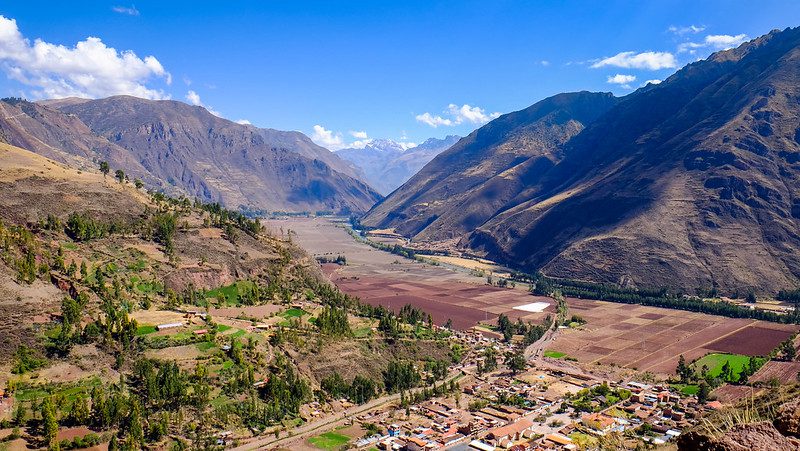
Sacred Valley Peru is one of the most fascinating destinations in the Peruvian Andes, offering an extraordinary combination of ancient history, traditional culture, breathtaking mountain landscapes, and archaeological treasures. Located in the Cusco region, this remarkable valley follows the course of the Urubamba River and encompasses traditional Andean villages, fertile agricultural lands, impressive Inca constructions, and communities that continue to preserve their ancestral customs.
For centuries, the region has played an important role in the development of Andean civilization. During the Inca Empire, its fertile soils, favorable agricultural conditions, and strategic geographical position made it an important center for food production, settlement, and cultural activities.
Today, travelers visit Sacred Valley Peru to explore archaeological complexes, discover traditional markets, experience local craftsmanship, enjoy outdoor adventures, and learn about the cultural heritage of the Andes.
Whether you are interested in ancient civilizations, cultural tourism, photography, hiking, or discovering traditional Peruvian communities, the Sacred Valley offers experiences that go beyond conventional sightseeing.
This comprehensive travel guide explores the valley’s location, history, major attractions, activities, transportation, accommodation options, and essential travel recommendations to help you plan a rewarding visit.
Where Is Sacred Valley Peru Located?
The Sacred Valley is situated in the southeastern Peruvian Andes, within the Cusco region. It extends along the Urubamba River, also known in different sections as the Vilcanota River, connecting several traditional towns and archaeological destinations.
Table of Contents
The geographical area is characterized by mountain ranges, fertile agricultural plains, steep slopes, and landscapes shaped by centuries of human activity.
Its location between Cusco and the wider Andean highlands makes it an important destination for travelers exploring Peru’s historical and cultural attractions.
Geography and Location of the Sacred Valley
The valley encompasses several communities and destinations, including Pisac, Calca, Urubamba, Yucay, Ollantaytambo, Chinchero, and surrounding rural settlements.
Each location has distinctive characteristics, from archaeological remains and traditional architecture to agricultural landscapes and artisan communities.
The region’s geographical diversity creates different environmental conditions depending on elevation, exposure, and proximity to the river.
The lower valley generally has a relatively mild climate compared with higher Andean locations, making it suitable for agriculture and rural settlements.
The Urubamba River and Andean Landscape
The Urubamba River is one of the defining geographical features of Sacred Valley Peru.
Its waters flow through the mountainous landscape, supporting agricultural activities and sustaining communities throughout the region.
The surrounding environment includes fertile fields, mountain slopes, natural terraces, and spectacular views of the Andes.
Visitors can appreciate the relationship between the river, agricultural land, and traditional settlements while traveling between the valley’s principal destinations.
Altitude and Climate
Altitude is an important consideration when planning a trip to Sacred Valley Peru.
Many settlements in the valley are located at lower elevations than Cusco, although some surrounding archaeological attractions and mountain communities are considerably higher.
This variation creates different climatic conditions throughout the region.
Generally, the valley experiences two main seasons:
- Dry season: Approximately May through September, with clearer skies and less frequent rainfall.
- Rainy season: Approximately November through March, with increased precipitation and greener landscapes.
April and October are often considered transitional months.
Temperatures can change throughout the day, so visitors should prepare for sunny afternoons, cool evenings, and occasional rainfall.
History and Cultural Significance of Sacred Valley Peru
The Sacred Valley has an important place in the history of Andean civilization.
Long before the arrival of the Spanish, different communities inhabited the region and developed agricultural systems, settlements, and cultural traditions adapted to the mountainous environment.
During the expansion of the Inca Empire, the valley became an important center for agriculture, political organization, and religious activities.
Its natural resources and geographical characteristics contributed to its importance within the broader imperial territory.
The Sacred Valley During the Inca Empire
The Incas recognized the agricultural potential and strategic importance of the valley.
They developed settlements, ceremonial structures, agricultural terraces, and sophisticated infrastructure to manage the landscape.
Ollantaytambo and Pisac are among the most important archaeological destinations associated with this historical period.
Their architectural remains demonstrate the engineering knowledge, organizational capabilities, and construction techniques developed by Andean societies.
The valley also provided access to different ecological environments, allowing agricultural production to benefit from variations in temperature, elevation, and soil conditions.
Agricultural Innovation and Engineering
One of the most remarkable aspects of Inca civilization was its ability to adapt agriculture to difficult geographical conditions.
In the Sacred Valley, agricultural terraces were constructed along mountain slopes to create more productive cultivation areas.
These structures helped manage soil, improve drainage, reduce erosion, and organize agricultural production.
Irrigation channels and water-management systems also played an important role in supporting cultivation.
The agricultural landscape remains one of the most visible examples of the relationship between ancient engineering and the natural environment.
Traditional Andean Communities and Heritage
The Sacred Valley is not simply an archaeological destination. It is also a living cultural region.
Many local communities continue to maintain traditional agricultural practices, textile production, craftsmanship, and cultural celebrations.
Quechua remains an important language in the region, while traditional knowledge continues to influence daily activities and community identity.
Visitors can discover these traditions through artisan workshops, agricultural experiences, traditional markets, and community-based tourism.
Respecting local customs and supporting community initiatives are essential elements of responsible travel.
Best Places to Visit in Sacred Valley Peru
The valley contains numerous archaeological, cultural, and natural attractions.
Although each destination has its own characteristics, visiting several locations provides a broader understanding of the region’s history and cultural diversity.
Pisac and Its Archaeological Complex
Pisac is one of the most recognized destinations in Sacred Valley Peru.
Its archaeological complex occupies an impressive mountainside overlooking the surrounding valley.
The site contains agricultural terraces, ceremonial structures, residential areas, and impressive stone constructions.
The terraces demonstrate how the Incas adapted steep mountain slopes for agricultural production.
Visitors can explore different sections of the archaeological complex while enjoying panoramic views of the surrounding mountains and agricultural landscape.
The town of Pisac is also known for its traditional market, where visitors can discover textiles, handicrafts, ceramics, jewelry, and locally produced goods.
Exploring both the archaeological site and the town provides an opportunity to appreciate the region’s historical and contemporary cultural identity.
Ollantaytambo and Its Ancient Architecture
Ollantaytambo is among the most historically significant destinations in the Sacred Valley.
Its archaeological complex features monumental terraces, stone constructions, ceremonial areas, and impressive architectural structures.
The settlement is particularly remarkable because its historic urban layout preserves important elements of Inca planning.
Narrow streets, traditional stone walls, irrigation channels, and ancient foundations remain part of the town’s architectural character.
The archaeological complex also offers extensive views of the valley and surrounding mountains.
Ollantaytambo is an important destination for travelers continuing toward Machu Picchu because its railway station provides access to the wider mountain region.
Spending time in the town allows visitors to explore its historical character beyond the principal archaeological attraction.
Chinchero and Traditional Andean Textiles
Chinchero is a traditional Andean community recognized for its cultural heritage, archaeological remains, and textile traditions.
Its location on a high plateau provides beautiful views of surrounding mountains and agricultural landscapes.
The community is particularly associated with traditional weaving techniques that have been transmitted across generations.
Artisans use natural materials, traditional tools, and plant-based dyes to create textiles featuring distinctive patterns and colors.
Visitors can learn about the preparation of wool, dyeing processes, spinning, and weaving techniques through cultural demonstrations.
Chinchero also contains archaeological remains and colonial architecture that reflect different periods of regional history.
It is an excellent destination for understanding the relationship between traditional craftsmanship and contemporary Andean identity.
Maras and Its Traditional Salt Pans
Maras is famous for its extensive collection of traditional salt evaporation ponds.
These salt pans occupy a mountainside and create a distinctive landscape composed of numerous small pools arranged in terraces.
The production process uses naturally saline spring water that flows into individual ponds, where evaporation allows salt to crystallize.
Local families have maintained traditional methods of salt production for generations.
The site demonstrates how natural resources, environmental conditions, and traditional knowledge can support a long-standing economic activity.
The contrasting white salt deposits and surrounding mountain landscape make Maras an interesting destination for cultural exploration and photography.
Moray and Its Circular Agricultural Terraces
Moray is one of the most distinctive archaeological sites in Sacred Valley Peru.
Its most recognizable feature is a series of circular agricultural terraces arranged in large depressions in the landscape.
These terraces create different environmental conditions according to their depth, exposure, and elevation.
Researchers commonly associate the complex with Inca agricultural experimentation and the study of crop adaptation.
The site illustrates the sophisticated understanding of agricultural environments developed by Andean civilizations.
Moray is particularly interesting for travelers interested in ancient engineering, agricultural history, and archaeological landscapes.
Urubamba, Calca and Yucay
Beyond the principal archaeological attractions, the Sacred Valley includes several towns that offer opportunities to experience everyday regional life.
Urubamba is an important commercial and agricultural center with restaurants, accommodation, markets, and access to nearby attractions.
Calca provides a more traditional atmosphere and access to surrounding rural communities and mountain landscapes.
Yucay is known for its peaceful environment, agricultural surroundings, and historical connections with the region’s former settlements.
These towns are useful destinations for travelers who want to spend additional time exploring the valley rather than visiting only its most famous archaeological sites.
Best Things to Do in Sacred Valley Peru
Sacred Valley Peru offers a diverse selection of activities for different interests and travel styles.
Visitors can combine historical exploration with outdoor adventures, cultural experiences, and opportunities to discover local traditions.
Explore Ancient Inca Archaeological Sites
Exploring archaeological complexes is one of the most important activities in the region.
Pisac, Ollantaytambo, and Moray provide opportunities to understand the architectural and agricultural achievements of the Inca civilization.
Visitors can examine stone construction, ancient terraces, ceremonial structures, and the relationship between archaeological sites and their natural surroundings.
Taking sufficient time at each location makes the experience more meaningful than simply stopping for photographs.
Experience Traditional Andean Culture
Cultural tourism provides opportunities to understand the traditions that continue to shape the Sacred Valley.
Visitors can participate in traditional weaving demonstrations, learn about agricultural practices, discover regional celebrations, and interact with local artisans.
Community-based experiences also help visitors understand the importance of traditional knowledge and cultural preservation.
Respectful interaction is essential, particularly when visiting rural communities and participating in cultural activities.
Visit Local Markets and Artisan Workshops
Traditional markets are important gathering places throughout the valley.
They offer locally produced agricultural products, textiles, ceramics, handmade accessories, and other traditional goods.
Pisac and Chinchero are particularly interesting destinations for discovering regional craftsmanship.
Visiting artisan workshops provides a closer look at production techniques and the cultural meaning behind traditional designs.
Purchasing directly from local producers can also contribute to the regional economy.
Discover Outdoor and Adventure Activities
The mountainous landscape creates opportunities for outdoor recreation.
Travelers can explore rural paths, mountain viewpoints, agricultural areas, and scenic routes while enjoying the natural beauty of the Andes.
Hiking and Mountain Exploration
Hiking is an excellent way to discover the valley’s geographical diversity.
Different routes pass through agricultural terraces, rural settlements, mountain slopes, and spectacular viewpoints.
Some excursions require considerable physical effort because of elevation changes and high-altitude conditions.
Visitors should choose routes according to their fitness levels and allow sufficient time for acclimatization.
Mountain Biking and Outdoor Excursions
Mountain biking provides another way to experience the region.
Depending on the route, visitors can travel through countryside landscapes, traditional communities, and mountain roads.
Horseback riding and other guided outdoor activities are also available in selected areas.
Choosing appropriate equipment and experienced local guidance is important for safety.
Photography and Scenic Experiences
The Sacred Valley offers excellent photography opportunities.
Its landscapes combine agricultural fields, traditional architecture, mountain peaks, ancient stone structures, and rural communities.
Early morning and late afternoon often provide attractive lighting conditions.
Photographers should always respect private property and ask permission before photographing individuals, particularly during community activities and traditional celebrations.
Discover Traditional Andean Food
Regional gastronomy is an important part of the cultural experience.
The valley’s agricultural production includes corn, potatoes, quinoa, vegetables, and other ingredients that form part of traditional Andean cuisine.
Popular dishes and foods include:
- Choclo with cheese.
- Quinoa soup.
- Traditional potato preparations.
- Andean corn-based dishes.
- Trout prepared in regional styles.
- Pachamanca, a traditional underground cooking method.
Trying local food provides another way to understand the relationship between agriculture, geography, and regional traditions.
Best Time to Visit Sacred Valley Peru
Choosing the right season can influence the quality of your experience.
The valley is accessible throughout much of the year, but weather conditions affect outdoor activities, road conditions, visibility, and hiking experiences.
Dry Season
The dry season generally extends from May through September.
This period offers more frequent clear skies and favorable conditions for exploring archaeological sites, hiking, and photography.
It is also a popular travel period, meaning some attractions and accommodation areas can become busier.
Nights can be cold, particularly in higher communities.
Rainy Season
The rainy season generally occurs from November through March.
During this period, the landscape becomes greener, and agricultural areas receive more water.
However, frequent rainfall can affect hiking routes and transportation conditions.
Visitors should bring waterproof clothing and maintain flexibility in their travel schedules.
Seasonal Travel Considerations
April and October can provide a balance between changing weather conditions and visitor numbers.
Regardless of the season, travelers should prepare for strong sunlight, temperature variations, and occasional rainfall.
Checking local weather conditions before outdoor excursions is always recommended.
How to Get to Sacred Valley Peru
Most international travelers reach the region through Cusco, which serves as an important transportation center in southeastern Peru.
From Cusco, different roads connect visitors with the principal destinations throughout the valley.
Traveling from Cusco
Traveling by road is the most common way to reach Sacred Valley Peru.
Depending on the destination and traffic conditions, the journey can take approximately one to two hours.
The route passes through mountain landscapes and traditional communities.
Visitors can arrange private transportation, shared vehicles, organized excursions, or other local transport options.
Transportation Options Within the Valley
Moving between towns requires some planning because attractions are distributed across a relatively large geographical area.
Common transportation options include:
- Private vehicles.
- Local shared transportation.
- Taxis.
- Organized excursions.
- Walking routes around individual towns.
Travelers visiting several archaeological sites in one day should consider distances, road conditions, opening hours, and the time required at each attraction.
Connecting the Sacred Valley with Machu Picchu
Ollantaytambo is an important transportation point for visitors traveling toward Machu Picchu.
Rail connections from the town provide access to the wider mountain destination.
Including the Sacred Valley in a broader itinerary allows travelers to combine archaeological exploration, cultural experiences, and natural landscapes before continuing their journey.
It is important to coordinate transportation schedules and entrance arrangements in advance.
How Many Days Do You Need in Sacred Valley Peru?
The ideal length of stay depends on your interests, available time, and preferred travel pace.
Although some visitors explore the main attractions in one day, spending additional time provides a more complete experience.
One-Day Itinerary
A one-day visit can focus on two or three major destinations.
A possible itinerary includes:
- Morning: Explore the archaeological complex of Pisac.
- Midday: Discover the town and traditional market.
- Afternoon: Visit Ollantaytambo and explore its historical streets.
This schedule is relatively demanding, so transportation should be organized carefully.
Two-Day Itinerary
A two-day visit allows travelers to explore the region at a more comfortable pace.
Day one:
- Visit Pisac.
- Explore the archaeological complex.
- Discover the traditional market.
- Spend the evening in the valley.
Day two:
- Explore Moray.
- Visit the Maras salt pans.
- Discover Chinchero and its traditional textile heritage.
Three-Day Itinerary
Three days provide additional opportunities for cultural exploration and relaxation.
Day one:
- Explore Pisac and its archaeological heritage.
- Discover local markets.
- Enjoy the surrounding landscapes.
Day two:
- Visit Maras and Moray.
- Learn about traditional salt production.
- Explore the agricultural landscape.
Day three:
- Discover Ollantaytambo.
- Visit traditional streets and archaeological structures.
- Explore additional cultural experiences in the surrounding communities.
This itinerary offers a more balanced introduction to the region.
Where to Stay in Sacred Valley Peru
Accommodation options throughout the valley range from traditional guesthouses and small rural lodges to comfortable hotels and larger properties.
Choosing the right location depends on transportation needs, planned activities, and personal preferences.
Choosing the Right Town
Urubamba is a practical accommodation base because of its central location and access to several attractions.
Ollantaytambo is particularly convenient for visitors planning to continue toward Machu Picchu.
Pisac is suitable for travelers interested in archaeological exploration, traditional markets, and a quieter atmosphere.
Yucay offers a more peaceful rural environment and access to agricultural landscapes.
Accommodation and Rural Tourism
Travelers can choose accommodation that reflects their interests and preferred travel style.
Some properties provide opportunities to experience traditional architecture, agricultural surroundings, and local hospitality.
Rural tourism can also help support local communities when accommodation providers operate responsibly and contribute to the regional economy.
Spending several nights in the valley allows visitors to experience the region beyond a short sightseeing excursion.
Essential Travel Tips for Sacred Valley Peru
Preparing properly can make your visit more comfortable and enjoyable.
Altitude Acclimatization
Altitude is an important factor when traveling through the Andes.
Although many valley towns are lower than Cusco, some archaeological sites and surrounding communities are located at considerable elevations.
Visitors should avoid excessive physical activity immediately after arriving and allow their bodies time to adjust.
Staying hydrated, resting, and recognizing symptoms of altitude sickness are important precautions.
Anyone experiencing severe or worsening symptoms should seek medical attention.
What to Pack
A practical packing list includes:
- Comfortable walking shoes.
- Lightweight clothing.
- Warm layers for cold mornings and evenings.
- Waterproof jacket.
- Sunscreen.
- Sunglasses.
- Hat.
- Reusable water bottle.
- Small backpack.
- Personal medication.
- Cash in Peruvian soles.
Packing for changing weather conditions is particularly important when visiting several elevations in one day.
Cultural Etiquette and Responsible Tourism
The Sacred Valley is home to communities with long-standing cultural traditions.
Visitors should respect local customs, ask permission before taking photographs, and avoid entering private agricultural areas without authorization.
Supporting local artisans, purchasing authentic handmade products, and choosing responsible tourism experiences can contribute to cultural preservation and community development.
At archaeological sites, visitors should remain on designated paths and follow conservation regulations.
Entrance Fees and Site Regulations
Some archaeological attractions require entrance tickets, while other destinations have separate admission arrangements.
Requirements can vary depending on the location and current regulations.
Travelers should verify entrance conditions, ticket validity, access restrictions, and opening hours before departure.
Planning these details in advance helps avoid unnecessary delays.
Frequently Asked Questions About Sacred Valley Peru
Where Is Sacred Valley Peru Located?
Sacred Valley Peru is located in the Cusco region of southeastern Peru. It follows the Urubamba River and includes several traditional towns, archaeological complexes, and rural Andean communities.
Why Is Sacred Valley Important?
The Sacred Valley was an important agricultural, cultural, and strategic region during the Inca Empire. Its fertile lands, sophisticated agricultural terraces, archaeological structures, and traditional communities demonstrate its historical significance.
Is Sacred Valley Worth Visiting?
Yes. The region offers an exceptional combination of archaeological heritage, traditional culture, mountain scenery, outdoor activities, and historical attractions. It is an excellent destination for travelers interested in understanding Peru beyond its most famous archaeological sites.
What Is the Best Time to Visit Sacred Valley Peru?
The dry season, generally from May through September, is popular for sightseeing, hiking, and outdoor activities. The rainy season, from November through March, offers greener landscapes but requires additional preparation for changing weather conditions.
How Many Days Should You Spend in Sacred Valley Peru?
Two to three days are recommended for exploring the principal attractions comfortably. One day is possible for a short visit, but additional time allows travelers to discover more archaeological sites, traditional communities, and natural landscapes.
Can You Visit Sacred Valley Without a Guide?
Yes. Independent travelers can explore many destinations using local transportation or private vehicles. However, hiring a knowledgeable local guide can provide valuable historical, archaeological, and cultural information.
Is Sacred Valley at a High Altitude?
Yes. The region is located in the Andes, and elevations vary considerably between valley towns and higher archaeological attractions. Some destinations are lower than Cusco, while others are situated at elevations above 3,000 meters.
Visitors should consider acclimatization and avoid excessive physical activity during their first days.
What Are the Most Important Attractions in Sacred Valley Peru?
Some of the principal attractions include:
- Pisac archaeological complex.
- Ollantaytambo archaeological complex.
- Chinchero traditional village.
- Maras salt pans.
- Moray circular terraces.
- Urubamba town.
- Traditional Andean markets and artisan communities.
Each destination provides a different perspective on the region’s history, geography, and culture.
Can You Visit Sacred Valley and Machu Picchu on the Same Trip?
Yes. Many travelers combine the Sacred Valley with Machu Picchu as part of a broader itinerary through the Cusco region.
Ollantaytambo provides an important railway connection for continuing toward the mountain destination.
Planning transportation and entrance arrangements in advance is recommended.
What Should You Pack for Sacred Valley Peru?
Visitors should bring comfortable walking shoes, sunscreen, sunglasses, a hat, warm clothing, a waterproof jacket, water, and personal essentials.
Weather conditions can change throughout the day, so wearing layers is particularly useful.
Conclusion
Sacred Valley Peru is a remarkable destination where ancient history, traditional Andean culture, agricultural innovation, and extraordinary natural landscapes come together.
From the archaeological terraces of Pisac and the monumental architecture of Ollantaytambo to the traditional salt production of Maras and the circular agricultural structures of Moray, the region offers countless opportunities to explore the achievements of ancient civilizations.
Beyond its archaeological attractions, the valley remains a living cultural landscape. Traditional weaving, agricultural practices, local markets, regional gastronomy, and community traditions continue to shape its identity.
For travelers visiting the Cusco region, spending time in the Sacred Valley provides a deeper understanding of Peru’s cultural heritage and geographical diversity.
Whether you plan to explore ancient ruins, experience traditional communities, discover mountain landscapes, or enjoy regional cuisine, this destination offers a rewarding travel experience.
Rather than treating the Sacred Valley as simply a stop between Cusco and Machu Picchu, consider making it an important part of your itinerary. Its history, traditions, and natural beauty deserve the time and attention of every traveler seeking to discover the authentic character of the Peruvian Andes.