
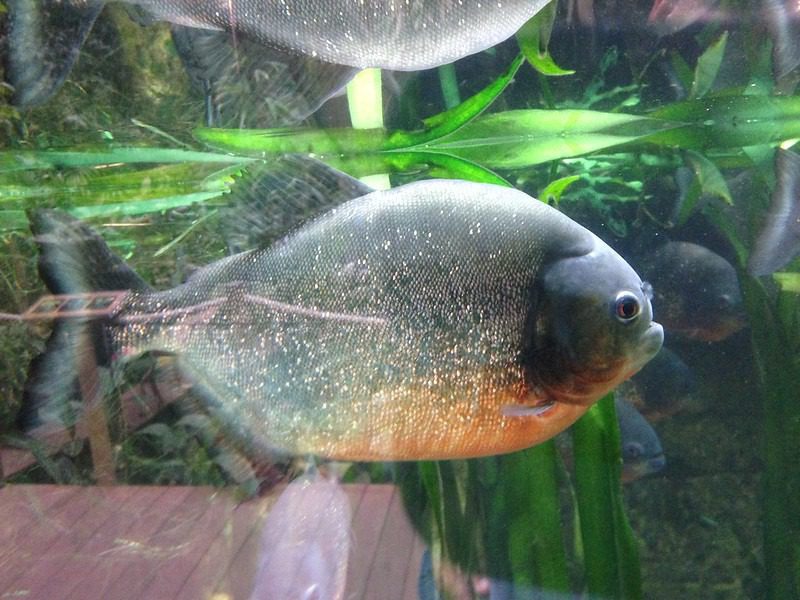
The piranha is one of the most fascinating and misunderstood freshwater fish in the world. Native to the rivers, lakes, and wetlands of South America, this remarkable fish has become an iconic inhabitant of the Amazon rainforest. Recognized for its sharp triangular teeth, powerful jaws, and distinctive feeding behavior, the piranha plays an important role in maintaining the ecological balance of tropical freshwater environments.
Although popular culture often portrays piranhas as extremely aggressive predators capable of stripping large animals to the bone within seconds, their actual behavior is much more complex. Different piranha species have different feeding preferences, social structures, and survival strategies. Some primarily consume other fish and aquatic animals, while others also feed on fruits, seeds, insects, and organic material.
The Amazon River Basin provides an ideal environment for many piranha species, offering abundant food, warm freshwater, submerged vegetation, flooded forests, and diverse aquatic habitats. These fish are also found in other major South American river systems, including the Orinoco, Paraguay, and Paraná basins.
Beyond their reputation as predators, piranhas are essential members of freshwater food webs. They contribute to nutrient recycling, influence populations of smaller aquatic organisms, and provide food for larger predators. Understanding their biology, habitat, diet, reproduction, and interactions with other wildlife reveals why these fascinating fish deserve attention and protection.
Table of Contents
This comprehensive guide explores piranha facts, physical characteristics, species, habitat, feeding behavior, reproduction, ecological relationships, and their importance in the Amazon rainforest.
1. Piranha Facts and Physical Characteristics
Piranhas belong to a group of freshwater fish native to South America. They are members of the family Serrasalmidae, which also includes pacus and silver dollars. Although several species share similar physical characteristics, piranhas display considerable differences in body size, coloration, feeding habits, and behavior.
Their muscular bodies, strong jaws, and specialized teeth make them particularly well adapted to life in tropical rivers and lakes.
What Is a Piranha?
A piranha is a freshwater fish belonging to several genera within the family Serrasalmidae. The best-known species include the red-bellied piranha (Pygocentrus nattereri) and black piranha (Serrasalmus rhombeus).
These fish inhabit warm freshwater environments throughout much of tropical and subtropical South America. They are particularly associated with the Amazon and Orinoco river systems.
Piranhas are generally characterized by:
- Sharp, triangular teeth arranged in tightly fitting rows.
- Strong jaw muscles capable of producing powerful bites.
- Deep, laterally compressed bodies.
- Well-developed swimming muscles.
- Sensitive sensory systems that detect movement and vibrations.
- Feeding adaptations suited to different food sources.
Not every piranha is an exclusively carnivorous predator. Dietary preferences vary between species, and some consume substantial quantities of plant material.
Piranha Size and Weight
Piranha size varies considerably depending on the species, habitat, available food, and environmental conditions. Many commonly encountered species measure approximately 15–30 centimeters in length.
The red-bellied piranha generally reaches around 20–30 centimeters, although individuals can occasionally grow larger. The black piranha is known for its robust body and can reach approximately 40–50 centimeters in exceptional cases.
Their weight also varies according to age and physical development. Larger individuals generally possess stronger jaws and more developed swimming muscles.
Growth is influenced by several environmental factors:
- Availability of fish and other food sources.
- Water temperature.
- Habitat quality.
- Competition for resources.
- Seasonal changes in water levels.
Piranha Teeth and Jaw Structure
One of the most recognizable characteristics of piranhas is their unusual dental structure. Their teeth are triangular, sharp, and arranged in a tightly fitting pattern that allows the upper and lower jaws to work together efficiently.
These teeth are specialized for cutting, gripping, and removing pieces of food. Their shape allows piranhas to consume different types of prey, including fish, crustaceans, and other aquatic organisms.
Unlike many fish with small, needle-like teeth, piranhas possess relatively large teeth in proportion to their body size.
Their dental adaptations are particularly important because different species rely on different feeding strategies.
Piranha Bite Force
Piranhas are famous for their powerful bites. Their jaw muscles and specialized teeth allow them to exert considerable force relative to their body size.
Bite strength differs between species and individual fish. Larger species, including the black piranha, are particularly notable for their strong jaws.
The bite is produced through coordinated movement of the jaw bones and muscles. Their teeth concentrate pressure into relatively small contact areas, helping them cut through food efficiently.
This combination of jaw strength and tooth structure makes piranhas effective feeders in their aquatic environments.
Physical Appearance and Coloration
Piranhas have compact, muscular bodies with a distinctive laterally compressed shape. This body structure helps them maneuver through vegetation, submerged branches, and narrow river channels.
Their coloration varies according to species and age.
Red-bellied piranhas often have silvery sides, darker backs, and reddish or orange coloration around the lower body. Black piranhas generally display darker gray or nearly black coloration.
Their fins provide balance and movement, while their powerful tails generate propulsion during swimming.
2. Piranha Habitat and Geographic Distribution
Piranhas are native to South America, where they inhabit an extensive network of tropical rivers, lakes, tributaries, and wetlands. Their distribution is closely connected to freshwater ecosystems that provide suitable temperatures, food resources, and places to reproduce.
The Amazon River Basin is particularly important because it contains an enormous variety of aquatic habitats that support numerous piranha species.
Where Do Piranhas Live?
Piranhas are found across several major river systems in South America, including:
- Amazon River Basin: One of the most important regions for piranha diversity.
- Orinoco River Basin: A large tropical freshwater system in Venezuela and Colombia.
- Paraguay River: An important habitat for several piranha species.
- Paraná River: A major South American river system supporting diverse freshwater wildlife.
- Guiana Shield river systems: Additional freshwater environments containing different members of the piranha group.
Their distribution is not limited to the main rivers. They also inhabit smaller tributaries, flooded forests, lagoons, and seasonal waterways.
Piranhas in the Amazon Rainforest
The Amazon rainforest offers excellent conditions for piranhas because of its warm temperatures, extensive freshwater networks, and seasonal flooding.
During the rainy season, rivers overflow their banks and flood surrounding forests. This process creates temporary aquatic environments where fish can find additional food and shelter.
Flooded forests are especially important because they contain submerged roots, fallen branches, fruits, seeds, insects, and numerous small aquatic animals.
These habitats provide opportunities for feeding, movement, and reproduction.
Piranhas can also be found in:
- Slow-moving river channels.
- Forest lagoons.
- Shallow floodplain lakes.
- Areas with submerged vegetation.
- River margins with abundant organic material.
Types of Water Habitats
South American rivers contain different water types, each with distinctive chemical and ecological characteristics.
Blackwater rivers: These waterways often have dark-colored water caused by dissolved organic substances released by decomposing vegetation. Their relatively acidic conditions support specialized aquatic communities.
Whitewater rivers: These rivers carry suspended sediments and nutrients from surrounding landscapes. They frequently support productive floodplains and diverse fish populations.
Clearwater rivers: These waterways generally have lower concentrations of suspended sediments and can support different aquatic communities depending on their chemical composition.
Floodplain lakes: These lakes become connected to rivers during seasonal flooding, allowing fish to move between habitats and access additional feeding areas.
Oxbow lakes: Formed when rivers change course and leave behind isolated or partially connected water bodies, these lakes provide important habitats for Amazonian fish.
Water Conditions and Environmental Preferences
Piranhas generally inhabit warm freshwater environments. Water temperature, dissolved oxygen, vegetation, and seasonal water levels influence their distribution and activity.
Important environmental conditions include:
- Warm tropical temperatures.
- Suitable dissolved oxygen levels.
- Access to food resources.
- Aquatic vegetation and submerged structures.
- Areas that provide shelter from predators.
- Appropriate conditions for spawning.
Different species have different environmental preferences, meaning that not every piranha inhabits the same type of water.
Piranha Habitat in Peru
Peru contains extensive Amazonian freshwater environments where piranhas form part of the region’s aquatic biodiversity.
The Madre de Dios region, particularly around Puerto Maldonado and the Tambopata River system, offers opportunities to explore tropical freshwater habitats and observe native fish.
Lagoons, tributaries, river channels, and seasonal wetlands provide habitats for numerous fish species.
The Tambopata region is particularly interesting because its aquatic ecosystems are connected to surrounding rainforest environments. Fish, aquatic plants, insects, birds, mammals, and reptiles interact through complex ecological relationships.
Piranha fishing is also offered as a recreational activity in some Amazon tourism destinations, allowing visitors to learn about local fishing practices and freshwater wildlife.
3. Piranha Diet and Feeding Behavior
Piranhas have diverse feeding habits that vary considerably between species. Although they are widely recognized as meat-eating fish, their diets can include fish, insects, crustaceans, fruits, seeds, and other organic materials.
Their specialized teeth and powerful jaws allow them to consume different food sources depending on availability and environmental conditions.
What Do Piranhas Eat?
The diet of a piranha depends on its species, size, habitat, and feeding opportunities.
Common food sources include:
- Smaller fish and fish remains.
- Aquatic insects and insect larvae.
- Crustaceans such as shrimp.
- Mollusks.
- Small amphibians.
- Fruits and seeds that fall into the water.
- Organic material and carrion.
Red-bellied piranhas are known to consume fish, insects, crustaceans, and other animal material. Their diet can change according to seasonal food availability.
Some species also consume significant quantities of plant material, demonstrating that piranhas occupy different ecological feeding roles.
Are Piranhas Carnivores or Omnivores?
Piranhas are not all exclusively carnivorous. Their feeding habits range from predominantly animal-based diets to more varied diets containing plant material.
Some species are specialized predators, while others are opportunistic feeders.
This diversity is important because it allows different piranha species to occupy different ecological niches within the same freshwater environment.
Their diets may include:
- Animal prey.
- Plant material.
- Fruits and seeds.
- Dead organic matter.
This dietary flexibility helps them survive in environments where food availability changes throughout the year.
How Do Piranhas Hunt?
Piranhas use several feeding strategies to capture food. Some species actively pursue smaller fish, while others rely on ambush tactics or take advantage of available food.
Their sensory systems help them detect movement and vibrations in the water.
When potential prey is detected, a piranha may approach rapidly and use its powerful jaws to capture or remove pieces of food.
Their hunting behavior depends on several factors:
- Prey size and movement.
- Water visibility.
- Availability of hiding places.
- Competition with other fish.
- Hunger and feeding opportunities.
Although piranhas sometimes feed in groups, they do not necessarily cooperate in coordinated hunting strategies like certain marine predators.
Scavenging and Opportunistic Feeding
Scavenging is another important part of piranha feeding behavior.
Piranhas may consume dead fish, animal remains, and other organic material found in their habitats.
This behavior contributes to nutrient recycling because organic material is broken down and transferred through the aquatic food web.
Scavenging is particularly useful when living prey is difficult to find or when seasonal environmental changes affect food availability.
Piranha Feeding Frenzy: Facts and Myths
The image of hundreds of piranhas attacking an animal in a spectacular feeding frenzy has become one of the most recognizable representations of Amazon wildlife.
However, these dramatic scenes are not representative of everyday piranha behavior.
Feeding intensity can increase when food is abundant or when several fish compete for a concentrated food source.
Environmental stress, food shortages, and opportunities for scavenging can also influence feeding activity.
In natural environments, piranhas generally feed according to food availability and their individual ecological requirements.
Understanding this distinction is important because sensational stories have contributed to exaggerated fears about these fish.
4. Piranha Behavior and Social Structure
Piranha behavior is more complex than their reputation suggests. Different species display different social interactions, feeding patterns, and responses to environmental conditions.
Some species frequently form groups, while others are more solitary or territorial.
Do Piranhas Swim in Schools?
Many piranhas are observed swimming in groups, particularly during certain life stages or environmental conditions.
Group swimming may provide several advantages, including reducing the risk of predation and improving awareness of potential threats.
However, group formation does not always indicate cooperative hunting.
Piranhas may gather because they share suitable feeding areas, shelter, or favorable environmental conditions.
The size and composition of groups can change according to food availability, water conditions, and predator presence.
Territorial and Defensive Behavior
Some piranha species demonstrate territorial behavior, especially during reproduction.
Breeding individuals may defend nesting areas against other fish that could threaten their eggs or young.
Defensive behavior can include rapid movements, threatening displays, and biting when an individual approaches too closely.
Competition may also occur around feeding areas and other valuable resources.
Daily Activity Patterns
Piranha activity is influenced by light conditions, water temperature, food availability, and seasonal environmental changes.
Some species are particularly active during daylight hours, using their vision and sensory systems to locate food.
Their activity may decrease during unfavorable environmental conditions or when they need to remain hidden from predators.
Feeding opportunities can also vary throughout the day depending on the movement of prey and the availability of organic material.
Communication and Sensory Abilities
Piranhas use several sensory systems to interpret their underwater surroundings.
The lateral line system is particularly important because it detects water movements and vibrations produced by nearby animals.
Their vision also helps them identify prey, obstacles, and potential threats.
Chemical signals may provide additional information about their environment and interactions with other fish.
Together, these sensory abilities help piranhas navigate complex aquatic habitats where visibility can be limited.
How Piranhas React to Danger
Piranhas face numerous predators throughout their lives.
When threatened, they may respond by swimming away, hiding among submerged vegetation, moving into deeper water, or gathering with other individuals.
Juvenile piranhas are particularly vulnerable because they are smaller and have fewer physical defenses.
Their survival depends on suitable shelter, environmental awareness, and the ability to avoid larger predators.
5. Piranha Reproduction and Life Cycle
Piranha reproduction is closely connected to seasonal changes in tropical freshwater environments. In many regions, breeding activity is associated with warmer water, increasing water levels, and favorable environmental conditions.
Their reproductive strategies help maintain populations in rivers, lakes, and flooded forests.
Piranha Breeding Season
The breeding season varies according to species and geographic location.
In many Amazonian environments, reproduction is associated with seasonal flooding and changes in water conditions.
Rising water levels can create additional spawning and nursery habitats, providing opportunities for young fish to develop in areas with food and shelter.
Environmental factors influencing reproduction include:
- Water temperature.
- Seasonal rainfall.
- Flooding patterns.
- Availability of suitable nesting areas.
- Food availability.
Spawning Behavior and Nest Construction
Some piranha species, including red-bellied piranhas, display nesting behavior during reproduction.
Breeding individuals may select areas with vegetation or suitable substrates where eggs can be deposited.
Males of certain species prepare or defend nesting areas, helping protect developing eggs.
After spawning and fertilization, the eggs remain in the selected nesting environment until they hatch.
Piranha Eggs and Juvenile Development
Piranha eggs develop in aquatic environments where temperature and water conditions influence incubation.
After hatching, young fish pass through larval and juvenile stages.
During early development, they depend on small food sources such as microscopic organisms, insect larvae, and other tiny aquatic prey.
As they grow, their feeding habits change, and they gradually develop the body structure and teeth associated with adult piranhas.
Juvenile survival depends heavily on food availability, water quality, shelter, and the presence of predators.
Parental Care and Protection
Parental care differs between piranha species.
In some species, breeding individuals defend their nests and protect eggs against potential predators.
This defensive behavior improves the likelihood that eggs will survive until hatching.
The protection of nesting areas is especially important in crowded freshwater environments where many fish compete for food and suitable reproduction sites.
Piranha Lifespan and Sexual Maturity
Piranha lifespan varies according to species, environmental conditions, and individual survival.
Some piranhas can live approximately 10 years or longer under favorable conditions, although exact longevity differs between species and populations.
Sexual maturity is also influenced by growth rates and environmental conditions.
Food availability, water temperature, and habitat quality all contribute to their development.
6. Piranha Anatomy and Unique Adaptations
Piranhas possess several anatomical adaptations that allow them to survive in tropical freshwater environments. Their teeth, jaws, muscles, sensory organs, and body structure are specialized for feeding, swimming, and avoiding predators.
These characteristics have helped different piranha species occupy a variety of ecological niches throughout South America.
Sharp Teeth and Specialized Feeding Adaptations
Piranha teeth are among their most recognizable anatomical features.
Their triangular teeth have sharp edges and fit closely together when the mouth closes. This arrangement allows them to remove pieces of food efficiently.
Their dental structure is particularly useful for consuming fish, crustaceans, and other animal material.
Different species may have variations in tooth size and shape according to their feeding preferences.
The teeth are periodically replaced throughout their lives, helping maintain their feeding efficiency.
Powerful Jaw Muscles and Bite Mechanics
The piranha jaw is designed to produce a strong biting action.
Its muscular structure allows the fish to close its mouth with considerable force, while the arrangement of its teeth helps concentrate pressure during feeding.
These adaptations are particularly useful when capturing slippery prey or removing pieces of flesh.
The black piranha is especially recognized for its robust head and powerful biting ability.
Body Shape and Swimming Adaptations
Piranhas have relatively deep, laterally compressed bodies that help them move through different aquatic environments.
Their body shape provides maneuverability, allowing them to change direction while swimming among vegetation and submerged branches.
Their muscular tails generate propulsion, while the pectoral, pelvic, and dorsal fins contribute to balance and directional control.
These swimming adaptations are useful in both open water and densely vegetated habitats.
Sensory Systems and Underwater Detection
Piranhas rely on several sensory organs to identify food, navigate, and detect threats.
The lateral line system is particularly important. It consists of specialized sensory structures that detect changes in water movement and pressure.
This ability allows piranhas to perceive nearby movements even when water visibility is poor.
Their vision is also useful for detecting prey and recognizing environmental features.
Chemical perception provides additional information about food sources and other organisms.
Survival Adaptations in Tropical Rivers
Survival in the Amazon requires animals to respond to changing water levels, temperature, food availability, and predation pressure.
Piranhas possess several adaptations that help them manage these challenges.
Their compact bodies allow maneuverability, their teeth provide effective feeding capabilities, and their sensory systems help detect environmental changes.
Their coloration may also provide some camouflage in darker or vegetation-rich waters.
Together, these characteristics make piranhas well adapted to the complex freshwater ecosystems of South America.
7. Piranha Predators and Ecological Relationships
Despite their reputation as dangerous predators, piranhas are also prey for many larger animals.
Their presence in the Amazon food web creates important relationships between fish, reptiles, birds, and mammals.
Understanding these interactions reveals their ecological importance beyond their feeding behavior.
What Animals Eat Piranhas?
Several Amazonian animals consume piranhas as part of their diets.
Important predators include:
- Caimans: These aquatic reptiles consume fish, including piranhas, when opportunities arise.
- Giant otters: These social mammals are skilled fish hunters and may consume different freshwater fish species.
- Large predatory fish: Bigger fish can capture smaller piranhas, particularly juveniles.
- Aquatic birds: Some fish-eating birds capture small piranhas in shallow waters.
- Other reptiles: Certain aquatic and semi-aquatic predators may consume piranhas depending on their size and habitat.
Piranha eggs and juveniles face additional risks from insects, fish, and other aquatic organisms.
Piranhas in the Amazon Food Chain
Piranhas occupy different positions in aquatic food webs depending on their species and diet.
Predatory species consume smaller fish and other aquatic animals, while more omnivorous species also use plant material as a food source.
At the same time, piranhas provide food for larger predators.
This creates interconnected feeding relationships that transfer energy throughout the freshwater ecosystem.
Their ecological position can change as they grow because juvenile and adult individuals often have different diets and face different predators.
Competition With Other Amazon Fish
Piranhas share their habitats with many other freshwater fish, including catfish, arapaima, pacus, and numerous smaller species.
Competition may occur when different fish consume similar food sources or use the same feeding areas.
However, the Amazon contains such an extensive diversity of habitats that many fish species can occupy different ecological niches.
For example, arapaima are large air-breathing fish that consume fish and other aquatic prey, while pacus are known for their varied diets, including fruits and seeds.
These differences help shape the complex relationships within Amazonian freshwater communities.
Ecological Importance of Piranhas
Piranhas contribute to ecosystem functioning in several ways.
Population regulation: Predatory piranhas consume smaller aquatic organisms and influence local prey populations.
Nutrient recycling: Scavenging individuals consume organic remains, helping transfer nutrients through aquatic food webs.
Food availability: Piranhas provide an important food source for larger fish, reptiles, birds, and mammals.
Biodiversity: Their different feeding strategies contribute to the ecological diversity of South American rivers.
Without these interactions, the structure and functioning of freshwater ecosystems would be different.
8. Piranha Species and Classification
The term piranha refers to several species of freshwater fish rather than a single species.
Their classification is important because different piranhas have different physical characteristics, geographic distributions, and feeding behaviors.
Most recognized piranhas belong to genera within the family Serrasalmidae.
Red-Bellied Piranha (Pygocentrus nattereri)
The red-bellied piranha is one of the most widely recognized species.
It is particularly famous for its silvery body, reddish lower abdomen, and sharp triangular teeth.
This species occurs in several South American river systems, including the Amazon and Paraguay basins.
Its diet includes fish, insects, crustaceans, and other available food sources.
Red-bellied piranhas are often observed in groups, although their social behavior changes according to environmental conditions.
Black Piranha (Serrasalmus rhombeus)
The black piranha is recognized by its dark coloration, robust body, and powerful jaws.
It occurs in parts of the Amazon and other northern South American freshwater systems.
This species is primarily associated with predatory feeding behavior and is known for its strong bite relative to body size.
Its coloration and body structure distinguish it from many other piranha species.
Blackspot Piranha
The name blackspot piranha is commonly used for certain species with distinctive dark markings on their bodies.
These markings, combined with differences in body shape and coloration, help distinguish them from other members of the group.
Their habitat and feeding preferences vary according to the species being identified.
Other Recognized Piranha Groups
Several additional genera contain fish commonly recognized as piranhas.
These include:
- Serrasalmus
- Pygocentrus
- Pristobrycon
- Pygopristis
Their classification reflects differences in evolutionary history, morphology, and ecological adaptations.
Differences Between Piranha Species
Not all piranhas look or behave alike.
| Characteristic | Red-bellied piranha | Black piranha |
|---|---|---|
| Scientific name | Pygocentrus nattereri | Serrasalmus rhombeus |
| Body coloration | Silvery with reddish underside | Dark gray to black |
| Body structure | Deep and laterally compressed | Robust and deep-bodied |
| Feeding habits | Varied animal-based diet | Predominantly predatory |
| Habitat | Major South American river systems | Amazon and other northern river systems |
These differences demonstrate why piranhas should be studied as a diverse group rather than treated as one uniform species.
9. Are Piranhas Dangerous to Humans?
Piranhas have a reputation as dangerous fish, largely because of their sharp teeth and powerful jaws.
Although bites can cause serious injuries, encounters with humans should be understood in the context of natural behavior.
Most piranhas are not constantly searching for opportunities to attack people. Their feeding activities are generally directed toward available food sources, while defensive bites may occur when fish feel threatened.
Do Piranhas Attack People?
Piranha bites involving humans have been documented in South America.
However, these incidents are not representative of normal interactions between people and piranhas.
Bites may occur when fish are disturbed, handled, caught on fishing equipment, or approached near nesting areas.
The likelihood of encounters can also change with local environmental conditions and food availability.
What Causes Piranha Bites?
Several situations may increase the risk of being bitten.
- Handling a captured piranha without appropriate protection.
- Disturbing fish near breeding or nesting areas.
- Accidentally stepping on or touching a fish.
- Fishing activities involving direct contact.
- Entering unfamiliar waters without understanding local conditions.
Defensive behavior is an important factor because piranhas may use their teeth when responding to perceived threats.
How Dangerous Is a Piranha Bite?
A piranha bite can cause puncture wounds, cuts, tissue damage, and bleeding.
The severity depends on the fish’s size, the location of the bite, and the circumstances of the encounter.
Any significant bite should receive prompt medical attention, particularly when there is deep tissue damage, persistent bleeding, or a risk of infection.
Can You Swim in Amazon Rivers With Piranhas?
Piranhas inhabit many Amazonian waterways, but their presence does not mean every river or lagoon is automatically dangerous.
Swimming safety depends on local conditions, water quality, wildlife activity, currents, and other environmental risks.
Visitors should follow local guides’ advice and avoid entering unfamiliar waterways without confirming that swimming is appropriate.
Responsible wildlife tourism focuses on observing animals without disturbing their natural habitats.
10. Piranha Fishing and Human Interactions
Piranhas have an important relationship with human communities throughout the Amazon.
For generations, local populations have used traditional fishing methods to obtain freshwater fish for food. Today, piranha fishing is also a recreational activity offered in certain Amazon tourism destinations.
These interactions provide opportunities to learn about freshwater ecosystems and traditional fishing practices.
Traditional Piranha Fishing in the Amazon
Fishing is an important part of everyday life for many Amazonian communities.
Rivers and lakes provide food resources, and local fishers have developed techniques adapted to different fish species and environmental conditions.
Piranhas are among the fish caught in some regions.
Traditional fishing knowledge often includes understanding seasonal water changes, fish movements, feeding behavior, and suitable fishing locations.
Piranha Fishing in Peru
Peru’s Amazon rainforest contains extensive waterways where piranha fishing can be experienced as part of certain guided excursions.
The Madre de Dios region is particularly interesting for visitors exploring Puerto Maldonado and the Tambopata area.
Fishing experiences may take place in selected lagoons or suitable river environments, depending on local conditions and tourism operations.
Visitors can learn about piranha characteristics, fishing equipment, and the role of these fish in Amazonian ecosystems.
How to Catch Piranhas
Traditional piranha fishing often uses relatively simple equipment.
Common fishing supplies include:
- Fishing rods or sturdy handlines.
- Hooks appropriate for the target fish.
- Suitable fishing bait.
- Floats or other basic fishing accessories.
- Protective equipment for handling captured fish.
Animal-based bait is commonly used because many piranha species respond to food sources containing animal material.
Fishing should always follow local regulations, conservation practices, and the guidance of experienced operators.
Piranha Fishing as an Amazon Tourism Experience
Piranha fishing has become an interesting activity for travelers seeking direct contact with Amazonian nature.
It combines recreation with environmental learning and offers an opportunity to understand the relationship between local communities and freshwater ecosystems.
In destinations around Puerto Maldonado and Tambopata, fishing may be included in broader jungle excursions involving wildlife observation, canoe trips, and visits to forest lagoons.
For visitors, the experience is not simply about catching a fish. It also provides an opportunity to appreciate the diversity of Amazonian aquatic life.
Piranhas as Food
Piranhas are consumed in some South American communities.
Their flesh can be prepared using traditional cooking techniques, including frying, grilling, and soups.
Food preparation varies according to regional culinary traditions and the availability of ingredients.
As with other freshwater fish, safe preparation requires proper cleaning, adequate cooking, and attention to local food safety recommendations.
Sustainable fishing practices are also important to ensure that fish populations and aquatic habitats remain healthy.
11. Piranha Conservation and Environmental Threats
Although piranhas are widespread in many South American river systems, their habitats face increasing environmental pressure.
The health of freshwater ecosystems is essential for maintaining fish populations, aquatic biodiversity, and the ecological relationships that support the Amazon rainforest.
Conservation efforts should consider individual species, their geographic distribution, and the environmental conditions they require.
Are Piranhas Endangered?
Piranhas do not all have the same conservation status.
Many species occupy extensive geographic ranges, while others have more restricted distributions and may be more vulnerable to environmental changes.
It is therefore important to assess each species individually rather than assume that all piranhas are either threatened or secure.
Scientific population assessments, habitat monitoring, and freshwater biodiversity research help determine their conservation needs.
Major Threats to Piranha Habitats
Several environmental problems can affect piranha populations and the ecosystems they inhabit.
Amazon deforestation: Removing forest vegetation can alter water quality, increase erosion, and affect the natural processes that support aquatic habitats.
River pollution: Agricultural runoff, sewage, industrial waste, and other pollutants can contaminate freshwater environments.
Overfishing: Excessive fishing pressure can affect local fish populations and disrupt ecological relationships.
Dam construction: Dams can change natural river flows, interrupt aquatic connectivity, and modify habitats used by fish for feeding and reproduction.
Habitat destruction: Wetland drainage, river modification, and the degradation of flooded forests can reduce suitable environments for aquatic wildlife.
Climate Change and Amazon River Ecosystems
Climate change creates additional challenges for tropical freshwater environments.
Changes in rainfall patterns, rising temperatures, and more severe droughts can influence the seasonal flooding cycles that characterize Amazonian rivers.
These changes may affect:
- Water temperature and dissolved oxygen.
- Fish reproduction and spawning conditions.
- Availability of feeding habitats.
- Movement between rivers and floodplain lakes.
- Distribution of aquatic organisms.
Because piranhas depend on freshwater ecosystems, environmental changes can influence their behavior, food availability, and long-term survival.
Freshwater Conservation and Protection
Protecting piranhas requires maintaining the health of the rivers, lakes, and wetlands where they live.
Important conservation strategies include:
- Protecting Amazon rainforest vegetation.
- Reducing freshwater pollution.
- Promoting responsible fishing practices.
- Monitoring fish populations.
- Preserving natural river connections.
- Supporting local conservation initiatives.
- Encouraging sustainable wildlife tourism.
Healthy freshwater ecosystems benefit not only piranhas but also countless other species that depend on Amazonian waterways.
12. Interesting and Surprising Facts About Piranhas
Piranhas are fascinating fish with numerous characteristics that make them unique members of South American freshwater ecosystems.
Here are some interesting facts that reveal more about their biology and behavior.
Piranhas Have Remarkably Sharp Teeth
Their triangular teeth fit closely together, forming an effective cutting structure that allows them to remove pieces of food.
Not All Piranhas Have the Same Diet
Different species consume different food sources. Some primarily eat other fish, while others include insects, crustaceans, fruits, and seeds in their diets.
Some Piranhas Consume Fruits and Seeds
Plant material can form part of the diet of certain members of the piranha group, demonstrating their dietary diversity.
Piranhas Play an Important Ecological Role
They participate in aquatic food webs as both predators and prey, helping transfer energy throughout freshwater ecosystems.
Different Species Have Different Feeding Strategies
Some piranhas are predominantly predatory, while others use more varied feeding strategies depending on available resources.
Piranhas Can Detect Vibrations in the Water
Their lateral line system helps them detect water movement, allowing them to recognize nearby animals and environmental changes.
Their Behavior Changes With Environmental Conditions
Water levels, temperature, food availability, and predator presence can influence their movement, feeding, and social interactions.
The Amazon Is Home to Remarkable Piranha Diversity
The Amazon Basin contains numerous piranha species and related fish, making it an important region for studying freshwater biodiversity.
13. Frequently Asked Questions About Piranhas
Where Do Piranhas Live?
Piranhas are native to South America and inhabit freshwater environments throughout the Amazon, Orinoco, Paraguay, and Paraná river systems. They can be found in rivers, tributaries, lakes, wetlands, and flooded forests.
What Do Piranhas Eat?
Piranha diets vary by species. Common food sources include smaller fish, insects, crustaceans, mollusks, amphibians, fruits, seeds, and organic remains.
How Big Can Piranhas Grow?
Many piranhas measure approximately 15–30 centimeters long. Some larger species, such as the black piranha, can reach approximately 40–50 centimeters in exceptional cases.
How Sharp Are Piranha Teeth?
Piranhas have triangular teeth with sharp cutting edges. Their teeth fit closely together when their jaws close, allowing them to grip and remove pieces of food efficiently.
How Strong Is a Piranha Bite?
Piranhas can produce powerful bites relative to their body size. Bite performance varies between species, with the black piranha particularly recognized for its strong jaw structure.
Are All Piranhas Carnivorous?
No. Although many piranhas consume animal material, some species have more varied diets that include fruits, seeds, and other plant material.
Do Piranhas Attack Humans?
Piranha bites involving humans have been documented, but attacks are not their typical feeding behavior. Bites may occur when fish are disturbed, handled, or approached near breeding areas.
Do Piranhas Live in Groups?
Many piranha species are observed swimming in groups. Group formation can provide protection against predators and may occur around favorable feeding habitats.
How Long Do Piranhas Live?
Their lifespan varies according to species and environmental conditions. Some piranhas can live approximately 10 years or longer under favorable conditions.
What Animals Eat Piranhas?
Caimans, giant otters, large predatory fish, and fish-eating birds can consume piranhas. Eggs and juveniles are also vulnerable to numerous aquatic predators.
How Do Piranhas Reproduce?
Many piranhas reproduce through spawning. Females deposit eggs in suitable aquatic environments, where males of some species fertilize and defend them.
Can Piranhas Survive Outside the Amazon?
Yes. Piranhas naturally inhabit several South American river systems beyond the Amazon, including the Orinoco, Paraguay, and Paraná basins.
Are Piranhas Found in Peru?
Yes. Piranhas inhabit several freshwater environments in the Peruvian Amazon, including river systems in the Madre de Dios region.
Can Tourists Go Piranha Fishing in the Amazon?
Yes. Piranha fishing is available through certain guided Amazon excursions, including activities in the Puerto Maldonado and Tambopata region. Availability depends on the destination, local regulations, and environmental conditions.
Conclusion: Understanding the Piranha and Its Importance in the Amazon Ecosystem
The piranha is one of the most recognizable freshwater fish in South America, but its importance extends far beyond its reputation for sharp teeth and powerful bites.
From the Amazon River Basin to the wetlands and tributaries of the Orinoco and Paraguay systems, these fish occupy diverse aquatic habitats and display fascinating adaptations that allow them to survive in tropical freshwater environments.
Their feeding behavior, specialized teeth, strong jaws, sensory systems, and reproductive strategies make them particularly interesting subjects for understanding freshwater biodiversity.
Piranhas also play valuable ecological roles. As predators, scavengers, and prey for larger animals, they contribute to the complex relationships that maintain aquatic food webs.
In Peru, particularly around Puerto Maldonado and Tambopata, piranhas are part of the remarkable diversity of Amazonian wildlife. They offer opportunities for scientific study, environmental education, and responsible wildlife tourism.
Understanding these fascinating fish helps replace exaggerated myths with a more accurate appreciation of their natural behavior and ecological importance.
Ultimately, protecting piranhas means protecting the rivers, wetlands, flooded forests, and surrounding rainforest environments that sustain the incredible biodiversity of the Amazon.
SEO optimization checklist
Recommended for publication
| SEO element | Recommendation |
|---|---|
| Primary keyword | Piranha |
| SEO title | Piranha: Facts, Habitat, Diet, and Behavior |
| URL slug | /piranha/ |
| Search intent | Informational |
| Content type | Wildlife pillar article |
| Main geographic focus | Amazon Rainforest, South America |
| Secondary location keywords | Peru, Tambopata, Puerto Maldonado |
| Heading structure | H1–H4 |
| Internal linking | Amazon wildlife, freshwater fish, Amazon fishing |
| FAQ section | 14 questions |
| Suggested category | Amazon Wildlife / Fish |