
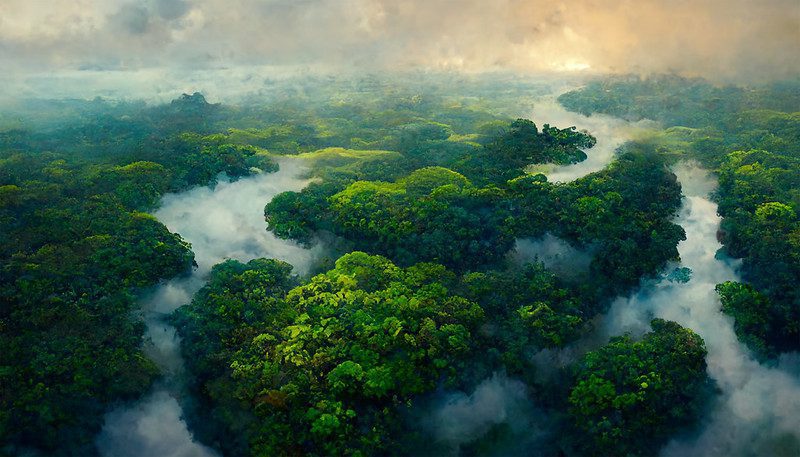
The Amazon rainforest is one of the oldest and most extraordinary natural environments on Earth, but exactly how old is the Amazon? Its history stretches back tens of millions of years, involving dramatic geological changes, ancient rivers, prehistoric wetlands, and the gradual evolution of tropical forests. Although scientists cannot assign one precise age to the entire rainforest, geological and fossil evidence reveals that tropical ecosystems existed in the Amazon region long before its modern landscape developed.
Today, the Amazon is the world’s largest tropical rainforest, covering approximately 5.5 million square kilometers across South America. Its extraordinary biodiversity, extensive river systems, and complex vegetation are the result of millions of years of environmental evolution. Understanding its age means exploring not only the rainforest itself but also the geological history of the Amazon Basin and the formation of the Amazon River.
How Old Is the Amazon Rainforest?
The Amazon rainforest does not have a single universally accepted age. Scientists distinguish between the age of ancient tropical ecosystems in the region and the development of the modern rainforest as we recognize it today.
Evidence from fossil plants, pollen, sediments, and prehistoric animal remains indicates that tropical ecosystems existed in Amazonia tens of millions of years ago. Research into western Amazonian ecosystems has documented a history extending approximately 60 million years.
Table of Contents
However, this does not mean that today’s continuous Amazon rainforest existed in exactly the same form 60 million years ago. Its vegetation, climate, rivers, and animal communities changed considerably throughout geological history.
The modern Amazonian landscape developed through several important geological processes, particularly the uplift of the Andes Mountains, changes in drainage systems, and the formation of extensive river networks.
The Earliest Evidence of Amazonian Tropical Ecosystems
During the early Cenozoic Era, which began approximately 66 million years ago, South America experienced significant environmental and geological changes.
The Amazon region supported ancient ecosystems that included tropical vegetation, freshwater environments, and diverse animal communities. Fossil evidence provides valuable information about these prehistoric landscapes.
Over millions of years, plants adapted to changing temperatures, rainfall patterns, soil conditions, and seasonal flooding. These evolutionary processes contributed to the development of increasingly complex tropical ecosystems.
The Development of the Modern Amazon Rainforest
The modern Amazon rainforest emerged gradually rather than appearing at one particular moment.
During the Miocene Epoch, approximately 23 to 5.3 million years ago, major geological changes transformed western Amazonia. Extensive wetlands, lakes, and river systems covered large areas of the region.
As the Andes Mountains continued rising, sediment accumulated across lowland areas, and drainage patterns changed. These processes helped establish the geographical conditions that supported the development of the modern Amazon rainforest.
Why Scientists Cannot Establish One Exact Age
Determining the age of a rainforest is more complicated than determining the age of a mountain or fossil.
A rainforest is a living ecosystem composed of thousands of plant and animal species that continuously evolve and interact with their surroundings.
Some tropical plant communities may have existed for millions of years, while other species appeared much more recently.
Additionally, geological changes periodically transformed forest environments into wetlands, floodplains, and different types of vegetation.
Consequently, the Amazon rainforest should be understood as an ancient and continuously evolving ecosystem rather than a forest with one exact birth date.
How Did the Amazon Rainforest Begin?
The origins of the Amazon rainforest are closely connected to the geological history of South America.
Millions of years ago, the continent had a different landscape. Mountain ranges were developing, river systems followed different directions, and extensive lowland areas experienced changing environmental conditions.
Several geological processes eventually created the conditions necessary for the development of the Amazon’s enormous tropical forest.
South America’s Ancient Geological Landscape
During the Late Cretaceous and early Cenozoic periods, South America experienced significant geological changes.
The continent’s drainage systems were different from those seen today. Many ancient rivers carried water and sediments across large areas, while portions of northwestern South America experienced marine and coastal influences.
As the continent evolved, these geographical conditions gradually changed.
The formation of extensive lowland environments provided suitable habitats for tropical vegetation and freshwater ecosystems.
The Influence of the Andes Mountains
The Andes Mountains played one of the most important roles in shaping the Amazon rainforest.
The mountain range developed through the movement and interaction of tectonic plates over tens of millions of years. Its uplift significantly influenced the climate, geography, and drainage systems of western South America.
As the Andes rose, rivers transported enormous quantities of sediments toward the eastern lowlands.
These sediments enriched many floodplains and contributed to the formation of different soil environments.
The mountains also influenced rainfall patterns by affecting atmospheric circulation and moisture movement across the continent.
Today, the Andes provide substantial freshwater and sediment inputs to the Amazon River system, helping maintain the ecological complexity of the region.
The Evolution of Tropical Vegetation
Tropical vegetation developed through millions of years of adaptation.
Plants gradually evolved different strategies to survive intense rainfall, warm temperatures, competition for sunlight, and seasonal flooding.
Some species developed broad leaves to capture sunlight beneath the forest canopy, while others evolved specialized roots to survive in periodically flooded environments.
Trees, vines, palms, ferns, orchids, and other plants eventually formed complex ecological communities.
These adaptations contributed to the extraordinary vegetation diversity that characterizes the Amazon today.
The Formation of Ancient Wetlands and Forests
During the Miocene, western Amazonia contained a vast system of lakes, swamps, wetlands, and slow-moving rivers commonly associated with the ancient Pebas system.
This environment was very different from the present-day rainforest.
It supported aquatic organisms, freshwater mollusks, fish, reptiles, and diverse plant communities.
Over time, Andean uplift and changes in sediment accumulation transformed these environments. Many ancient wetlands disappeared, making way for different terrestrial and freshwater ecosystems.
How Old Is the Amazon River?
The Amazon River and the Amazon rainforest have different geological histories.
Although the Amazon River system is millions of years old, its modern transcontinental configuration developed relatively recently in geological terms.
Scientists continue to investigate exactly when the river became connected across the continent and established its present drainage pattern.
Some geological models place the establishment of the transcontinental Amazon River around 10 to 9 million years ago, while other research supports a younger date, with the modern drainage system becoming fully integrated approximately 2.5 million years ago.
These differences reflect the complexity of reconstructing ancient river systems from geological evidence.
The Ancient Drainage Systems of South America
Before the modern Amazon River developed, the region contained several interconnected drainage networks.
Western Amazonia was influenced by large wetlands, lakes, and rivers that transported water toward northern South America.
Eastern Amazonia already contained ancient river systems that drained toward the Atlantic Ocean.
Over millions of years, tectonic movements and sediment accumulation changed the connections between these systems.
When Did the Amazon River Begin Flowing Toward the Atlantic Ocean?
The development of the eastward-flowing Amazon River was strongly influenced by the uplift of the Andes and changes in the geography of the Amazon Basin.
As mountain building continued, sediments accumulated in western lowlands, gradually transforming ancient drainage patterns.
The resulting changes contributed to the establishment of a transcontinental river system connecting the Andes with the Atlantic Ocean.
Evidence from sediments deposited offshore supports the development of a major Amazon drainage system during the Miocene, although the precise timing of its complete integration remains debated.
Differences Between the Modern River and Its Ancestors
The ancient Amazon River was not necessarily identical to the enormous river seen today.
Its tributaries, water volume, drainage connections, and geographical boundaries changed considerably over geological time.
Today, the Amazon River is the largest river in the world by water discharge, carrying enormous quantities of freshwater toward the Atlantic Ocean.
Its extensive network of tributaries connects mountains, forests, wetlands, and floodplains across several South American countries.
The Geological History of the Amazon Rainforest
Understanding the geological timeline helps explain how the Amazon developed into one of Earth’s most important ecosystems.
Different geological periods witnessed changes in vegetation, animal life, river systems, and climate.
The Paleogene Period
66–23 MILLION YEARS AGO
The Paleogene Period followed the extinction event that eliminated the non-avian dinosaurs.
During this period, South America experienced major environmental changes. Tropical vegetation developed across extensive areas, and ancient ecosystems supported diverse animal communities.
Fossil evidence from Amazonian regions provides important information about the early history of tropical South American environments.
However, the modern Amazon rainforest had not yet developed in its present geographical and ecological configuration.
The Miocene Epoch
23–5.3 MILLION YEARS AGO
The Miocene was one of the most important periods in the geological history of the Amazon.
During this time, the Andes Mountains continued rising, and extensive wetlands developed across western Amazonia.
The ancient Pebas system supported an extraordinary diversity of aquatic and terrestrial organisms.
As sediment accumulated and drainage patterns changed, the region gradually developed the environmental conditions associated with the modern Amazon Basin.
Important evolutionary and geographical changes during this period helped shape the biodiversity of the rainforest.
The Pliocene Epoch
5.3–2.58 MILLION YEARS AGO
During the Pliocene, the Amazon River system became increasingly integrated.
Changes in drainage patterns contributed to the development of extensive connections between western and eastern Amazonia.
The disappearance of many ancient wetlands allowed different terrestrial environments to expand.
Plant and animal populations continued adapting to new habitats, contributing to the formation of modern Amazonian ecosystems.
The Pleistocene Epoch
2.58 MILLION–11,700 YEARS AGO
The Pleistocene was characterized by repeated global climatic fluctuations.
Although the Amazon remained an important tropical ecosystem, rainfall patterns, river levels, and vegetation distributions changed over time.
Some areas experienced drier conditions, while others maintained relatively humid environments.
These changes influenced species distribution and contributed to the complex geographical patterns of Amazonian biodiversity.
The region also supported impressive prehistoric animals, including giant ground sloths, large reptiles, and enormous herbivorous mammals.
The Development of the Modern Amazon Ecosystem
During the last 11,700 years, the Holocene Epoch has witnessed the development of environmental conditions broadly associated with the present-day Amazon.
Forests, rivers, wetlands, and seasonal floodplains continued evolving.
The Amazon became home to an extraordinary concentration of plant and animal species, supported by warm temperatures, abundant rainfall, and diverse habitats.
Human populations have also inhabited and managed Amazonian landscapes for thousands of years, influencing vegetation and ecosystems in different regions.
What Was the Amazon Like Millions of Years Ago?
The ancient Amazon was a landscape of changing environments rather than one continuous forest.
Depending on the geological period and geographical location, the region contained extensive wetlands, freshwater lakes, rivers, forests, and floodplains.
These environments supported different forms of wildlife and vegetation.
Ancient Lakes, Rivers, and Wetlands
During the Miocene, large portions of western Amazonia were covered by interconnected aquatic environments.
The ancient Pebas wetlands included lakes, swamps, and slow-moving waterways.
These habitats supported numerous aquatic organisms, including fish, mollusks, turtles, and crocodilians.
Sediments deposited in these ancient environments preserved valuable geological and fossil evidence.
Prehistoric Animals and Extinct Species
Millions of years of evolution produced remarkable animal communities in the Amazon region.
Fossil discoveries have revealed ancient relatives of modern mammals, reptiles, fish, and other organisms.
Some prehistoric species were considerably larger than their modern relatives.
The region’s changing freshwater environments also supported ancient crocodilian groups, giant turtles, and unusual aquatic animals.
These discoveries demonstrate that Amazonian biodiversity has a long and complex evolutionary history.
The Evolution of Amazonian Plant Life
Ancient plant communities changed as temperatures, rainfall, soil conditions, and river systems evolved.
Pollen preserved in sediments provides valuable evidence about vegetation that existed millions of years ago.
Scientists use this information to reconstruct ancient landscapes and understand how tropical forests responded to environmental changes.
Many modern Amazonian plant families have evolutionary histories extending far beyond the development of the present-day rainforest.
Changes in Climate and Biodiversity
Climate played an essential role in shaping Amazonian ecosystems.
Temperature, rainfall, seasonal flooding, and atmospheric conditions influenced which species could survive in particular environments.
As climatic conditions changed, some species expanded their geographical ranges while others became isolated or disappeared.
These processes contributed to the exceptional diversity found throughout the Amazon today.
Why Is the Amazon Rainforest So Biodiverse?
The Amazon rainforest is considered one of the most biologically diverse ecosystems on Earth.
Its extraordinary biodiversity results from millions of years of evolution, favorable tropical conditions, geographical complexity, and interactions between different habitats.
Millions of Years of Species Evolution
Over geological time, plants and animals developed adaptations that allowed them to occupy different ecological niches.
Some monkeys adapted to life high in the forest canopy, while other mammals became specialized for terrestrial or aquatic environments.
Birds developed different feeding strategies, and insects evolved complex relationships with plants.
This evolutionary diversification helped produce the remarkable number of species living in the Amazon.
Tropical Climate and Abundant Rainfall
Warm temperatures and substantial rainfall support continuous plant growth across much of the Amazon.
These conditions allow trees, palms, vines, and other vegetation to form dense forest communities.
The forest canopy creates different environmental conditions at various heights, providing habitats for numerous organisms.
River Systems and Natural Geographical Barriers
The Amazon’s enormous network of rivers has played an important role in species evolution.
Large rivers can separate animal populations, particularly among monkeys, birds, amphibians, and other organisms with limited ability to cross extensive waterways.
Over time, geographical isolation can contribute to the development of new species.
The Importance of Forest Ecosystems
The Amazon is not one uniform environment.
It includes terra firme forests, seasonally flooded forests, swamps, palm forests, riverbanks, and wetlands.
Each habitat supports different plant and animal communities.
This variety of environments contributes to the region’s exceptional ecological richness.
Is the Amazon Rainforest Older Than the Dinosaurs?
The answer depends on whether we are discussing ancient tropical vegetation or the modern Amazon rainforest.
The non-avian dinosaurs disappeared approximately 66 million years ago. However, tropical forests and the evolutionary ancestors of many flowering plants existed before that extinction event.
The modern Amazon rainforest, as a recognizable ecosystem with its present river network and biodiversity, developed much later.
When Dinosaurs Lived in South America
South America supported numerous dinosaur species during the Mesozoic Era.
At that time, the continent was part of the ancient southern landmass associated with Gondwana.
Its climate, vegetation, and geographical conditions were very different from those of modern Amazonia.
Although some tropical vegetation existed, there is no basis for assuming that today’s Amazon rainforest already existed in its current form.
What Existed in the Amazon Before Modern Rainforests?
Before the development of the modern Amazon ecosystem, the region contained different combinations of tropical vegetation, rivers, wetlands, lakes, and floodplains.
These ancient environments supported prehistoric animals and plants that gradually evolved or disappeared.
The Amazon we know today is the result of this long geological and biological transformation.
Why Understanding the Age of the Amazon Matters Today
Understanding the Amazon’s ancient history is important for appreciating its ecological value and the need to protect it.
Its biodiversity represents millions of years of evolutionary development, while its rivers and forests play essential roles in regional and global environmental processes.
The Importance of Amazonian Biodiversity
The Amazon contains an extraordinary variety of wildlife, including monkeys, jaguars, giant otters, sloths, macaws, toucans, reptiles, amphibians, and thousands of insect species.
Its plant diversity is equally remarkable.
Protecting these species means preserving complex ecological relationships that developed over enormous periods of time.
Climate Regulation and Carbon Storage
Amazonian forests store substantial quantities of carbon in their vegetation and soils.
Through photosynthesis, trees absorb carbon dioxide and release oxygen.
The forest also influences regional rainfall patterns through evapotranspiration, helping recycle moisture across the landscape.
These processes make the Amazon important for regional climate stability and the global carbon cycle.
Conservation of Ancient Ecosystems
Deforestation, forest degradation, fires, mining, and climate change threaten many Amazonian habitats.
When forests disappear, wildlife loses essential food sources, shelter, and breeding areas.
Protecting the rainforest helps maintain ecological processes that have developed over millions of years.
Protecting the Amazon for Future Generations
The Amazon is more than a vast collection of trees. It is an interconnected natural system shaped by ancient geological processes and continuous biological evolution.
Its protection requires responsible land management, scientific research, sustainable tourism, and cooperation with local and Indigenous communities.
Understanding its history helps us recognize why conserving this extraordinary ecosystem is so important.
Frequently Asked Questions About the Age of the Amazon
How many years old is the Amazon rainforest?
The Amazon region has a history of tropical ecosystems extending tens of millions of years, with some fossil records documenting approximately 60 million years of ecological history. However, the modern Amazon rainforest developed gradually and does not have one universally established age.
Is the Amazon rainforest 55 million years old?
The figure of 55 million years is sometimes used to describe the ancient history of tropical ecosystems in Amazonia. However, it should not be interpreted as the exact age of the modern rainforest. Fossil evidence suggests a broader and more complex history extending approximately 60 million years.
How old is the Amazon River?
The Amazon River’s geological ancestors are millions of years old. Research suggests that the modern transcontinental drainage system developed through several stages, with estimates ranging from approximately 10 million years ago to around 2.5 million years ago for its more complete modern configuration.
Did the Amazon exist when dinosaurs lived?
The geographical region that is now the Amazon existed during the age of dinosaurs, but the modern Amazon rainforest did not exist in its present form. Ancient tropical vegetation and different ecosystems occupied parts of South America during that period.
Was the Amazon always a tropical rainforest?
No. The Amazon region experienced significant environmental changes over millions of years. Ancient wetlands, lakes, rivers, and different vegetation communities existed before the development of the modern rainforest.
What was the Amazon before it became a rainforest?
Different parts of the region contained ancient tropical vegetation, extensive wetlands, freshwater lakes, swamps, and river systems. One important prehistoric environment was the Pebas wetland system in western Amazonia.
How did the Andes Mountains create the Amazon rainforest?
The uplift of the Andes changed drainage patterns, influenced regional climate, and transported enormous quantities of sediments into the Amazon lowlands. These geological processes helped create the conditions that supported the development of the modern Amazon ecosystem.
Is the Amazon rainforest getting older or disappearing?
The Amazon continues to evolve naturally, but deforestation, fires, and climate change are threatening significant areas of the forest. Although the ecosystem has survived millions of years of environmental changes, modern human pressures are creating serious challenges for its long-term survival.
Conclusion: The Amazon Is a Living Ecosystem With Millions of Years of History
So, how old is the Amazon? Its history extends tens of millions of years, although the modern rainforest and its river system developed gradually through different geological periods.
From ancient tropical vegetation and prehistoric wetlands to the enormous river network and extraordinary biodiversity we see today, the Amazon represents one of the most remarkable evolutionary histories on Earth.
Understanding its age allows us to appreciate not only its geological importance but also the ecological processes that make it unique.
Today, exploring the Amazon rainforest offers an opportunity to experience this extraordinary natural heritage firsthand. Its towering trees, winding rivers, colorful birds, monkeys, giant otters, and countless other species are living reminders of an ecosystem shaped by millions of years of evolution.