
The Amazon rainforest is home to one of the richest freshwater ecosystems on Earth, containing thousands of fish species with extraordinary shapes, sizes, colors, and survival adaptations. From powerful piranhas and enormous arapaimas to colorful discus fish and electric eels, Amazon rainforest fishes play essential roles in maintaining the ecological balance of rivers, lakes, wetlands, and flooded forests.
The Amazon River Basin stretches across several South American countries and contains an extensive network of freshwater habitats. Its rivers and tributaries support an incredible variety of aquatic life, making the region one of the most important freshwater biodiversity areas in the world.
These fish are not only important predators and prey within aquatic food chains but also contribute to forest regeneration, nutrient cycling, and the livelihoods of local communities.
Introduction to Amazon Rainforest Fishes
The Amazon Basin supports more than 2,000 described freshwater fish species, with additional species still being discovered and scientifically described. Its extraordinary diversity results from millions of years of geographical changes, river development, seasonal flooding, and ecological adaptation.
Amazon rainforest fishes inhabit different aquatic environments, including large rivers, small streams, blackwater lakes, flooded forests, and shallow wetlands. Each habitat provides different food sources, water conditions, and opportunities for reproduction.
Some species are extremely small and live among submerged plants, while others grow into enormous freshwater predators. Their colors and physical characteristics vary considerably depending on their feeding habits, habitats, and evolutionary adaptations.
Fish are also important to Amazonian communities because they provide food, support traditional fishing activities, and contribute to regional economies.
Most Famous Fish in the Amazon Rainforest
The Amazon rainforest contains many remarkable fish species. Some are famous for their size, others for their unusual biological characteristics, and several have become symbols of the region’s aquatic biodiversity.
Piranhas
Piranhas are among the most recognizable fish in the Amazon rainforest.
These freshwater fish belong to several species characterized by powerful jaws and sharp triangular teeth. They inhabit rivers, lakes, and flooded forest environments throughout parts of South America.
Although piranhas have a reputation for being aggressive, their feeding behavior varies depending on their species, size, food availability, and environmental conditions. Some primarily consume other fish, while others eat insects, fruits, seeds, and aquatic organisms.
Red-bellied piranhas are particularly recognizable because of their reddish lower bodies. They often form groups, which can provide protection and improve feeding opportunities.
Arapaima – The Giant of Amazon Waters
The arapaima is one of the largest freshwater fish in the world and one of the most impressive inhabitants of Amazonian rivers.
This enormous fish can grow beyond two meters in length and weigh more than 100 kilograms. Its long body, large scales, and reddish markings make it relatively easy to recognize.
One of its most interesting adaptations is its ability to breathe atmospheric air using a modified swim bladder that functions like a primitive lung. This allows the arapaima to survive in warm, oxygen-poor waters where other fish may struggle.
Arapaimas frequently inhabit floodplain lakes and slow-moving rivers. They are carnivorous predators that feed on smaller fish and other aquatic animals.
Electric Eels
Electric eels are fascinating aquatic predators capable of producing powerful electrical discharges.
Despite their common name, electric eels are not true eels. They belong to a group of South American knifefishes and possess specialized electrical organs.
They use electricity for navigation, communication, detecting prey, and defense. Strong electrical discharges can stun prey and discourage potential predators.
Electric eels inhabit slow-moving rivers, muddy waters, and flooded areas where visibility is often limited.
Their ability to breathe atmospheric air also helps them survive in waters with low dissolved oxygen.
Amazon Catfish
Catfish represent an extremely diverse group of Amazon freshwater fishes.
Some species remain relatively small, while others become enormous predators capable of traveling long distances through the Amazon River system.
The redtail catfish is recognized by its large head, broad mouth, and reddish tail. Other large species include the tiger shovelnose catfish, which has distinctive markings and a long, flattened snout.
Many Amazon catfish are bottom-dwelling fish that search for food near riverbeds. Depending on the species, their diet includes smaller fish, insects, crustaceans, and organic material.
Peacock Bass
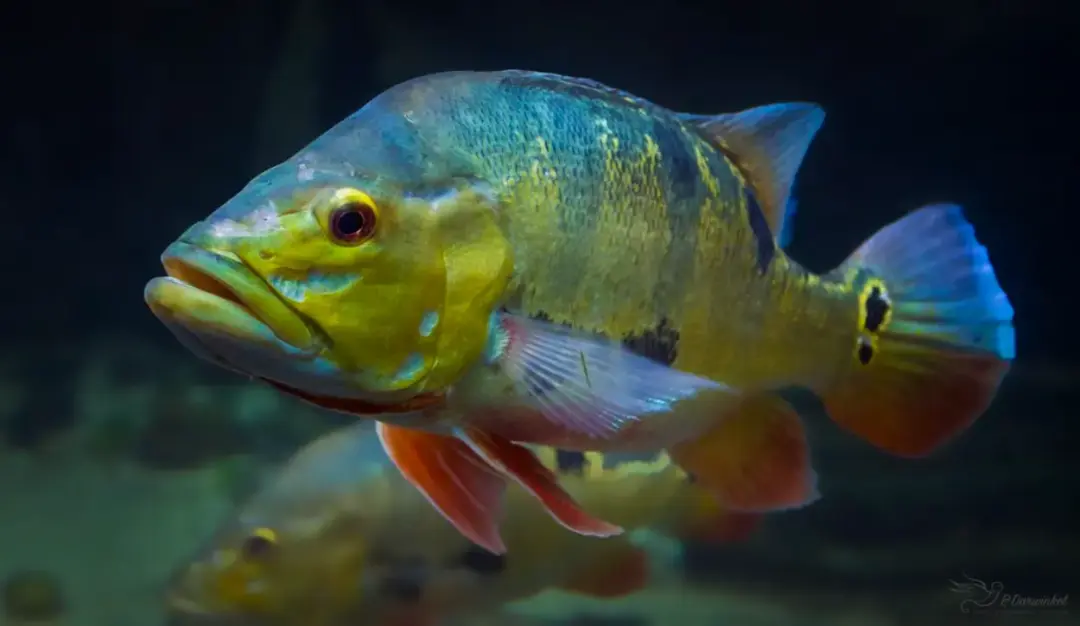
Peacock bass are colorful predatory freshwater fish found in many Amazonian rivers and lakes.
They are recognizable by their strong bodies, bright yellow or green coloration, and distinctive dark markings. Some species also have a circular spot near the tail that resembles an eye.
These fish are active predators that feed mainly on smaller fish. They prefer warm freshwater environments and are frequently associated with submerged branches, vegetation, and flooded forest habitats.
Peacock bass are also important to recreational fishing in parts of the Amazon.
Pacu Fish
Pacu fish are relatives of piranhas, but many species have different feeding habits and distinctive teeth.
Their strong, flattened teeth are adapted for crushing fruits, seeds, and other plant material. Depending on the species, they may also consume insects and smaller aquatic organisms.
Pacu fish are particularly interesting because some contribute to seed dispersal in flooded forests. They consume fruits that fall into the water and can transport seeds to different locations.
Freshwater Stingrays
The Amazon Basin contains several freshwater stingray species, particularly within the genus Potamotrygon.
Unlike marine stingrays, these animals are adapted to freshwater environments and inhabit sandy riverbeds, muddy channels, and shallow lakes.
Their flattened bodies allow them to move close to the bottom while searching for food. They generally consume small fish, crustaceans, worms, and other bottom-dwelling organisms.
Freshwater stingrays have defensive tails equipped with venomous spines, making it important to avoid stepping on them in shallow water.
Discus Fish
Discus fish are among the most beautiful freshwater fish associated with the Amazon rainforest.
They have rounded, laterally compressed bodies and attractive patterns that may include blue, red, brown, and green colors.
They inhabit relatively calm waters, including flooded forests and areas with submerged roots and vegetation.
Discus fish feed on small aquatic organisms, insects, and other available food sources. They are also known for their unusual parental behavior, as their young feed on a nutritious mucus produced by the skin of their parents.
Arowana Fish
The silver arowana is a distinctive Amazon freshwater predator with an elongated body, large metallic scales, and an upward-facing mouth.
It frequently hunts near the water surface, where it captures insects and other small animals. It is also capable of jumping out of the water to catch prey from low branches.
This remarkable hunting behavior makes it one of the most interesting fish in the Amazon ecosystem.
Candiru Fish
Candiru fish are small, elongated catfish that inhabit Amazonian freshwater environments.
Some species are parasites that feed on the blood of larger fish, while others have different feeding behaviors.
They are often associated with riverbeds and muddy environments. Although candiru fish have developed an exaggerated reputation in popular stories, their actual biology and behavior are more diverse than many people realize.
Different Types of Amazon Rainforest Fishes
Amazon rainforest fishes can be classified according to their diets, body characteristics, and ecological roles.
Carnivorous Fish
Carnivorous species consume other animals and occupy important positions in aquatic food chains.
Examples include piranhas, electric eels, arapaimas, and many catfish species.
Their diets may include smaller fish, aquatic insects, crustaceans, frogs, and other available prey.
These predators help regulate populations of other aquatic organisms and contribute to the natural balance of freshwater ecosystems.
Herbivorous Fish
Herbivorous fish primarily consume plant material, including aquatic vegetation, fruits, leaves, and seeds.
Certain pacu species are particularly important because they consume fruits from trees growing near rivers.
Their feeding behavior connects aquatic ecosystems with the surrounding rainforest and helps transport seeds through flooded habitats.
Omnivorous Fish
Omnivorous fish consume both plant and animal material.
Their diets can include insects, fruits, seeds, algae, crustaceans, and smaller aquatic organisms.
This dietary flexibility allows them to survive when particular food sources become less available during seasonal changes.
Small Tropical Fish
The Amazon rainforest also contains thousands of smaller fish species that inhabit shallow streams, vegetation, and submerged roots.
Neon tetras, pencilfish, hatchetfish, and small corydoras are examples of colorful species associated with Amazonian freshwater habitats.
Although many are small, they play important ecological roles as consumers of insects and plankton and as prey for larger fish.
Giant Freshwater Fish
Large species such as arapaima and some giant catfish are among the most impressive aquatic animals in the Amazon Basin.
They occupy important positions in freshwater food webs and often require extensive habitats to complete their life cycles.
Their populations can be affected by fishing pressure, habitat fragmentation, and changes in water quality.
Where Do Amazon Rainforest Fishes Live?
Amazon rainforest fishes occupy a wide variety of aquatic habitats. Water chemistry, current strength, vegetation, oxygen levels, and seasonal flooding influence where different species live.
Amazon River and Its Tributaries
The Amazon River and its extensive tributary network provide habitat for countless freshwater species.
Large rivers offer deep channels, sandy beaches, submerged vegetation, and areas with different water currents.
Tributaries also create connections between different habitats, allowing many fish species to move between feeding and reproduction areas.
Blackwater Rivers
Blackwater rivers contain dark water caused mainly by dissolved organic compounds released from decomposing vegetation.
These waters are often acidic and relatively low in nutrients.
Specialized fish species, including discus and several ornamental freshwater fish, inhabit these environments.
Whitewater Rivers
Whitewater rivers generally carry large amounts of suspended sediments from the Andes and other surrounding regions.
They transport nutrients and support highly productive aquatic environments.
Many fish species use these rivers for feeding, reproduction, and migration.
Flooded Forests and Seasonal Lakes
Flooded forests are among the most important habitats for Amazon rainforest fishes.
During the rainy season, rising rivers cover large areas of vegetation, creating temporary aquatic environments beneath the forest canopy.
Fish enter these flooded areas to feed on fruits, seeds, insects, and other organisms.
When water levels decrease, many return to permanent rivers and lakes.
Amazon Wetlands and Underwater Vegetation
Wetlands and shallow lakes provide feeding and breeding areas for numerous fish species.
Aquatic vegetation offers shelter for small fish and juvenile predators, while submerged roots provide hiding places from larger animals.
These habitats are especially important for maintaining freshwater biodiversity.
What Do Amazon Rainforest Fishes Eat?
The diets of Amazon rainforest fishes are extremely diverse.
Some species are specialized predators, while others consume fruits, seeds, insects, algae, and microscopic organisms.
Fish That Eat Other Fish
Predatory fish such as piranhas, arapaimas, and electric eels consume smaller fish and other aquatic animals.
These predators help regulate populations and maintain ecological balance.
Fish That Eat Fruits and Seeds
Fruit-eating fish are especially important in flooded forest ecosystems.
Pacu and some other characiform fishes consume fruits and seeds that fall into the water during the rainy season.
This feeding behavior helps connect rainforest vegetation with aquatic food webs.
Fish That Feed on Insects and Crustaceans
Many smaller fish feed on aquatic insects, insect larvae, shrimp, and other crustaceans.
These organisms provide essential nutrients and are particularly important food sources for juvenile fish.
Plankton and Aquatic Plants
Some Amazon fish feed on plankton, algae, and aquatic vegetation.
These food sources support numerous smaller species that eventually become prey for larger predators.
Adaptations of Amazon Rainforest Fishes
Amazon fish have developed extraordinary adaptations that allow them to survive in constantly changing freshwater environments.
Survival During Seasonal Flooding
Seasonal flooding is one of the most important ecological processes in the Amazon Basin.
Some fish migrate into flooded forests when water levels rise, taking advantage of abundant food and sheltered environments.
Others move between rivers, lakes, and tributaries depending on seasonal conditions.
These movements are essential for feeding and reproduction.
Camouflage and Defense Mechanisms
Many fish have coloration that helps them blend into their surroundings.
Dark markings, transparent bodies, and brown or green patterns provide camouflage among roots, leaves, rocks, and aquatic vegetation.
Other species rely on sharp teeth, defensive spines, or electrical discharges to protect themselves.
Breathing and Oxygen Adaptations
Some Amazon fish inhabit waters with very low oxygen concentrations.
Electric eels and arapaimas can breathe atmospheric air, allowing them to survive in environments where dissolved oxygen is limited.
Other species use behavioral adaptations or specialized respiratory structures to tolerate challenging water conditions.
Reproduction and Migration
Fish reproduction varies considerably across Amazonian species.
Some deposit eggs among vegetation, while others reproduce in river channels or shallow floodplain habitats.
Certain species undertake long-distance migrations between feeding and spawning areas.
Seasonal flooding creates important opportunities for reproduction by connecting habitats that remain separated during the dry season.
Dangerous and Unusual Fish in the Amazon
Several Amazon freshwater fish have developed unusual characteristics that make them particularly interesting.
Piranhas and Their Feeding Behavior
Piranhas have powerful jaws and sharp teeth designed for cutting and consuming food.
However, they do not constantly attack large animals or humans. Their behavior depends on environmental conditions, food availability, species, and other factors.
Electric Eels and Electrical Discharges
Electric eels can generate strong electrical shocks that help them capture prey and defend themselves.
Their electrical organs make them some of the most remarkable predators in freshwater environments.
Candiru and Its Reputation
Candiru fish are famous for stories about their supposed attacks on humans.
However, the best-known accounts are exaggerated, and documented human incidents are extremely rare.
Their actual ecological importance is associated primarily with their relationships with other aquatic animals.
Freshwater Stingrays and Their Defensive Spines
Freshwater stingrays can inflict painful injuries with their venomous tail spines.
They usually remain close to the riverbed, where their flattened bodies provide camouflage.
Care should be taken when walking through shallow Amazonian waters.
The Ecological Importance of Amazon Fish
Amazon rainforest fishes are essential to the health and functioning of freshwater and terrestrial ecosystems.
Maintaining Aquatic Food Chains
Fish connect different levels of aquatic food webs.
Small species consume plankton and insects, medium-sized fish feed on smaller animals, and larger predators hunt other fish.
These relationships help regulate populations and maintain ecosystem stability.
Seed Dispersal and Forest Regeneration
Fruit-eating fish contribute to seed dispersal by consuming fruits that fall into rivers and flooded forests.
Some seeds pass through their digestive systems and may be transported away from their original locations.
This interaction demonstrates the important connection between aquatic animals and rainforest vegetation.
Supporting Amazon Wildlife and Local Communities
Fish are a major food source for many Amazonian communities.
Traditional fishing provides protein and supports local economies, while aquatic species also contribute to the diets of larger wildlife, including river dolphins, caimans, and fish-eating birds.
Healthy fish populations are therefore important for both biodiversity and human livelihoods.
Threats and Conservation of Amazon Rainforest Fishes
Despite their remarkable diversity, Amazon rainforest fishes face increasing environmental pressures.
Deforestation and Habitat Destruction
Deforestation removes vegetation along rivers and destroys important flooded forest habitats.
The loss of trees can affect water temperature, sediment levels, food availability, and breeding environments.
Protecting riverbank forests and natural floodplains is essential for maintaining healthy fish populations.
Water Pollution and Mercury Contamination
Mining activities, agricultural chemicals, sewage, and other pollutants can negatively affect freshwater ecosystems.
Mercury contamination is a particularly serious concern in areas affected by gold mining.
Mercury can accumulate in aquatic food chains, creating risks for fish, wildlife, and people who depend on freshwater resources.
Overfishing and Unsustainable Fishing
Intensive fishing can reduce populations of commercially valuable species, especially large fish that take several years to reach reproductive maturity.
Sustainable fishing practices, seasonal restrictions, and community-based management can help protect vulnerable populations.
Protecting Amazon Freshwater Biodiversity
Conservation requires protecting rivers, tributaries, wetlands, and flooded forests as interconnected ecosystems.
Monitoring fish populations, controlling pollution, reducing habitat destruction, and supporting sustainable fishing communities are important strategies.
The long-term survival of Amazon rainforest fishes depends on maintaining healthy freshwater habitats and recognizing their importance to the entire rainforest ecosystem.
Frequently Asked Questions About Amazon Rainforest Fishes
How many fish species live in the Amazon rainforest?
The Amazon Basin contains more than 2,000 scientifically described freshwater fish species. The actual diversity is likely higher because researchers continue discovering and describing new species.
What is the largest fish in the Amazon River?
The arapaima is one of the largest freshwater fish in the Amazon. It can exceed two meters in length and weigh more than 100 kilograms.
What are the most dangerous fish in the Amazon?
Some fish considered potentially dangerous include piranhas, electric eels, and freshwater stingrays. Their risks differ: piranhas have powerful teeth, electric eels produce strong electrical discharges, and stingrays possess venomous defensive spines.
Do piranhas live throughout the Amazon River?
Piranhas inhabit many parts of the Amazon Basin, including rivers, lakes, and flooded areas. Their distribution varies depending on species, habitat conditions, and geographical location.
What do Amazon rainforest fishes eat?
Amazon fish have different diets. Some consume smaller fish, while others feed on fruits, seeds, insects, crustaceans, algae, plankton, and aquatic vegetation.
Are there electric eels in the Amazon?
Yes. Electric eels inhabit freshwater environments in the Amazon Basin and other northern South American river systems. They use electrical discharges for hunting, navigation, and defense.
Can Amazon fish survive in flooded forests?
Yes. Many Amazon fish enter flooded forests during the rainy season. These temporary habitats provide abundant food, shelter, and breeding opportunities.
Are Amazon freshwater fish endangered?
Some Amazon freshwater fish populations face serious threats from habitat destruction, pollution, overfishing, and climate-related changes. However, conservation status varies considerably between species.
Conclusion: The Extraordinary Diversity of Amazon Rainforest Fishes
Amazon rainforest fishes represent one of the most fascinating examples of freshwater biodiversity on Earth. From giant arapaimas and powerful piranhas to colorful discus fish and unusual electric eels, these aquatic animals have developed remarkable adaptations to survive in one of the world’s most complex ecosystems.
Their importance extends far beyond rivers and lakes. They support aquatic food chains, contribute to seed dispersal, sustain local communities, and help maintain the ecological balance of the Amazon rainforest.
Protecting their habitats, reducing water pollution, and encouraging sustainable fishing practices are essential for preserving this extraordinary aquatic biodiversity for future generations.