
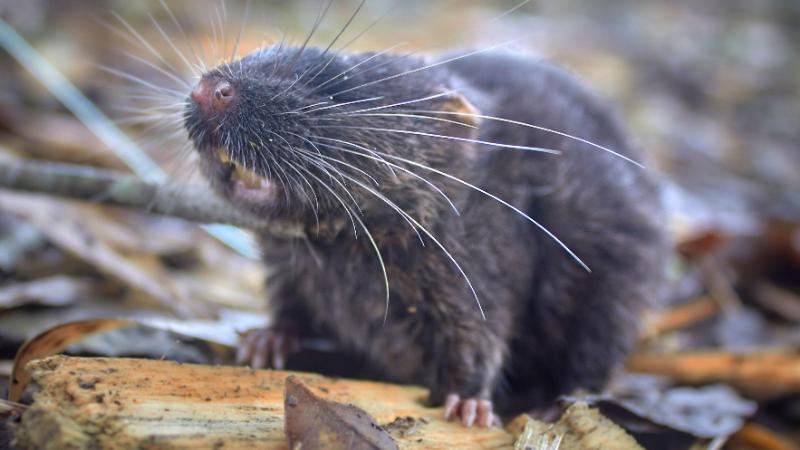
Deep within the tropical forests of Peru, where humid vegetation surrounds mysterious wetlands and small streams wind through dense greenery, scientists have uncovered an extraordinary mammal that challenges our understanding of rodents. Known as the amphibious mouse, this unusual animal has attracted international attention because of its remarkable adaptation to life around water.
Unlike the familiar mice that live in houses, agricultural fields, or dry forest environments, this remarkable rodent belongs to a rare group of semi-aquatic mammals. Its partially webbed toes provide an important clue to its unusual lifestyle, helping distinguish it from many other small rainforest rodents.
The amphibious mouse was documented during a scientific expedition to the Alto Mayo landscape in northern Peru. Researchers identified it as belonging to the genus Daptomys, a group of semi-aquatic rodents considered exceptionally rare and difficult to study. The discovery was particularly important because the animal was found in a small patch of swamp forest threatened by expanding agricultural activities.
Table of Contents
The expedition was part of a broader biodiversity assessment that revealed an extraordinary variety of previously undocumented wildlife. Scientists recorded more than 2,000 species and identified 27 species new to science, including several mammals, fish, amphibians, and butterflies.
What makes the amphibious mouse especially fascinating is how much remains unknown about its natural history. Scientists have identified its unusual anatomy and aquatic lifestyle, but questions about its reproduction, population size, lifespan, and ecological relationships still require investigation.
This tiny mammal represents something much larger than an unusual wildlife discovery. It demonstrates how much biodiversity remains hidden within tropical ecosystems and why protecting seemingly small patches of natural habitat can be essential for preserving extraordinary species.
1. Facts and Characteristics of the Amphibious Mouse
What Is the Amphibious Mouse?
The amphibious mouse is a rare semi-aquatic rodent associated with the genus Daptomys. It was documented in the Alto Mayo landscape of the San Martín region in Peru, where researchers discovered a previously undescribed mammal living in a swamp forest environment.
The term amphibious describes its ability to use both terrestrial and aquatic environments. Unlike fully aquatic mammals, which spend most or all of their lives in water, semi-aquatic rodents move between land and water to find food, shelter, and suitable places to rest.
The discovery attracted attention because semi-aquatic rodents are unusual compared with the enormous diversity of terrestrial rodents found throughout South America.
Although the animal is commonly called the amphibious mouse, it is important to understand that this name describes its ecological characteristics rather than placing it among amphibians such as frogs and salamanders. It is a mammal with fur, a backbone, and the reproductive characteristics of rodents.
Scientific Classification and Taxonomy of Daptomys
The amphibious mouse belongs to the rodent family Cricetidae, which includes numerous mice, rats, hamsters, and related mammals.
Its identification as Daptomys sp. indicates that researchers assigned it to an existing genus but that its exact species identity was not established in the initial discovery report.
This distinction is important. A new animal discovery does not automatically mean that its formal scientific description and naming have been completed. Further examination, comparison with related specimens, and genetic research may be necessary.
The genus Daptomys belongs to the subfamily Sigmodontinae, a diverse group of New World rodents distributed throughout Central and South America.
Physical Appearance and Body Characteristics
One of the most remarkable characteristics of the amphibious mouse is its partially webbed toes.
In many terrestrial rodents, the toes are separated and adapted primarily for walking, climbing, digging, or running. In semi-aquatic animals, however, membranes between the toes can increase the surface area of the feet.
This anatomical feature can help generate additional propulsion when an animal moves through water.
The amphibious mouse also has the general characteristics of a small rodent, including a compact body, fur, and a tail. However, detailed measurements and a complete description of its external anatomy should not be assumed without published species-specific data.
Its specialized feet provide one of the clearest indications that water plays an important role in its lifestyle.
Why Is It Considered One of the Rarest Rodents?
The amphibious mouse belongs to a group of semi-aquatic rodents that scientists consider exceptionally rare.
Some species within this group have been observed only a handful of times, making it difficult to understand their behavior, distribution, and ecological requirements.
Small mammals are particularly challenging to study in dense tropical forests. They can move through thick vegetation, remain hidden beneath leaves, and occupy habitats that are difficult for researchers to access.
The discovery of the Alto Mayo mouse is especially important because it was found in a very restricted patch of swamp forest. Whether it occupies additional locations remains an important scientific question.
Interesting Facts About the Amphibious Mouse
- It belongs to the genus Daptomys.
- It is a mammal, not an amphibian.
- It has partially webbed toes adapted to aquatic movement.
- It belongs to a group of exceptionally rare semi-aquatic rodents.
- It was documented in the Alto Mayo landscape of northern Peru.
- Its reported diet includes aquatic insects.
- Its discovery highlights the importance of tropical swamp forests.
- Its population size and complete geographic distribution remain uncertain.
2. Habitat and Geographic Distribution
Where Does the Amphibious Mouse Live?
The amphibious mouse was discovered in the Alto Mayo landscape in the San Martín region of northern Peru.
This region contains a complex combination of tropical forests, wetlands, rivers, streams, agricultural areas, and mountainous environments.
The landscape is particularly important because different elevations and environmental conditions create habitats for a remarkable variety of plants and animals.
The amphibious mouse was specifically found in a small patch of swamp forest. This type of habitat provides the moist conditions and aquatic environments associated with its semi-aquatic lifestyle.
Unlike rodents that prefer dry ground or open grasslands, semi-aquatic species depend on suitable water-related environments to obtain food and move through their surroundings.
Alto Mayo: A Biodiversity Hotspot in Northern Peru
Alto Mayo is recognized as an important region for biodiversity in Peru.
Its landscape supports numerous species of mammals, birds, reptiles, amphibians, insects, and freshwater organisms.
The combination of tropical forests, mountain slopes, wetlands, and freshwater ecosystems creates a variety of ecological conditions.
The 2022 biodiversity expedition conducted by Conservation International and local collaborators demonstrated just how much wildlife remains undocumented in this region.
Researchers recorded 2,046 species through field surveys, camera traps, acoustic monitoring, and environmental DNA techniques.
Among the discoveries were several mammals previously unknown to science, including the amphibious mouse, a spiny mouse, and a dwarf squirrel representing an unusual new lineage.
These findings demonstrate that even landscapes influenced by human activities can contain extraordinary biological diversity.
Swamp Forests and Tropical Wetland Ecosystems
Swamp forests are among the most distinctive habitats in tropical South America.
They are characterized by waterlogged soils, seasonal flooding, dense vegetation, and plant communities adapted to persistent moisture.
Some wetlands remain flooded throughout much of the year, while others experience seasonal changes in water levels.
These environments provide food, shelter, and breeding areas for many different organisms.
For small semi-aquatic mammals, swamp forests can offer access to aquatic insects, protected spaces among vegetation, and opportunities to move between terrestrial and aquatic habitats.
However, wetlands are also vulnerable to drainage, agricultural expansion, pollution, and changes in natural water flow.
When a small wetland disappears, the animals depending on it may lose much more than a feeding area. They can lose their entire suitable habitat.
The Importance of Palm Swamps and Wetland Vegetation
Palm-dominated wetlands are important components of many Amazonian ecosystems.
Their vegetation can provide shade, organic matter, shelter, and a variety of food resources for aquatic and terrestrial organisms.
Fallen leaves and decaying vegetation contribute to the formation of complex food webs. Microorganisms, aquatic insects, fish, and other small organisms depend on these organic materials.
For a semi-aquatic mouse, the surrounding vegetation may provide protection while nearby water supports its feeding activities.
However, the precise plant species and microhabitat preferences of the Alto Mayo amphibious mouse require further research.
Is the Amphibious Mouse Endemic to Peru?
The amphibious mouse documented in Alto Mayo is a Peruvian discovery, but its complete geographic distribution is not yet established.
Finding an animal in one location does not prove that it exists exclusively there.
The possibility that additional populations occur in other swamp forests or wetland environments remains open.
Researchers need more field surveys to determine whether the animal has a restricted distribution or whether it occupies a broader network of suitable habitats.
This uncertainty makes habitat research especially important.
3. Diet and Hunting Behavior
What Does the Amphibious Mouse Eat?
One of the most interesting aspects of the amphibious mouse is its association with aquatic food resources.
Scientific reporting about the Alto Mayo discovery identifies aquatic insects as part of its diet.
These organisms are abundant in many tropical freshwater environments and represent an important food source for fish, amphibians, birds, and insect-eating mammals.
Aquatic insects can include larvae and other life stages of insects that develop in streams, pools, and wetlands.
Their availability may make swamp forests particularly suitable environments for small semi-aquatic predators.
However, the complete diet of this particular mouse has not yet been documented in detail.
Aquatic Insects and Other Potential Food Sources
Tropical wetlands contain a remarkable variety of invertebrates.
Mosquito larvae, aquatic beetles, insect larvae, and other small organisms contribute to freshwater food webs.
Some aquatic insects spend their early development underwater before emerging as adults.
These organisms create opportunities for animals capable of searching for food along shallow water margins or beneath submerged vegetation.
Although aquatic insects are associated with the amphibious mouse’s feeding ecology, it would be premature to claim that they represent its entire diet.
Further observations are necessary to determine whether it also consumes terrestrial insects, other small invertebrates, or plant material.
How Does It Find Food in Wetland Environments?
The amphibious mouse’s partially webbed toes suggest an ability to move efficiently through water.
This could help it explore shallow aquatic environments where small prey organisms are available.
Its hunting strategy may involve searching around submerged vegetation, wet leaves, stream margins, and other areas where aquatic insects gather.
However, these specific techniques remain subjects for future research rather than confirmed descriptions of its behavior.
Understanding its feeding habits will help scientists identify which wetland characteristics are most important for its survival.
The Role of Small Rodents in Aquatic Food Chains
Small insect-eating mammals can occupy important positions within tropical ecosystems.
By consuming insects and other invertebrates, they participate in the regulation of populations and transfer energy from small organisms to larger predators.
Their presence also contributes to the complexity of food webs.
Even when an animal is rarely observed, its ecological role may be significant.
Studying the amphibious mouse could therefore help researchers understand how small mammals contribute to the functioning of tropical wetland ecosystems.
4. Behavior and Lifestyle
Is the Amphibious Mouse a Good Swimmer?
Its partially webbed toes provide strong evidence of adaptation to movement in aquatic environments.
Webbing between the toes increases the surface area of the feet and can improve propulsion when an animal pushes against water.
This adaptation is found in several unrelated groups of mammals and birds that use aquatic environments.
For the amphibious mouse, these feet represent an important anatomical characteristic associated with its semi-aquatic lifestyle.
Although its swimming abilities are of considerable interest, detailed scientific observations of its speed, diving behavior, and swimming techniques are still needed.
How Does It Move Between Land and Water?
Semi-aquatic mammals must balance two different environments.
They need to move efficiently through water while also remaining capable of traveling across vegetation, soil, and other terrestrial surfaces.
The amphibious mouse’s feet appear adapted to this combination.
Its small body may also allow it to navigate through narrow spaces among wetland vegetation.
This ability could be especially useful in swamp forests, where roots, fallen leaves, shallow pools, and submerged plants create a complex environment.
Daily Activity and Possible Nocturnal Habits
Many small tropical mammals are difficult to observe because they remain hidden during the day or become active when visibility is limited.
Some rodents are nocturnal, while others are active during the day or show flexible activity patterns depending on food availability and environmental conditions.
For the Alto Mayo amphibious mouse, a complete activity schedule has not been established.
Future studies using camera traps, tracking methods, and direct field observations could reveal when it feeds, swims, rests, and moves through its habitat.
Solitary Behavior and Social Interactions
The social organization of this particular mouse remains poorly understood.
It is not currently appropriate to describe it as definitively solitary or group-living.
Different rodents display a wide variety of social systems, from animals that maintain individual territories to species that form complex family groups.
Discovering how the amphibious mouse interacts with others of its kind will be important for understanding its reproductive behavior and population dynamics.
How Does It Avoid Danger?
Life in a tropical wetland presents several challenges.
Small mammals must avoid predators, locate suitable food, and find protected areas where they can rest.
Dense vegetation, submerged roots, and narrow spaces may provide potential hiding places.
Water may also create opportunities for escape from some terrestrial predators, although aquatic environments contain their own dangers.
The exact defensive strategies of the amphibious mouse remain unknown.
Nevertheless, its unusual habitat and specialized anatomy suggest that survival depends on a close relationship with the surrounding wetland environment.
5. Reproduction and Life Cycle
How Do Semi-Aquatic Mice Reproduce?
Reproduction is one of the least understood aspects of the amphibious mouse’s biology.
As a rodent, it belongs to a mammalian group in which reproduction generally involves internal fertilization and the birth of live young.
However, the specific reproductive cycle of the Alto Mayo animal has not been established.
Its mating season, litter size, gestation period, and reproductive maturity require direct scientific investigation.
Mating Behavior and Breeding Season
In tropical environments, seasonal changes in rainfall and food availability can influence the reproductive activity of mammals.
Some species reproduce throughout the year, while others show seasonal patterns associated with favorable environmental conditions.
For a wetland-dependent rodent, changes in water levels and food availability could potentially influence breeding opportunities.
However, these possibilities should not be confused with confirmed information about Daptomys sp.
Gestation, Birth, and Early Development
Small rodents generally have relatively short reproductive cycles compared with many larger mammals.
Their young are typically born in protected nests or sheltered locations, where they receive maternal care during early development.
The exact gestation period and developmental stages of the amphibious mouse remain unknown.
Researchers will need to study additional specimens and observe living individuals to understand how its young develop.
Parental Care and Nesting Habits
Shelter is essential for the survival of newborn mammals.
Wetland vegetation may provide potential nesting areas, although the specific nesting preferences of the amphibious mouse have not been confirmed.
Understanding whether it constructs nests in dry elevated locations, uses natural cavities, or occupies protected spaces among roots would provide valuable information about its ecological requirements.
What Is the Lifespan of the Amphibious Mouse?
There is currently insufficient species-specific information to establish its average lifespan.
The lifespan of small rodents varies considerably according to genetics, habitat conditions, food availability, predation, and environmental stress.
Further research is necessary before reliable estimates can be made for this unusual semi-aquatic mammal.