
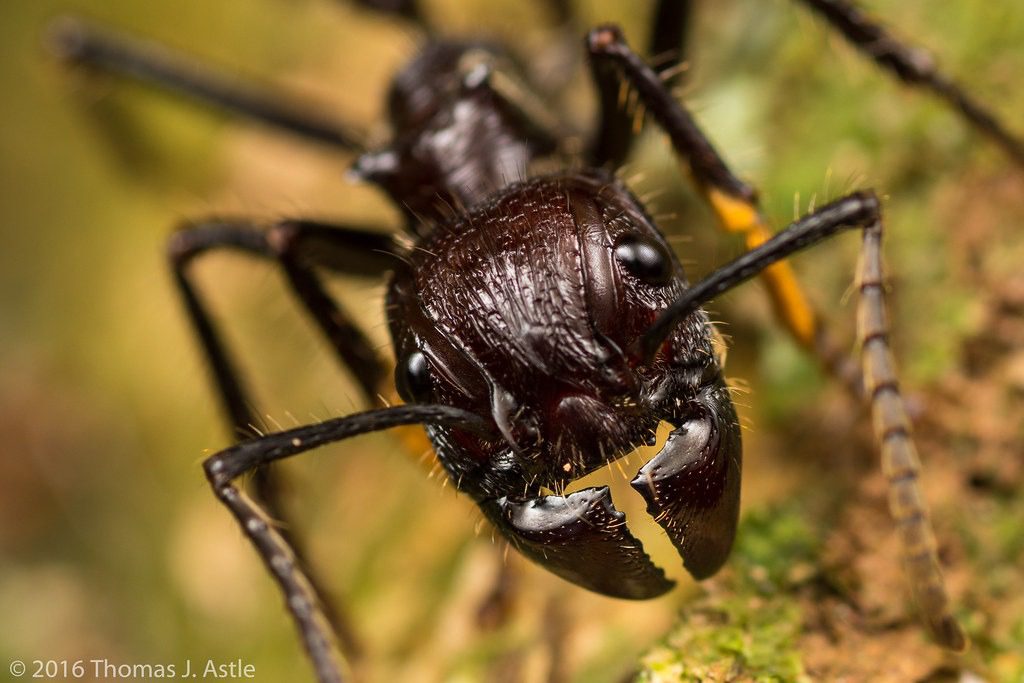
The bullet ant (Paraponera clavata) is infamous for delivering the most excruciating sting known to humans. Yet this powerful insect is more than just its painful reputation. From its ecology and behavior to its role in indigenous rituals, the bullet ant is a marvel of evolutionary design. This article provides an in-depth exploration of this ant’s biology, environment, and cultural impact, structured according to keyword hierarchy and relevance.
What is a Bullet Ant?
General Overview
The bullet ant is a species of large, ground-dwelling ant native to the rainforests of Central and South America. Named for its sting, which is said to be as painful as a bullet wound, it belongs to the subfamily Paraponerinae. Workers can grow up to 30 mm in length, making them one of the largest ant species in the world.
Bullet Ant Size
The Bullet Ant is one of the largest ant species in the tropical rainforests of Central and South America, especially within the Amazon rainforest ecosystem. Adult worker ants typically measure between 18 and 30 mm (0.7 to 1.2 inches) in length, making them noticeably larger than most forest-floor ants. Their elongated bodies, powerful mandibles, and long legs contribute to their intimidating appearance and efficient predatory behavior.
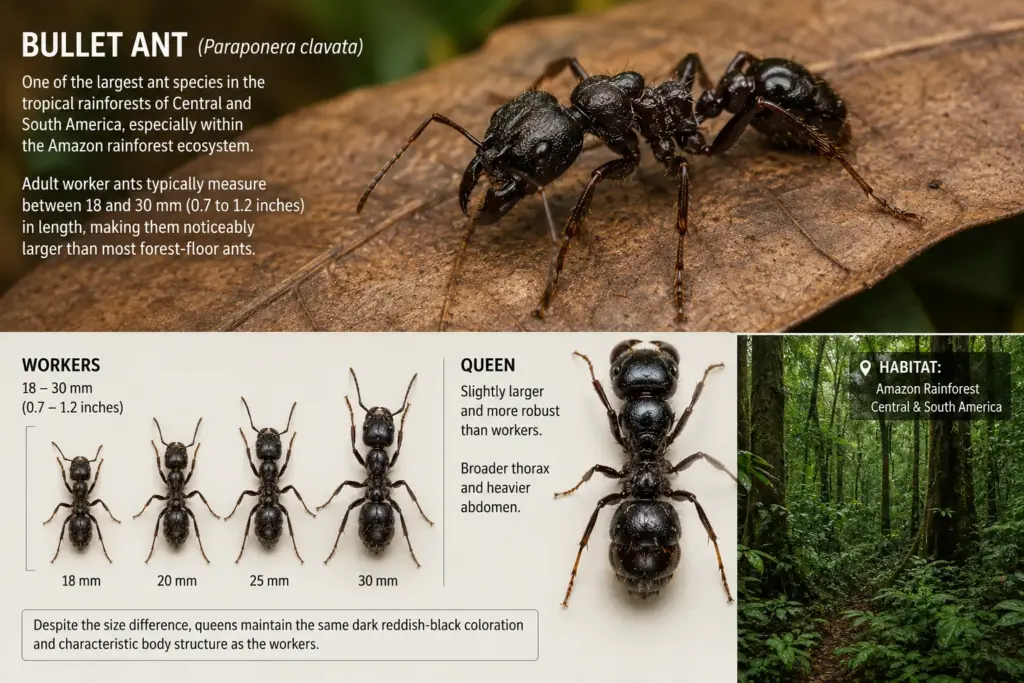
Queens are generally slightly larger and more robust than worker ants. They possess a broader thorax and heavier abdomen, adaptations associated with reproduction and colony establishment. Despite the size difference, queens maintain the same dark reddish-black coloration and characteristic body structure as the workers.
The large body size of bullet ants provides several ecological advantages. Their strength and mobility allow them to dominate smaller insects and compete effectively for food resources on the rainforest floor. This size also supports their defensive capabilities, including the delivery of their famously painful sting, which is used to deter predators and protect the colony.
In the Amazon rainforest, bullet ants are commonly found nesting at the base of large trees, where their size and aggressive behavior make them important predators and scavengers within the forest-floor ecosystem.Bullet Ant Size
Bullet Ant Habitat
Geographic Range
The Bullet Ant is widely distributed throughout the tropical rainforests of Central and South America. Its range extends from southern Nicaragua through Costa Rica and Panama into the Amazon Basin. Large populations are commonly found in countries such as Brazil, Colombia, Ecuador, Peru, Bolivia, and parts of Venezuela.
These ants thrive in warm, humid environments with dense vegetation and abundant rainfall. They are most commonly associated with primary rainforest ecosystems, where temperatures remain stable and moisture levels are consistently high throughout the year.
Preferred Rainforest Environment
Bullet ants are especially abundant in lowland Amazon rainforest habitats below 1,500 meters (4,900 feet) in elevation. They prefer forests with rich leaf litter, large canopy trees, and moist soil conditions that provide protection and easy access to food sources.
The dense rainforest canopy creates shaded and humid microclimates that help bullet ants avoid dehydration. Fallen logs, tree buttresses, and thick root systems also provide ideal shelter and nesting opportunities.
Nesting Behavior
Colonies are typically established at the base of large rainforest trees, where the ants use exposed roots and surrounding soil to construct secure underground nests. Entrances are often concealed beneath leaves, roots, or debris, helping protect the colony from predators and environmental disturbances.
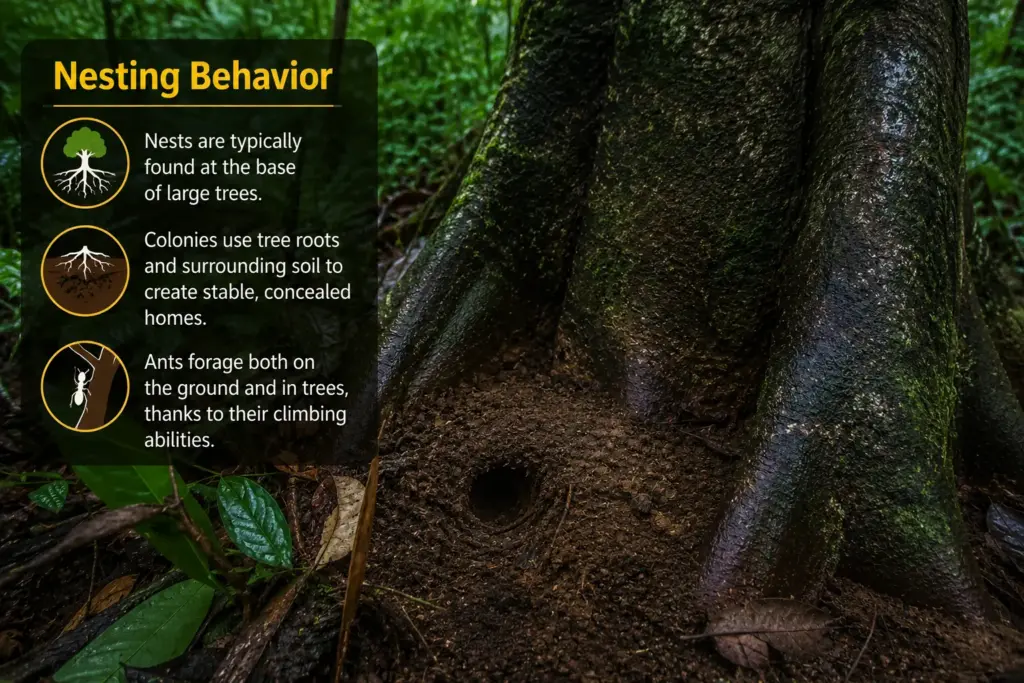
A single colony may contain several hundred ants, including workers, larvae, and one reproductive queen. The nest structure usually consists of interconnected tunnels and chambers that provide storage areas and protected spaces for developing young ants.
Arboreal and Ground Foraging
Bullet ants are highly versatile foragers. Workers travel both across the forest floor and high into the trees in search of food. Their strong legs and hooked claws make them excellent climbers, allowing them to navigate trunks, vines, and branches with ease.
Their diet includes nectar, small insects, arthropods, and tree sap. They also scavenge dead insects and occasionally prey on smaller rainforest creatures. This flexible feeding behavior helps them survive in the highly competitive rainforest ecosystem.
The Bullet Ant Sting
Pain and Description
The sting of the bullet ant is considered the most painful insect sting on Earth. Described as intense, throbbing, and almost paralyzing, it ranks at the top of the Schmidt Sting Pain Index.
Bullet Ant Bite vs. Sting
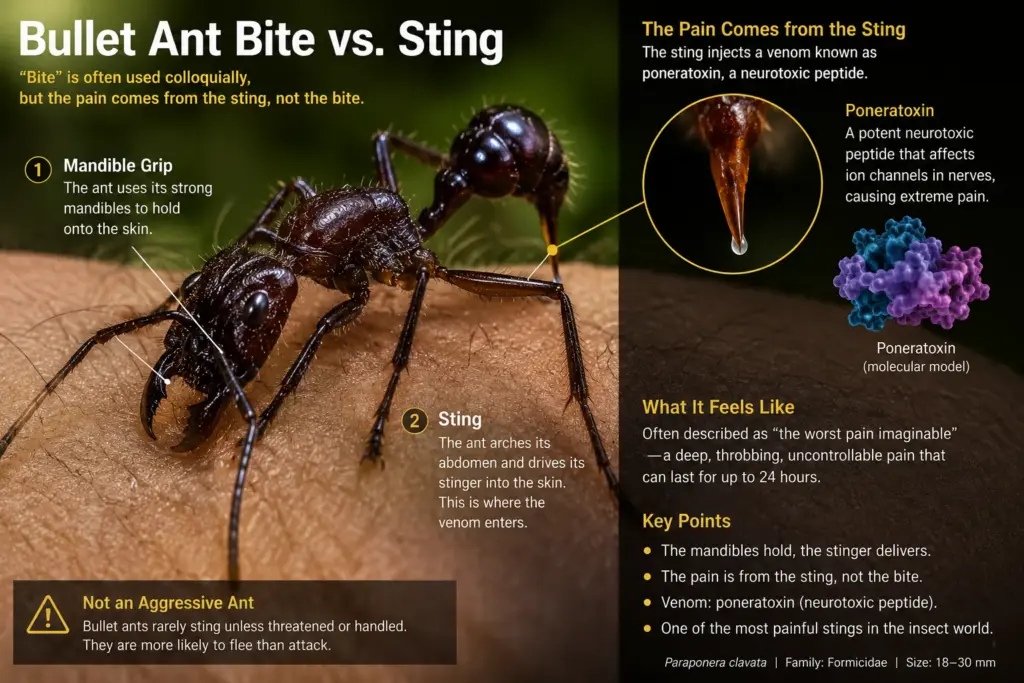
- “Bite” is often used colloquially, but the pain comes from the sting, not the bite.
- The ant uses its strong mandibles to hold onto the skin before stinging.
- The sting injects a venom known as poneratoxin, a neurotoxic peptide.
Symptoms of a Sting
- Immediate, searing pain lasting 12 to 24 hours.
- Swelling, redness, and potential muscle spasms.
- In rare cases, victims report nausea, vomiting, and disorientation.
Can a Bullet Ant Kill You?
While a bullet ant sting is excruciating, it is not typically fatal to humans. However, multiple stings or an allergic reaction could require medical attention. No recorded deaths have been directly attributed to bullet ant stings.
Bullet Ant Ritual
Indigenous Use in Initiation
The bullet ant plays a central role in the rite of passage practiced by the Sateré-Mawé tribe in Brazil. Boys must endure the stings of hundreds of ants to prove their transition into manhood.
The Bullet Ant Glove
- Gloves made from woven leaves are filled with sedated bullet ants.
- The ants are positioned with stingers facing inward.
- Initiates must wear the gloves for 10 minutes while enduring dozens of stings.
- The ritual must be completed 20 times over several months to be considered successful.
Aftereffects
- Participants often experience hallucinations, muscle paralysis, and involuntary shaking.
- The ritual is viewed as a demonstration of bravery and endurance.
Bullet Ant Diet
Omnivorous Behavior
Bullet ants are opportunistic omnivores, feeding on a variety of plant and animal matter.
- Nectar and sugary plant exudates.
- Small arthropods, including beetles, termites, and other ants.
- Occasionally scavenge from carrion or leftovers from larger predators.
Foraging Strategies
- Mostly nocturnal foragers.
- Use pheromone trails to direct others to food sources.
- Forage alone or in small groups to maximize efficiency.
Bullet Ant Predators
Despite their painful sting, bullet ants are not immune to predation.
Natural Enemies
- Phorid Flies: Parasitic flies lay eggs on bullet ants; larvae eventually kill the host.
- Anteaters and Tamanduas: Specialized predators that feed on ants and termites.
- Birds: Some species have developed techniques to avoid stings while consuming ants.
Defense Mechanisms
- Strong mandibles and venomous stinger.
- Alarm pheromones that summon colony members for a coordinated defense.
Bullet Ant Queen
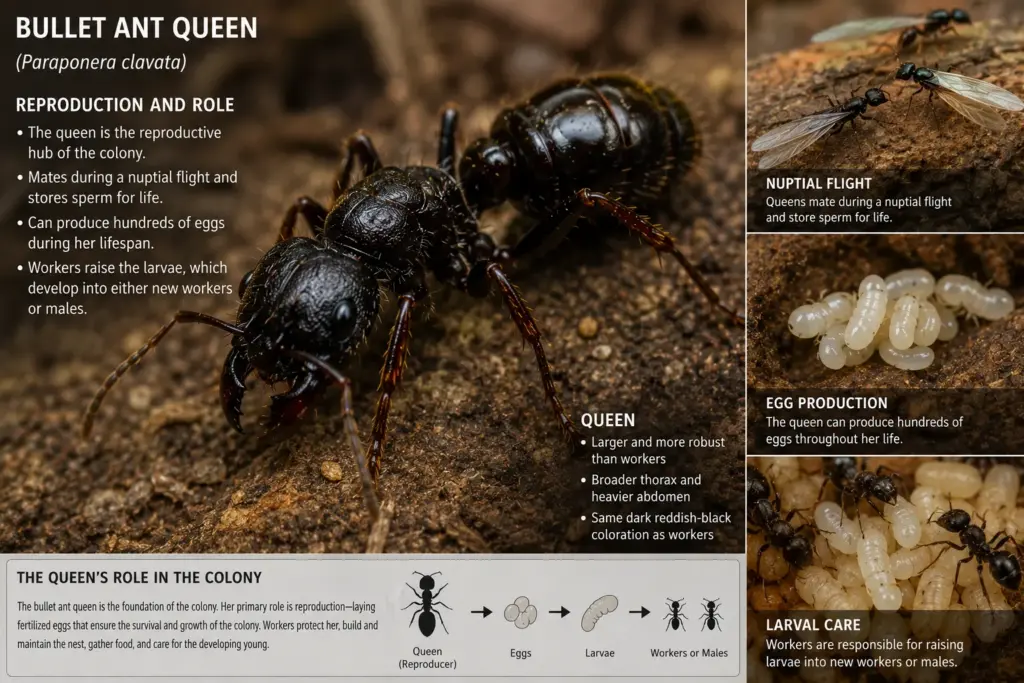
Reproduction and Role
The queen is the reproductive hub of the colony.
- Mates during a nuptial flight and stores sperm for life.
- Can produce hundreds of eggs during her lifespan.
- Workers raise the larvae, which develop into either new workers or males.
Colony Structure
- Colonies are typically small, consisting of a few hundred ants.
- All workers are female; males exist only temporarily for mating purposes.
Bullet Ant vs. Bulldog Ant
Comparison Overview
While both species are formidable, they differ significantly in behavior and habitat.
- Bullet Ant:
- Found in South America.
- Known for its extremely painful sting.
- Lives in rainforest ecosystems.
- Bulldog Ant (Myrmecia spp.):
- Native to Australia.
- Aggressive with powerful mandibles.
- Can leap and has excellent vision.
Interesting and Unusual Facts
Remarkable Pain Scale
The bullet ant’s sting is used as the benchmark for all other insect stings. Pain descriptions include “pure, intense, brilliant pain” and “like walking over flaming charcoal with a 3-inch nail embedded in your heel.”
Venom Research
Poneratoxin is under scientific investigation for its potential applications in neurology and pain management due to its effect on sodium ion channels.
Nocturnal Terrors
Despite their size and pain potential, bullet ants are rarely seen by tourists because of their nocturnal habits and remote habitats.
Communication and Organization
Bullet ants communicate through a complex system of pheromones, allowing them to coordinate colony defense and foraging with remarkable efficiency.
The bullet ant is more than just a painful insect. It’s a key species in the rainforest, a symbol of resilience and initiation in indigenous cultures, and a subject of fascination for entomologists and thrill-seekers alike. Understanding the bullet ant’s lifestyle, biology, and role in its environment reveals a creature of complexity and significance far beyond its fearsome sting.