
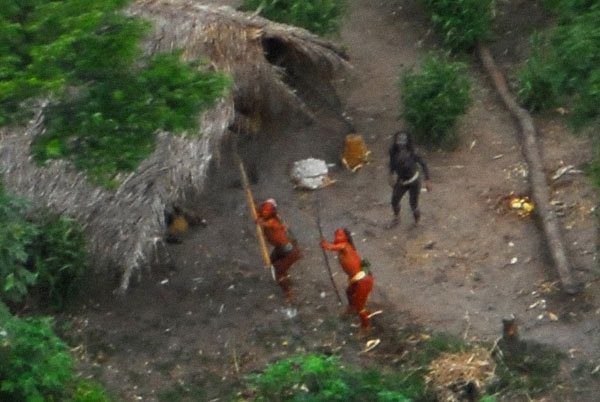
Deep within the Amazon rainforest, some Indigenous peoples continue to live with little or no direct contact with the outside world. These communities, commonly known as uncontacted tribes, maintain their own cultural traditions, languages, knowledge systems, and relationships with the natural environment. Their territories are among the most remote and ecologically important regions of the Amazon Basin.
Although the term uncontacted is widely used, many of these communities are more accurately described as Indigenous peoples in voluntary isolation. Some may have experienced encounters with outsiders in the past but subsequently decided to avoid further interaction. Their isolation is closely connected to historical experiences, cultural independence, territorial security, and the desire to maintain traditional ways of life.
The Amazon rainforest provides these populations with food, water, shelter, medicinal plants, and the natural resources necessary for their survival. However, increasing deforestation, illegal mining, unauthorized land invasions, and other external pressures threaten their territories.
Understanding Amazon rainforest uncontacted tribes requires looking beyond their apparent isolation. Their existence represents an important part of Indigenous cultural diversity, human history, and the relationship between people and tropical forest ecosystems.
Who Are the Uncontacted Tribes of the Amazon Rainforest?
Uncontacted tribes are Indigenous communities that maintain little or no sustained contact with national society or other outside populations. They generally live in remote forest territories where traditional activities and knowledge remain central to everyday life.
The word uncontacted can create the impression that these communities have never encountered outsiders. However, this is not necessarily accurate. Some have experienced violent encounters, exploitation, displacement, or the spread of infectious diseases. These experiences have influenced their decisions to maintain distance from external groups.
Many communities deliberately avoid contact because they want to preserve their independence and protect their territories.
Understanding Indigenous Peoples in Voluntary Isolation
Indigenous peoples in voluntary isolation are communities that choose to maintain distance from surrounding societies. Their decision should be understood as an expression of autonomy and self-determination rather than evidence of a lack of knowledge or development.
These communities possess sophisticated knowledge of their environments. They understand seasonal changes, animal behavior, edible plants, waterways, forest resources, and traditional methods of obtaining food.
Their knowledge is generally transmitted through generations through observation, storytelling, practical activities, and cultural traditions.
Voluntary isolation also means that outside societies should respect their decisions. Contact should never be forced, encouraged, or treated as a tourism attraction.
The Difference Between Isolated and Contacted Indigenous Communities
Not all Indigenous communities in the Amazon have the same relationship with outside society.
Some maintain regular interactions with nearby villages, public institutions, healthcare services, and markets. Others have limited contact while preserving many traditional practices. Indigenous peoples in voluntary isolation generally avoid sustained interaction with outsiders.
There are also communities in initial contact, which have recently established interactions with external populations or are beginning to do so.
These distinctions are important because each community has different needs, circumstances, and protection requirements.
Why Some Indigenous Peoples Choose to Avoid Outside Contact
Historical experiences are among the most important reasons why certain Indigenous communities maintain isolation.
During different periods of Amazonian history, Indigenous populations experienced violence, forced displacement, exploitation, and the destruction of traditional territories. Some encounters also introduced infectious diseases that caused severe population losses.
For communities that experienced these events, avoiding outsiders became an important strategy for survival.
Maintaining isolation can also protect cultural independence, traditional social organization, and access to ancestral lands.
Where Do Uncontacted Tribes Live in the Amazon Rainforest?
Isolated Indigenous peoples inhabit several remote regions of the Amazon Basin, particularly areas containing extensive forests, river systems, and relatively inaccessible landscapes.
Their territories extend across parts of South America, including Peru and Brazil. However, reliable information about their exact locations and population sizes is limited.
Protecting their privacy is essential. Publishing precise locations, routes, or identifying geographical information could expose these communities to unauthorized encounters and serious risks.
Isolated Indigenous Territories in the Peruvian Amazon
Peru contains several recognized territories associated with Indigenous peoples in voluntary isolation and initial contact.
These territories are particularly important in the Amazonian regions of Madre de Dios, Ucayali, Loreto, and surrounding forest landscapes.
The Peruvian Amazon contains extensive areas of tropical rainforest, rivers, wetlands, and diverse ecosystems that support traditional Indigenous subsistence activities.
Some protected territories are established to safeguard ancestral lands and reduce external interference.
The protection of these areas is important because roads, extractive activities, illegal logging, and unauthorized entry can threaten the survival of isolated populations.
Remote Indigenous Regions of the Brazilian Amazon
Brazil also contains numerous territories associated with isolated Indigenous peoples.
Large forest landscapes, extensive river systems, and remote ecological regions provide important habitats for communities that maintain little or no sustained contact with outsiders.
Some territories are officially recognized and protected through Indigenous land policies and monitoring activities.
The protection of these regions is particularly important because expanding agricultural frontiers, illegal mining, logging, and infrastructure projects can increase pressure on Indigenous lands.
The Importance of Rivers, Forests and Natural Boundaries
The Amazon rainforest is not simply a collection of trees. It is a complex environment containing interconnected rivers, wetlands, streams, forests, and seasonal floodplains.
These ecosystems provide essential resources for Indigenous communities.
Rivers can serve as sources of drinking water, fishing areas, and natural transportation routes. Forests provide materials for shelters, tools, food gathering, and traditional medicines.
Seasonal changes also influence daily activities, including fishing, hunting, and the collection of forest products.
For isolated communities, maintaining access to healthy ecosystems is fundamental to cultural and physical survival.
Traditional Life of Isolated Amazonian Communities
Traditional lifestyles in the Amazon vary considerably between Indigenous groups. Each community has its own knowledge, practices, social organization, and relationship with the surrounding environment.
Although outsiders often imagine isolated populations as living entirely through hunting and gathering, many Amazonian Indigenous societies have historically combined several subsistence activities.
Hunting, Fishing and Gathering Forest Foods
Hunting and fishing are important traditional activities for many Indigenous communities.
The Amazon rainforest contains numerous animal species that can provide protein and other essential nutrients. Depending on the ecosystem, traditional hunting may involve terrestrial mammals, birds, and other wildlife.
Fishing is particularly important because the Amazon Basin contains an extensive network of rivers and streams with remarkable aquatic biodiversity.
Forest gathering also provides fruits, seeds, nuts, insects, and other edible resources.
These activities require detailed knowledge of animal behavior, seasonal availability, forest conditions, and sustainable resource use.
Traditional Agriculture and Plant Resources
Some Amazonian Indigenous communities practice traditional agriculture alongside hunting, fishing, and gathering.
Small cultivated areas may contain crops such as cassava, plantains, maize, and other locally adapted plants.
Agricultural practices vary according to local conditions, soil characteristics, seasonal flooding, and cultural traditions.
Plant resources also provide materials for constructing shelters, making household objects, preparing food, and producing traditional medicines.
Knowledge about useful plants is often accumulated through generations of observation and practical experience.
Shelters, Tools and Everyday Activities
Traditional shelters are adapted to local environmental conditions and available materials.
Depending on the community, construction may involve palm leaves, wood, vines, and other forest resources.
Tools and household objects are commonly made from natural materials. Their design reflects practical needs, local knowledge, and cultural traditions.
Everyday activities may include preparing food, maintaining shelters, caring for children, gathering materials, and participating in community activities.
It is important to recognize that there is no single traditional Amazonian lifestyle. Different communities have distinct ways of organizing their daily lives.
Indigenous Knowledge of Rainforest Wildlife and Plants
Indigenous environmental knowledge is one of the most valuable aspects of Amazonian cultural heritage.
Generations of experience have created detailed understandings of plant characteristics, animal movements, seasonal cycles, and ecological relationships.
This knowledge can include identifying edible fruits, recognizing useful plant materials, understanding fishing environments, and observing changes in weather and river levels.
Such knowledge is closely connected to cultural identity and the ability to live within the rainforest.
Languages, Culture and Ancestral Knowledge
The Amazon Basin is one of the most culturally and linguistically diverse regions of the world.
Hundreds of Indigenous languages have historically been spoken across the wider Amazon region, representing different linguistic families, cultural traditions, and systems of knowledge.
Indigenous Languages and Cultural Identity
Language is central to the identity of Indigenous communities.
It provides a means of communicating knowledge, expressing cultural values, maintaining social relationships, and transmitting traditional practices.
For communities in voluntary isolation, languages may remain largely undocumented because direct contact and linguistic research are not appropriate without consent.
The absence of extensive written records does not mean that these languages lack complexity or cultural importance.
They are living systems of communication that preserve histories, environmental knowledge, and distinctive ways of understanding the world.
Traditional Knowledge Passed Between Generations
Knowledge transmission often takes place through daily activities and direct observation.
Children may learn about forest resources, animal behavior, traditional food preparation, and social responsibilities by participating in community life.
Older generations play an important role in preserving cultural knowledge.
Stories, practical demonstrations, and shared experiences help maintain traditions that may have developed over many generations.
Spiritual Beliefs and Relationships With Nature
Amazonian Indigenous cultures have diverse spiritual traditions and understandings of the natural world.
Some communities maintain cultural relationships with particular animals, plants, rivers, forests, and ancestral landscapes.
These relationships may influence traditional practices, community values, and the ways natural resources are understood and used.
It is important not to assume that all Indigenous communities share the same spiritual beliefs. Their traditions are diverse and should be understood within their own cultural contexts.
Why Do Uncontacted Tribes Avoid Contact With the Outside World?
Avoiding outside contact is often a conscious decision shaped by historical experiences and the desire to maintain independence.
Understanding this decision is essential for respecting Indigenous rights.
Historical Experiences With Outsiders
Throughout Amazonian history, Indigenous communities have experienced exploitation, forced labor, displacement, and violence.
The expansion of extractive industries and commercial activities has also brought external populations into ancestral territories.
For some isolated communities, encounters with outsiders have been associated with danger rather than cooperation.
Consequently, maintaining distance can be an important form of territorial and cultural protection.
Protection of Cultural Independence
Cultural independence allows communities to maintain their own languages, traditions, social organization, and relationships with ancestral territories.
Forced contact can disrupt established ways of life and expose communities to external pressures.
Respecting voluntary isolation means recognizing that Indigenous peoples have the right to determine their own relationships with the outside world.
Health Risks and Vulnerability to Infectious Diseases
One of the most serious dangers associated with unwanted contact is the transmission of infectious diseases.
Communities with limited previous exposure to certain pathogens may face severe health consequences when new infections enter their territories.
Respiratory infections and other communicable diseases can spread rapidly, particularly when access to appropriate healthcare is limited.
Even seemingly minor encounters can create serious public health risks.
For this reason, avoiding unauthorized contact is an essential protection measure.
Major Threats Facing Uncontacted Amazon Tribes
Despite their remote locations, isolated Indigenous populations face increasing pressure from activities occurring near or inside their territories.
These threats can damage ecosystems, restrict access to traditional resources, and create dangerous opportunities for unwanted encounters.
Deforestation and Illegal Logging
Deforestation is one of the most significant environmental challenges facing the Amazon.
Illegal logging can destroy forest habitats, open unauthorized access routes, and disrupt the ecological conditions that support Indigenous subsistence activities.
The removal of valuable trees can also damage surrounding vegetation and increase the risk of further land invasion.
For isolated populations, forest destruction represents a direct threat to their territories and traditional ways of life.
Illegal Mining and Land Invasions
Illegal mining can introduce serious environmental and social problems into remote Amazonian territories.
Mining activities may contaminate rivers, damage forest ecosystems, and attract additional unauthorized populations.
In areas where mercury is used in gold extraction, contamination can affect aquatic organisms and create risks for people who depend on rivers for food and water.
Land invasions can also increase the likelihood of violent encounters and disease transmission.
Drug Trafficking and Unauthorized Activities
Remote Amazonian territories can be affected by illegal activities involving unauthorized transportation routes, commercial exploitation, and organized criminal networks.
These activities may create insecurity, increase pressure on forest resources, and interfere with territorial protection.
Communities living in voluntary isolation are particularly vulnerable because they may have limited opportunities to respond to external incursions.
Environmental Destruction and Territorial Conflicts
Infrastructure expansion, agricultural development, forest fires, and extractive projects can place additional pressure on Indigenous territories.
The fragmentation of forest landscapes can reduce access to traditional resources and disturb ecological connections.
Territorial conflicts also become more difficult when land boundaries are poorly protected or unauthorized activities continue without effective enforcement.
How Are Uncontacted Tribes Protected?
Protecting Indigenous peoples in voluntary isolation requires coordinated action focused on territorial security, legal recognition, environmental conservation, and respect for their decisions.
The central principle is that protection must not depend on establishing contact.
Indigenous Reserves and Protected Territories
Recognizing and protecting ancestral territories is one of the most important ways to safeguard isolated communities.
Protected areas can help prevent unauthorized settlement, commercial exploitation, and destructive activities.
However, legal recognition alone is not sufficient. Effective protection also requires monitoring, enforcement, and cooperation with Indigenous organizations and local communities.
No-Contact Policies and Indigenous Rights
No-contact policies are designed to prevent unwanted interactions with isolated populations.
These policies recognize that forced contact can threaten physical health, cultural independence, and territorial security.
The principle of self-determination is particularly important because isolated Indigenous peoples have the right to decide whether they want relationships with outside societies.
Protection measures should prioritize prevention rather than intervention.
Environmental Monitoring and Territorial Protection
Monitoring remote forest territories helps identify illegal logging, mining, fires, and other unauthorized activities.
Satellite observation, aerial monitoring, and territorial surveillance can help identify environmental changes without requiring direct contact with isolated populations.
These approaches are important for identifying threats while reducing unnecessary intrusion into protected areas.
The Role of Indigenous Organizations and Local Communities
Indigenous organizations and contacted neighboring communities can play important roles in territorial protection.
Their knowledge of regional conditions and historical relationships with surrounding landscapes can support conservation initiatives.
Cooperation, legal advocacy, environmental monitoring, and community-led protection activities can help strengthen the defense of ancestral territories.
Why Protecting Uncontacted Tribes Is Important for the Amazon
The protection of isolated Indigenous peoples is important not only for human rights but also for the cultural and ecological future of the Amazon.
Preserving Cultural Diversity
Every Indigenous community represents a unique cultural history.
Languages, traditional knowledge, social practices, and relationships with ancestral territories contribute to humanity’s cultural diversity.
When an isolated population is threatened by forced contact, displacement, or disease, the consequences can extend beyond immediate physical harm.
Cultural knowledge and traditions that have developed over generations may also be lost.
Protecting Rainforest Biodiversity
Healthy Indigenous territories frequently overlap with ecologically important forest landscapes.
Maintaining these territories can help protect wildlife habitats, waterways, and forest ecosystems.
The traditional knowledge of Indigenous peoples also provides valuable insights into biodiversity, seasonal cycles, and sustainable relationships with natural resources.
Respecting Indigenous Autonomy and Human Rights
Ultimately, protecting isolated Indigenous communities means recognizing their rights to life, territory, culture, and self-determination.
They should not be treated as tourist attractions, research opportunities, or symbols of an untouched past.
They are contemporary peoples with the same fundamental human rights as everyone else.
Their decision to remain isolated deserves respect.
Responsible Tourism and What Visitors Should Know
The Amazon rainforest attracts travelers interested in wildlife, biodiversity, Indigenous cultures, and remote natural landscapes.
However, tourism involving isolated Indigenous communities requires an especially careful approach.
Why Tourists Must Never Search for Isolated Tribes
Tourists should never attempt to locate, approach, photograph, follow, or establish contact with Indigenous peoples in voluntary isolation.
Unwanted encounters can introduce infectious diseases, cause fear, disrupt traditional activities, and expose communities to dangerous situations.
Travelers should also avoid sharing alleged sightings, coordinates, routes, or information that could facilitate unauthorized access.
Responsible tourism begins by respecting the boundaries of protected Indigenous territories.
Respectful Ways to Experience Amazonian Culture
Visitors interested in Amazonian cultural heritage can learn through appropriate experiences offered by contacted Indigenous communities that voluntarily choose to participate in tourism.
Cultural experiences may include traditional food preparation, handicrafts, ecological interpretation, forest knowledge, and community-led educational activities.
These experiences should be based on informed consent, fair economic benefits, and respect for local traditions.
Supporting Responsible Conservation and Indigenous Communities
Travelers can contribute to Amazon protection by choosing responsible tourism operators, respecting protected areas, and avoiding activities that damage forest ecosystems.
Supporting legitimate conservation projects and Indigenous-led initiatives can also help strengthen environmental protection and community development.
The most important principle is to understand that the Amazon is not an empty wilderness. It is a living landscape with diverse communities, histories, and rights.
Frequently Asked Questions About Amazon Rainforest Uncontacted Tribes
How many uncontacted tribes are there in the Amazon?
There is no definitive population count because isolated communities generally avoid direct contact, making accurate demographic information difficult to obtain. However, the wider Amazon region contains numerous documented and estimated groups living in voluntary isolation.
Where are most uncontacted tribes located?
Isolated Indigenous populations are found in several remote areas of the Amazon Basin, particularly in Peru and Brazil. Their territories include extensive tropical forests and river systems. Exact locations are often kept confidential to protect their security.
What do uncontacted tribes eat?
Their diets vary according to their territories and traditions. Traditional food sources may include fish, wild fruits, seeds, nuts, cultivated plants, and animals obtained through hunting.
Do uncontacted tribes know about the modern world?
Some isolated communities may have encountered outsiders, observed aircraft, or become aware of external activities near their territories. However, their knowledge and experiences vary considerably. It is incorrect to assume that all isolated peoples have no awareness of the outside world.
Why do uncontacted tribes avoid contact with outsiders?
Many maintain isolation because of historical experiences involving violence, exploitation, displacement, and infectious diseases. Avoiding contact can help preserve cultural independence, protect ancestral lands, and maintain community security.
Are there uncontacted tribes in the Peruvian Amazon?
Yes. Peru contains several recognized territories associated with Indigenous peoples in voluntary isolation and initial contact. These areas are particularly important for protecting cultural heritage and rainforest ecosystems.
What dangers do uncontacted tribes face?
Major threats include illegal logging, mining, land invasions, drug trafficking, environmental destruction, territorial conflicts, and infectious diseases introduced through unwanted contact.
Can tourists visit uncontacted tribes?
No. Tourists should never attempt to visit, locate, approach, or contact Indigenous peoples in voluntary isolation. Such encounters can expose communities to serious health risks and threaten their cultural and territorial security.
How can people help protect isolated Indigenous communities?
People can support territorial protection, responsible conservation initiatives, Indigenous rights advocacy, and environmental organizations working to prevent illegal activities. Respecting no-contact principles is also essential.
Why is the Amazon rainforest important to uncontacted tribes?
The rainforest provides essential resources, including food, water, shelter materials, medicinal plants, and wildlife. It also forms the foundation of cultural traditions, ancestral knowledge, and community identity.
Conclusion
Amazon rainforest uncontacted tribes represent an important part of the region’s human and cultural diversity. Their traditional knowledge, languages, subsistence practices, and relationships with the natural environment demonstrate the remarkable variety of ways human societies interact with tropical ecosystems.
However, their continued existence depends on the protection of ancestral territories and respect for their decisions to remain isolated. Deforestation, illegal mining, unauthorized land invasions, and forced contact threaten both their physical survival and cultural independence.
Protecting these communities requires more than conserving forests. It requires recognizing Indigenous autonomy, defending territorial rights, preventing unwanted encounters, and respecting the principle that every community has the right to determine its own future.
The future of Amazon rainforest uncontacted tribes is closely connected to the future of the rainforest itself. Preserving their territories means protecting not only extraordinary ecosystems but also the cultural heritage and human rights of peoples who have chosen to maintain their independence from the outside world.